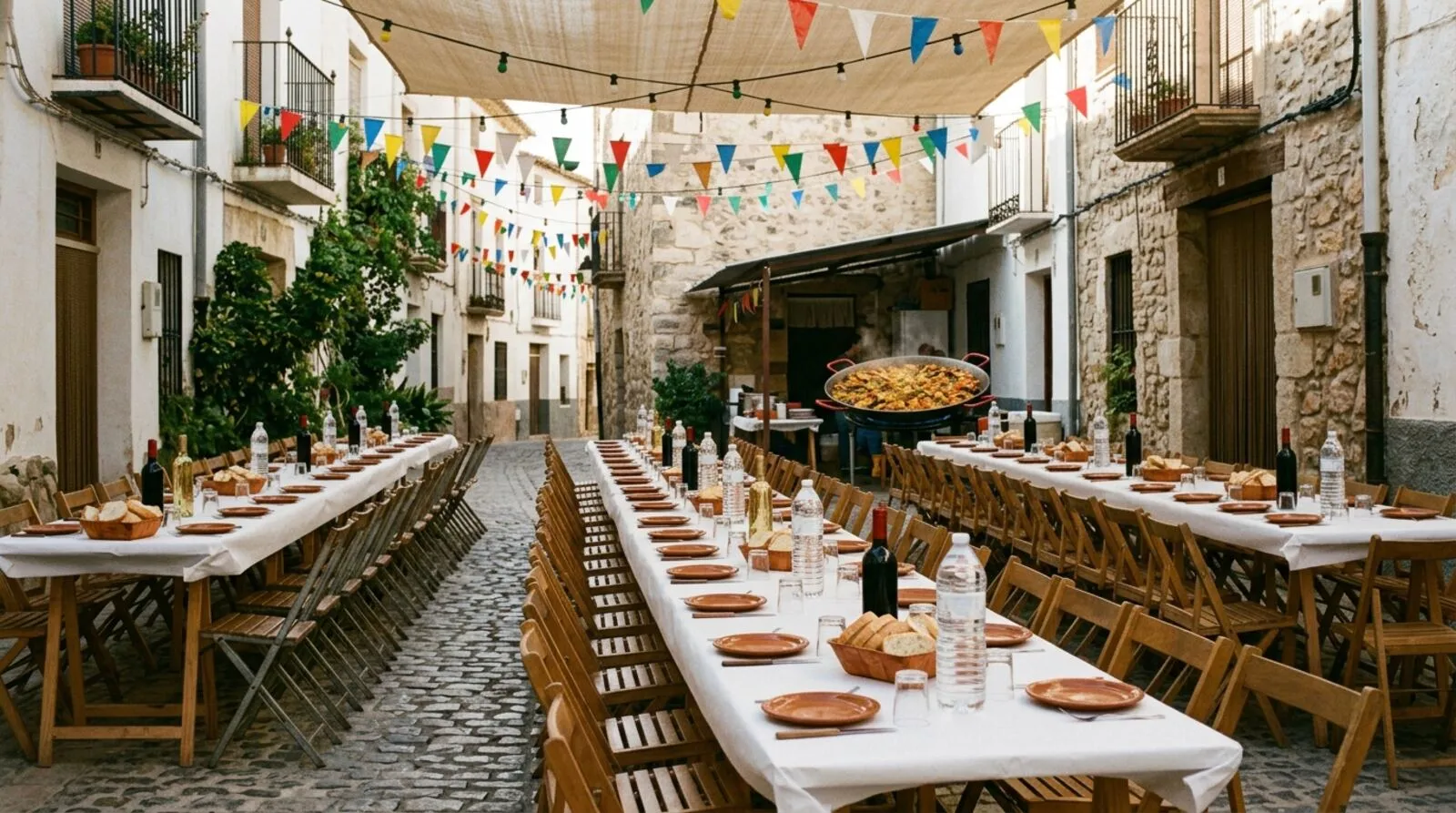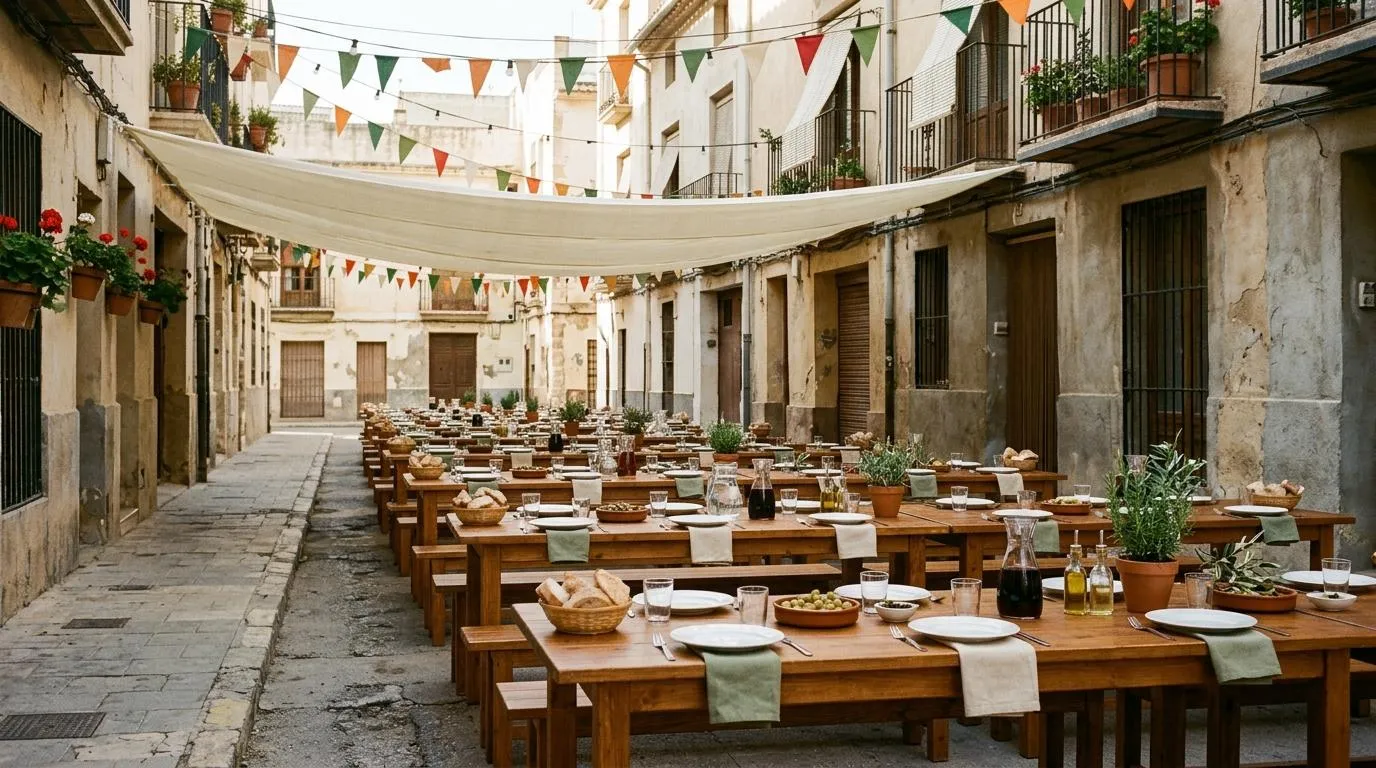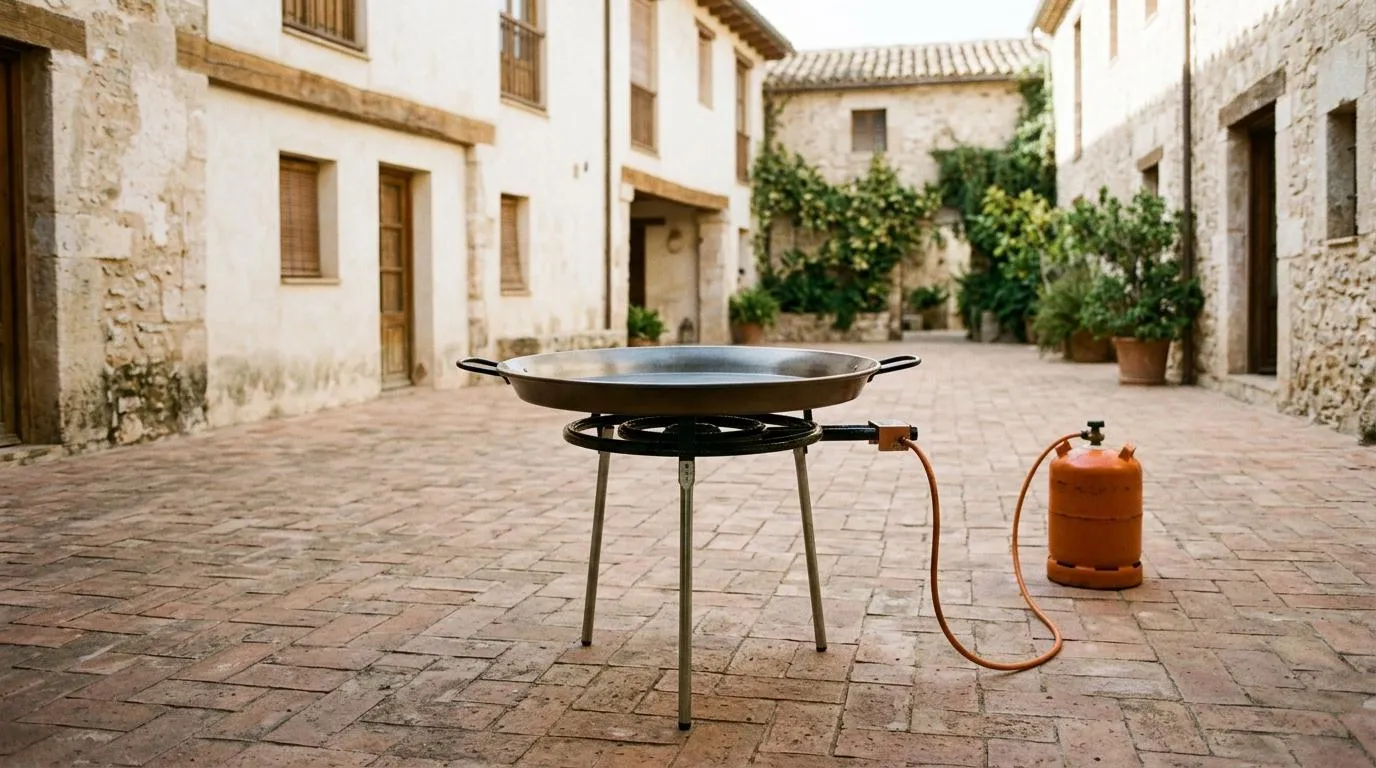
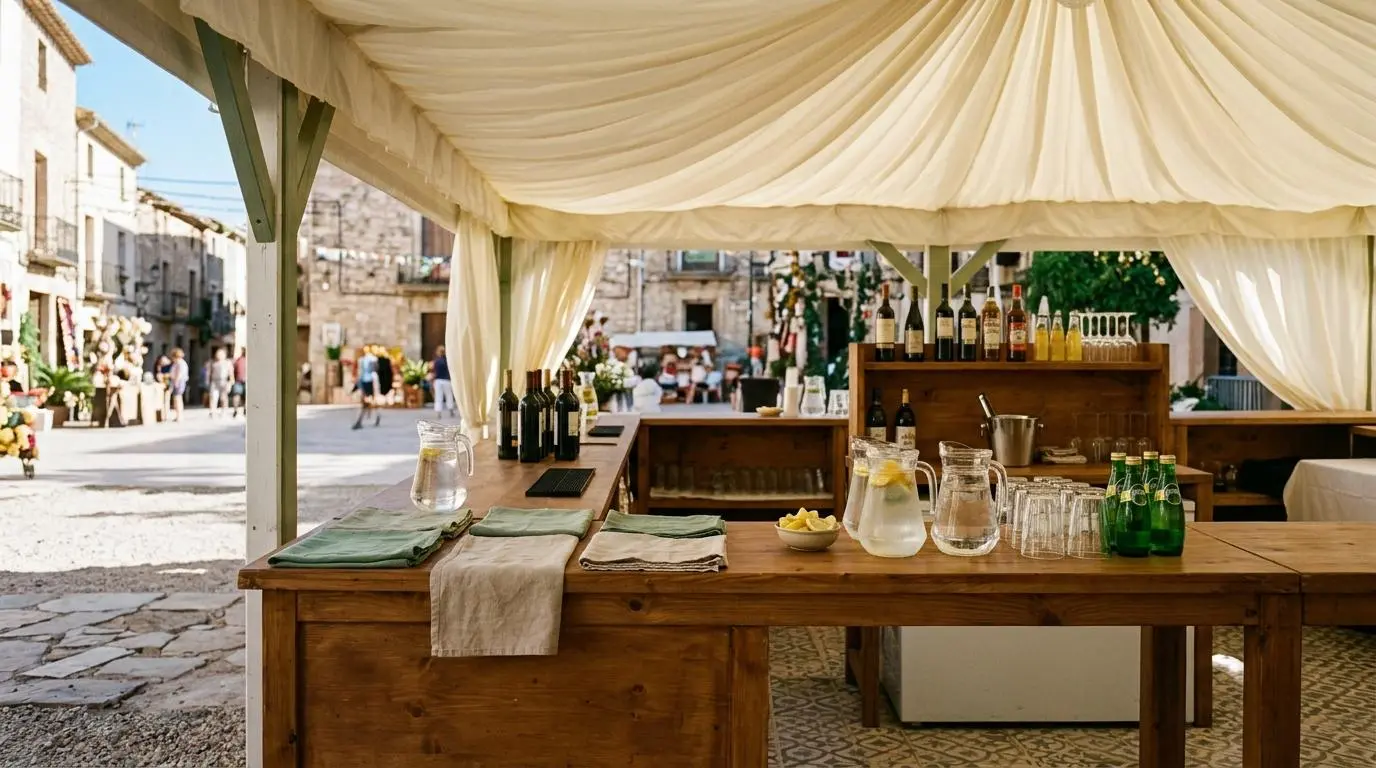
A bar can have plenty of drinks and still struggle: the person serving only needs to cross the queue to fetch cups. Plan routes, opening times and responsibilities before counting cases. Quantities become useful once you know who will be there and for how long.
This guide is for a local fiesta association, comparsa or organising committee. For a specific proposal, see local fiesta catering. It does not prescribe a drinks or staffing ratio for every event.
Count attendance by session
Separate lunch, the afternoon, dinner and any evening programme. Record confirmed guests, expected visitors and likely surges, such as the end of a parade. Do not add sessions together as though everyone were a different guest: record what each meal or drinks arrangement covers.
| Information to collect | What it helps decide | Who confirms it |
|---|---|---|
| Attendance and ages by session | Water, alcohol-free drinks and food | Organisers |
| Event and bar opening times | Arrival peaks and shift changes | Committee and bar lead |
| Menu and drink formats | Units, cups and storage | Supplier and organisers |
| Refrigeration and deliveries | What can be stored or replenished | Supply lead |
| Payment arrangement | How to avoid one queue for everything | Treasurer and service team |
Use the same guest list as the comparsa meal planning guide. For several days of service, keep a separate count for each day.
Buy against a replenishment plan
Ask for a forecast by product and session, distinguishing confirmed demand from estimates. Check units per case, storage space, deliveries and the terms for returning unopened stock. An unexplained buffer can turn into cases that will not fit in the available refrigeration.
Keep a simple record of opening stock, deliveries, issues and leftovers. Agree who authorises another delivery, whom they call and where the goods arrive. Do not wait until a product runs out to discover that a parade blocks vehicle access.
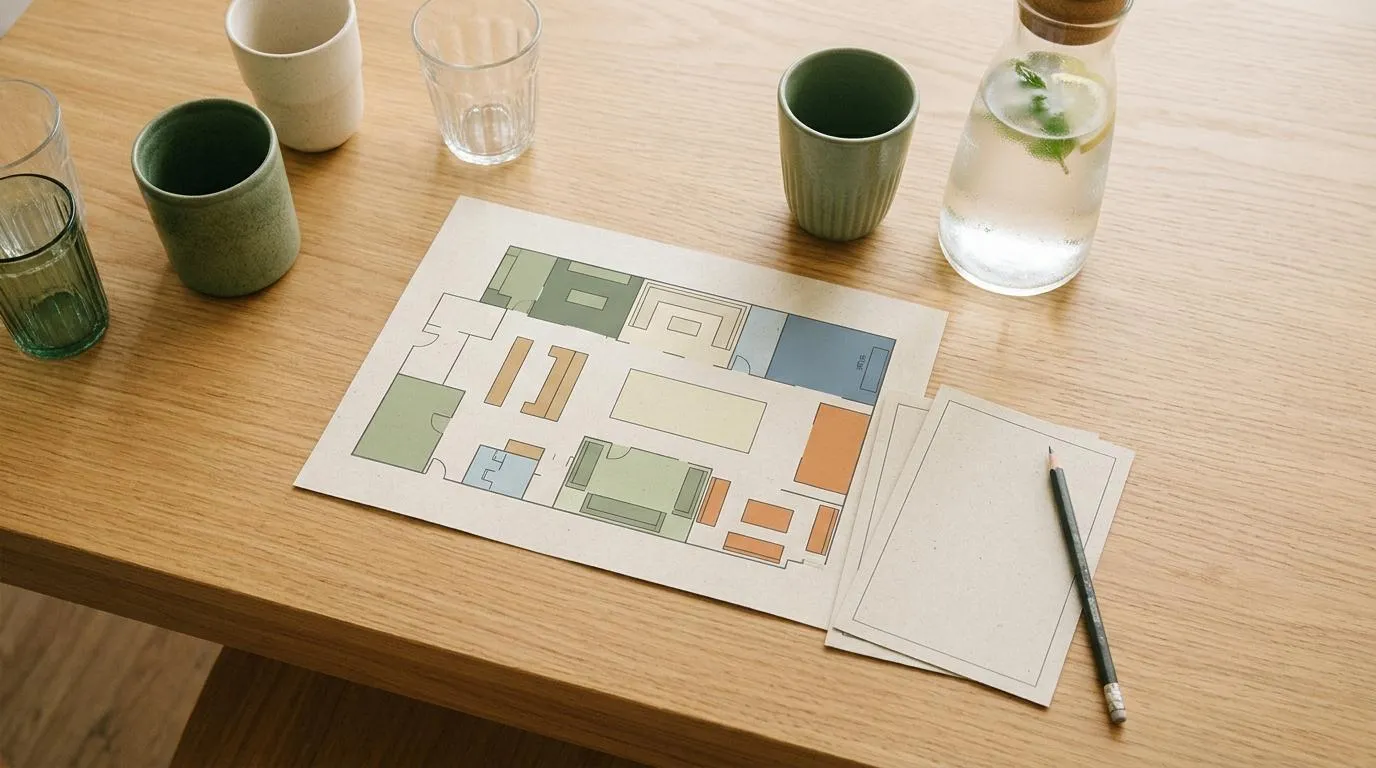
Map customers, service and restocking separately
Position ordering so it does not block collection. Give the restocking team a route that avoids the kitchen and the customer queue. Check water, electricity, refrigeration, storage and waste collection; the marquee itself does not establish which supplies are included.
Walk through one order: take it, collect payment, prepare it, hand it over and clear used items. If one person does several jobs, identify where work stops. This trial helps agree staffing and handovers more effectively than membership numbers alone.
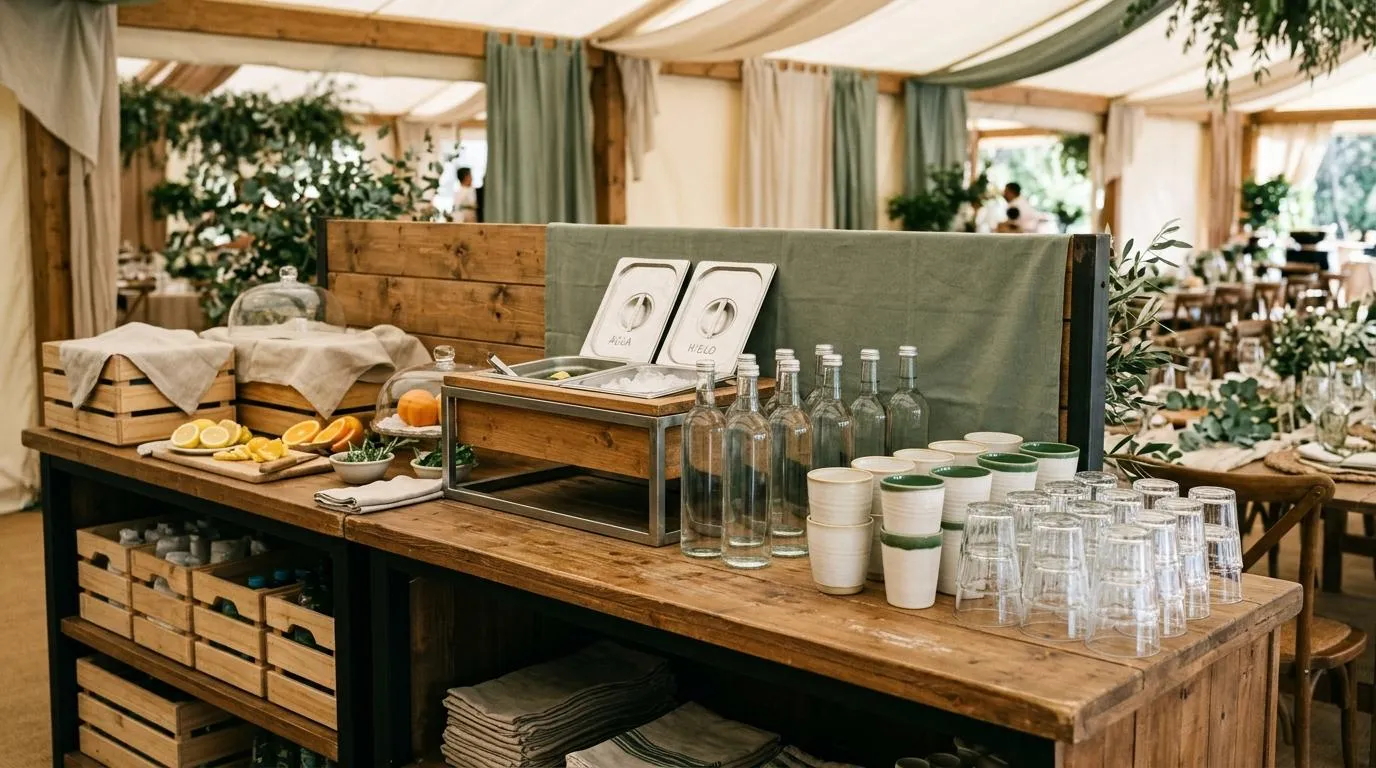
Tickets, a fixed contribution or payment per order
For tickets, explain where they are sold, what they cover and how sales reconcile with service. For a fixed contribution, record who is entitled to what. For payment per order, agree how an order is identified and where it is collected.
If an order-taking system or QR code is proposed, ask for a demonstration and a manual fallback. Opening a menu on a phone does not explain how the order reaches the bar or how customers know it is ready. Agree the actual configuration in the proposal rather than assuming features of a Xepep system.
Confirm permission for the venue and activity
As a local example, Alicante City Council requires a technical project and emergency action plan for authorised racós and barracas. Source checked 31 October 2026. This municipal process should not be applied automatically to other towns.
Contact the council where the event takes place and assign responsibility for each permission. Coordinate access and times with the fiesta calendar and the official programme for that edition. For Hogueras, see the guide to barraca meals.
What to send with a quote request
Include location, dates, opening sessions, attendance, meals and payment arrangements. Attach a layout and explain the venue’s supplies. Ask what the proposal includes: stock, staff, refrigeration, tableware, setup and clearing.
You can request a quote for your fiesta bar or discuss a planning question before deciding on the format.