A comparsa meal (a comparsa, or filà, is one of the troupes that parade and hold their own events during the Moors and Christians fiestas) is organised around three answers: which event it is, where it’s being held and how many of you will actually sit down. Once those are clear, the menu, the money, the bar and the permits all fall into place behind the fiesta programme, which is what rules in any filà.
We’re writing this from the kitchen. We’re a family business from Aspe with four generations in the trade, and at Moors and Christians we work hand in hand with the juntas, the committees that run each troupe. This is what we’d like every treasurer, captain or president to know before they pick up the phone.
The meals a comparsa has during the fiestas
Not every meal carries the same weight, and treating them all the same is the first mistake.
Almuerzo before setting off. The almuerzo is the late-morning bite, and it needs to be quick and practical, because people are on their way to the parade. What matters is that everyone knows what time they eat and what time they have to leave the table. Spanish omelette, cured meats and hot sandwiches from the griddle work well here.
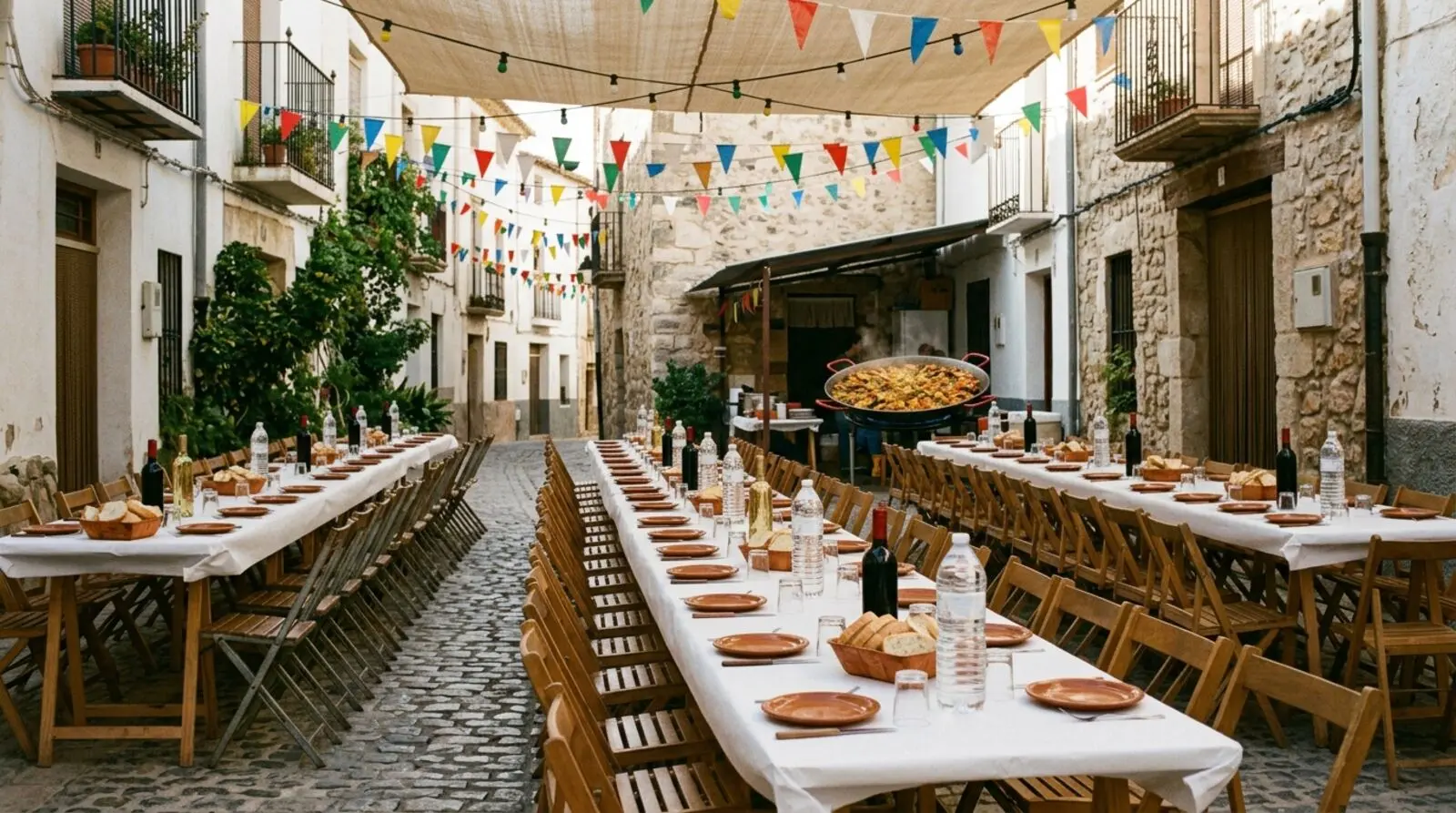
Comida de hermandad (fellowship meal). This is the one that brings the whole comparsa or filà together, families included. Three things matter: tables well laid out, the main course on time, and nobody spending forty minutes staring at an empty plate. It’s the natural place for a rice dish or a plated main. If you want a local rice, the recipe section has the arroz con costra from Elche and the Vega Baja and the Valencian baked rice. Many of these fiesta dishes go back a long way, as our history of Valencian cuisine shows.
Gala or presentation dinner. With speeches, the handing-over of posts or music, the dinner has to keep time with the event. For the presentation of the cargos (the year’s office-holders), a standing reception with canapés usually works better than a sit-down dinner: people say hello, move around and aren’t tied to their cutlery.
Cuartelillo and bar. The cuartelillo is the troupe’s base during the fiestas. If the marquee is going to be open for several days, we’re no longer talking about catering a meal but about a continuous service, with shopping, storage, a bar and clearing up every day. It’s best decided from the start, because it changes the whole organisation.
One piece of advice before we go on: don’t copy another comparsa’s format without looking at your own programme. Ask yourselves who’s coming straight from an event, who has to leave early and whether relatives, musicians or the band are eating with you.
Members, bookings and payment: where most of the trouble starts
The classic mistake is confusing the membership list with the list of bookings. A member may not turn up, and a guest may eat without being on any list. Keep a register with each person’s name, chosen menu and payment status, and make sure the whole committee can see it.
Three rules that save arguments:
- One person deals with the kitchen. If changes come in through three different people, someone ends up without a meal. Have one person collect them, pull them together and confirm which list replaces the last one.
- A cut-off date agreed with the kitchen. Don’t assume it’s fine because “last year we closed on the Thursday”. Every meal has its own buying and prep deadlines.
- Drop-outs and places in writing. Make it clear how a place is confirmed and who to tell when someone pulls out.
Charging per filà, per table or per person
If you charge per filà or per table, have one person responsible for collecting the money and checking off places. If everyone pays individually, the register has to show clearly which bookings are confirmed. Both systems work. What never works is the number of people who’ve paid not matching the number of meals ordered.
Before collecting any money, explain what the fee includes: food, the drinks planned, tableware and anything else approved by the junta. If the bar is separate, say so beforehand, not when the food’s already on the table.
Where it’s held: premises, marquee or street
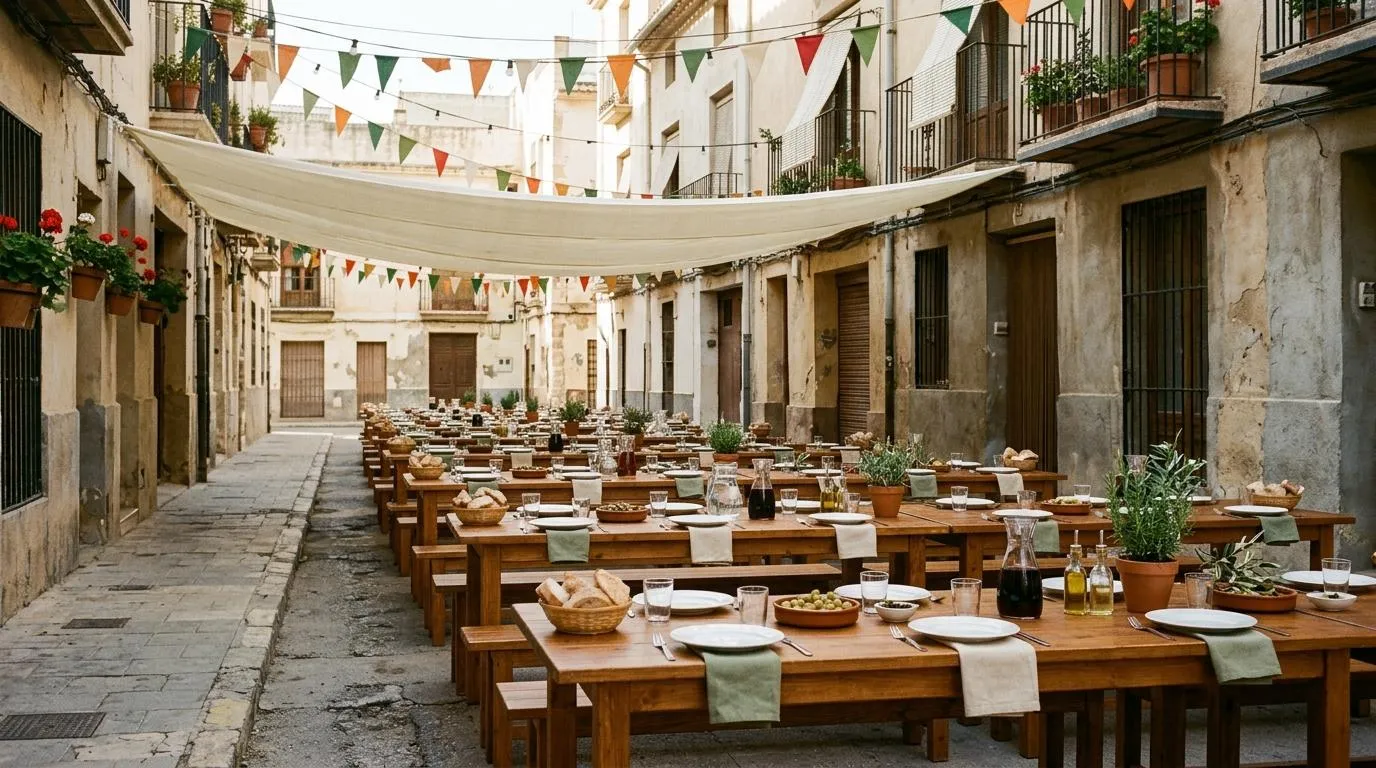
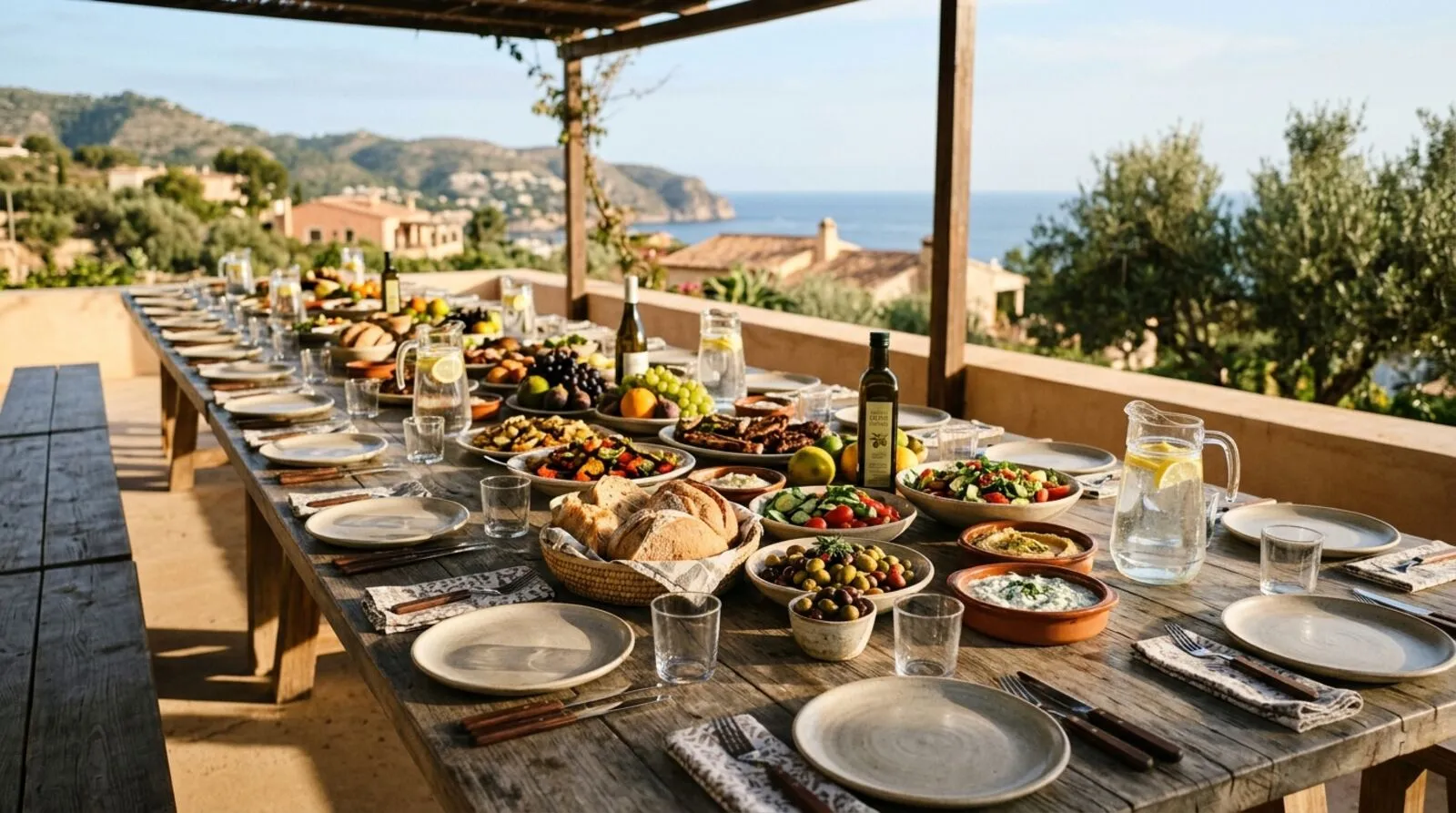
The venue decides what can be set up. Before you finalise the menu, look at access, the unloading area, the tables available and the route the waiting staff will take. In a marquee, keep a working corner that won’t end up as a walkway for guests or a store for banners and costumes.
This is what we always ask about the premises or marquee:
| What | Why it matters |
|---|---|
| Water, power and gas connections | Without them there’s no kitchen; if anything’s missing, we need to know before set-up |
| Access and unloading area | It decides when and how the equipment arrives |
| Tables, chairs and tableware you already have | Whatever you don’t have, we bring or sort out |
| Kitchen and bar area | So they don’t get in the way of the tables or walkways |
| Rubbish collection | Someone has to empty the bins and take them away every day |
If the meal is in the street or at a council-owned venue, the town council needs to know about the whole set-up: marquee, kitchen and bar. It’s not enough to ask whether “you can hold a meal”. Draw a simple sketch showing the kitchen, the bar, the tables and the bins, and give it to the kitchen and to whoever is handling the permits. It’s the cheapest way to spot problems before a single lorry moves.
If your fiesta is in the Vinalopó, we come from Aspe with our team; our page on catering in Aspe and the Vinalopó shows the area we cover.
Paella, bar and QR ordering: how the service works
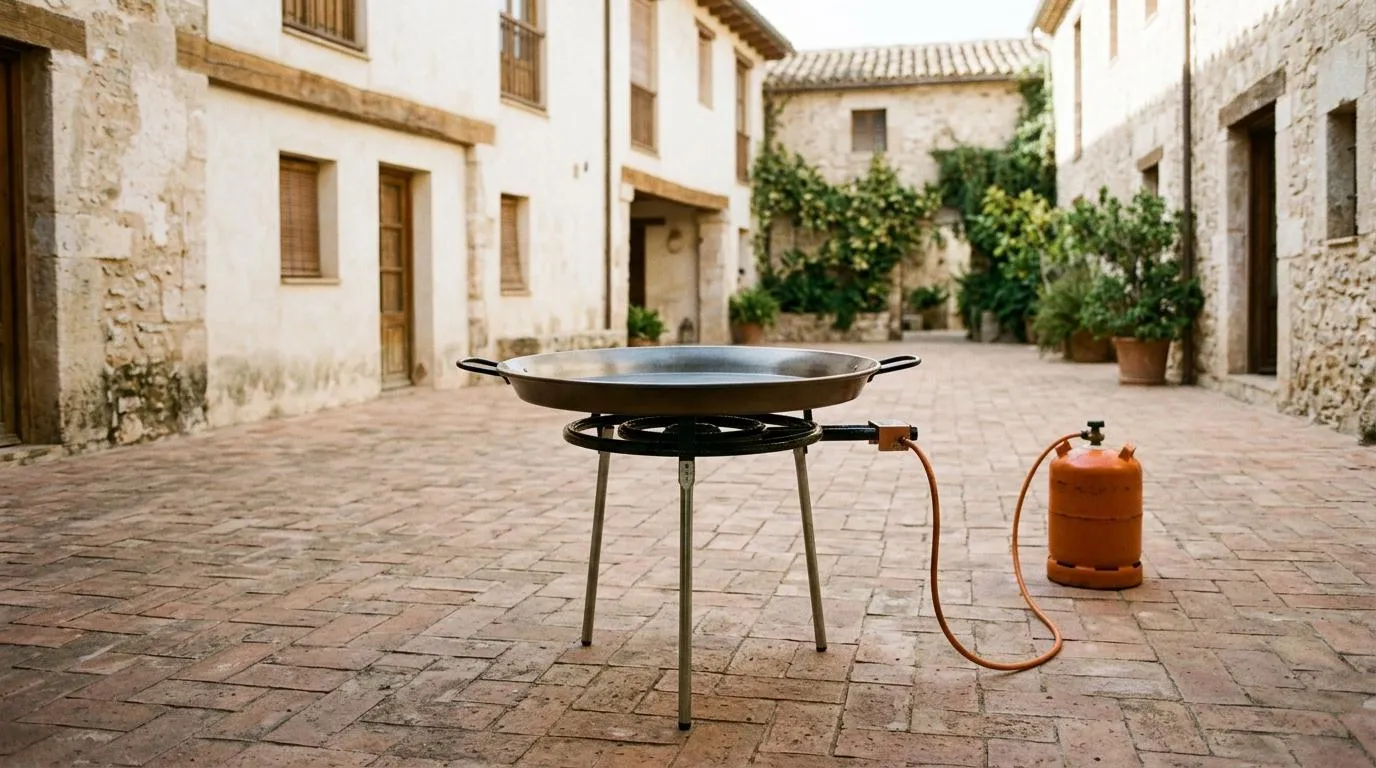
Rice cooked live. At a fellowship meal, a rice dish cooked in front of everyone has something no plate from the kitchen can match: people gather round the pan and the meal starts before anyone sits down. You’ll need to agree how tables are called up, who hands out the special portions and where the drinks go. If you’re a big group, read how to organise a paella for a hundred people first. And if anyone asks where the custom comes from, here’s the history of paella.
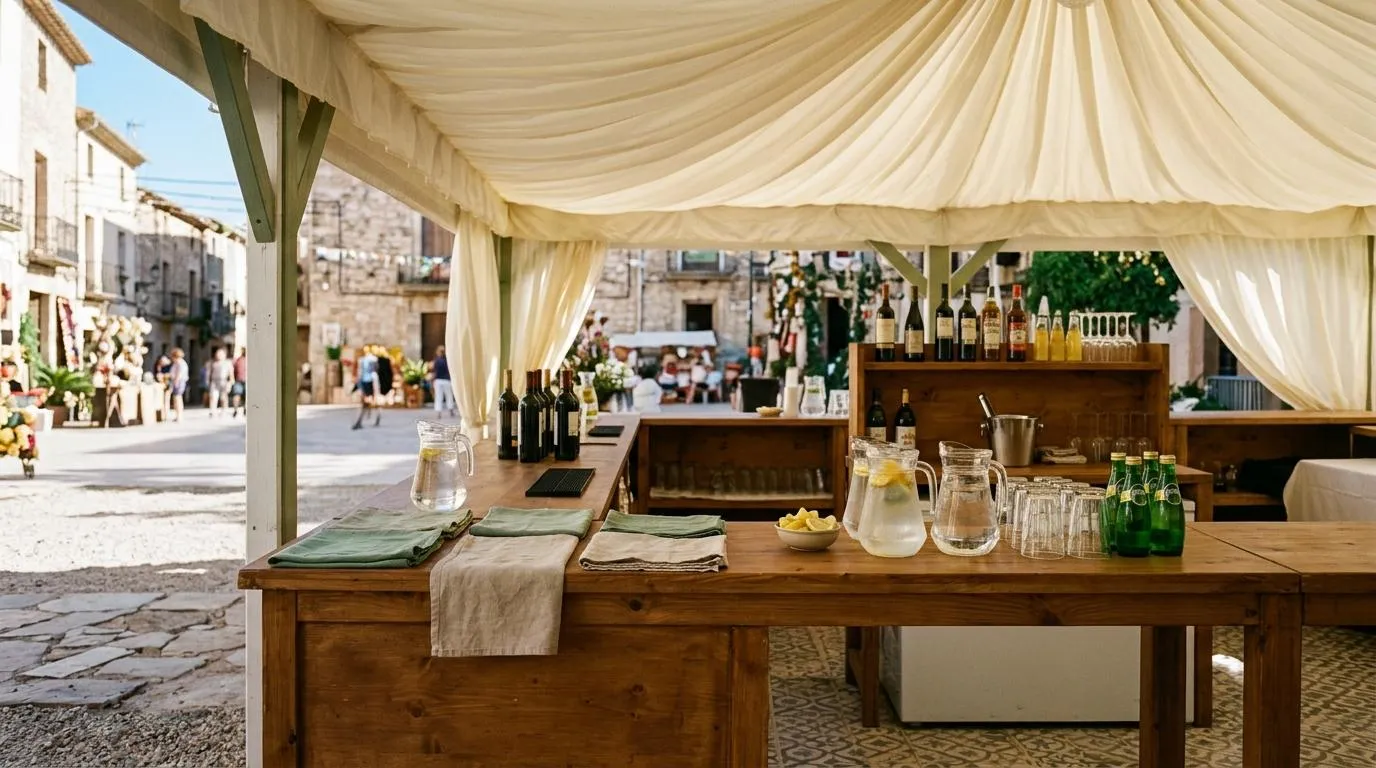
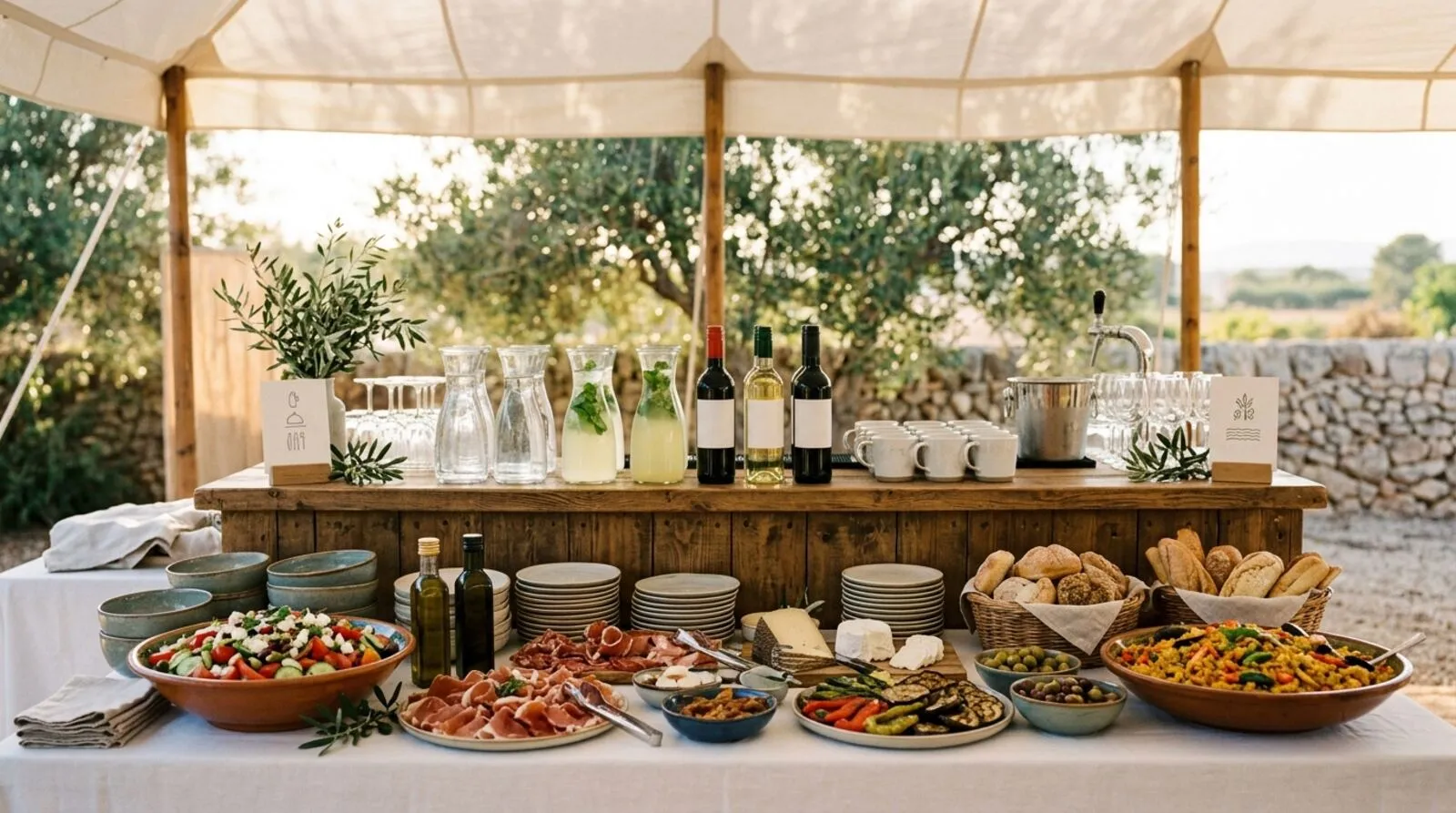
Bar in the marquee. We set up a kitchen and bar inside your marquee, for a one-off meal or for several days in a row; at fiestas it’s usually between four and six. Orders are logged on a QR ordering system, so the committee knows at any moment what’s been served and what’s been paid for, and at the end of the week the accounts add up. It’s the same set-up we use for local fiestas and committees and for Hogueras (the Bonfires of San Juan) and barracas.
Capacity. We have the pans, burners and equipment to feed 500 people at once, and for on-site service we work from 40 guests.
Before the first day, we go over the power, water and gas connections with the junta, and who does what between the kitchen and the comparsa. The clearer the split, the less running about on the big day. If you’d like to see what it looks like, there are photos of Moors and Christians presentations in our gallery.
How many portions and how much drink to allow
First of all: count per meal and per menu, even if it’s the same members all week. The same people don’t come to the almuerzo and the dinner. Add in everyone who eats without being a member too: the band, musicians, organising staff and helpers. Leave them until the last day and they turn up out of nowhere with no meal.
| Item | How to decide | What to agree in advance |
|---|---|---|
| Main course | Confirmed bookings for that menu | Portions and what changes are allowed |
| Special menus | Needs notified in advance | Who identifies them and who serves them |
| Drinks with the meal | Whatever the fee includes | What’s covered and who tops up |
| Bar | Drinks list and opening hours | Logging, payment and cashing up |
| Tableware | Format and location of the service | Who brings it and who takes it away |
There’s no magic number for drinks. It changes with the time of day, the heat, what’s included with the meal and the mood of each peña (group of friends). The sensible approach is to start from real bookings, agree with the kitchen how restocking works, and make sure the committee can see what’s being drunk throughout the fiesta, not just on the last day.
Dietary needs and allergens
Gather everyone’s needs before you confirm the menu. Tell a preference (I don’t like it, I don’t eat meat) apart from an allergy or intolerance, because they’re handled differently: a vegetarian dish is no use to someone who has to avoid one specific ingredient.
Spanish law requires allergen information for unpackaged food too, so the kitchen must be able to give you that information for every dish; it’s set out in Royal Decree 126/2015, published in the BOE (Spain’s official state gazette). Ask for it in writing for the agreed menu and decide how people will be able to check it during service.
Two tips for the day itself. Mark the reserved portions and who’s taking them out, so the person affected doesn’t have to explain all over again in the middle of the queue. And never assume a dish is suitable because of its name: check the recipe.
Timeline: when to get started
Work backwards from your programme, not from the months another comparsa goes by. An example close to home: according to Turismo de Aspe, the Moors and Christians fiestas in Aspe take place from 7 to 10 August, with eight comparsas, four on the Moorish side and four on the Christian side. Whatever your dates, the order of work is the same:
- Venue and format for each meal.
- The kitchen’s proposal, bookings and payment.
- Headcount, dietary needs and final timings.
| Type of gathering | What changes in the organisation |
|---|---|
| Moors and Christians, several days | Fitting the meals around the entradas (the grand entry parades), other parades and presentations |
| Patron saint fiesta | Checking the local calendar, the processions and the use of the venue |
| Fellowship meal outside the fiestas | The whole set-up and service in a single event |
To go over the plan with the junta:
- Venue and set-up conditions confirmed.
- Bookings, menus and payments reconciled.
- Dietary needs passed on to the kitchen.
- Timings checked against the programme of events.
- People in charge of contact, service and settling the accounts.
When the fiestas are over, note down what went wrong and what was used while it’s all fresh. It’s the best starting point for next year.
Next step
If you’d like to turn this plan into a proposal, tell us the dates, venue, numbers and meals on our Moors and Christians catering page and get a quote for your comparsa. And if you still need to work out the rice, see our guide to how much rice to allow per person.
For a family celebration, see our guide to how to plan a First Communion lunch in Alicante.
For drinks and several services, see the marquee bar guide. Coordinate local activities with the Aspe fiesta meal guide.