
Valencian baked rice
Yield: 3 servings
Are there 40 or more of you? We cook rice dishes live for groups
Large paella pans need less liquid. Sources
Ingredients
Rice
- 250 gRice
- to tasteHot water or cocido stock
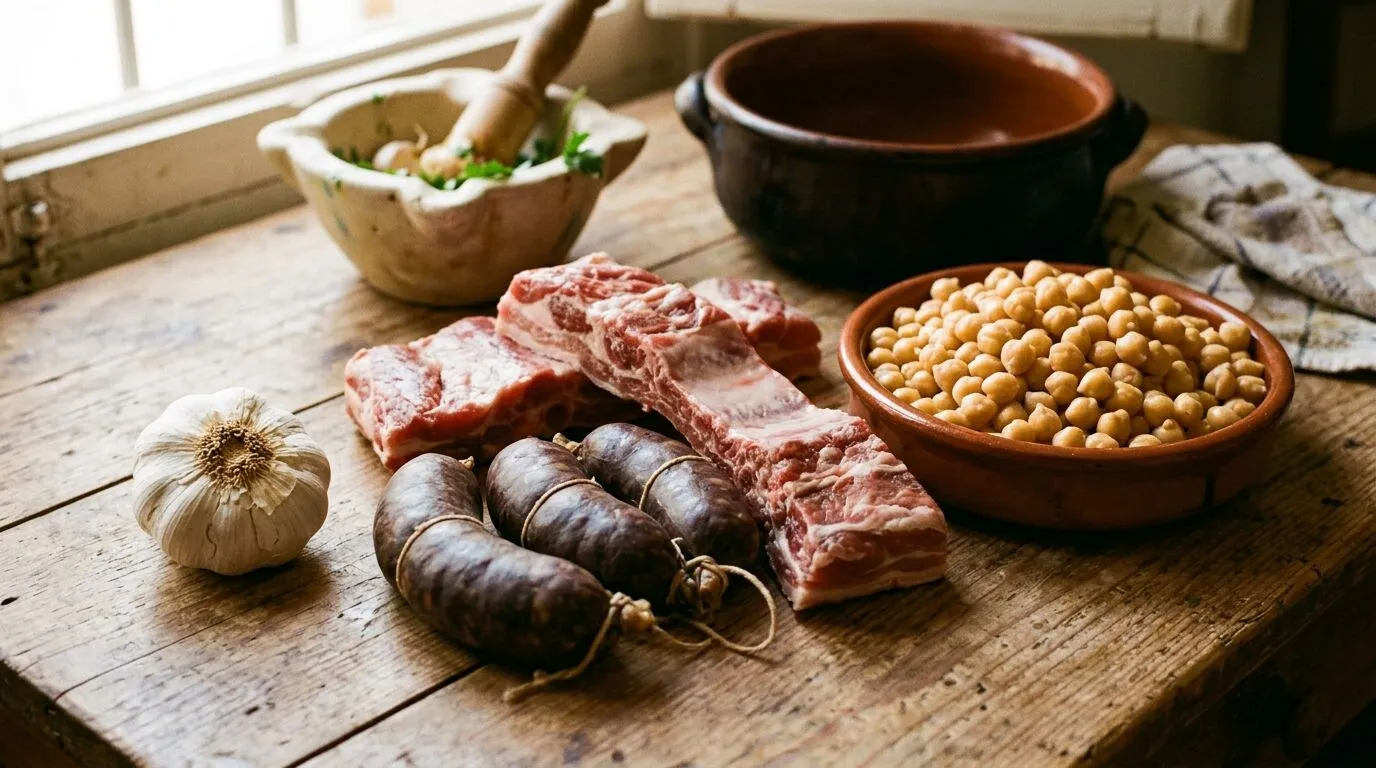
- 130 gCooked chickpeas
cazuela
- 500 gPork ribs
- 250 gOnion black pudding (morcilla de cebolla)
- 1 pcsHead of garlic
- 2 pcsTomatoes
- 2 pcsMedium potatoes
- to tasteOlive oil
- to tasteSalt
Ingredients
Steps
- 1Preheat the oven to 250 °C for 10 minutes while you prepare the dish.10 min
- 2In an earthenware dish with a splash of to taste, brown the 500 g, the 250 g and the whole 1 pcs until they take colour.
- 3Add one of the tomatoes and fry it down until it melts into everything else.
- 4Add the 250 g and toast it briefly in the same dish, stirring so it soaks up the sofrito.
- 5Slice the second tomato and pass it through the dish for a moment.
- 6Pour in the to taste, twice the volume of the rice, adjust the to taste and add the already cooked 130 g.
- 7Peel the 2 pcs, cut them into slices and fry them. Lay them on the rice together with the slices of tomato.
- 8Put the dish in the oven at 250 °C for 20 to 30 minutes, until no stock is left and the surface is golden.25 min
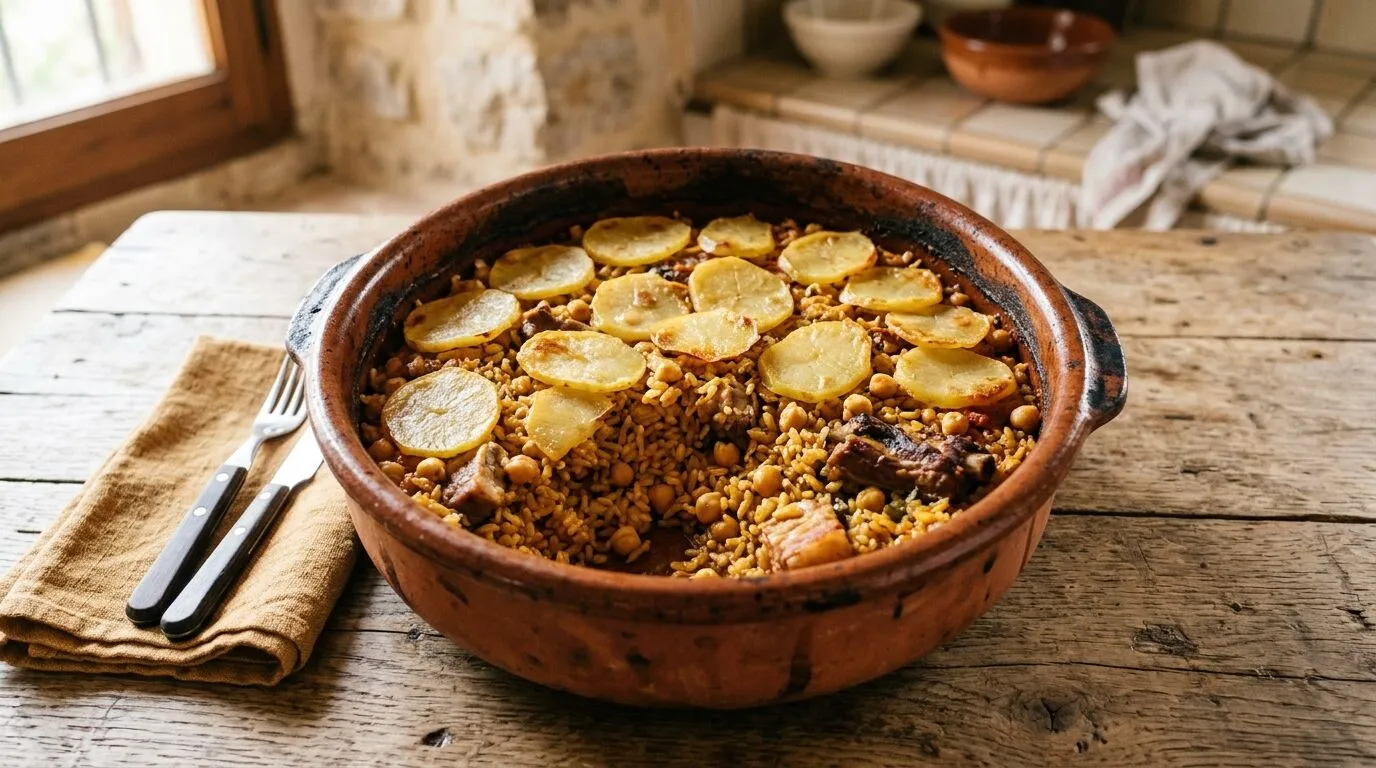
The finish: dry and golden on top
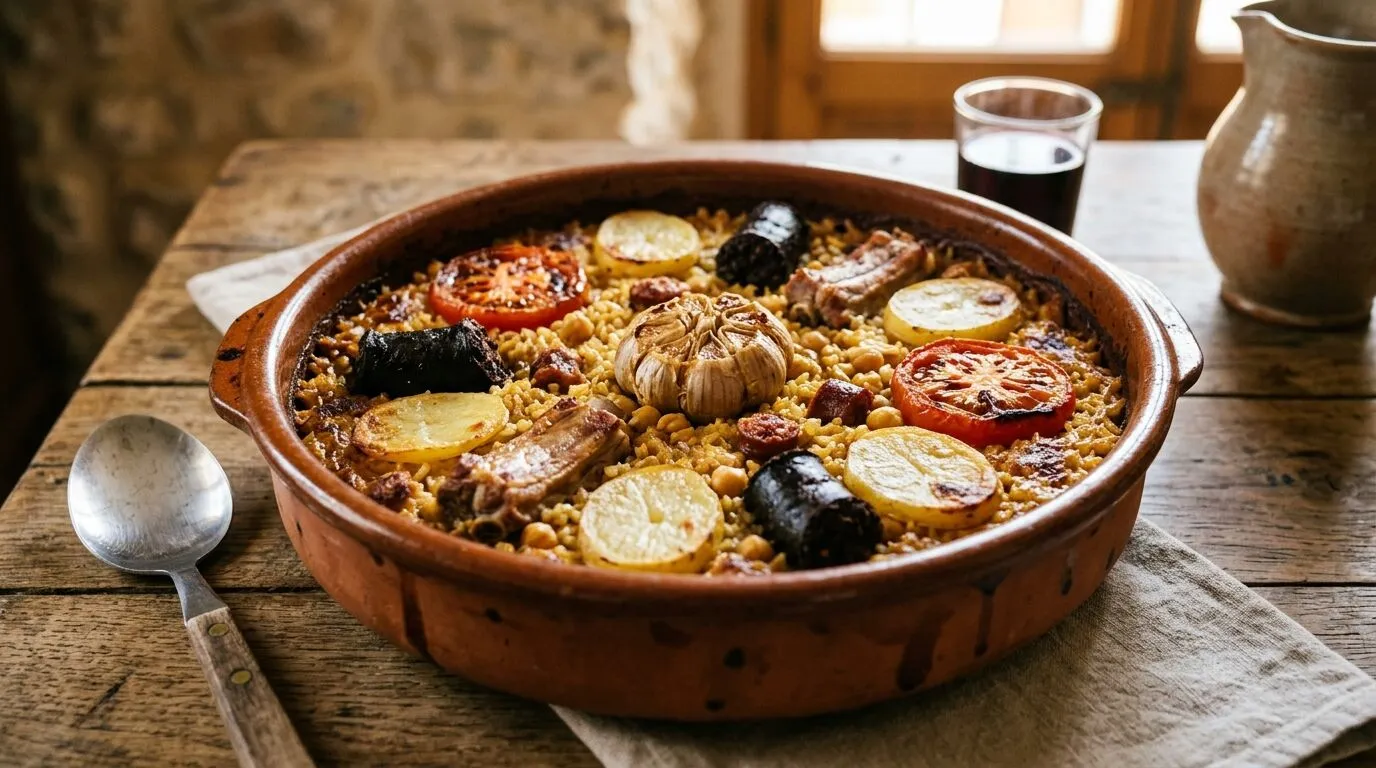
Baked rice isn’t eaten with a spoon or with stock on the plate: it comes out dry, with loose grains and a golden layer of potato and tomato on top. The stock is absorbed in the oven and it is what flavours the grain. If you take the dish out and see liquid, it needed more oven time; if the rice is hard and has no juice, it was left too long or short of stock. If you want to revisit the difference from creamy and soupy rice, it is in the glossary: creamy, soupy and dry rice. If you’re curious about where the rice comes from, there’s a guide: history of rice in Spain.
The earthenware dish and the oven
The dish is earthenware and flat, wide, so the rice sits in a thin layer and cooks evenly. It is the kind that used to be carried to the neighbourhood bread oven, which is where the old name arròs passejat that Turisme Comunitat Valenciana mentions comes from. A home oven does the job. What matters is that the dish can first take the direct heat, where you make the sofrito, and then the oven.
Temperature is the most disputed point. Turisme Comunitat Valenciana asks for 250 °C for 20 to 30 minutes; Canal Cocina bakes at 200 °C for about 20. Both recipes work in their own oven. Start with whichever your oven calls for and adjust by eye: the rice is in charge, not the thermometer.
The ingredients that count
- Ribs and onion black pudding. They are the fat and the flavour. The onion morcilla, and no other, is the one Alicante Turismo mentions.
- Chickpeas. In the Alicante Turismo recipe they go in already cooked; in the Turisme Comunitat Valenciana one, soaked from the night before. They are the trace of the cocido (the Spanish chickpea stew) the dish comes from.
- The stock. If you have cocido stock, it beats water: the official recipe asks for two parts of stock to one of rice, and Alicante Turismo twice as much water as rice.
- Potato and tomato. They go on top, in slices, and they are the lid that browns. The potato is fried first.
- The rice. Turisme Comunitat Valenciana asks for one with a designation of origin; bomba rice is one of the varieties it covers.
Using up the cocido
If you have cocido stock at home, this is the dish to use it up. The Turisme Comunitat Valenciana recipe prepares it with a stock of pork and veal bones, onion, carrot, hen and celery, and adds it hot in the proportion of two parts to one of rice. For four servings allow 80 g of rice per person, 250 g of chickpeas, four strips of pork belly, sixteen pieces of rib, four black puddings and a head of garlic. The Alicante Turismo recipe is simpler: ribs, onion black pudding, chickpeas and potato, and water. Both are valid, and the difference comes down to what is left of the cocido.
In Lent, without meat
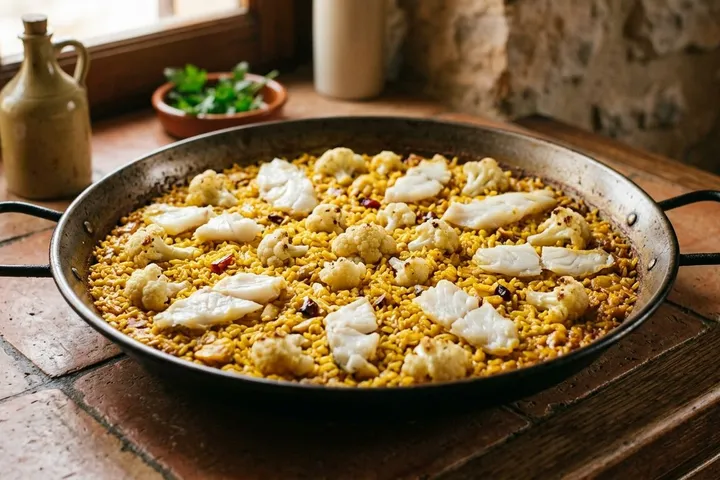
There is a meat-free version that keeps the dish and the oven: arròs al forn “en panses i cigrons”, which Valencia Bonita gives with potato, raisins, chickpeas, garlic and parsley, without meat. It is a good example of how the technique of dish and oven defines the recipe, not the ribs. If you are after a Lenten rice made in a paella pan, see the salt cod and cauliflower rice.
Typical mistakes
The faults in this dish almost always come from the liquid and the oven. If you go over twice the stock, the rice comes out waterlogged; if you fall short, hard. If you put the dish into a cold oven, the timings no longer hold: that is why the Turisme Comunitat Valenciana recipe begins by preheating. And salt is tasted before baking, as the same recipe asks: once it is in, it can’t be corrected well.
Quantity and company
Alicante Turismo doesn’t say how many its 250 g of rice serves. With the 80 g per person that Turisme Comunitat Valenciana gives, you get about three servings, and that is how this recipe card is calculated. It is a small-table dish: a single dish and a domestic oven don’t stretch to a banquet, and for big groups the calculations go another way, as we explain in how much rice per person.
If you want to compare with another dish-and-oven rice, see the Sant Blai rice, Torrent style, which shares the technique, or the arroz con costra (crusted rice), which is finished with set egg.
If you are a big group and want rice dishes on the table, we cook rice live for groups.
History and variations
Alicante Turismo describes it as a popular dish once made with the leftovers of the cocido, hence the chickpeas, ribs and black pudding, although it is also prepared without a previous cocido. Decades ago it was called *arròs passejat*, “rice taken for a walk”: the flat earthenware dish was carried to the neighbourhood bread oven. In La Costera they are proud of making it masterfully, and Xàtiva holds a national competition. The difference between dry, creamy and soupy rice is in the glossary.
Valencian Community: In Lent it is made “en panses i cigrons”: meatless, with potato, raisins, chickpeas, garlic and parsley. Sources
Tips
If you have cocido stock, use it hot: two parts of stock to one of rice. That is the proportion in the Turisme Comunitat Valenciana recipe. Sources
Preheat the oven ten minutes before the dish goes in, as the Turisme Comunitat Valenciana recipe asks, and taste for salt before baking. Sources
If your oven doesn’t reach 250 °C, Canal Cocina bakes it at 200 °C for about 20 minutes. Keep an eye on the dish and don’t trust the clock. Sources
Valencian baked rice
Frequently asked questions
Where does baked rice come from?
It is a popular make-do dish: Alicante Turismo explains that it was made with what was left of the cocido, which is why the chickpeas, ribs and black pudding are never missing. Turisme Comunitat Valenciana recalls that it used to be called “arròs passejat”, rice taken for a walk, because the dish was carried to the neighbourhood bread oven for the final cooking. Today La Costera has a name for making it beautifully, and Xàtiva holds a national competition.
How long does baked rice take to cook?
In the oven, 20 to 30 minutes at 250 °C, until the stock has been absorbed, according to Turisme Comunitat Valenciana. Add 10 minutes of preheating and the time for the sofrito. Canal Cocina bakes it at 200 °C for about 20 minutes: every oven is different, so go by the rice, which should be dry with a golden surface.
What is Lenten baked rice?
It is the “en panses i cigrons” version (with raisins and chickpeas), made without meat: it has potato, raisins, chickpeas, garlic and parsley, according to Valencia Bonita. It keeps the earthenware dish and the oven of the usual rice, but swaps the ribs and black pudding for meat-free ingredients. It is the one made in Lent, when meat is avoided.
Sources
Glossary terms
Recipes
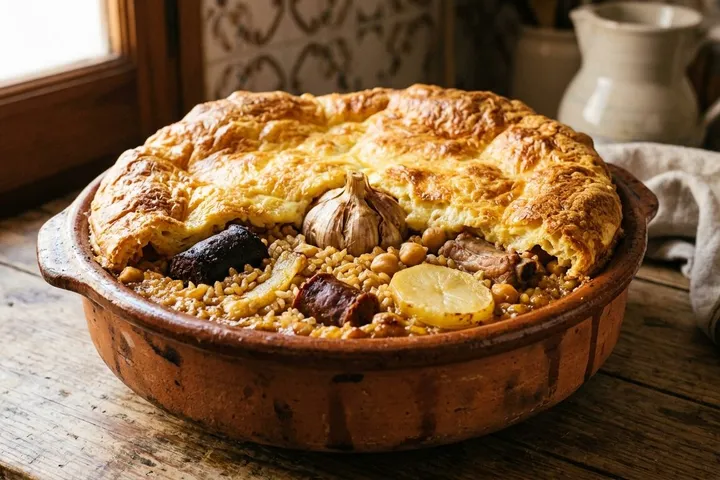
Arroz con costra (crusted rice)
Arroz con costra: a rabbit and sausage rice cooked for 8 minutes in the earthenware pot and finished with beaten egg in the oven or under a costrera.
Total time: 46 min
Sant Blai rossejat rice, Torrent style
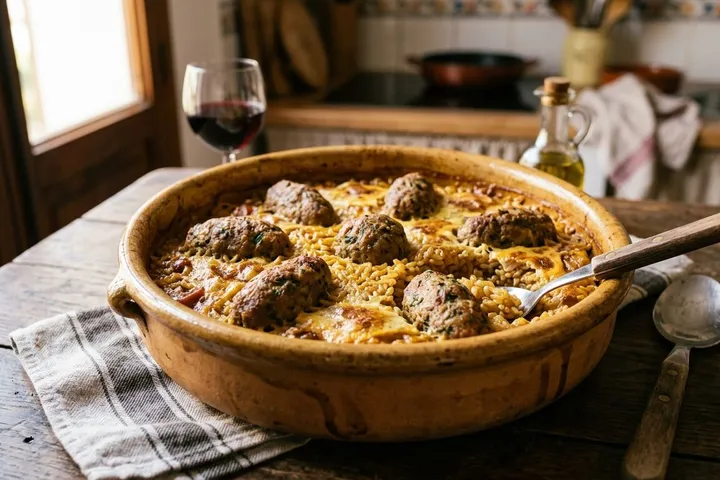
A casserole rice baked in the oven with pork ribs, chickpeas and meatballs, the Sant Blai dish in Torrent. It isn’t the seafood rossejat, made with fish stock.
Total time: 65 min
Brothy rice with chicken and rabbit (arroz caldoso)
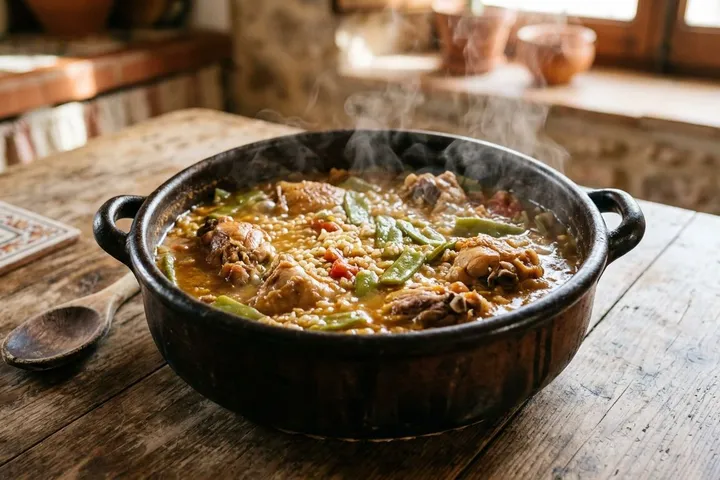
Brothy chicken and rabbit rice is home-style spoon food: browned meat, flat green beans and garrofón, and rice cooked in four times its volume of water.
Total time: 47 min
Salt cod and cauliflower rice (Lenten paella)
Lenten paella is a rice dish of desalted salt cod and cauliflower for 3 servings: everything is sautéed in the paella pan and cooked with fish stock.
Total time: 317 min
Rice with pork and vegetables
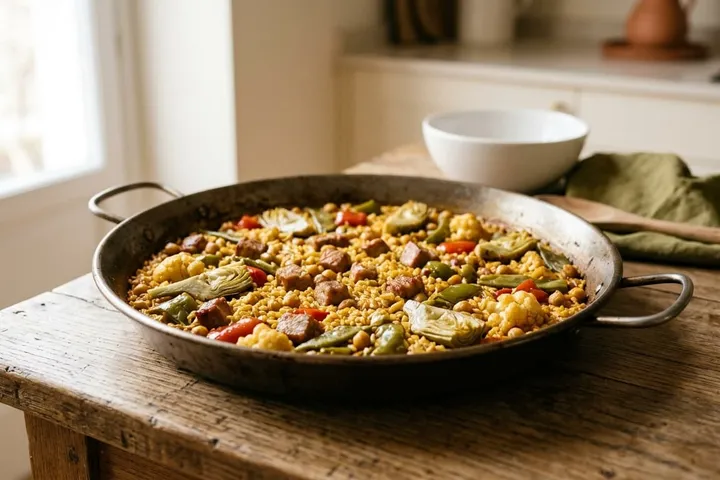
Bomba rice with lean pork, artichokes, cauliflower, green beans and chickpeas in rib stock: boil, convection oven and rest. Serves 4.
Total time: 22 min