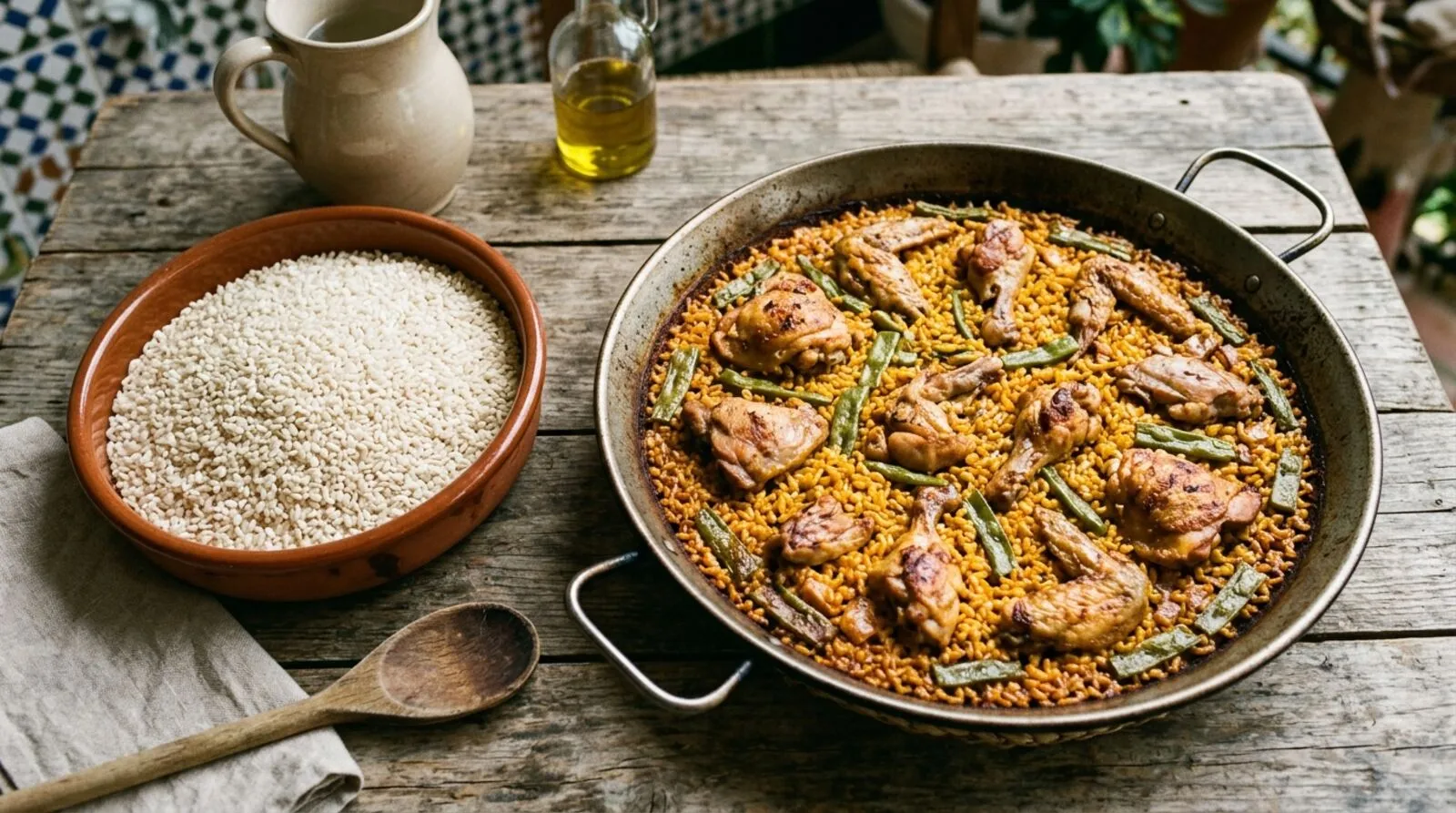
Creamy rice (arroz meloso), soupy rice (arroz caldoso) and dry rice (arroz seco) aren’t three different dishes but three ways of cooking the same rice, depending on the stock: dry rice absorbs all the liquid, creamy rice ends up thick and velvety with very little stock left, and soupy rice is eaten with a spoon. Alicante’s tourist board food guide sorts every one of the province’s rice dishes this way, “according to the amounts of rice and water used”. The difference comes down to how much liquid goes in and whether you stir it.
The three styles at a glance
The ratios are a rough guide, by volume of liquid to volume of rice. They vary with the rice variety, the heat and the size of the paella pan:
| Dry rice | Creamy rice | Soupy rice | |
|---|---|---|---|
| Liquid (Alicante tourist board) | 2 parts | 2.5 parts | 4 parts |
| Texture | Separate grains, no stock | Creamy, thick | Rice in its stock |
| Stirred? | No | Now and then | No |
| Resting | A few minutes | Briefly | Served straight away |
| How it’s eaten | Fork or spoon | Fork or spoon | Spoon |
| Examples | Paella, arroz a banda, senyoret | Creamy seafood rice, or with tuna belly | Soupy rice with octopus and artichokes |
¡Hola! Cocina gives very similar figures: “double the stock or the water (and a touch more)” for dry rice, 2.5 to 3 parts for creamy and 4 for soupy. The order never changes.
Dry: not a drop left
In a dry rice the grain has to absorb all the liquid, and it isn’t stirred while it cooks, so it doesn’t release starch and the grains stay separate. The Alicante guide says so, and so does the decree that declared paella valenciana a protected part of Valencian intangible heritage (Bien de Interés Cultural): you don’t stir because starch thickens, and in a paella you want separate grains. It’s the style of paella valenciana and arroz a banda, with socarrat on the bottom. The decree adds another time-honoured tip: if the number of guests allows, keep the layer of rice thin.
Creamy: the happy medium
Creamy rice sits halfway between soupy and dry: there’s hardly any stock left, and it’s thick and velvety. This one you do stir now and then, just enough for the rice to release its starch and bind the stock. It usually has seafood, mushrooms, tuna or seasonal vegetables. It’s served the moment it’s ready, because if it sits it turns gluey.
Soupy: one for the spoon
In a soupy rice the stock matters as much as the rice, because you eat the two together. So the stock has to be really good: a rockfish fumet, a shellfish one or a meat stock, with a well-made sofrito underneath. It isn’t stirred and doesn’t rest: it goes straight to the table, in a deep bowl.
Which rice works best for each
The Alicante guide recommends short-grain or bomba rice for soupy dishes, because it holds up during cooking without breaking. The Regulatory Council of the DOP Arroz de Valencia describes its three varieties like this:
- Sénia (and its sub-varieties): takes on flavour beautifully and gives a very creamy result. Wonderful in creamy rice dishes.
- Bomba: a very old variety that copes well with overcooking and gains consistency once it comes off the heat. That’s why bomba rice is the safe bet for soupy rice and big paellas.
- Albufera: the newest, creamy but firm, and according to the Council itself it’s “gaining ground” in creamy rice dishes.
At an event
Here, the style of service decides. Dry rice can sit on the table for a few minutes and is easy to serve straight from the pan, so it works best with lots of guests and a serving line. Creamy and soupy rice need deep bowls and have to be served there and then, so they suit smaller, seated groups. To see how we run live rice cooking, have a look at paella catering and show cooking, and to work out quantities, see how much rice per person.
How to make it
Brothy rice with chicken and rabbit recipeSources
- Alicante, gastronomía y producto: Seco, meloso o caldoso (Turismo de Alicante, 2022)
- Variedades amparadas (Consejo Regulador DOP Arroz de Valencia)
- Diferencias para preparar un arroz caldoso, un arroz meloso y un arroz seco (¡Hola! Cocina)
- Decreto 176/2021 del Consell, BIC inmaterial de la paella valenciana (BOE, 15 de marzo de 2022)