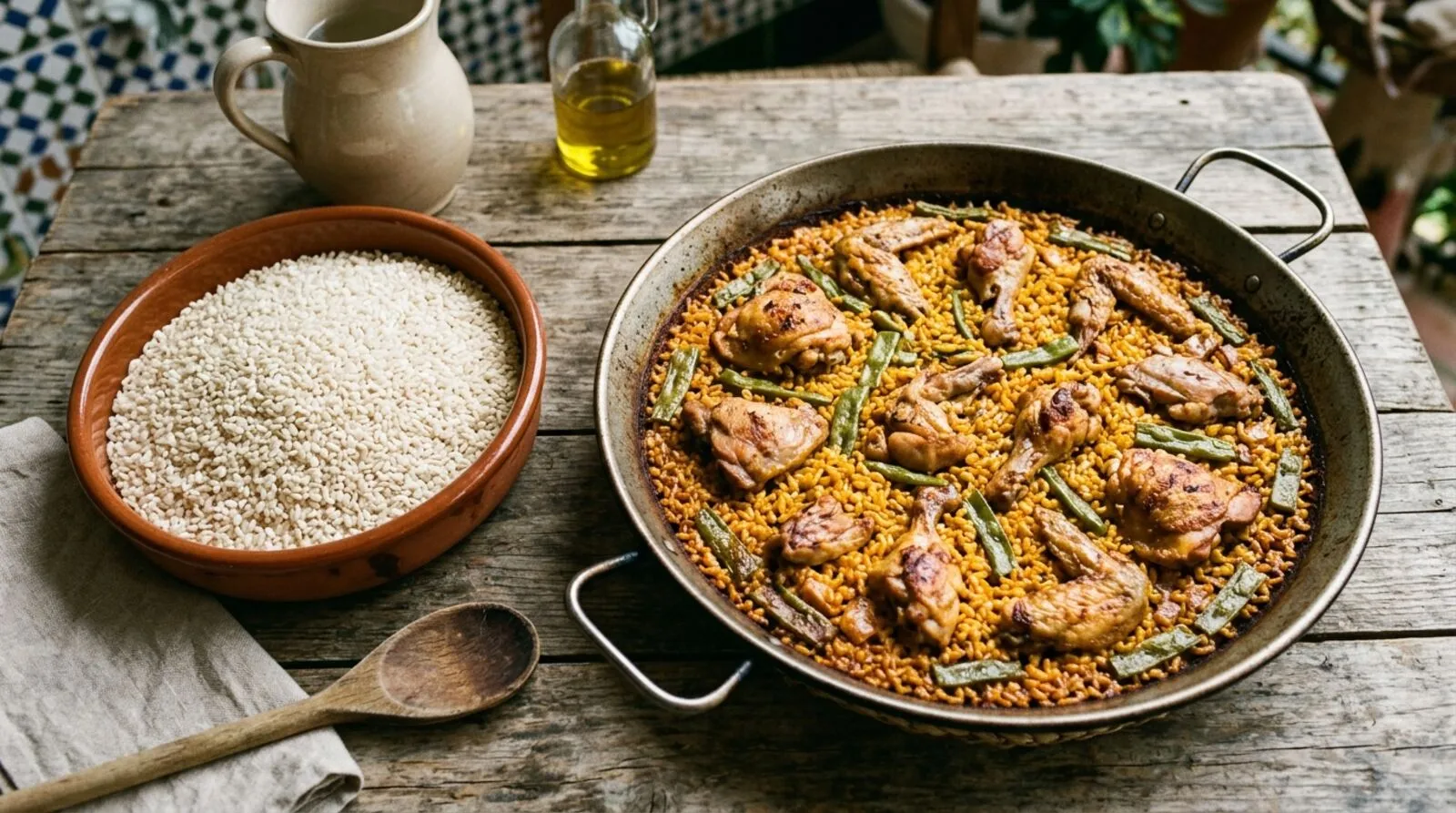
Bomba is a Spanish short-grain rice that soaks up a lot of stock and stands up to long cooking without going soft. It’s the rice many people associate with a “proper” paella, and one of the most expensive on the shelf. There are good reasons for both.
What makes it special
The Arroz de Valencia DO describes it as a variety that is “very old but highly prized for its unusual behaviour”: it copes very well with overcooking, takes on plenty of flavour, stays very firm and even firms up further once it’s off the heat. The Calasparra DO specification puts it in technical terms: a harder round grain, a longer cooking time, and a marked increase in length and high water absorption during cooking.
In kitchen terms: bomba drinks up the stock, swells lengthways, keeps its grains separate and gives you a margin for error that other rice doesn’t. With a paella for a crowd, where something is always running late, that margin is very welcome.
Where it comes from
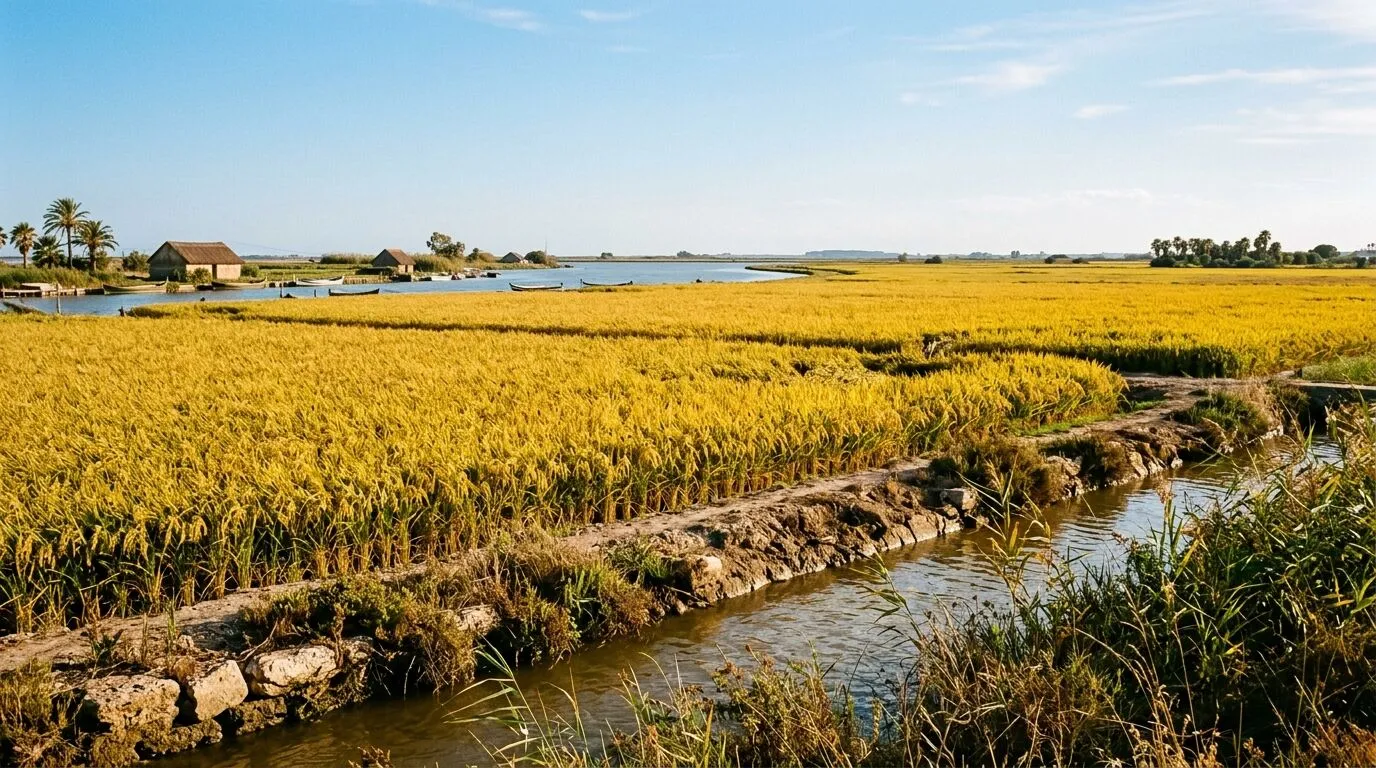
According to producer Arroz Tartana, the variety probably arrived from Asia in the 18th century, although nobody knows its exact origins. In the 1960s it almost disappeared, pushed out by higher-yielding varieties, and it made a comeback in the 1990s.
Today, certified bomba comes mainly from three designations:
- Arroz de Valencia DO, around the Albufera, with a regulatory council since 1998.
- Calasparra DO, in Calasparra and Moratalla (Murcia) and Hellín (Albacete), which covers just two varieties: bomba and balilla x sollana.
- Arròs del Delta de l’Ebre PDO, in Tarragona.
Rice reached Valencia centuries before bomba did: to see how, read our history of rice in Spain.
Why it costs more
It comes down to the field, not the brand. Arroz Tartana explains it like this: the plant is leafy and very tall, at around a metre and a half, very prone to lodging (toppling over), and September rain can wipe out part of the harvest. Yields are low and it’s hard work. The kilos a hectare doesn’t produce end up in the price.
How much stock it needs
It drinks more stock than ordinary rice: rice cook José Luis Berlanga says that with bomba the ratio is “closer to three than two”. Quantities for groups, and how to adjust them to the paella pan and the heat, are in how much rice and stock per person.
And what goes into that stock matters as much as how much of it there is: for a seafood rice, a good fumet makes all the difference.
Bomba, sénia or albufera?
| Variety | How it cooks | Best for |
|---|---|---|
| Bomba | Very firm, separate grains, copes with overcooking | Holds up well if the rice has to wait |
| Sénia (J. Sendra, bahía…) | Juicy, creamy, takes on flavour beautifully | Mediterranean rice dishes |
| Albufera | Creamy outside, firm inside | Creamy (meloso) rice |
The information in the table comes from the Arroz de Valencia DO, which considers all three suitable for traditional rice dishes. No single variety is best for everything: it depends on the texture you’re after – dry, creamy or soupy – and on how each cook works. Berlanga himself prefers sénia and J. Sendra for paella.
Bomba at a group lunch
For a big lunch, before you choose the rice you need to know how many people are eating and how many paella pans you’ll have. We’ve done the maths in how much rice per person for a group paella. And if you’d rather leave it to us, at Xepep we cook paella for 40 or for 500 people in front of your guests: see our live paella and rice catering.
Sources
- DO Arroz de Valencia: bomba, sénia and albufera varieties
- MAPA: Calasparra DO product specification
- INAP: Arròs del Delta de l’Ebre PDO regulation and its varieties (Order ACC/160/2024)
- Arroz Tartana: the bomba variety and how it’s grown
- Directo al Paladar: José Luis Berlanga on how much stock to use
- SOS: cooking bomba rice