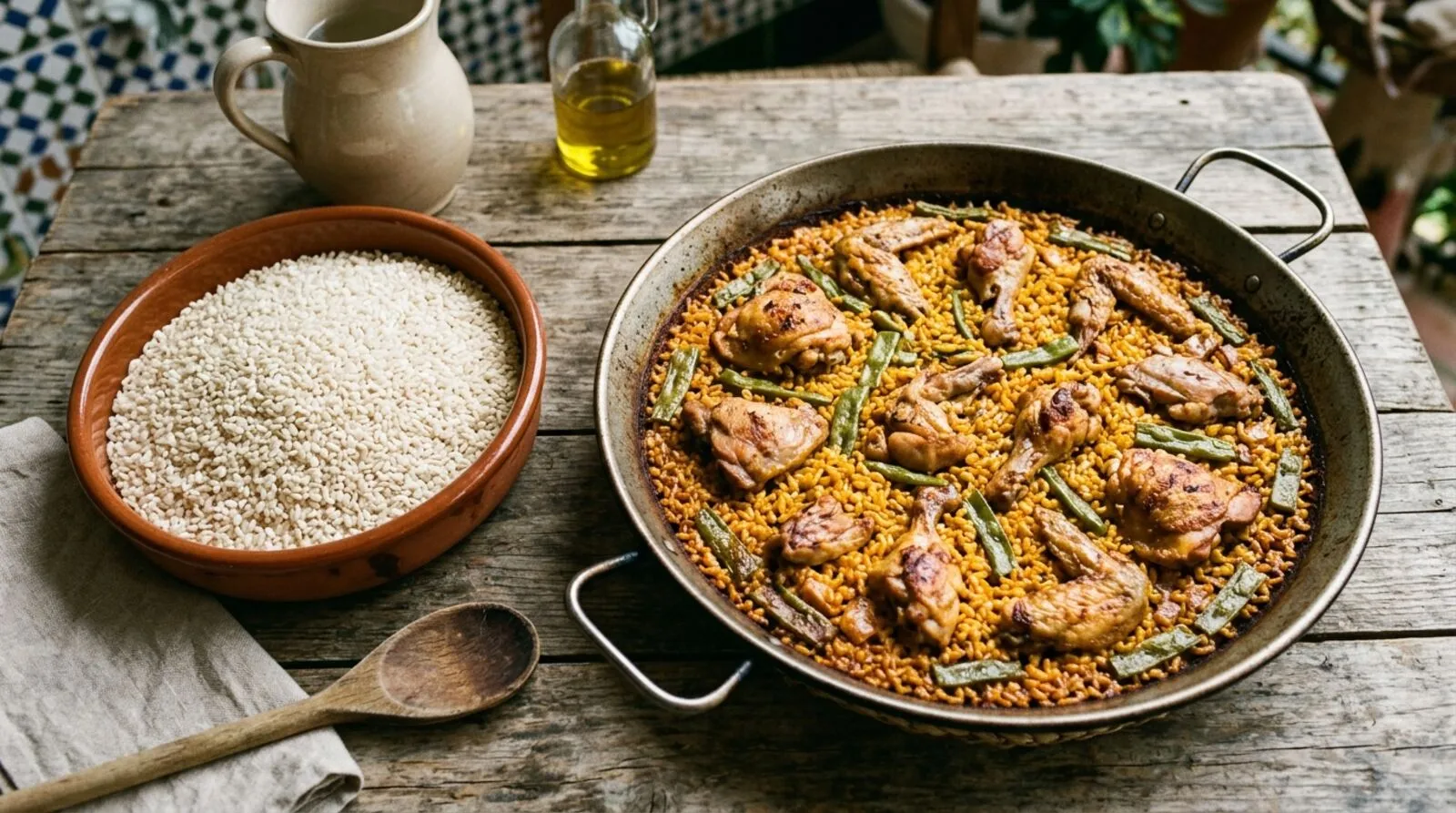
A paella pan, or paellera, is the round, wide, shallow metal pan with two handles that paella is cooked in. The DLE (the Royal Spanish Academy dictionary) describes it as a vessel “like a frying pan, shallow and with handles, used for making paella”. It’s that flat for a reason: the rice has to be spread out in a thin layer so it cooks evenly and the socarrat can form.
Paella or paellera?
In Valencian, paella means frying pan. That’s where “arroz a la paella” (rice in the pan) comes from and, over time, the name of the dish. In Spanish it happened the other way round: “paella” was used for the dish, and using it for the pan, FundéuRAE explains, only made it into the Royal Academy dictionary in 1970. Today both are correct: paellera, the more usual word in Spanish, or paella, the one Valencians have always used.
In practice, when someone round here says “get the big paella out”, nobody thinks they mean the rice. How the pan gave its name to the dish is told in our history of paella.
The paellero: the burner and the cook
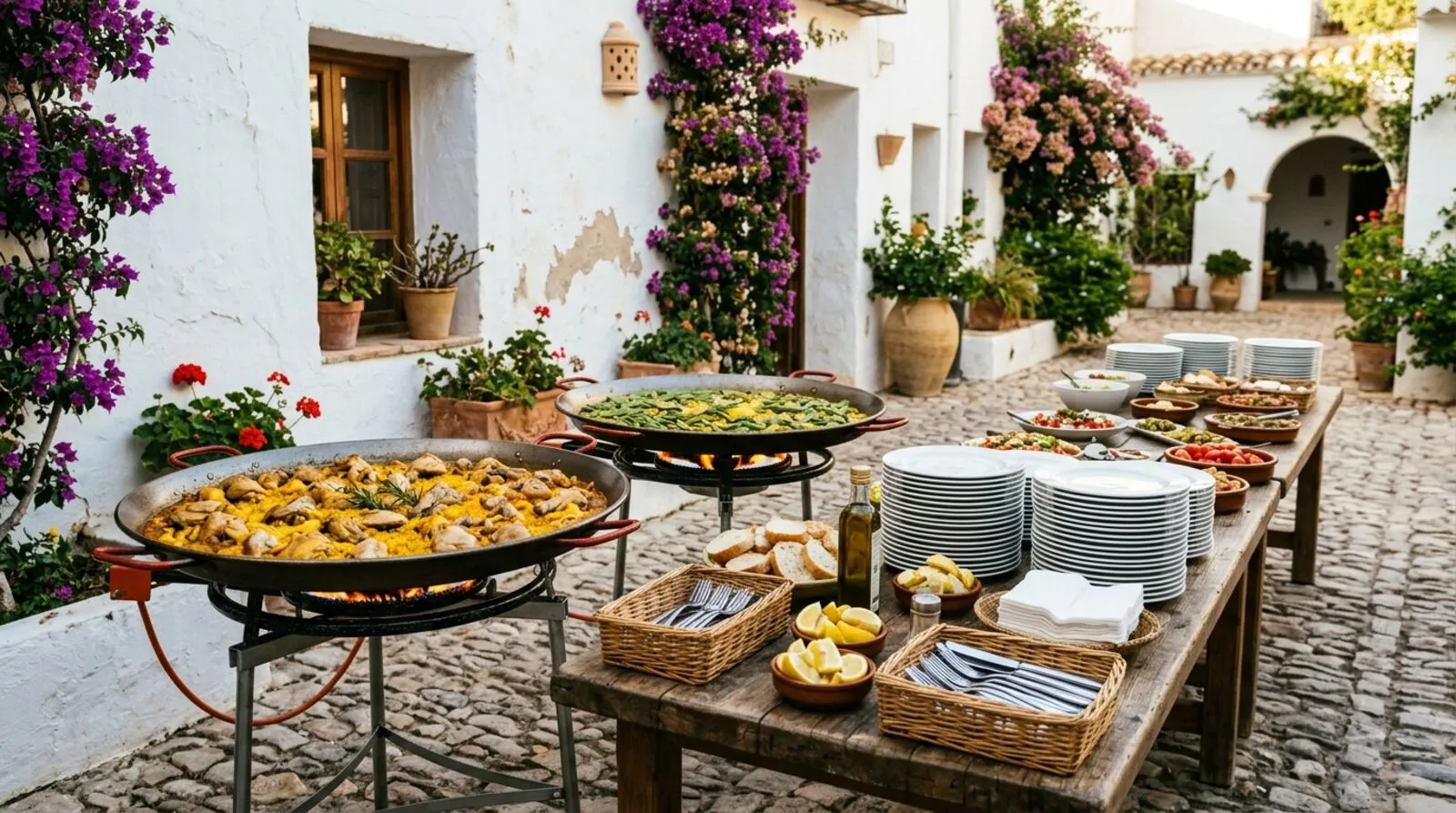
The DLE gives two meanings of paellero, and they are not the same thing. One is the special stove or grill for cooking paella: the gas burner with concentric rings you’ll see at any group lunch. The other is the person who cooks it.
If you’re putting on a lunch, you need all three: the pan, the burner and someone who knows what to do with a spoon. One more thing: the burner’s diameter and the pan’s are two different measurements. A small burner under a huge pan heats the middle and leaves the edges undercooked.
How many people each size serves
This is where shops don’t agree, and it’s no accident. Each one counts servings its own way, so there’s no single size chart that holds for all of them. What you can do is understand how they work it out.
Original Paella, one of the few that breaks it down (product page checked in October 2026), gives three depths of rice. Their polished 60 cm pan serves:
- Thin layer (what they call Valencian style): 6 to 8.
- Half capacity: 9 to 15.
- Full: 16 to 20.
Their 40 cm model goes from two to four with a thin layer up to eight or nine when full. Other sellers list a 60 cm paellera as “serves 19” with no further detail, a figure that matches Original Paella’s full pan, not the thin layer.
The practical takeaway: the number on the label is usually the maximum capacity. For a thin-layer Valencian paella, expect well under half that. And if you need to work out the rice, weight is the figure to trust: a kilo of dry rice makes ten servings of Valencian paella. We’ve done the maths for groups in how much rice per person for paella.
Materials and care
The classic pan is polished steel, and it rusts if you neglect it. Original Paella recommends washing it with the soft side of the sponge, drying it thoroughly and wiping on a thin coat of vegetable oil before putting it away somewhere dry. Before you use it for the first time, the factory’s protective coating has to come off. You can also get enamelled and stainless steel pans, and models that work on induction; each comes with its own cleaning instructions.
One giant pan or several?
At a fiesta lunch, a giant paella pan is a real crowd-pleaser, but it needs a burner to match and a cook who knows the trade. Several medium pans let you make different recipes and serve the rice in rounds. Our guide to planning a paella for 100 people weighs up the two options.
At Xepep we have the pans, the burners and the team to feed five hundred people at once, and we cook in one pan or several depending on the venue and the number of guests. It’s all part of our giant paella service for fiestas and group lunches.