Organising a paella for 100 people starts with settling four things: how many are eating rice, which rice dishes you’re making, where it’ll be cooked and how it’ll be served. Once those are clear, the pans, burners, timings and staff more or less sort themselves out. This guide is about the organising; if it’s the kilos you’re after, see the table of how much rice per person. Spoiler: for a hundred guests, 10 kg of rice for a Valencian paella.
First things first: the headcount and the menu
A hundred guests doesn’t mean a hundred plates of paella. There are children with their own menu, someone who’ll be eating something else, and people working who need feeding too. Separate those lists and work from the real number of people having rice.
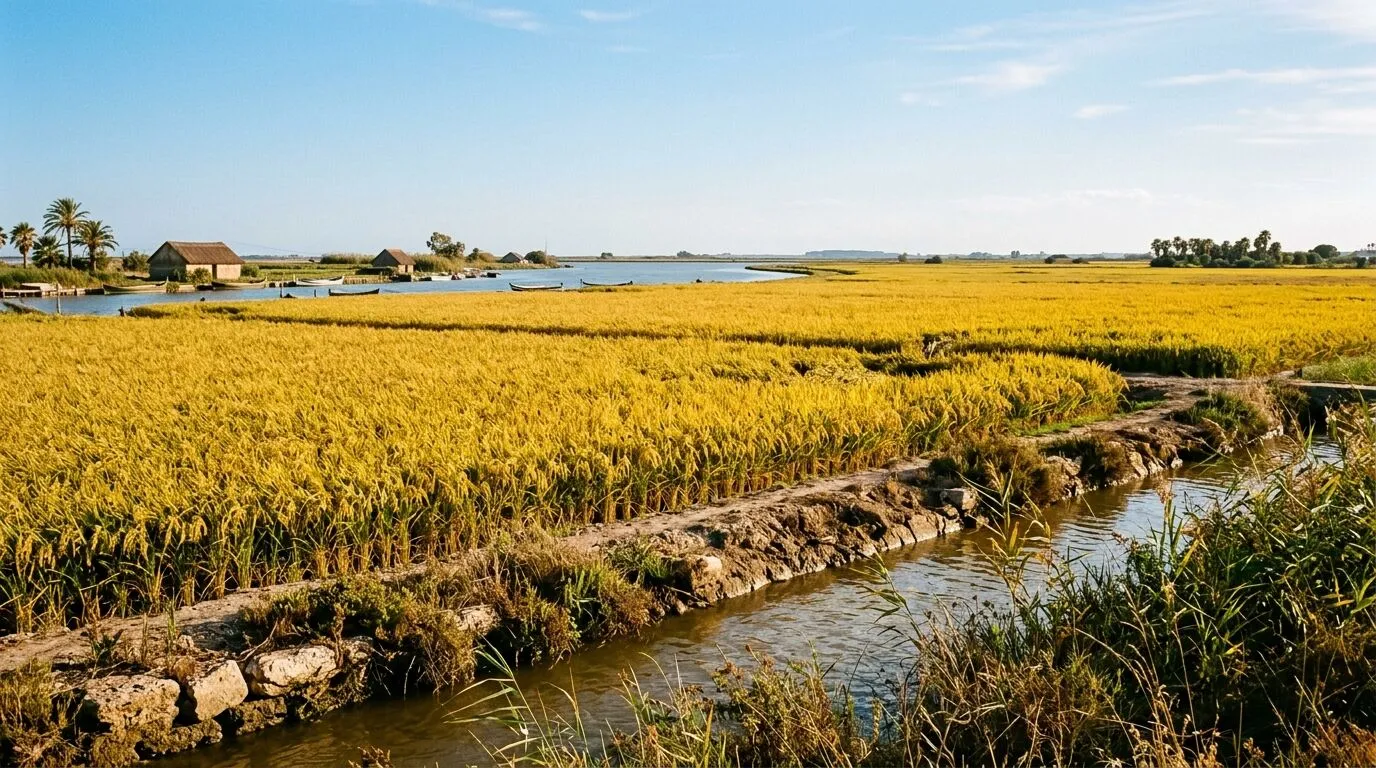
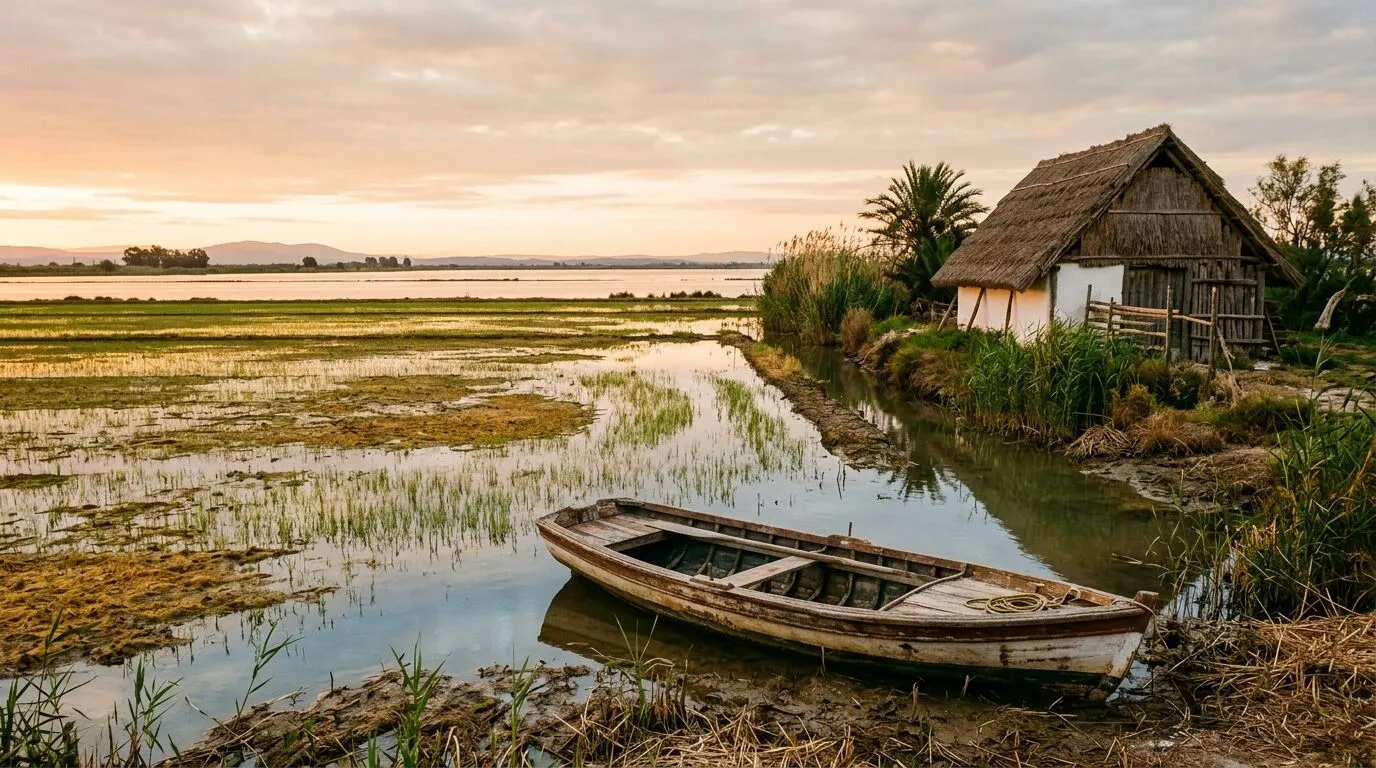
Then decide how many rice dishes you want. At a group lunch, one with meat and vegetables plus another with fish or just vegetables works well, or a Valencian paella alongside an arroz a banda (rice cooked in fish stock). Each rice dish means at least one pan, with someone keeping an eye on it. If you can’t decide, the recipe section has the Valencian paella and the arroz a banda step by step, along with the rest of our Valencian rice dishes. Cooking rice for a whole village is a fiesta tradition, and the history of paella starts in the Valencian huerta.
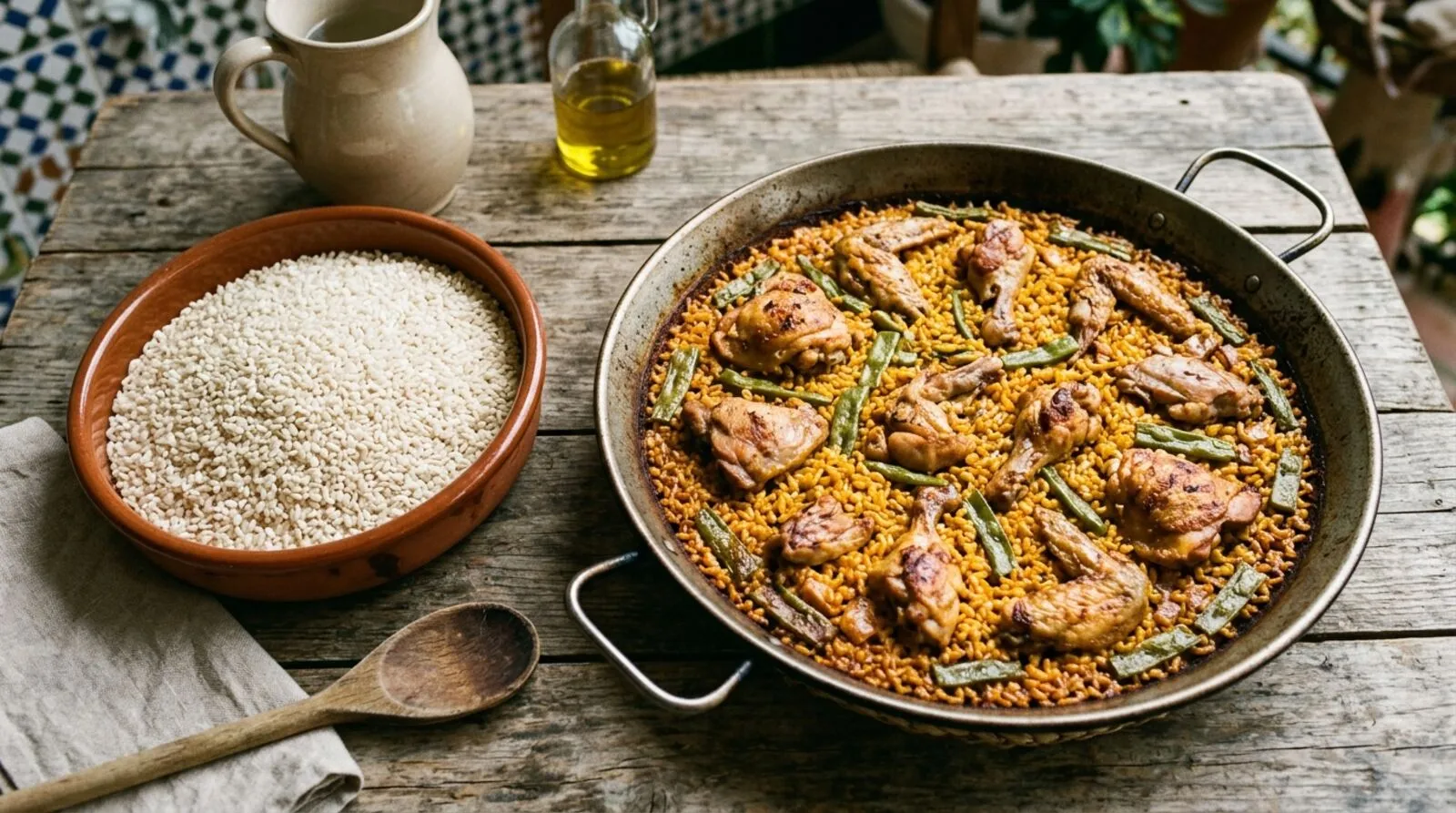
Ingredients for a Valencian paella for 100 people
The Spain.info recipe serves ten. Multiply it by ten and the shopping list looks like this:
| Ingredient | For 100 people |
|---|---|
| Rice | 10 kg |
| Chicken | 20 kg |
| Rabbit | 10 kg |
| Green beans | 5 kg |
| Garrofón (butter beans) | 2.5 kg |
| Tomato | 3 kg |
| Olive oil | 3 l |
| Paprika | 60 g |
| Water | about 35 l, less in large pans |
Saffron and salt at the cook’s discretion. If you’re making two different rice dishes, split the guests between them and work out each one separately.
One big pan or several?
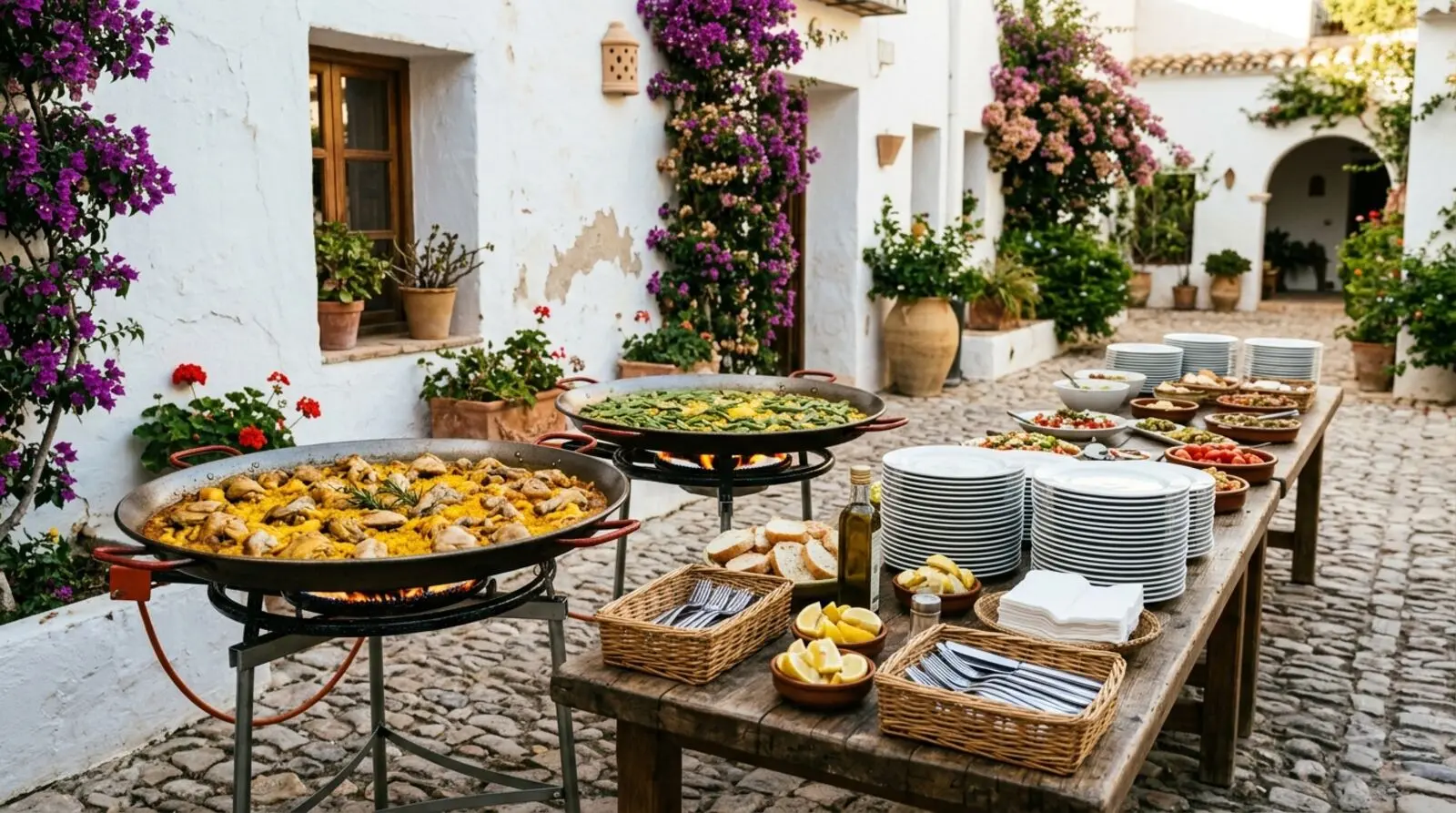
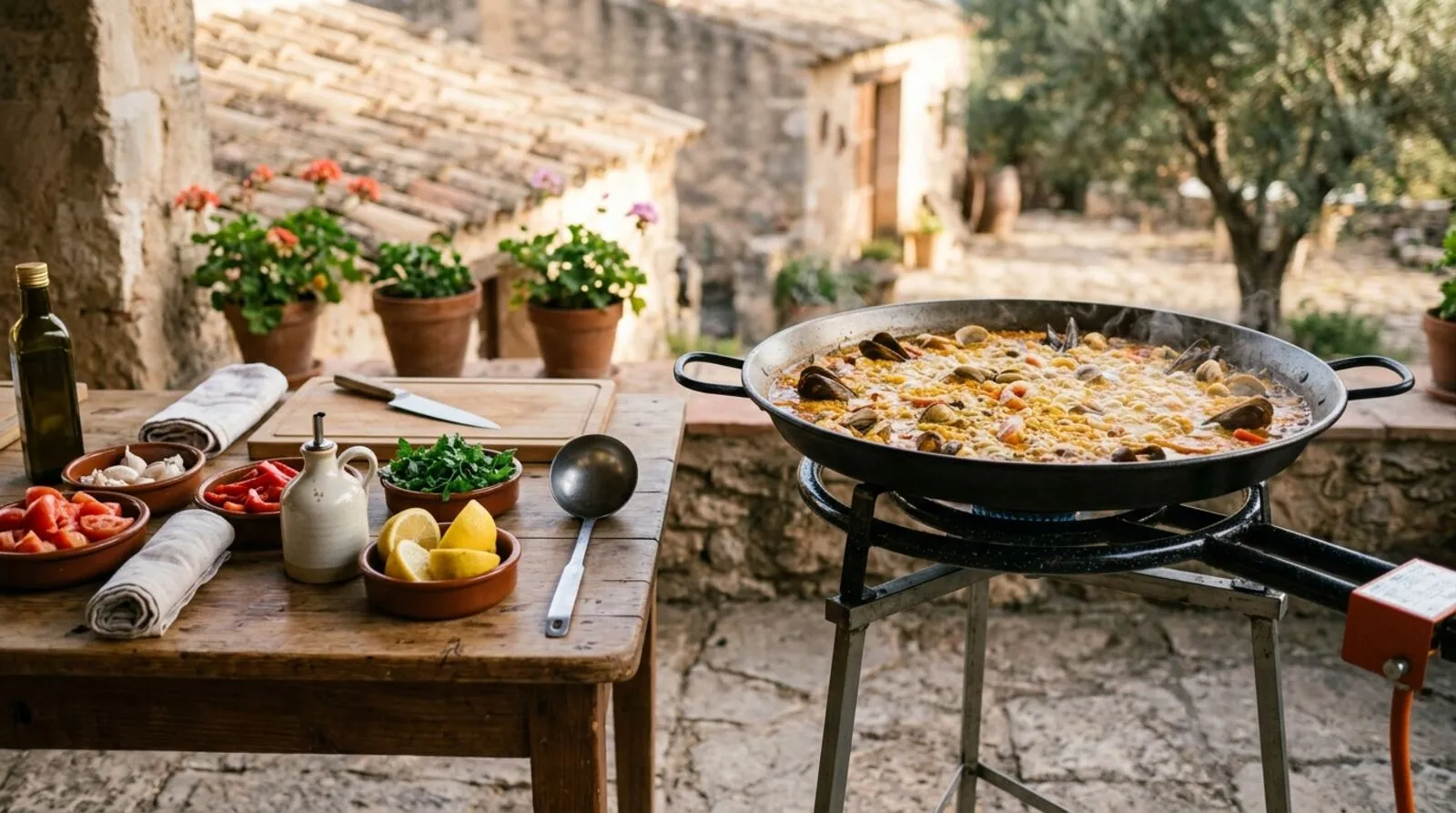
For a hundred people, the norm is several pans. To give you an idea: if each one serves 25, that’s four pans with 2.5 kg of rice each. How much each pan can take is something only the person cooking on that burner knows, so ask them before you finalise anything.
| Approach | What you get | What you need to sort out |
|---|---|---|
| Several pans at once | Rice in a thin, even layer, different recipes, serving in stages | More burners, more space, more hands in the kitchen |
| One giant pan | The spectacle of a communal paella | A burner to match, even heat and an experienced cook |
| In batches | Works if guests arrive in waves | Letting each group know when it’s their turn |
If you want one great paella as the centrepiece of the party, have a look at our giant paella for fiestas and events. For a smaller get-together at home or at a country property, there’s our paella delivery for groups.
What if it’s 50 or 200 people?
The rice follows the same rule: 5 kg for fifty and 20 kg for two hundred for a Valencian paella. You’ll find every figure from 10 to 200 guests in the rice per person table.
What changes is the set-up. Using the same example of 25 portions per pan, fifty people need two burners; two hundred need about eight pans, more working space and a serving system designed so that no queue builds up.
The space and the cooking area
Before you confirm the venue, take photos of the ground, the area where the burners will go and the route from the unloading point to the cooking area. Then ask yourself three questions:
- Can the equipment get in without going between tables that are already laid?
- Is there shade or cover for the people cooking and serving?
- Are guests kept at a sensible distance from the flames?
Set aside a separate work area for ingredients, clean crockery and rubbish. The kitchen is not a thoroughfare: anyone who wants to watch can do so from a marked-off edge. Think about rain and wind too; with gas burners, wind is enemy number one.
For an outdoor paella you generally need an open or well-ventilated space, a water supply nearby and access to unload the equipment; it’s worth going through it with whoever is cooking before the day.
Fire: gas or wood, and when you can’t light up
Cooking for large numbers is mostly done on gas: burners with their own gas bottle, which give an even heat that’s easy to adjust. Wood adds a different flavour but needs more space and closer watching. Either way, agree it in advance with whoever runs the venue.
If you’re cooking at a country property, out in the countryside or near woodland, check the fire risk. In summer, when the Valencian Community goes on level 3 pre-emergency (maximum risk), the Generalitat (the regional government) suspends the festive and recreational use of fire on forest land and within a 500-metre strip around it. The ban is applied day by day, so checking when you book isn’t enough: check again the week of the event and the day before, on your town council’s website, which usually publishes each warning (this one from Alicante City Council is a good example). Ask whether it also applies to gas burners in your case, and have a plan B under cover.
Timings: work backwards from lunchtime
The schedule for a paella for a hundred is built in reverse: start from the time you want to be sitting down and work back.
| Stage | What it involves | What to decide |
|---|---|---|
| Arrival | Vehicle access and unloading | Who opens up the venue and which entrance to use |
| Set-up | Burners, work tables, water | Where everything goes |
| Lighting and cooking | Sofrito (the fried base), stock, rice | What time each pan gets going |
| Resting | A few minutes before serving | That nobody rushes to serve |
| Serving | Plating up and handing out | Which system, and who’s in charge of it |
The Spain.info recipe allows 45 minutes of cooking and 5 or 6 of resting, but that’s for ten portions in a kitchen. For a hundred, add unloading, setting up and coordinating several burners: don’t confuse the time you eat with the time the burners go on. Ask the cook for two times in writing: arrival and lighting up.
If there’s something on beforehand (a parade, a prize-giving, a general meeting), put one person in charge of saying if it’s running late. The cook needs a single version of the real time.
How to serve a hundred people without queues
This is where the meal is won or lost. There are three ways to do it:
- Plating up at a fixed point. Guests come up in turns, table by table, and the cook serves without leaving the burner. For a hundred it’s usually the one that works best.
- Serving at the tables. Plates are brought to the table. Easier for guests, but it needs more front-of-house staff.
- Self-service from the pan. Only for small groups; with a hundred, a queue forms and the rice goes cold.
Choose one and announce it before you start. Keep the queue away from the burners so nobody walks through the cooking area. And prepare special portions separately (allergies, diets), with someone who knows which plate goes to whom.
Plates, cutlery and drinks
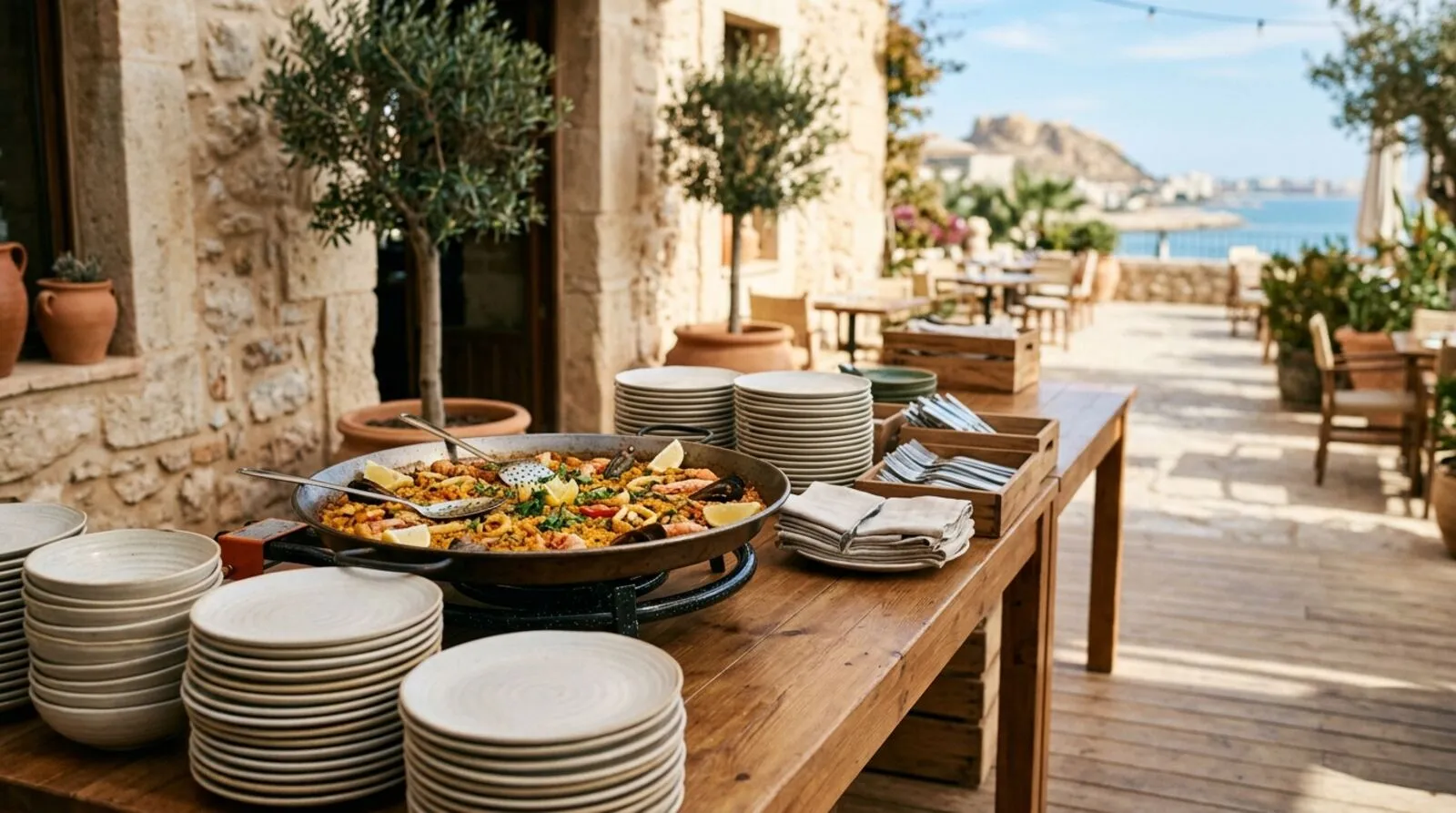
Put plates, cutlery and napkins at the start of the queue, not next to the pan: that way people pick them up without holding up the plating. Drinks go somewhere else if there’s room. And put someone in charge of restocking crockery and clearing away empties, so the serving table doesn’t get swamped.
Staff: which jobs need covering
Before you count heads, count jobs:
- Cooking: someone watching each pan, from the sofrito to the resting.
- Plating: someone putting the rice on the plates.
- Front of house: someone looking after the tables or managing the queue.
- Support: restocking crockery and drinks, clearing rubbish.
One rule that never fails: the cook doesn’t leave the burner to serve, and the serving point has its own person in charge.
Doing it yourselves or hiring a caterer
Doing it with friends or with the fiesta committee works well if someone knows their way around paella pans and fire and can focus on just that during the meal. That person can’t also be the one welcoming guests. You also need a plan for shopping, for keeping the ingredients properly and for cleaning up. If you’re a comparsa or filà (one of the troupes in the Moors and Christians fiestas), how to organise your comparsa’s meal has the jobs split up with you in mind.
If you hire someone, compare what each quote covers: ingredients, tableware, staff, set-up and clear-away. An offer of “paella for everyone” with no breakdown leaves too much up in the air. If the meal is part of a fiesta, have a look at our catering for local fiestas too, and if you want the rice to be part of the show, read what is show cooking.
Checklist for the day before
- Headcount confirmed, plus alternative menus and allergies.
- Unloading point, and who’s opening up.
- Cooking area marked out, with water nearby and sheltered from the wind.
- Fire risk level checked, if you’re cooking near woodland.
- Arrival time, lighting-up time and mealtime, in writing.
- A contact for warning of delays.
- Crockery, drinks and serving system agreed.
- Who takes away the rubbish and who returns the equipment.
Next step
With all that sorted, it’s just a matter of getting on with it. Double-check the kilos in our guide to how much rice per person for paella or tell us what you’re planning and we’ll tell you how we’d do it at Xepep: get a quote for your group paella with the date, the place and how many of you there are.
For a family celebration, see our guide to how to plan a First Communion lunch in Alicante.
Before confirming outdoor cooking, check country-venue fire rules and permits. Use the rice comparison to discuss the menu.