Mise en place is the advance preparation of everything needed to cook or serve: ingredients cut and measured, components made ahead, utensils clean and to hand, and the work station tidy before service begins. In catering that “everything” grows, because it also has to be loaded, transported and set up away from the kitchen.
What mise en place means
It is a French expression: “mise” is putting and “en place”, in place. It is pronounced, roughly, “meez on plahss”.
In official hospitality training in Spain the expression is fully established. The INCUAL qualification for restaurant, bar and café services speaks of “mise en place or puesta a punto operations” to speed up service, and the professional certificate for restaurant services, published in the BOE, has a training unit titled “Supply systems and mise en place in the restaurant”.
Types of mise en place
| Type | What it prepares | Who does it |
|---|---|---|
| Kitchen | Ingredients, preparations, utensils and containers | Kitchen |
| Dining room | Premises, equipment, furniture, crockery, cutlery, glassware and linen | Front of house |
| Bar | Drinks, ice, glassware and cocktail equipment | Bar |
The dining-room row follows the syllabus of “Restaurant mise en place” in the professional certificate: preparing the premises, getting machinery and equipment ready, and preparing and checking crockery, cutlery, glassware and linen.
How mise en place is applied in catering
In a restaurant, the mise en place ends in its own kitchen and its own dining room. In catering there are two more steps: preparing everything that travels and setting up in a place that is not ours.
- Advance production. Anything that can be done ahead is made in our own kitchen, the day before or that morning, so that on site we only have to finish and plate.
- Loading list. Everything that goes on the van, noted down and checked: equipment, tableware, ingredients, drinks and set-up material. Anything left behind cannot be sorted out once you are at the venue.
- Transport. Each thing in its container and at its temperature (see the cold chain).
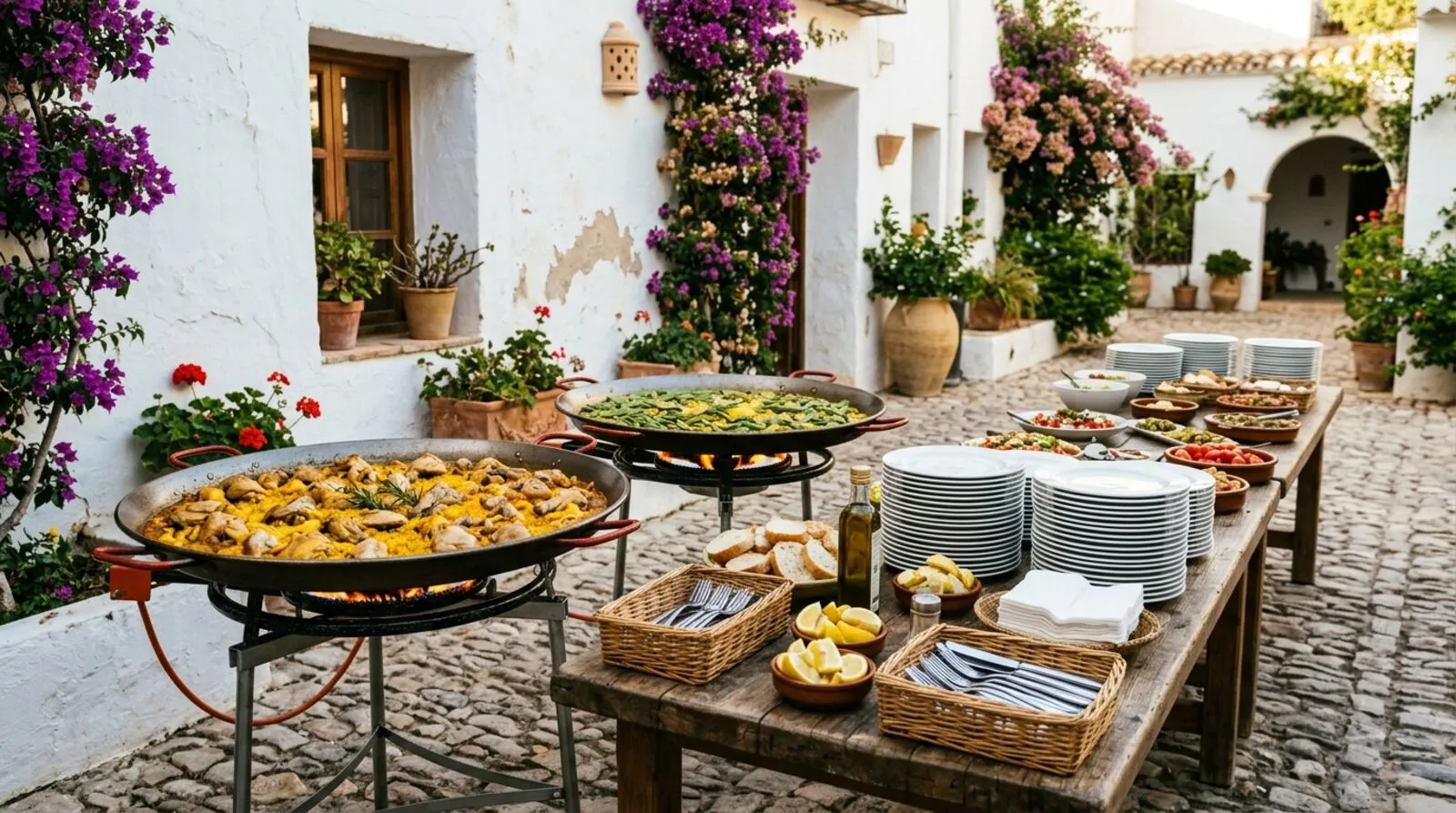
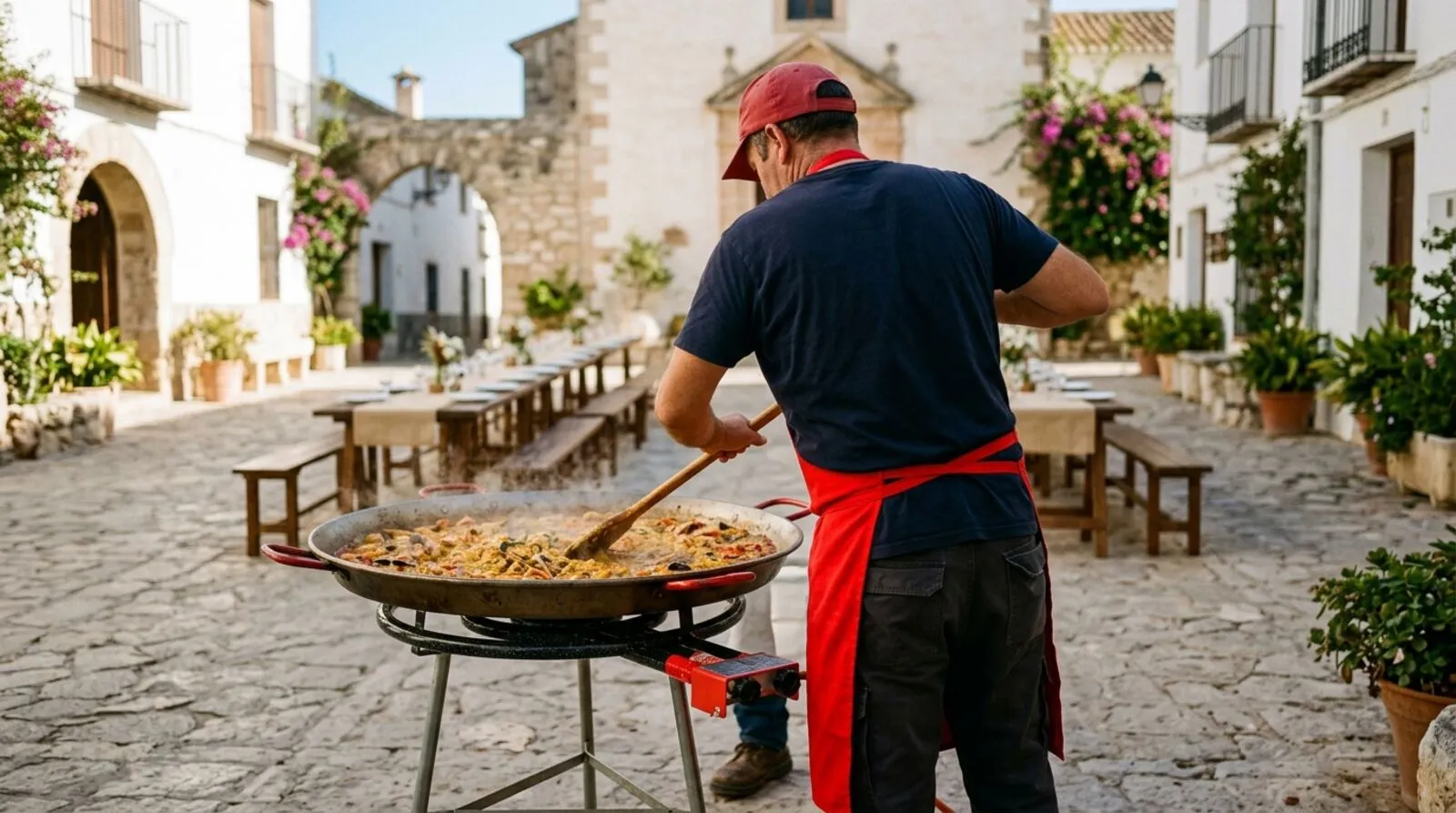
- Set-up on site. Tables, equipment, stations and plating point ready before the guests arrive.
- Service and clear-away. Restocking carries on during service, and the mise en place ends when everything is cleared away.
On Events and catering we sum it up like this: we arrive with time to spare, set up, cook, serve and leave everything cleared away.
Why it matters so much at events
A restaurant repeats its service every day; an event happens once and at a fixed time. There is no second chance to go and fetch what is missing, and the kitchen also has to comply with hygiene rules and its HACCP (APPCC) plan far from home. A good mise en place keeps service flowing and leaves less room for error, allergens included: every dish leaves the kitchen already labelled.
Mise en place and plating
Mise en place is the invisible half of plating: when the line starts, the garnishes and sauces are already cut, measured and portioned out. And if you are going to hire a caterer, ask what they need from the venue to set up: access for unloading, tables, water and sockets.
Planning an event? Tell us the day, the place and how many of you there are and get a quote.