Show cooking, or showcooking, means cooking in front of your guests: the cook prepares the dishes in full view, at an event or in a restaurant, instead of bringing them out ready-made from the kitchen. The food stops being something that just arrives at the table and becomes part of the party.
If you’re thinking about it for an event, here’s what it is, where the name comes from, the formats available, what’s needed on site and when it’s worth choosing over good old-fashioned catering.
What is show cooking (or showcooking)?
In a nutshell: live cooking. Guests watch the dish being made, can ask the cook questions and take it away freshly made. The Spanish Wikipedia defines it as a style of cooking in which dishes are prepared in front of the diners, and also gives it the name culinary demonstration.
Both spellings are used: show cooking as two words and showcooking as one. People search for it both ways, and here we use them to mean the same thing.
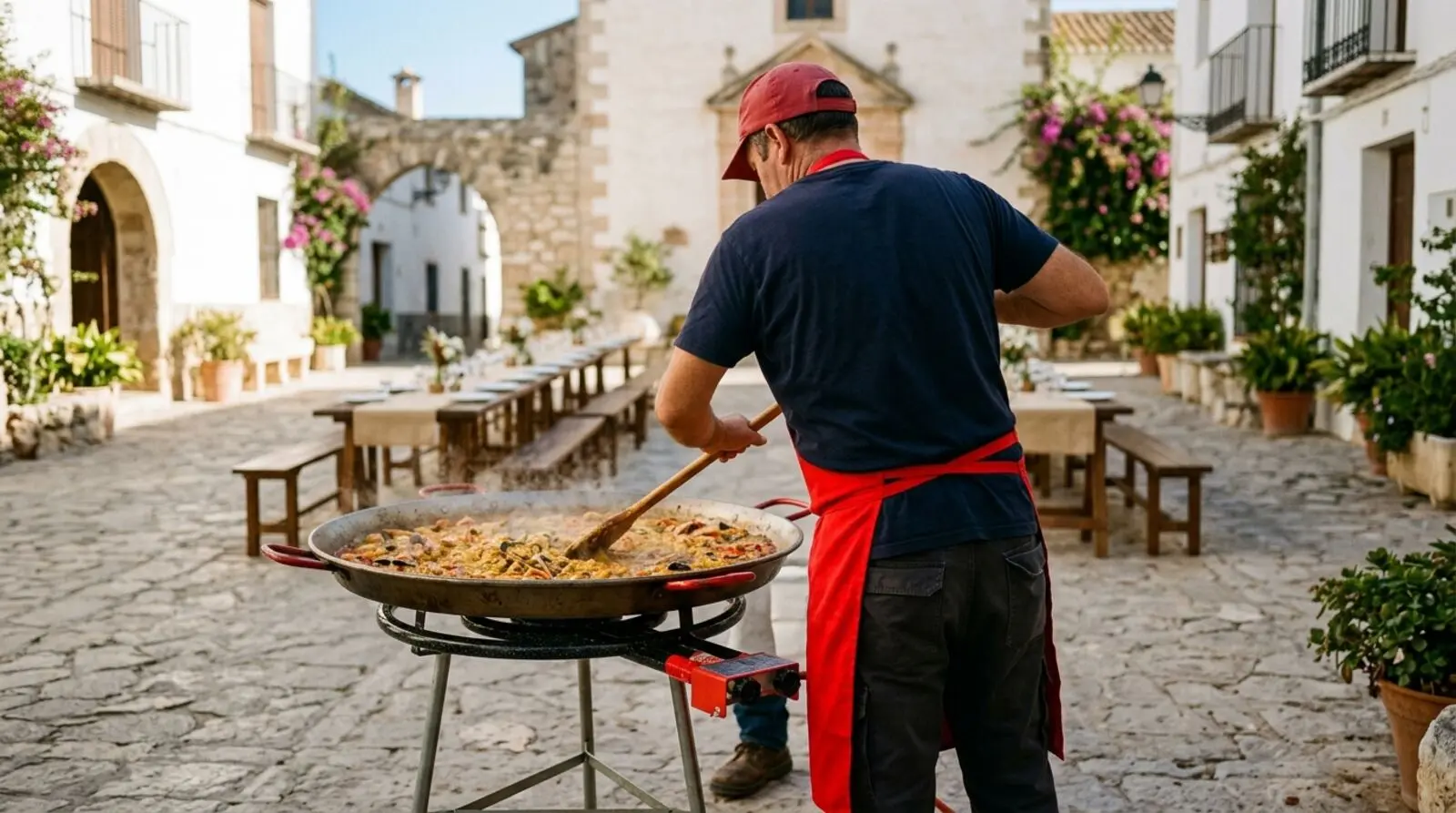
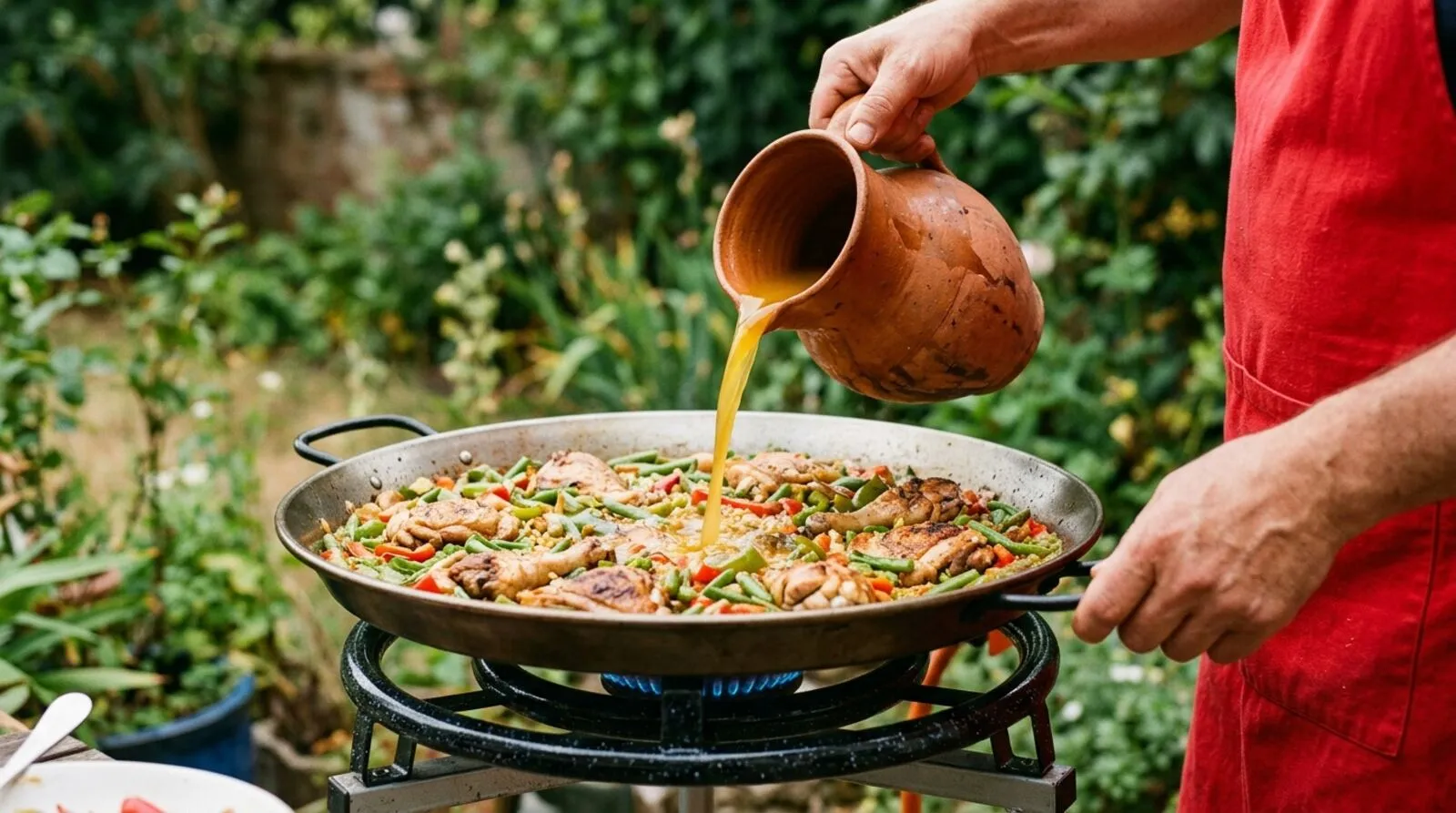
The difference from a buffet or tray-served catering is timing. With those, the cooking happens beforehand, out of sight. With show cooking, the cooking is the show: the flames, the smell, the sizzle of the griddle or the stock going into the paella pan.
Where the term comes from
The phrase flips the English cooking show, which is what cookery programmes are called in English. Television had them from very early on: according to Guinness World Records, the first was Cook’s Night Out, broadcast live by the BBC on 21 January 1937 with the French chef Marcel Boulestin. In the United States, Julia Child launched The French Chef on WGBH, Boston’s public broadcaster, on 11 February 1963, according to History.com.
In Spanish, the term took a leap: from teaching recipes in front of a camera to cooking with no camera at all, in restaurants, at fairs and at events, with the audience a metre from the flames and the chance to chat with whoever’s cooking. That’s the show cooking we mean here.
Types of show cooking
There’s no official classification, but at events you’ll mostly come across these formats:
- Live cooking stations. Several points, each cooking something different (griddle, fried bites, rice, ham carving), which guests move between. It’s the classic choice for a lively drinks reception.
- Rice cooked live. One or more paella pans on the fire in full view. This is the show cooking closest to our hearts: rice takes its time, and that wait is pure conversation. At Xepep this is how we work, with the rice cooking in front of the guests. It might be a classic Valencian paella or a celebration rice such as our lobster rice.
- Demonstration with tasting. The cook explains each step and everyone tastes at the end. It’s more educational and suits product launches or company meetings.
- Barbecue or grill. Common at outdoor events in summer.
- Themed. Food from a region, a country or a season, with a cook who tells the story behind each dish.
You can mix them: a drinks reception with a ham-carving station, a rice dish as the main event and something sweet to finish.
Pros and cons
What it brings:
- Trust. Guests see the ingredients and how they’re handled.
- Experience. People watch, smell and ask questions. The cook is part of the event.
- Freshly made food. Straight from the fire to the plate, with no cold storage or transport in between.
- Atmosphere. People gather round a paella pan or a griddle and start talking.
- Scale. It works just as well for a small group as for several hundred people.
- Dishes tailored to guests. It’s easy to set aside a portion for someone with a particular diet.
What to plan for:
- Space and ventilation. A fire and a cook with their station won’t fit in any old corner.
- The cooking sets the pace. The dish is ready when it’s ready, not when the clock says. Agree the serving time and how the food will get to each table.
- The weather, if it’s outdoors. Wind, rain or cold mean you need cover or a plan B.
- Prep beforehand. The ingredients arrive chopped and prepared, so only the cooking is left to do live.
- More hands than a tray service. Each station needs someone to cook and someone to serve.
What space and set-up it needs
Every set-up is different, and whoever’s cooking will tell you whether your space works. What nearly all of them ask for:
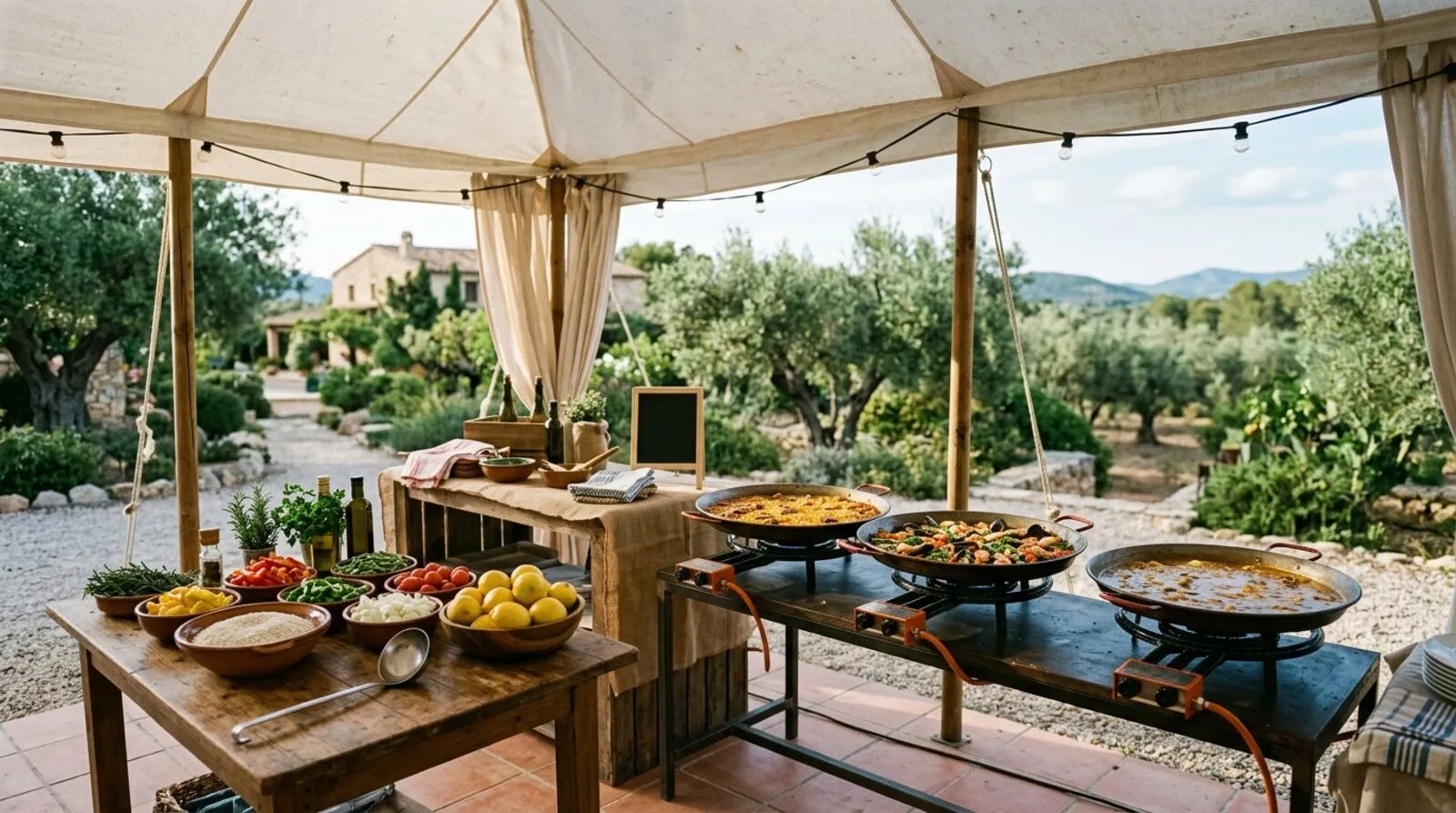
- A visible, accessible area, with room for the cook to move and a good view for guests. If it’s rice, outdoors or well ventilated, because of the burners.
- Enough ventilation so smoke and cooking smells don’t end up at the table.
- A water supply nearby.
- Side tables for ingredients, utensils and plating, within the cook’s reach.
- A clear route so guests can come up and move away without queueing.
- Somewhere to watch from: tables or seats nearby, if the show’s going to go on for a while.
For rice, our live paella and rice dishes for events page explains what’s needed on site and what we bring.
Rice show cooking: how to plan the timing
Rice sets the pace of the show. The Spain.info paella recipe allows about 45 minutes of cooking, from browning the meat to finishing the rice, and 5 to 6 minutes of resting in the pan before serving. In show cooking that becomes a wait with a purpose: guests arrive, watch the sofrito, smell the stock and, by the time the rice is resting, the table is ready. Build that time into the meal’s programme and let the aperitif do some work so the wait doesn’t drag.
Show cooking vs traditional catering
| Show cooking | Traditional catering | |
|---|---|---|
| Where it’s cooked | In full view of the guests | In a kitchen, before the event |
| What guests experience | Flames, smells and a chat with the cook | Dishes served ready-made |
| Freshness | Made and served on the spot | Prepared beforehand and kept hot or reheated |
| Space | Cooking area, ventilation and water | Serving area and tables |
| Pace | Set by the cooking | Easier to time |
| Staff | Cooks at the event, plus service staff | Service staff and, depending on the format, waiters |
| Best for | Events where the food is the star | Tight schedules or limited space |
They’re not mutually exclusive. Plenty of events combine classic catered nibbles to start with live rice as the centrepiece.
When to choose show cooking
It works best when:
- You’re organising a company event and want the food to bring people together, not be a box to tick. Live rice works at a team lunch, a presentation or an anniversary: see our corporate event catering and, if it’s in December, our guide to organising the company Christmas lunch.
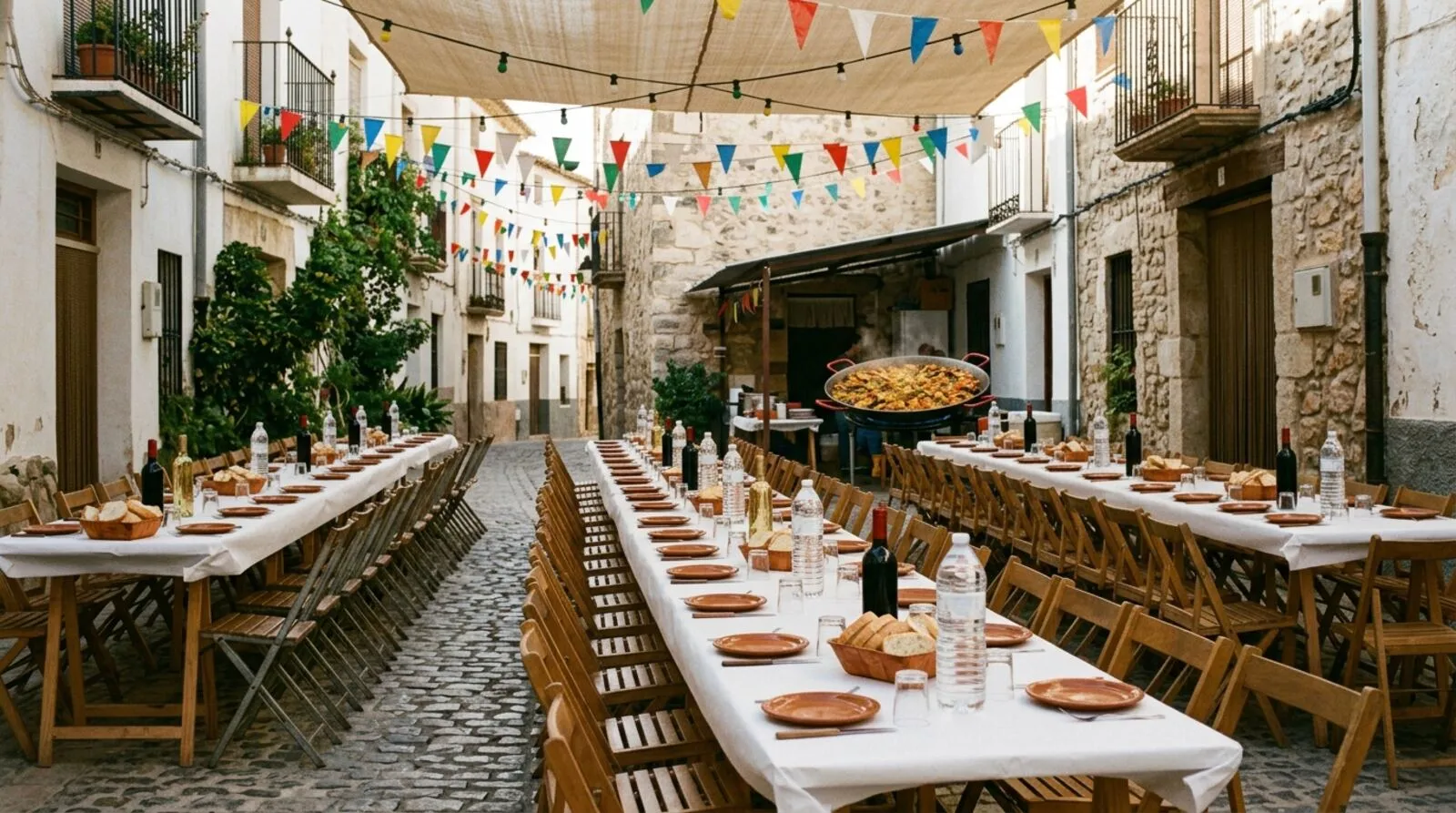
- It’s a village fiesta, a group meal or a celebration with lots of people and a long table. That’s what our giant paella is for, along with our guide to organising a paella for 100 people.
- There’s outdoor space or a well-ventilated area.
- You want people talking about the food: it gets conversations going and makes for great photos.
Best saved for another time if the schedule is very tight, if there’s nowhere to cook safely or if you need to serve everyone at exactly the same moment.
How to book it properly
For the supplier to give you an accurate proposal, tell them:
- The date and time you want to eat.
- Roughly how many guests and whether there are children. For rice, there’s a quantity guide in how much rice per person for paella.
- Where it will be and what’s there: space, water, cover.
- The format you have in mind: rice, stations or a mix.
- Any allergies and intolerances in the group.
- How much you want to hand over: just the rice, rice and service, or the whole meal.
With that, the cook can tell you whether the set-up is doable and how they’d go about it. To get started, get a quote for your event with the date, the place and the number of guests.
Planning a family celebration? See our guide to arranging a First Communion lunch in Alicante, with catering formats and a weekly checklist.
Sources
- Wikipedia: Show cooking
- Guinness World Records: first TV cookery show (Cook’s Night Out, BBC, 1937)
- History.com: Julia Child’s The French Chef premieres (11 February 1963)
- Manuel Fernández: qué es el show cooking en eventos y qué ventajas ofrece
- Hostelbar: show cooking, qué es y qué necesitas para llevarlo a cabo