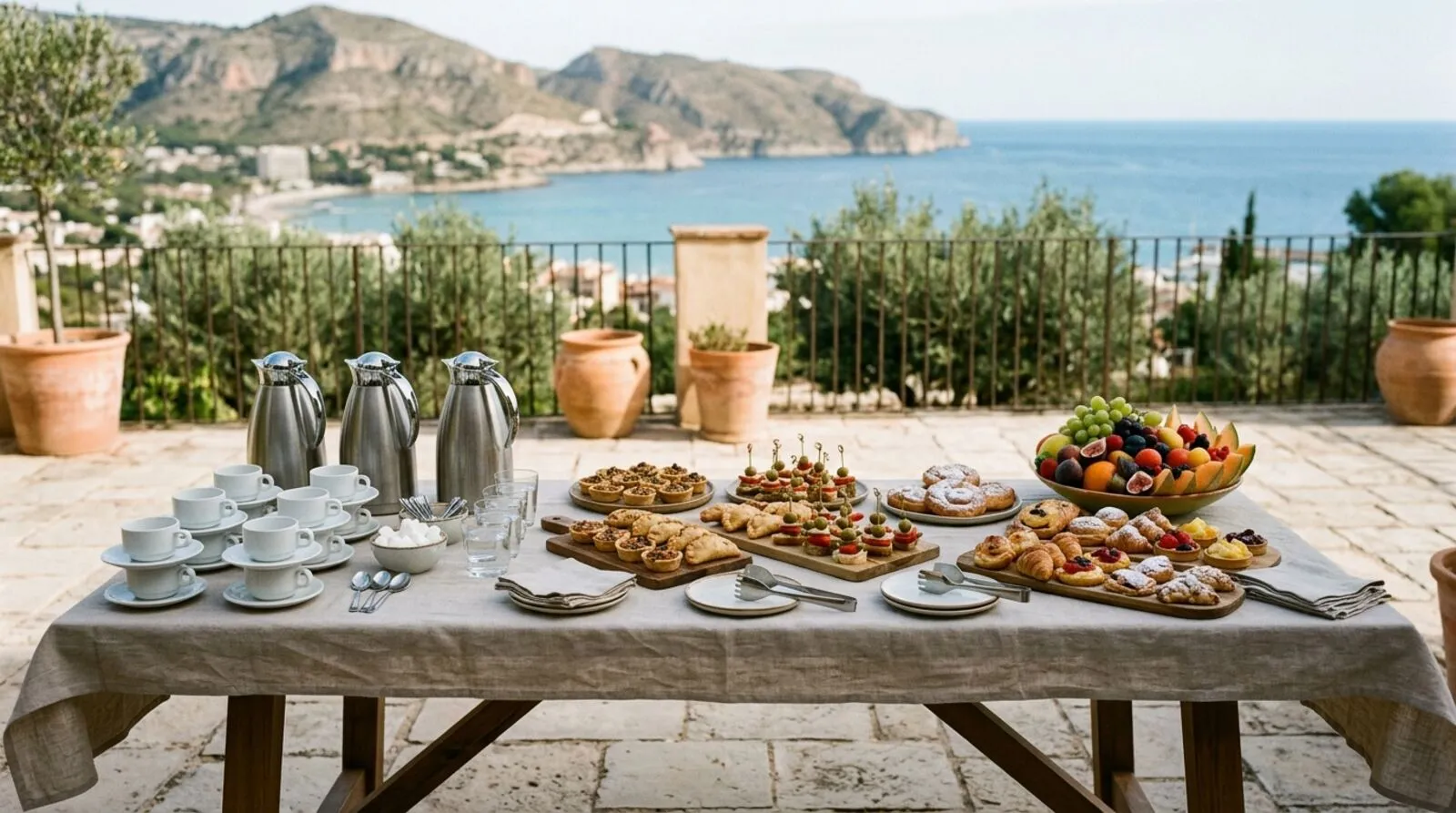
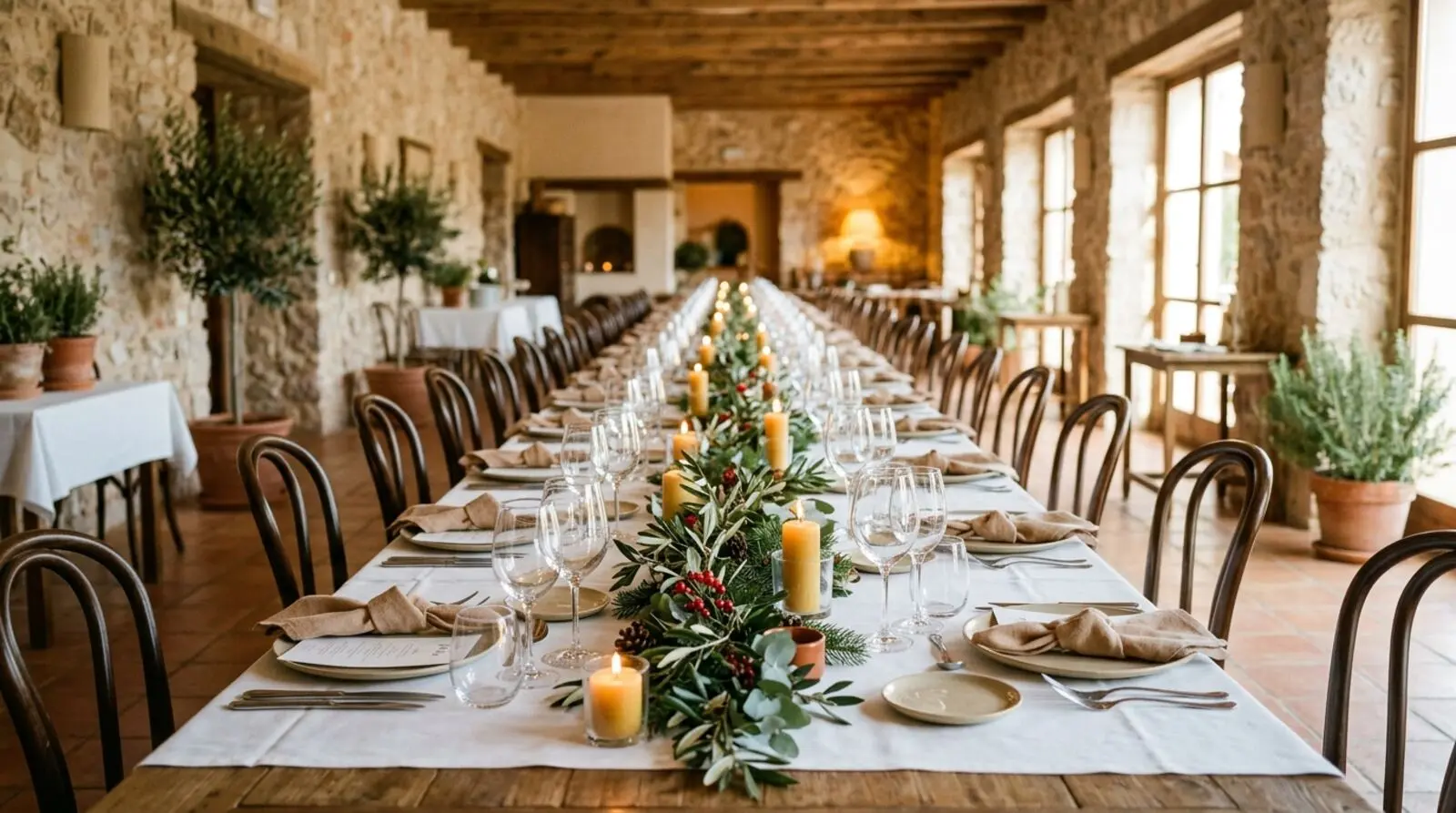
Book a company Christmas lunch two or three months ahead if you’re going to a restaurant or function room, and a month ahead if you’re hiring a caterer like us, who’ll cook wherever you are. In October you’re in good time, though without much to spare: the best dates in December are the first to go.
Here’s how to choose the date, the format and the numbers, and in what order. If you’d rather have it organised from start to finish, take a look at our Christmas catering for companies.
When to book the company Christmas lunch
ILUNION Hotels, a chain that hosts these celebrations in its hotels, recommends booking two or three months ahead to choose the space and fine-tune the menu, and says that at large companies the countdown starts as early as September. It makes sense: a function room only has so many dates, and each Friday in December can only be sold once.
With a caterer the maths changes, because the kitchen comes to you and you don’t need a free room. For company events at Xepep, a month is ideal; if you’re shorter on time, call anyway. What does need deciding early is three things: the date, the place and how many of you there’ll be, even if it’s only a rough figure.
Which dates go first
Demand isn’t spread evenly across the month:
- Thursdays and Fridays in late November and in December. A report on bookings in Barcelona singled them out as the days that account for much of the demand, and ILUNION notes that Thursday has become the new favourite.
- The weeks of December before the Constitution Day long weekend, which tend to be busier (6 and 8 December are both public holidays in Spain).
- The last week of November is the escape route for anyone wanting to avoid the rush.
- A Wednesday, or a lunchtime do, including a Friday lunch that rolls on into the afternoon, are the fallback when there are no evenings left.
Before suggesting a date, check what day Christmas Eve falls on that year. If it’s a Thursday or Friday, the last working week is very short and half the team will already have their minds on the holidays. The week before is usually a good middle ground: a festive atmosphere and diaries that are still manageable.
A countdown planning calendar
Count back from the day of the lunch. If your team is large, bring each step forward by a couple of weeks.
| When | What needs to be done |
|---|---|
| 8–12 weeks before | Date chosen (with a second option), rough budget and a decision on lunch or dinner |
| 6–8 weeks before | Format decided, venue confirmed and a first availability check with the supplier |
| 4 weeks before | Proposal accepted and date booked; invitation sent to the team asking about allergies and diets |
| 3 weeks before | Approximate headcount and list of allergies and intolerances with the supplier |
| 2 weeks before | Attendees confirmed, space checked (tables, crockery, kitchen or water supply) and timings fixed |
| 1 week before | Final headcount, running order for toasts or speeches, and the name of whoever meets the supplier on the day |
| 2–3 days before | Last drop-outs and additions; tell reception or maintenance if there’s a delivery to unload |
| On the day | One person from the company, phone to hand, to coordinate arrival, set-up and serving time |
If the lunch is in early December and it’s already October, squeeze the first two rows into a single week. Better a date booked with the format half decided than the perfect format and no date.
Christmas lunch or dinner: which to choose
Both work. Let your team decide, not habit.
- Lunch. It fits into the working day and finishes at a sensible time. Good if people live a long way away, have young children or don’t want to drive home in the dark.
- Dinner. It feels more like a party and lets the evening run on. On the other hand, it competes with dinners with friends and family, and the best evenings get snapped up sooner.
If you’re unsure, ask three or four colleagues from different departments. The atmosphere comes from the people who turn up, not from whoever signs the invoice.
Formats: seated, standing, food stations or live rice
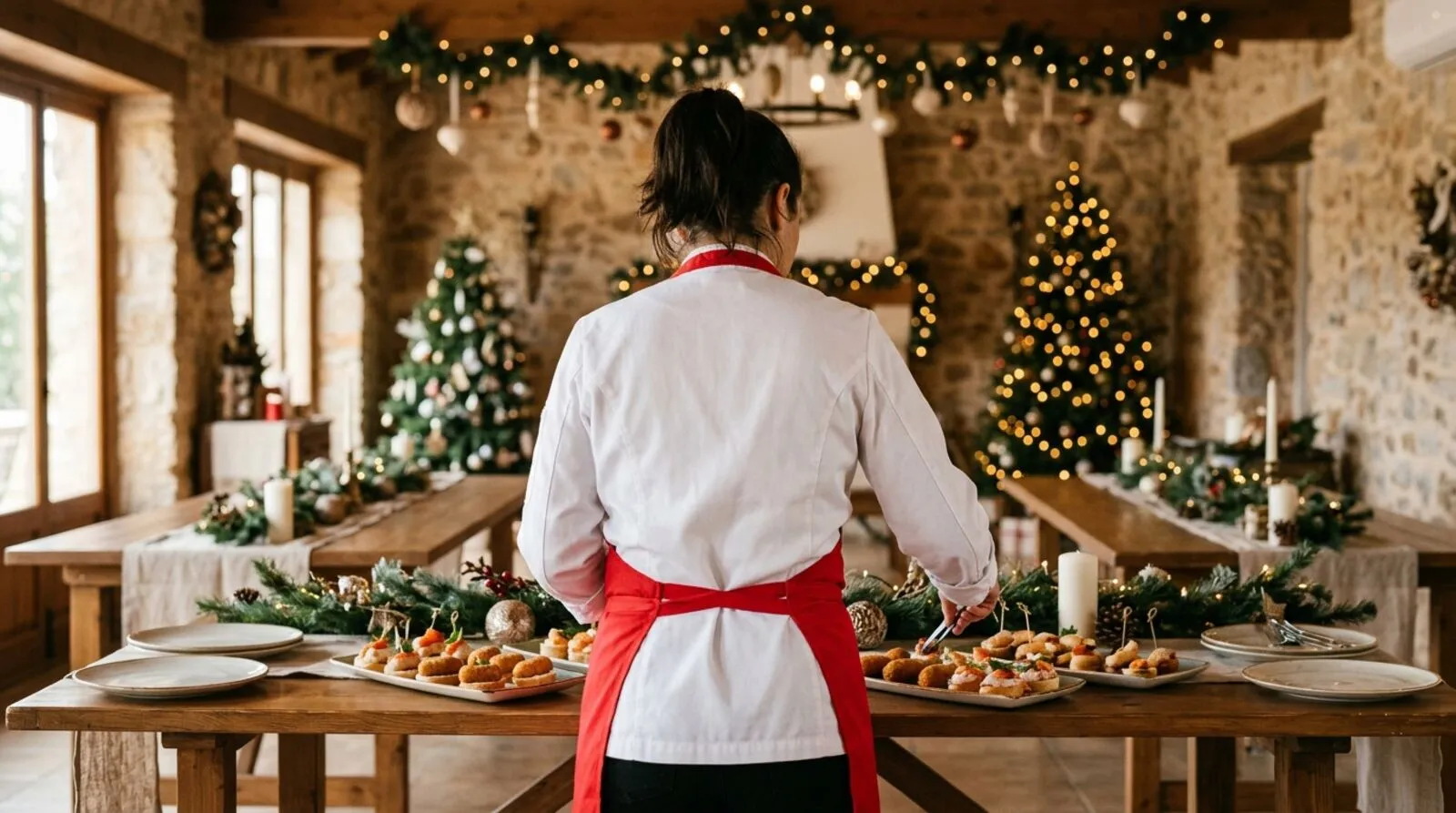
Before asking for proposals, think about what you want to happen during the meal. Each format nudges things in a different direction.
- Seated lunch or dinner. Starters, main and dessert served at the table. Best for a long, lingering meal and the easiest with allergies, because every dish arrives under control. It needs more tables, more crockery and more staff.
- Standing reception. Cold and hot bites passed round the room. It mixes departments and stops everyone sitting with the usual faces. It falls short if people need a proper meal and there’s nothing afterwards.
- Food stations. Several points (cheese, croquettes, rice, sweets) that people move between. It handles large groups well, as long as there’s room so queues don’t build up.
- Rice cooked live. A paella pan on the fire in front of the team is a natural gathering point: it smells wonderful, people chat while they wait and it’s served freshly made. If you’re not sure how it works, we explain it in what is show cooking. It can be the main course at a seated meal or a station at a standing reception.
What menu to serve at a company Christmas lunch
The temptation is to put together a menu full of novelties. The opposite usually works better: dishes everyone recognises, well made and served at the right temperature. A guide by format:
| Format | What usually works |
|---|---|
| Seated | Sharing starters in the middle of the table, a main (meat, fish or rice) and a simple dessert |
| Standing reception | A mix of cold and hot, one-bite pieces and something more substantial at the end |
| Food stations | Three or four very different points, with one hot savoury station as the main event |
| Rice cooked live | Nibbles to start while the rice cooks, and dessert or sweet treats to finish |
Whichever you choose, have an alternative ready without meat, one without gluten and one without dairy, and make sure the soft drinks go beyond water.
Attendees and RSVPs: how to pin down numbers
Numbers are what moves the budget most and what changes most. A few rules that save headaches:
- Set a closing date for RSVPs and put it in the invitation itself.
- Ask people to opt in. “Let us know if you’re not coming” brings surprises; “sign up if you’re coming” gives you a real number.
- Ask everything in one go: attendance, allergies, intolerances and whether anyone from outside is coming.
- Don’t forget people who aren’t on the payroll: interns, temps, freelancers or staff from other sites.
- Agree with the supplier how late numbers can change, and leave a margin for last-minute drop-outs.
If your team works shifts, a lunchtime meal with staggered departures is usually easier than a dinner. And if what you’re after is a short break during the working day, see our guide to the corporate coffee break.
Allergens and intolerances: what the law says
At any company meal there’ll be someone with some kind of restriction, and whoever serves the food is obliged to provide information.
The law requires caterers to tell you about the 14 allergens that must be declared, including for food served unpackaged: that comes from Regulation (EU) No 1169/2011, and in Spain Royal Decree 126/2015 sets out how (in writing, or verbally as long as it is also recorded in writing).
For you as the organiser, this means:
- Ask about allergies and diets in the invitation.
- Give the supplier a final list: how many people and what restriction each one has.
- Ask for the allergens in each dish in writing.
- If there’s a serious allergy, ask how that dish is kept separate in the kitchen and during service.
- Make sure the alternative dishes are labelled on the table or at the station.
Logistics: space, timings and set-up
Simple meals get complicated because of details nobody wrote down:
- Space. Work out tables, chairs and room to move between them. If the cooking’s happening at your workplace or at a venue, ask what the supplier needs: van access, a water supply and ventilation if there are burners.
- Crockery and service. Always ask what the proposal includes. At Xepep, waiting staff and tableware are itemised and quoted separately depending on the format, so you know what you’re paying for.
- Timings. Add up arrival, set-up, service and clearing away. If there are toasts, gifts or a few words from management, give them their slot and flag the time.
- Invoice. If it’s to be made out to the company, give the company’s tax details when you place the order.
- Plan B. If there’s a terrace or patio, have an indoor alternative in case it rains or turns chilly.
If the meal is at your office or warehouse, it’s best for someone who knows the building to talk directly to the supplier.
Ideas for a lunch that goes down well
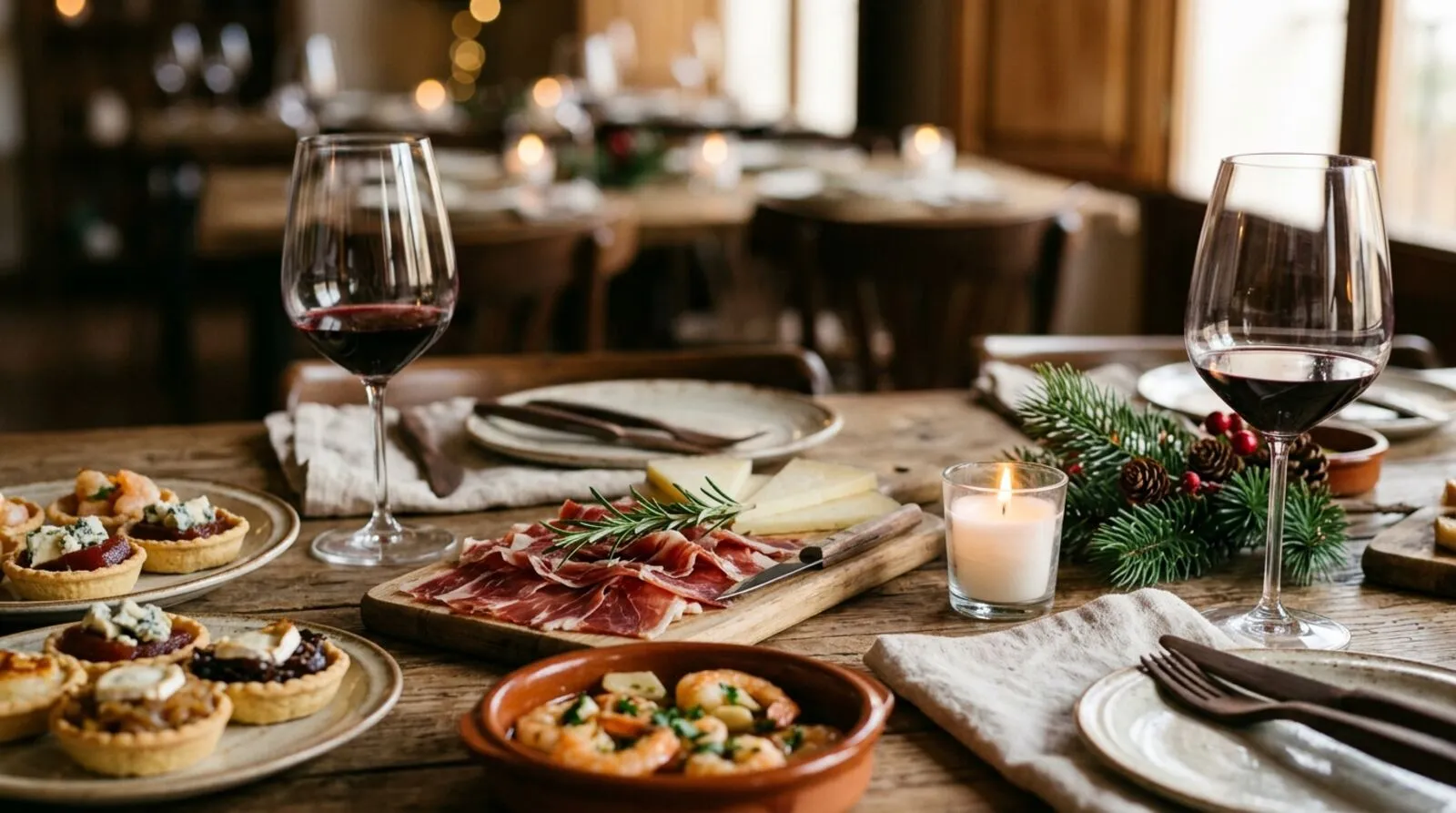
You don’t need any kind of show for people to have a good time. What makes the biggest difference:
- Mixing up the tables. A simple seating plan or name cards put people from different departments together.
- A short toast. Five minutes of thanks is plenty; long speeches let the food go cold.
- A dish that gets people talking. Rice on the fire, a cheese board or a good ham being carved do the job on their own.
- Low music, so people can talk.
- Something nice for non-drinkers: a good soft drink, an alcohol-free vermouth, a herbal tea.
- A clear finishing time. That way everyone can decide how long to stay without feeling they have to.
- Photos, yes, but ask first if they’re going to be posted.
Next step
With the date, rough numbers and the format in mind, you’re ready to ask for a proposal. Our Christmas parties for companies page explains how we handle these meals; if your team prefers to celebrate at another time of year, have a look at our corporate event catering. When you’re ready, tell us the date, the place and how many of you there’ll be and we’ll tell you how we’d do it.
Use the event catering allergen guide to communicate dietary requirements to the supplier.
Sources
- Royal Decree 126/2015 on food information for unpackaged food (BOE)
- Regulation (EU) No 1169/2011 on the provision of food information to consumers (arts. 9, 44 and Annex II)
- ILUNION Hotels: cena de empresa de Navidad, cuándo reservo, menú y qué tener en cuenta
- Diario Siglo XXI: las empresas se anticipan para reservar sus cenas de Navidad corporativas en Barcelona