
Ask for information on each preparation and agree how the right meal will reach its guest. Menu icons can help, but printing them does not finish the job: bread, sauces, a change of brand and service arrangements all matter.
This guide is for organisers of family celebrations, company meals and fiestas in Spain. The 14 allergens glossary explains the definitions and detailed list; this article focuses on what to check when arranging catering.
What the rules require for non-prepacked food
Regulation (EU) 1169/2011, Articles 9 and 44, requires information about Annex II substances used in preparation and still present in the food. Royal Decree 126/2015 sets out Spain’s rules for non-prepacked food, including food supplied by mass caterers. Sources checked 31 October 2026.
Article 6 permits verbal information subject to conditions: it must be available before purchase is completed, at no additional cost, and backed by accessible written or electronic records. A visible notice must explain where to obtain it or whom to ask, subject to the article’s exceptions. Requesting it while choosing the menu avoids trying to resolve everything in a buffet queue.
The 14 groups: check accompaniments too
This table summarises Annex II; consult the legal text for derivatives and exemptions. The examples are items to check, not an ingredient declaration for any Xepep menu.
| Mandatory declaration group | What to check in the proposal |
|---|---|
| Cereals containing gluten | Bread, pastry, coatings and sauces |
| Crustaceans | Shellfish and stocks |
| Eggs | Egg crusts, mayonnaise and desserts |
| Fish | Stocks, sauces and cured fish |
| Peanuts | Snacks and prepared products |
| Soya | Sauces and compound ingredients |
| Milk, including lactose | Cheese, creams and baking |
| Nuts | Ground mixtures, sauces and sweets |
| Celery | Stocks and vegetable mixes |
| Mustard | Dressings and sauces |
| Sesame | Bread and toppings |
| Sulphur dioxide and sulphites | Wine and other ingredients, subject to the legal threshold |
| Lupin | Flours and prepared products |
| Molluscs | Shellfish and stocks |
For sulphites, the Annex specifies concentrations above 10 mg/kg or 10 mg/litre of total SO₂, under its stated conditions. The Generalitat explains declarations for non-prepacked food. Other foods can also cause reactions, so communicate specific allergies beyond this list.

What to request before agreeing the menu
Ask for information on each dish and its accompaniments, identify who keeps it current and agree how substitutions will be communicated. If a family supplies a cake, decide who receives its ingredient information and how that information stays available until service.
Send requirements through the agreed channel, linked to the meal that needs delivering, without sharing personal details with every guest. For a first communion lunch, include children who need alternatives; for a coffee break, check individual items and the milk served with drinks.
Ingredients and cross-contact are separate questions
An egg-free recipe does not explain whether utensils or surfaces are shared with food containing egg. Ask about preparation, storage, transport and handover. Agree how individual meals will be identified and who answers guests’ questions during the event.
Do not turn “we adapt menus” into a promise of “zero traces”. Confirm the alternative against the specific requirement and actual service conditions. The cross-contamination guide explains the distinction.
On the day: a clear handover
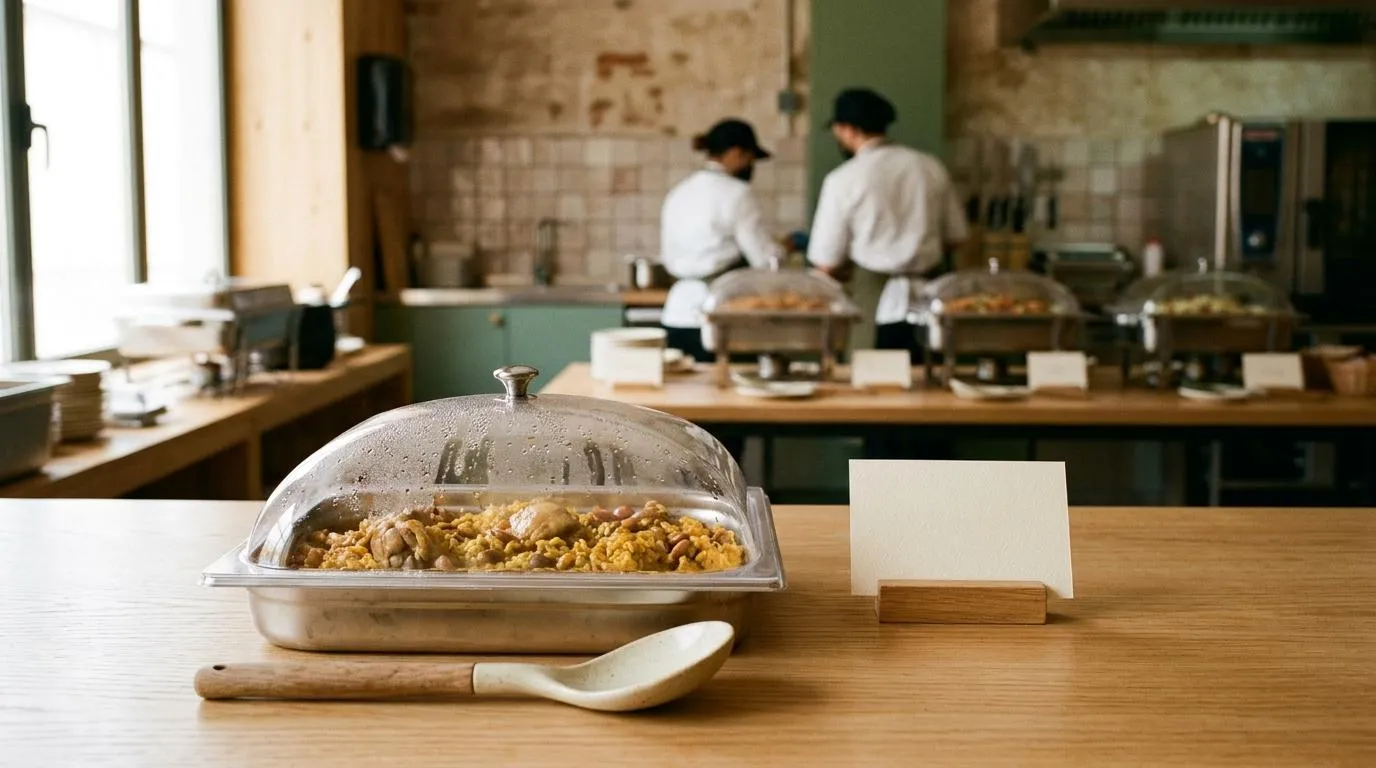
Review alternatives with the service lead before opening. Check that meals and utensils remain identifiable and that changes have been communicated. If a meal is uncertain, ask before serving it rather than removing a visible ingredient and assuming the issue is solved.
When discussing celebrations, company events or contract catering, include these requirements from the outset. You can request a proposal with food information or contact us to clarify the request. The format and available alternatives are confirmed in each proposal.