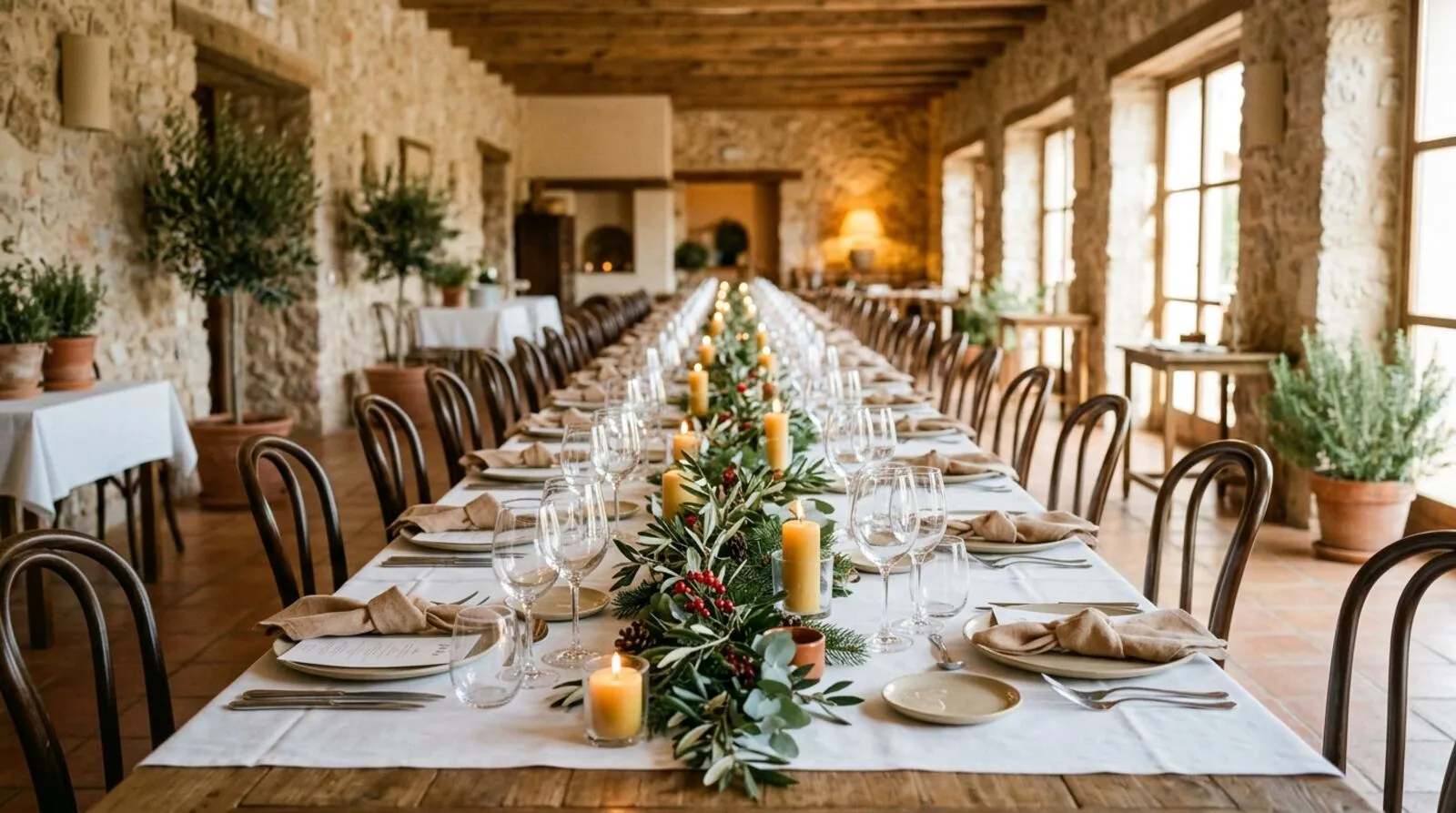
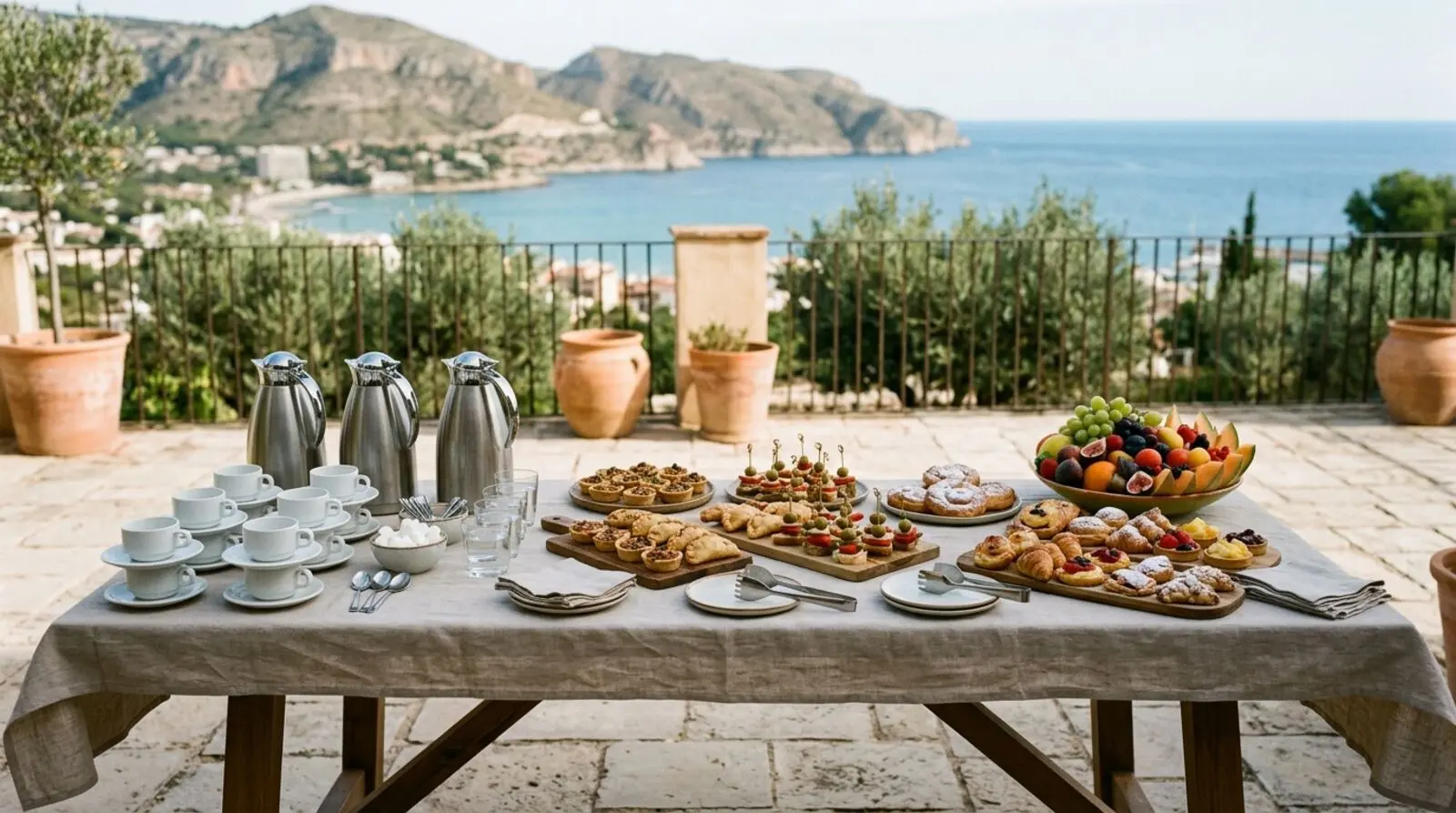
A corporate coffee break should include coffee and herbal teas, water or juice, something savoury, something sweet and fruit, in pieces you can eat standing up and with one hand. What makes it good isn’t a table groaning with food, but having it ready on time, served quickly, with something every attendee can have.
We often set it up for meetings, courses and conference days; these are the details worth having clear before you order.
What a coffee break is and how long it should last
It’s the breather in the programme: a chance to clear your head, grab something and have a chat. ASEST describes it as a tool to encourage interaction and networking among attendees, and it’s true that a lot of the contacts made at an event are made cup in hand. It tends to be around 20 minutes (Minor Hotels talks about “that 20-minute slot” as the key moment of a conference day), but your programme decides yours.
To work it out, add up four stages: leaving the room, getting to the table, helping yourself and going back. If the break is short, avoid anything that means waiting for it to be made to order. If there’s time to chat, a few high tables to rest a plate and a cup on make a big difference.
One detail that seems minor but isn’t: the time in the programme is the time the table must be ready, not the time the caterers arrive. Decide, too, who tells the kitchen if the session overruns.
The difference between catering and a coffee break
It’s one of the questions we’re asked most, and the answer is short. Catering is the full food and drink service for an event: it might be a drinks reception, a finger buffet, a sit-down meal or a dinner. A coffee break is one type of catering: the light break with drinks and small bites.
They’re not rivals: you choose according to what the day needs.
| If your event is… | What usually fits |
|---|---|
| A morning meeting or session, with no lunch afterwards | A coffee break, or a finger buffet if it runs on |
| A course or conference day with lunch afterwards | A light coffee break, with lunch separate |
| A presentation or an opening | A drinks reception or nibbles with food stations |
| A full day with speakers | A mid-morning break, lunch and, if needed, another break in the afternoon |
If you’re not sure, tell us the timetable and how many of you there are, and we’ll suggest the format that fits. That’s what our corporate event catering is for.
What to include in a coffee break
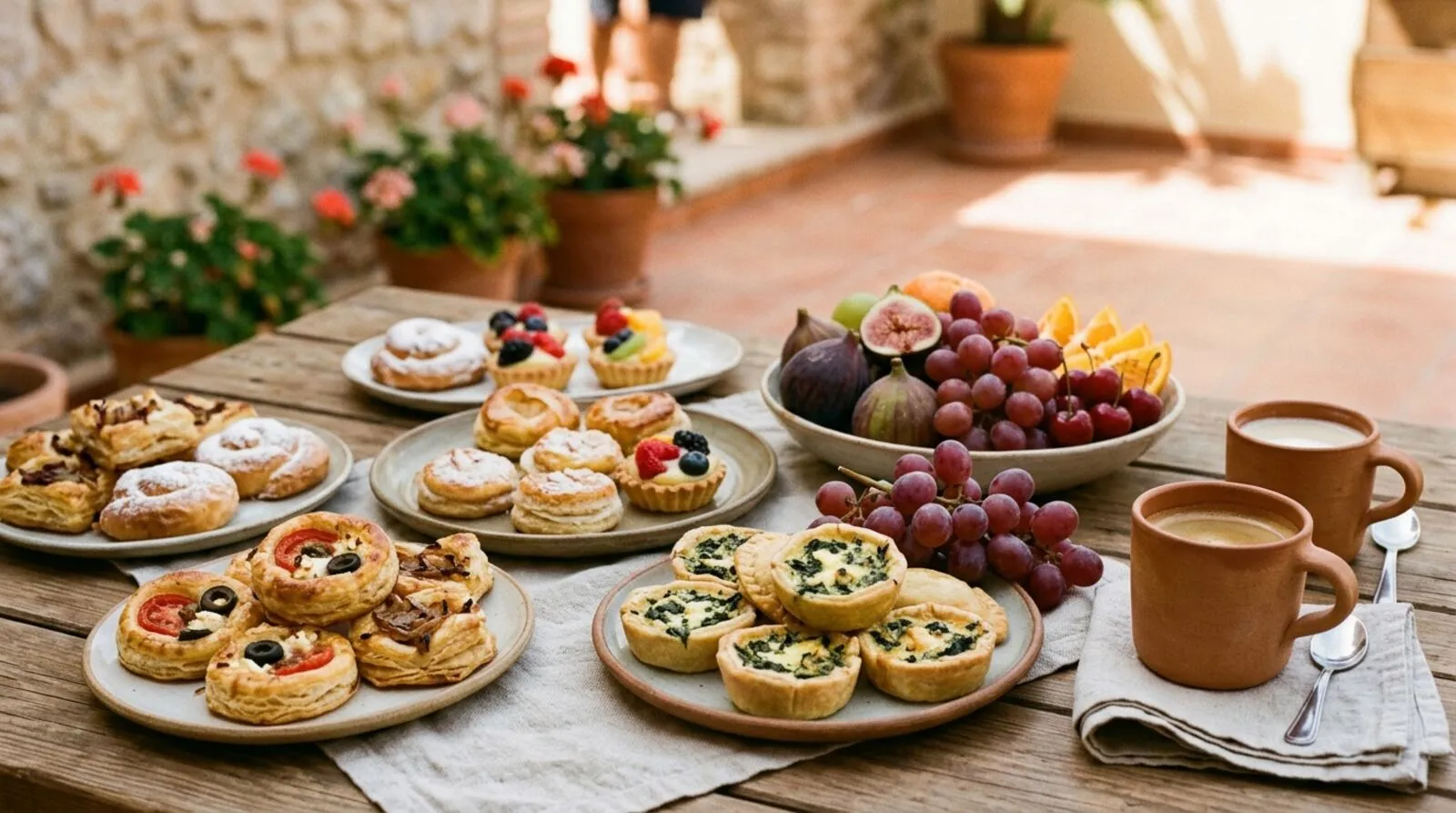
The idea is to have something for every taste without crowding the table with things that clash. Choose according to the time of day and what comes next, and go for things that can be eaten with one hand: people eat standing up, with a cup in the other.
| Group | Options | What to ask when ordering |
|---|---|---|
| Hot drinks | Coffee, decaf, herbal teas | How they’re served and who tops them up |
| Cold drinks | Water, juices | Where they go so there’s no queue |
| Savoury | Mini sandwiches, skewers, empanadillas (small pasties), tartlets | Size, filling and whether they hold up well out of the fridge |
| Sweet | Mini pastries, biscuits, fruit tartlets | Variety and size of each piece |
| Fruit | Whole or cut | How it’s presented and what crockery it needs |
| Extras | Milk, plant-based milk, sugar and sweetener | That they’re labelled |
It’s very close to the sample menu suggested by ASEST: coffee and herbal teas, water and juices, mini pastries, biscuits, fresh fruit, mini sandwiches, skewers and empanadillas. From there, we adapt it to your event’s timetable.
How to work out quantities
A figure for “pieces per person” is little use if you don’t know what each piece is like: a mini tartlet and a full-size sandwich don’t count the same. Before you order, be clear about these four things:
- How the order is counted: by the piece, by the tray or by the portion. If you’re comparing quotes, check they’re talking about the same thing.
- How many people are really coming. Count attendees, speakers and staff if they’ll be having something too. Separate registrations from confirmations, and agree when you’ll give the final number.
- What comes next. If the next meal is a long way off or the break replaces it, it needs to be more substantial than a mid-morning break with lunch at one.
- The time of day. Close to lunch, light bites that won’t spoil anyone’s appetite are better; first thing or mid-afternoon, something more filling goes down well.
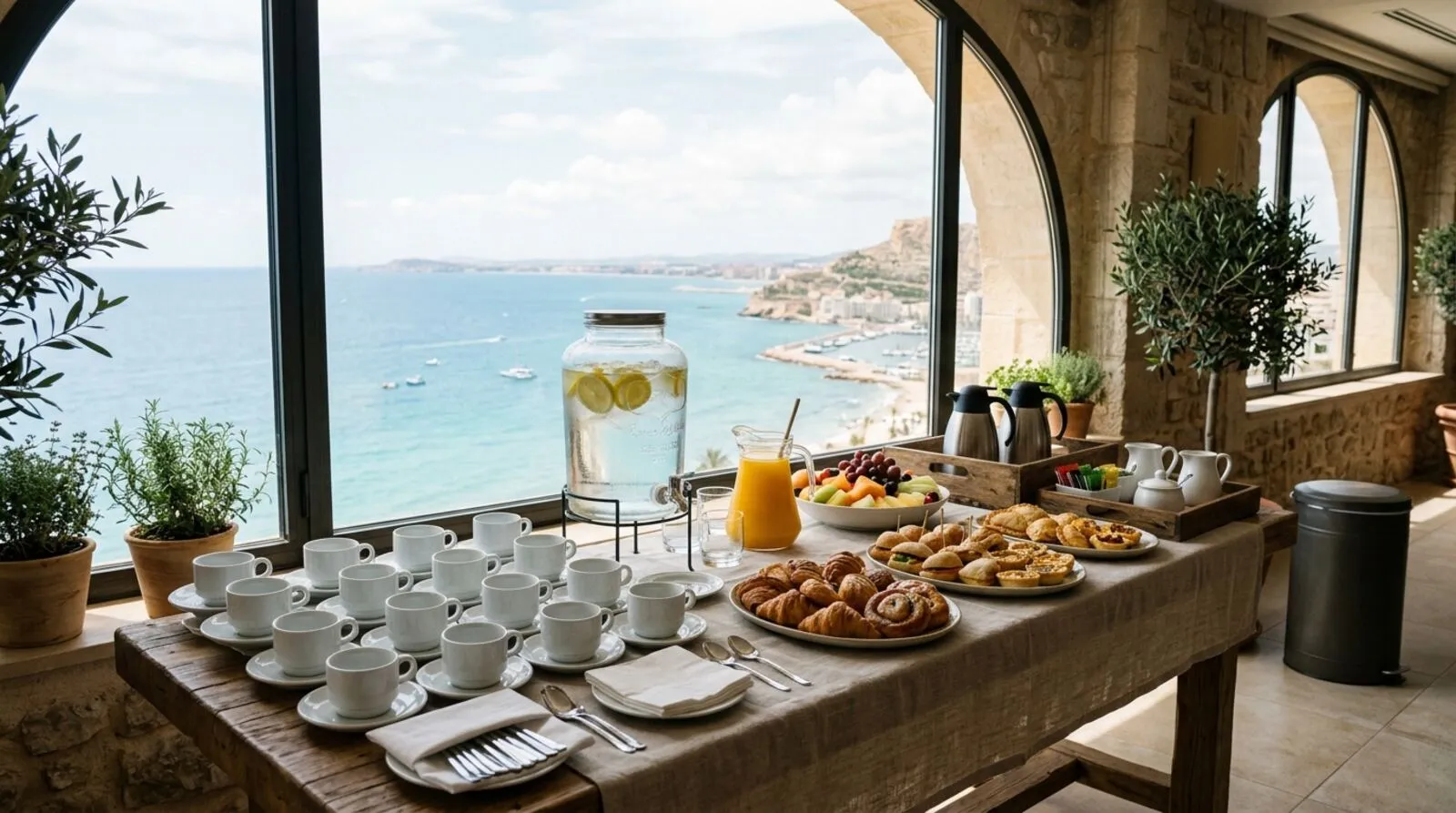
With drinks, don’t just think in litres: think about how they’ll be topped up. An order can add up on paper and still cause a queue if the top-ups can’t keep pace with everyone coming out of the room. Ask about flasks or serving containers, cups and glasses, and drink alternatives. And before padding out the order “just in case”, adjust it to the final headcount: it’s cheaper than throwing food away.
Dietary needs: gluten-free, vegan, dairy-free
Ask about dietary needs when people register and pass them on before the menu is finalised. Don’t expect a varied table to cover everything: plant-based milk takes care of a preference, but if there’s an allergy, you need to check what goes into every item.
Spanish law requires allergen information to be available for unpackaged food too (Royal Decree 126/2015, BOE). Ask the kitchen for that information for every item and decide how your attendees will be able to check it. The name of the item isn’t enough.
A practical tip: tell each person where their option is and who they can ask. It’s far more useful than a “something for everyone” sign. And if there are special requirements, tell us when you ask for a quote and we’ll have them covered.
How to set up a coffee break without bottlenecks
Before the break
Check access for unloading, the space and what the chosen format needs: tables, sockets, water. Agree when set-up can happen without disrupting the session and who will meet our team. We arrive with time to spare and set up before the session starts.
Think, too, about how people will move. If everyone comes out at once, make sure the coffee doesn’t block the way to everything else: coffee, water and food at separate points.
During and after
Name a contact person who can warn of delays and deal with anything unexpected. And be clear whether someone will be staffing the break or whether it’ll be set up and left ready, because that decides who tops up, and it needs to be in the quote. Waiting staff and crockery are quoted separately, depending on what you need, and always in writing.
A checklist for the day before:
- Time people leave the room, expected length and time back in the room.
- Confirmed attendees, with each dietary option labelled.
- Access, delivery of equipment and set-up spot.
- Crockery, supplies and top-ups agreed.
- Contact person on the day.
- Clearing away rubbish and equipment at the end.
Put bins where people can see them, but not blocking the food table. Clearing up also sets the pace of the day, especially if the room is being used again afterwards.
Coffee break and lunch: joining up the day
If there’s lunch afterwards, show us the full menu when you plan the break. That way we won’t repeat dishes by accident, and we can adjust how filling the coffee break is. We can also put the whole day together as a single proposal, so the break and lunch aren’t separate orders.
If you want to round off the day with something special, rice cooked live for your team changes the pace of any event; if you’ve never seen it done, we explain what show cooking is and when it’s a good idea. And if the end of the year is coming up, the company Christmas lunch needs booking early: we cover it in when to book the company Christmas lunch.
Next step
Tell us the date, the venue, how many of you there are and whether there’ll be lunch afterwards, and we’ll send you a proposal you can pass on to whoever makes the decision, with an invoice in the company’s name. You can get a quote for your event’s coffee break or first look through the formats in corporate event catering.
Before agreeing the food and drinks, check which allergen information to request.