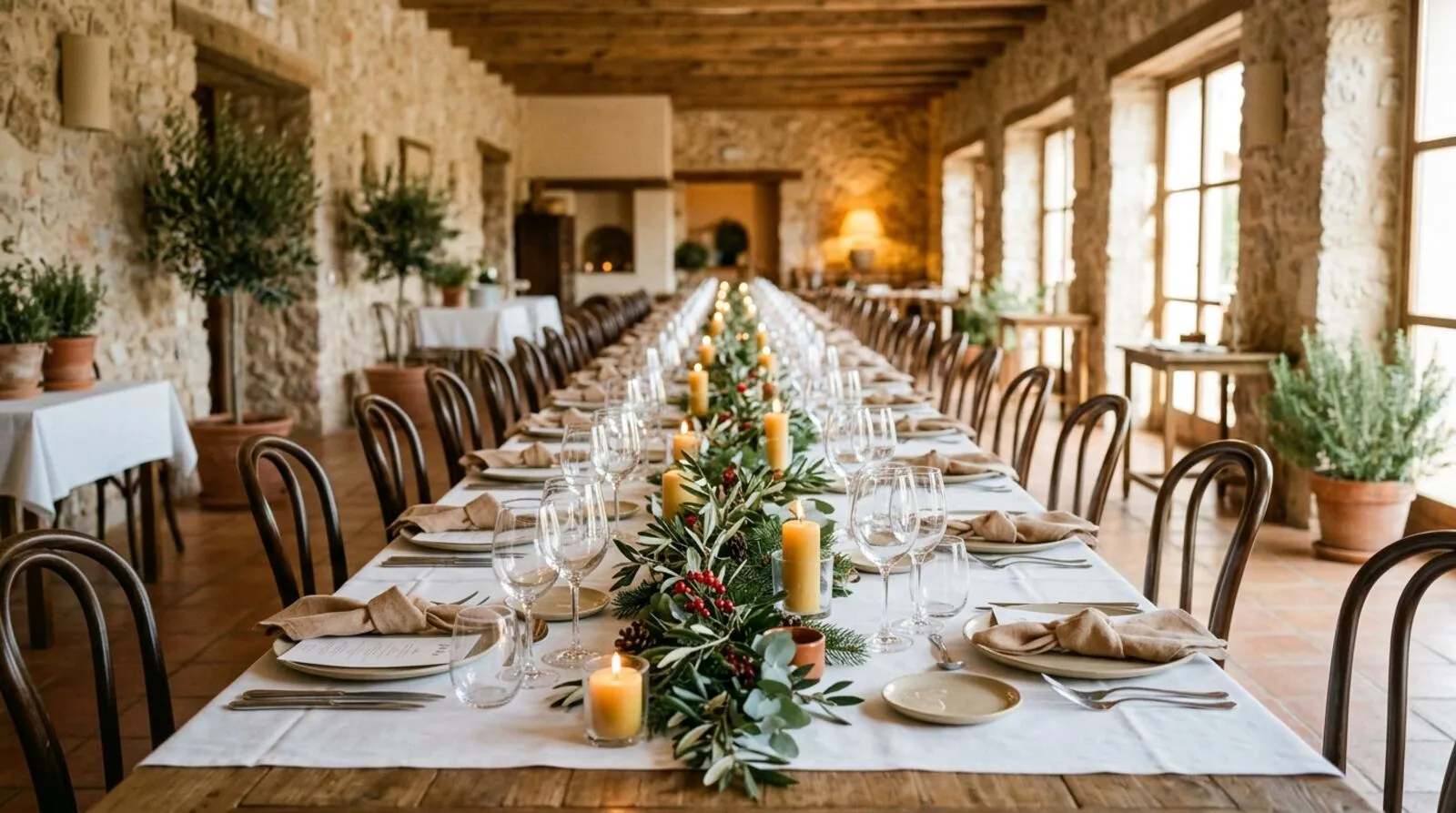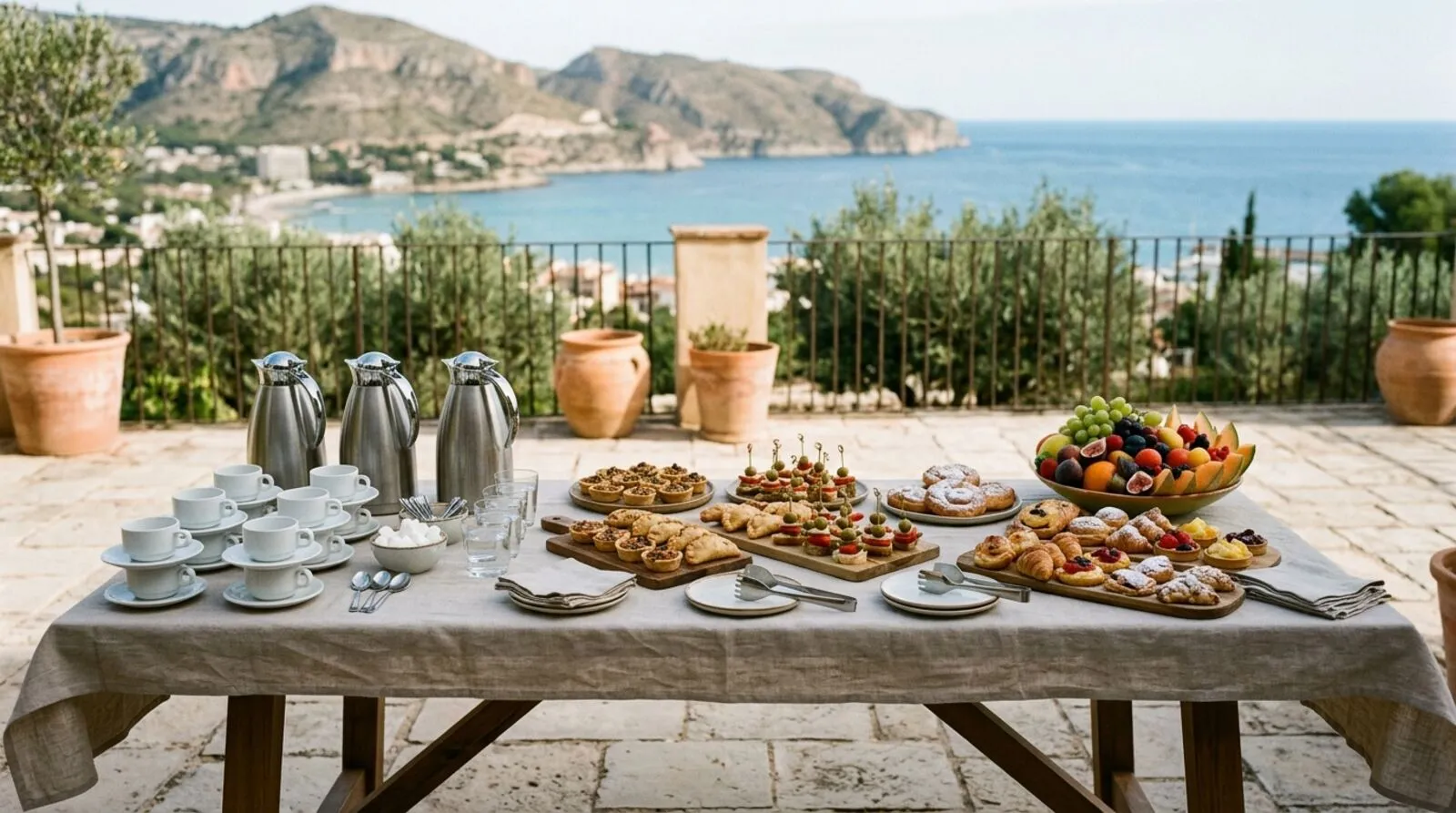
Finger food is food eaten with the hands, in small individual bites and without cutlery, almost always standing up. At a company event it is the backbone of the drinks reception, the standing lunch and the nibbles at a presentation or an opening.
What finger food means and what it is called in Spanish
It is an English expression, and in Spain it is used as it stands. FundéuRAE, the Spanish language-advice foundation, lists it among the unnecessary foreign words in food and drink and suggests “comida para picar” or “picoteo” instead. In practice, people simply name the piece: canapé, pincho, tapa, bocado, croqueta. The RAE dictionary defines a canapé as a “portion of bread or puff pastry topped with a small amount of food, usually served as an appetiser”: the classic example of finger food.
What makes a good piece of finger food
In a packed room, with a glass in one hand and someone talking to you, this is what matters:
- It can be eaten in one or two bites, with one hand.
- It does not drip, does not stain and does not fall apart when you pick it up.
- It holds up on the tray for a few minutes without going limp.
- You know what is in it: the label or the waiter has to be able to tell you when you ask.
| Type | Examples | When it works |
|---|---|---|
| Cold | Canapés, tartlets, skewers, tasting spoons | Receptions, guests arriving |
| Hot | Croquetas, empanadillas (small pasties), mini rolls | Standing receptions, presentations |
| In a shot glass or spoon | Chilled soups, ensaladilla (Spanish potato salad), desserts | When there are poseur tables to put them down on |
| Sweet | Fruit tartlets, small pastries | End of the reception or coffee break |
How much: what it depends on
It is the question we hear most and there is no simple chart to answer it, because “one piece” can be a tasting spoon or a mini roll. What it depends on:
- Whether it replaces the meal or just comes before it. A reception that stands in for lunch needs more pieces and something filling at the end; a few light bites are enough before a sit-down meal.
- How long it lasts. An hour-long reception is not the same as the end of a long working day.
- The time of day. People eat more at midday than in the middle of the afternoon.
When comparing quotes, make sure everyone counts the same way: number of pieces, size and varieties. If it is a break during a working day, you will find ideas in what to include in a corporate coffee break.
Welcome reception and welcome drink
A welcome reception (cóctel de bienvenida, or welcome drink) is what guests are offered on arrival: a drink, with or without alcohol, and a few bites so the first arrivals are not left waiting with nothing. The RAE dictionary lists “cóctel” as a drink and also as a “gathering or party where cocktails are served, generally in the late afternoon or evening”. Always plan an alcohol-free option and keep water where people can see it.
Finger food at a company event
In our catering for corporate events, the standing lunch or drinks reception is our nibbles-and-food-stations format, with people on their feet and circulating, designed for presentations, openings and the end of a working day. Waiting staff and tableware are quoted separately, depending on what you need.
A standing reception mixes departments and gets people moving, but it falls short if everyone needs to leave properly fed and nothing follows it. In when to book the company Christmas lunch we compare a drinks reception, a sit-down meal and rice cooked live.
Allergens: every piece counts
With lots of different pieces, the first thing to get lost is what is in each one. For food served unpackaged, allergen information is compulsory and must be available, either in writing or verbally backed up in writing (Royal Decree 126/2015). Tell us about any allergies in the group when you ask for a quote, and have a look at the 14 allergens that must be declared.
If you want a reception planned around your people, tell us the day, the time and how many of you there are, and get a quote for your corporate event.