Rice and paella ·
Paella origin and the history of rice in Spain
Paella origin and the history of rice in Spain: where paella is from, who brought rice, when Valencia began growing it. Timeline, myths and answers.

Paella catering
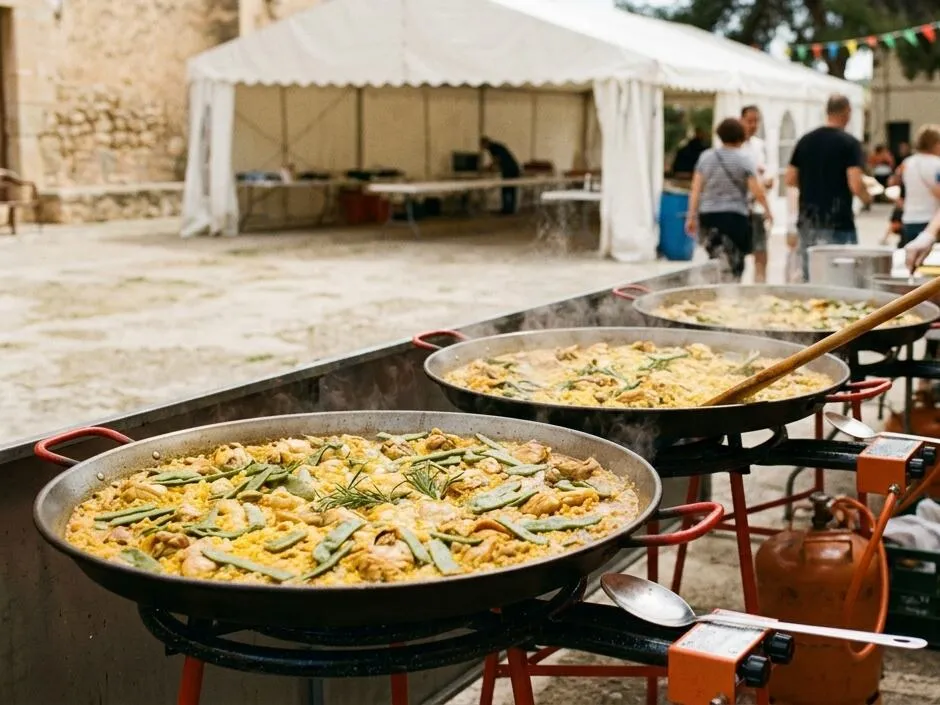
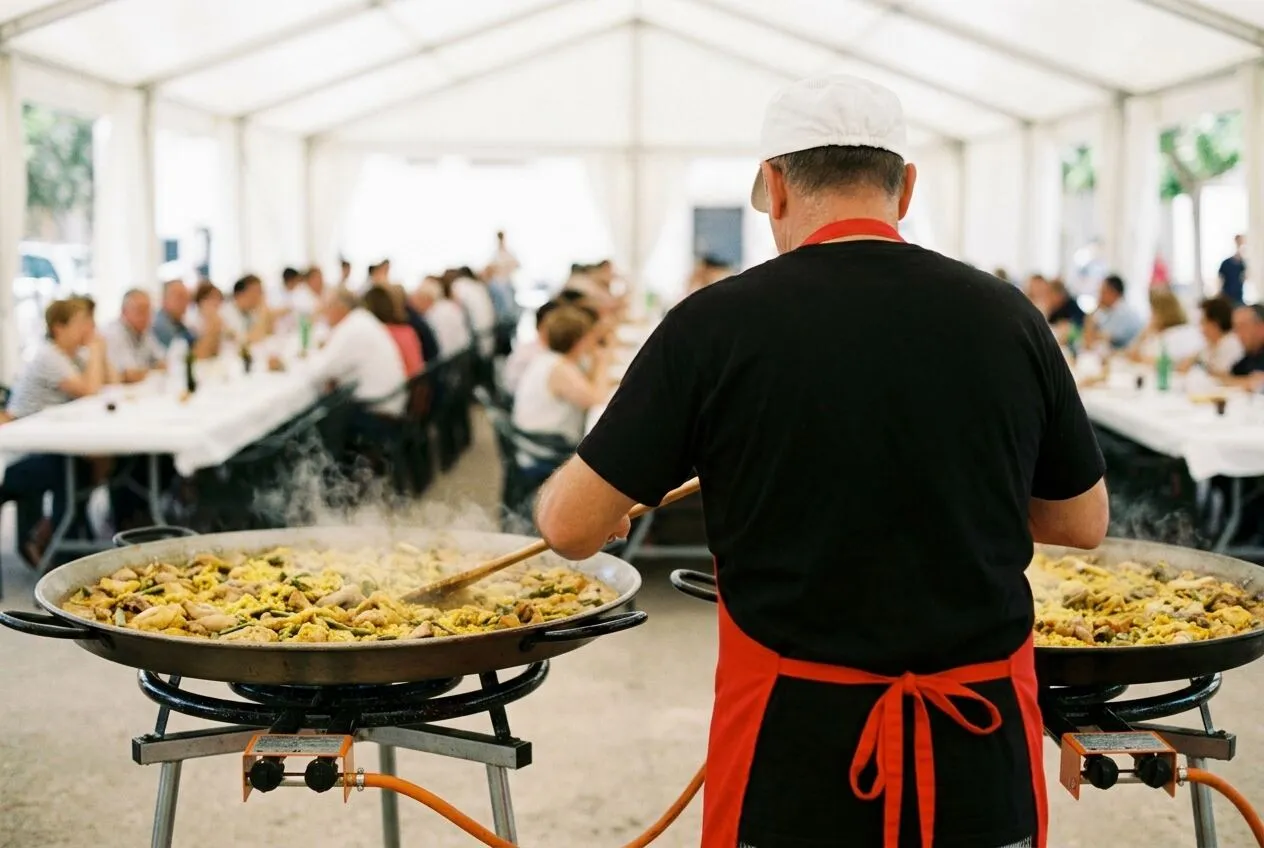
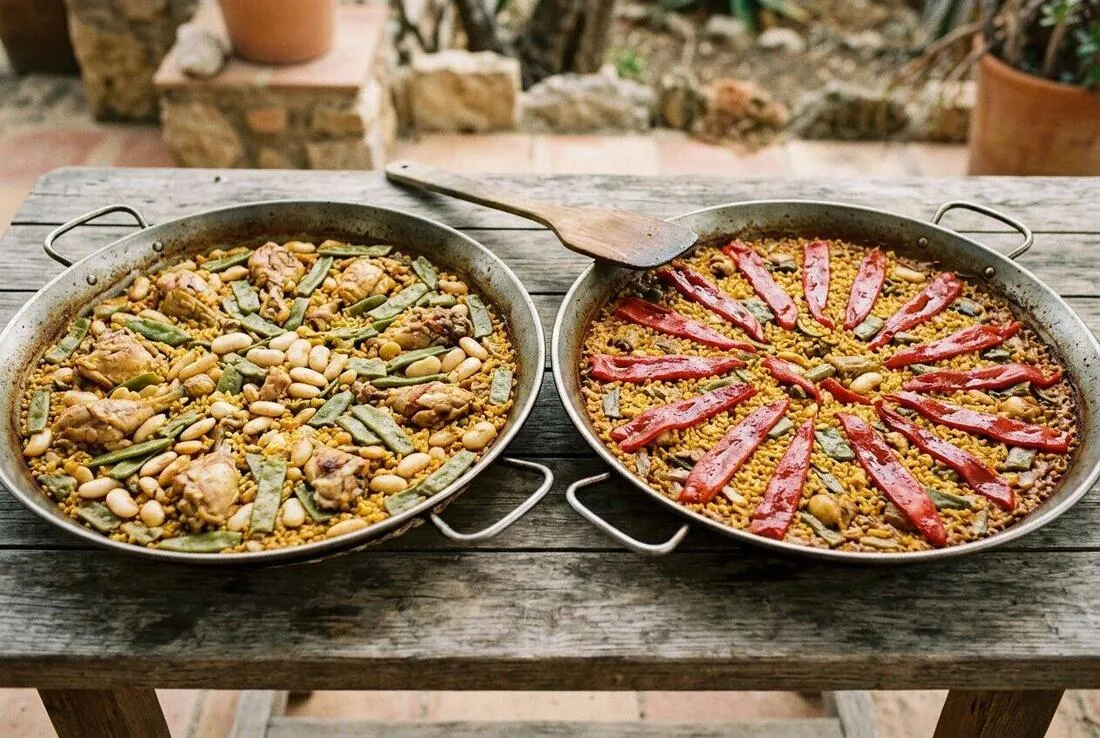
Rice is what people ask us for most, and what we do best. We cook it in front of your guests, for 40 people or for 500 in a single service.
Rice dishes
There’s no such thing as one paella. There’s the rice that suits each place and each fiesta. These are the ones we make most:
If your town makes it differently, let us know. Chances are we’ve cooked it already.
Capacity
From 40 to 500
guests in a single service.
We have paella pans, burners and equipment to feed five hundred people at once. And forty out in the countryside, too.
How the service works
Waiting staff and tableware are itemised separately in the proposal, depending on the format. Travel from Aspe is confirmed once we have the venue address.
Logistics
We agree the mealtime and work backwards: arrival, setting up the burners, the sofrito and when the rice comes out. We need unloading access and space to cook; we bring the rest of the kit ourselves.
If the event is outdoors, tell us the rain plan and whether cooking is allowed there. For large groups, we decide together whether to plate at one point or serve at the table.
For a single huge pan as the centrepiece of the fiesta, see our giant paella for fiestas and events. If you’d rather gather at home or on a finca, we also offer paella delivery.
Where we cook
We leave our kitchen in Aspe for anywhere in Alicante province. We also travel to Valencia, Murcia and Albacete. Travel forms part of the proposal.
Stations
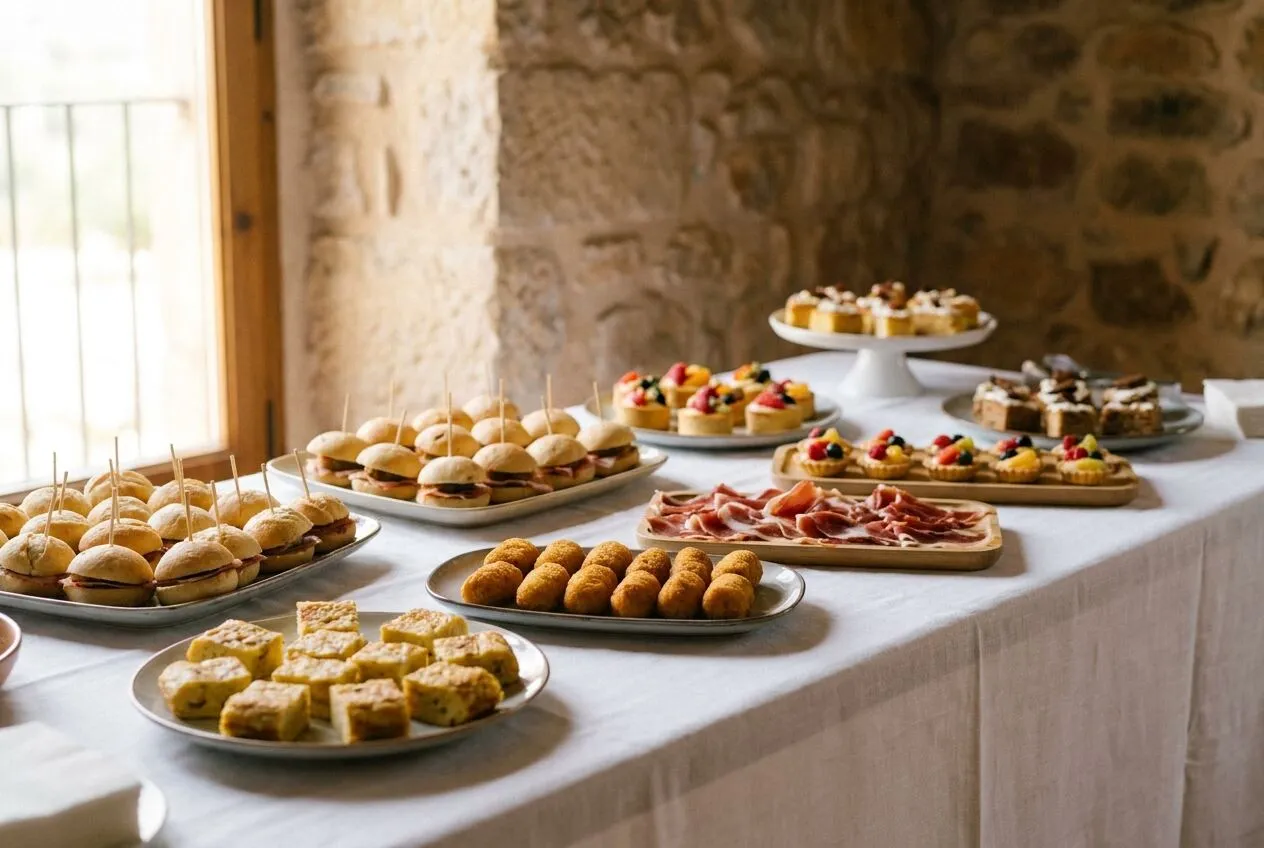
Cured fish and charcuterie from Pinoso, pickles and cocas, vermouth, fried snacks, croquetas, ham carving, a sweet finish.
See all the stations →You may also like:
Questions
For on-site service, we work from 40 guests. For fewer, we’ll have it ready for you to collect from our shop in Aspe.
We have the kit for 500 guests in a single service: pans, burners and staff. Beyond that we look into it with notice. How many pans depends on the rice and whether you eat all at once or in shifts.
An outdoor or well-ventilated spot for the burners, with water close by. We bring everything else.
Yes. Tell us how many and what they need, and we’ll make a separate paella.
Yes: the whole of Alicante province, plus trips to Valencia, Murcia and Albacete. Travel is set out in the proposal.
If you’re planning a community meal, take a look at our giant paella for events; to get your group together at your own place, we also offer paella delivery for groups.
Paella works for a working lunch too: see our corporate events. If the event is in Alicante or nearby, we also offer catering in Alicante.
See photos of our paellas cooked live.
Quote
Tell us the day, the place and the numbers, and we’ll tell you how we’d do it.
Rice and paella ·
Paella origin and the history of rice in Spain: where paella is from, who brought rice, when Valencia began growing it. Timeline, myths and answers.

Rice and paella ·
History of Valencian cuisine: from Moorish rice to paella and Alicante stews. A timeline, a table of dishes and answers to the questions people ask most.
Rice and paella ·
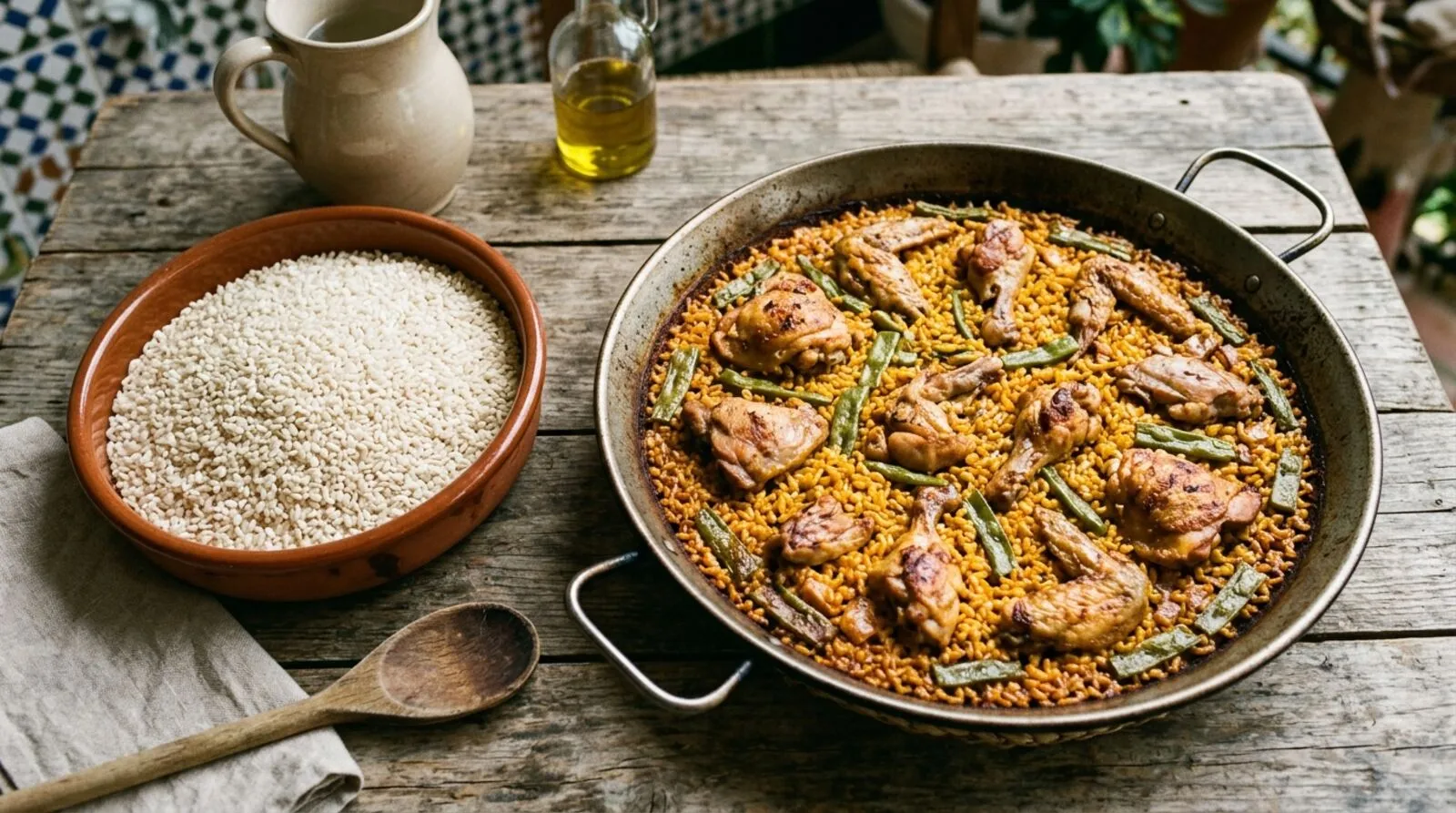
How much rice per person for paella: 100 g for a Valencian paella. A table for 10 to 200 guests, the shopping list for 50 and how much stock you need.
Arroz con costra (crusted rice) is the rice dish of Elche and Orihuela: rabbit, local sausages and chickpeas under a crust of baked egg.
RiceArroz del senyoret is an Alicante seafood rice with the shellfish peeled and the fish boned, so you can eat it without getting your hands messy.
RiceBomba is a Spanish short-grain rice that soaks up a lot of stock and stands up to long cooking without going soft.
RiceTurismo Región de Murcia describes caldero as the Mar Menor’s characteristic rice dish, made with fish and ñora peppers.
RiceThe three ways a Spanish rice dish can turn out, depending on the stock: dry rice absorbs it all, creamy is like risotto and soupy is eaten with a spoon.
RiceFideuà is a dish from Gandia made like a paella but with short noodles instead of rice, cooked dry in fish stock and served with alioli.
Rice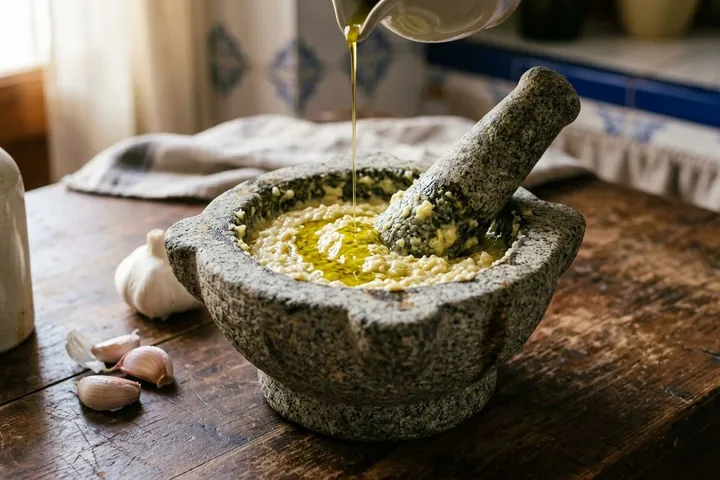
Traditional allioli is made in a mortar with just garlic, olive oil and salt. No egg, plenty of patience: the classic partner for arroz a banda and fideuà.
Total time: 20 min
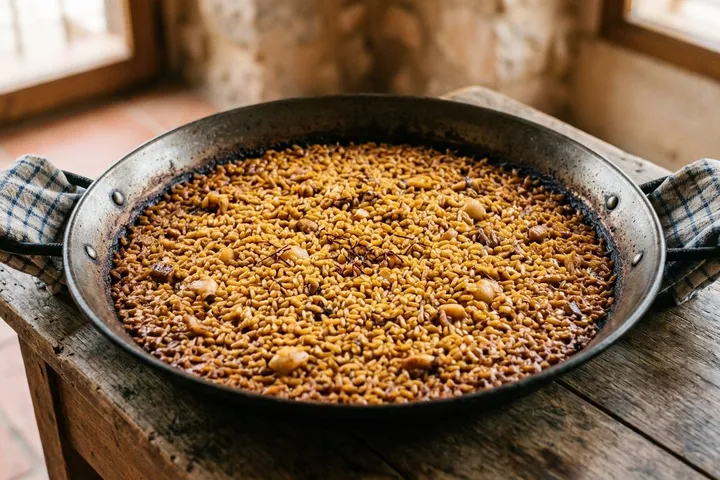
Arroz a banda for 4: ñora and baby cuttlefish sofrito, double the fish stock to rice, dry in the paella pan, fish served apart with potato and allioli.
Total time: 24 min
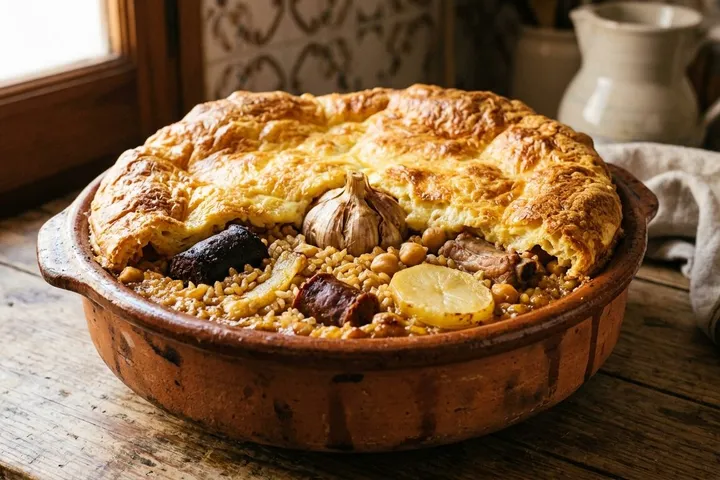
Arroz con costra: a rabbit and sausage rice cooked for 8 minutes in the earthenware pot and finished with beaten egg in the oven or under a costrera.
Total time: 46 min