Arroz del senyoret (in Valencian, arròs del senyoret or arròs de senyoret) is a seafood rice where the shellfish comes peeled and the fish boned, so you can eat it without getting your hands messy. The Diccionari normatiu valencià defines it as a dish of rice, fish, king prawns or prawns and mussels “que se servix amb tot el marisc pelat” (served with all the shellfish peeled). It’s one of the classics of Alicante cooking and a close cousin of arroz a banda.
How it got its name
Senyoret is Valencian for señorito, the young master of the house. Alicante’s tourist board food guide explains that the dish got its name because it was cooked for well-to-do families, where “the young master” wanted to enjoy a seafood rice without getting his hands dirty. The name is a little tongue-in-cheek, and these days nobody orders it to put on airs, but because it’s easy: everything on the plate can be eaten with a spoon or fork, with nothing to peel.
What goes into it
The same guide sums up the golden rule: there are plenty of variations, but in all of them “everything in it must be ready to eat”. The usual line-up:
- Short-grain rice, such as bomba.
- Rockfish stock, or a fumet made with morralla (small rockfish).
- A sofrito of tomato, garlic and ñora (dried sweet pepper): Alicante’s salmorreta.
- Peeled prawns or king prawns, squid or cuttlefish in pieces and a boneless fish such as monkfish.
- Mussels out of their shells, which the dictionary includes in its definition.
- Saffron and olive oil.
Directo al Paladar notes that most versions “just have prawns, squid and a fish such as monkfish”. What goes in changes with the season and with whatever came in at the fish market.
Dry, nearly always
Senyoret is usually a dry rice, cooked in a paella pan like arroz a banda. You can also make it creamy or soupy by adding more stock; here are the differences between the three styles. The Alicante rice recipe published by the city’s tourist board, with peeled prawns, squid and salmorreta, uses twice as much stock as rice and adds the seafood when the rice is almost done, so it doesn’t overcook.
Arroz a banda and senyoret
| Arroz a banda | Arroz del senyoret | |
|---|---|---|
| Stock | Rockfish | Rockfish |
| Texture | Dry | Dry, nearly always |
| Fish and seafood | The stock fish is served separately; very little in the rice | In the rice, peeled and boned |
| How it’s served | Rice on one side; fish with potato and alioli on the other | All together, ready to eat |
If you’re eating with people from the Murcia region, watch the names: they swap them round there, as we explain in the arroz a banda entry.
A rice dish with deep roots in the terreta
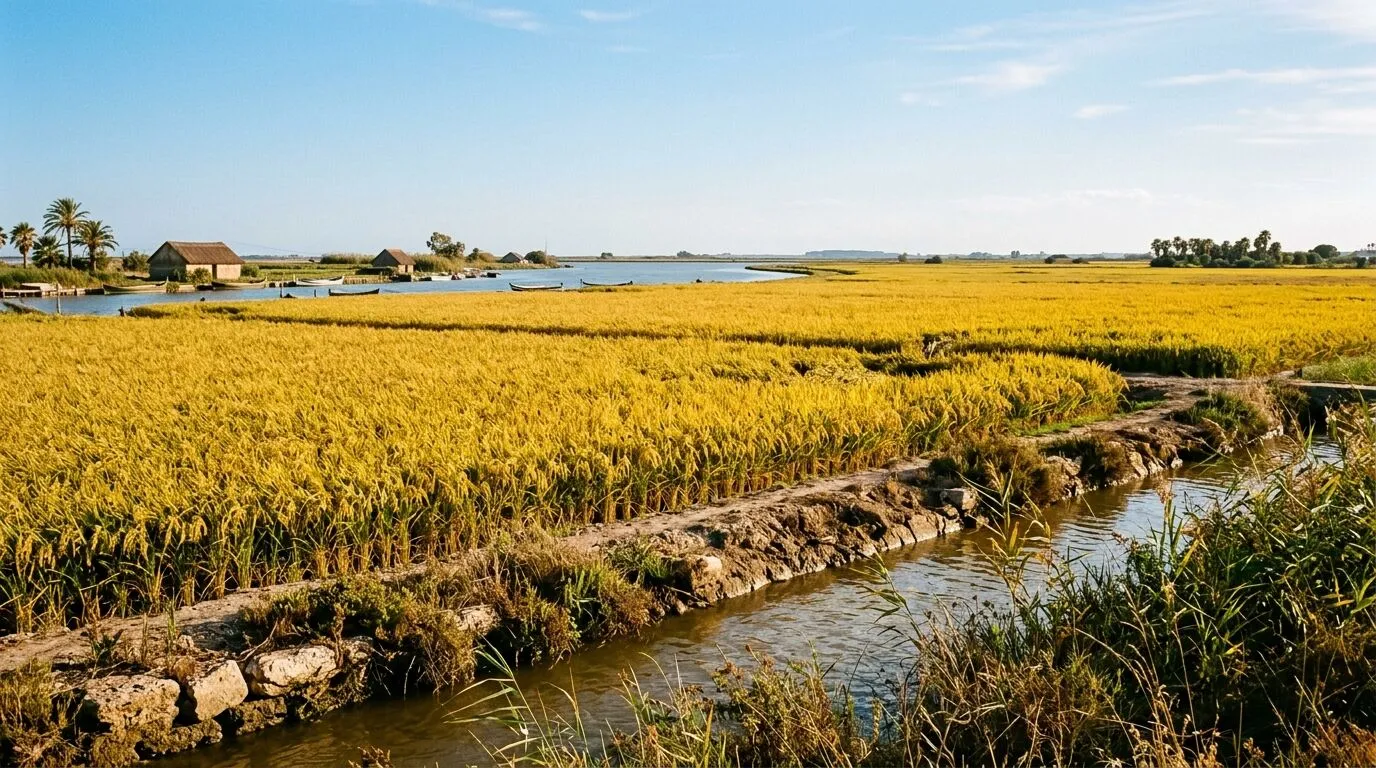
Rice on this coast goes back a long way, as our history of rice in Spain tells. The decree that made paella valenciana a Bien de Interés Cultural recalls that large-scale rice growing arrived with the Arabs, and that in the late 19th century paella moved from farm cottages to beachside eateries, including the Albufereta in Alicante. Today Alicante’s tourist board lists senyoret among the rice dishes cooked the traditional way in most of the city’s restaurants, alongside arroz a banda, caldero and black rice (arroz negro).
Arroz del senyoret at an event
It’s a very practical rice for events with lots of people standing, with children, or with guests who’d rather not battle with shells: every spoonful is ready to go. If you’d like it on your menu, get in touch via paella catering and show cooking or go straight to get a quote.
How to make it
Arroz del senyoret recipe, step by stepSources
- Alicante, gastronomía y producto: arroces tradicionales (Turismo de Alicante, 2022)
- Diccionari normatiu valencià (AVL): entry “arròs”, sense “arròs de senyoret”
- Arroz al senyoret, la receta clásica de arroz y marisco pelado (Directo al Paladar)
- Decreto 176/2021 del Consell, BIC inmaterial de la paella valenciana (BOE, 15 March 2022)
- Arròs (Gran Enciclopèdia Catalana): Pere el Cerimoniós’s 1342 privilege against paddy fields
- Parra Villaescusa (2013), El cultivo del arroz en Orihuela a finales de la Edad Media (Rice growing in Orihuela at the end of the Middle Ages), Medievalismo 23: the bans from 1342 to 1403