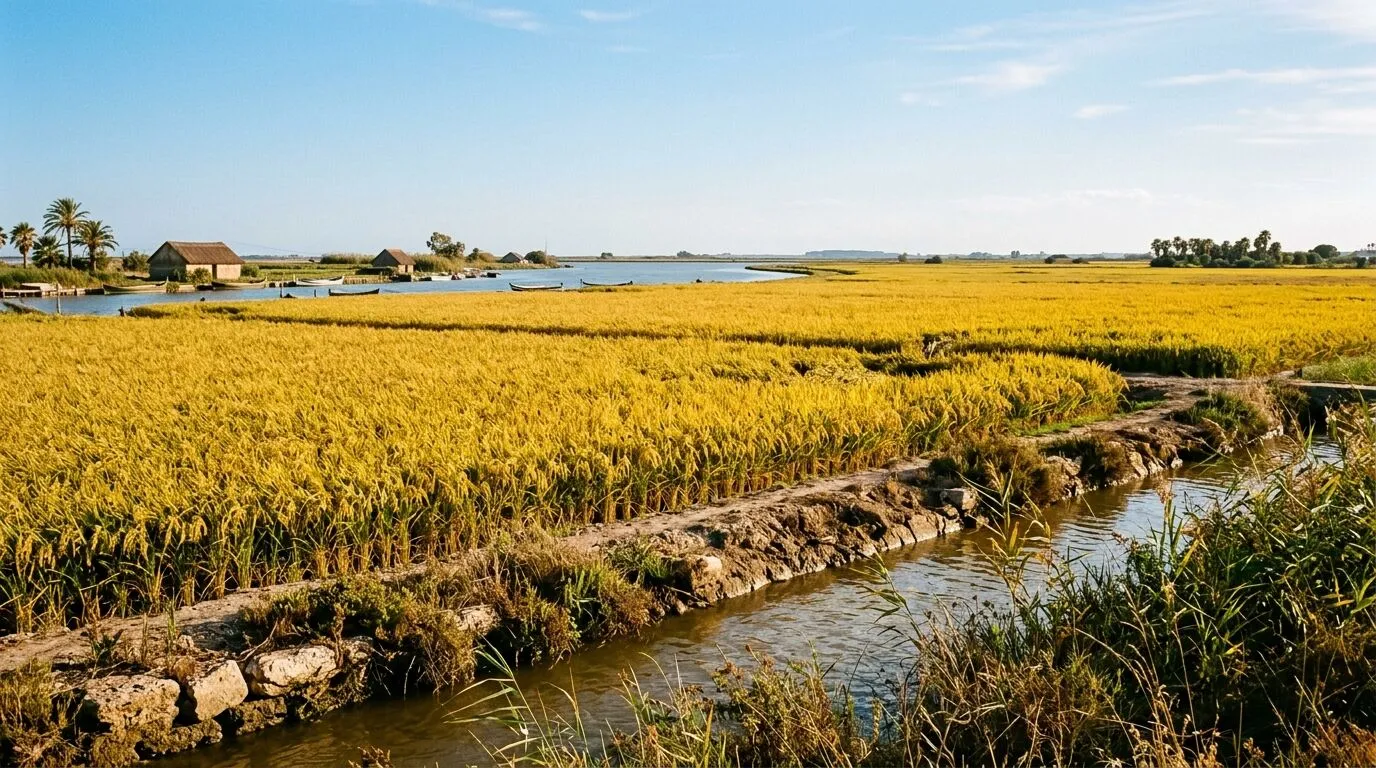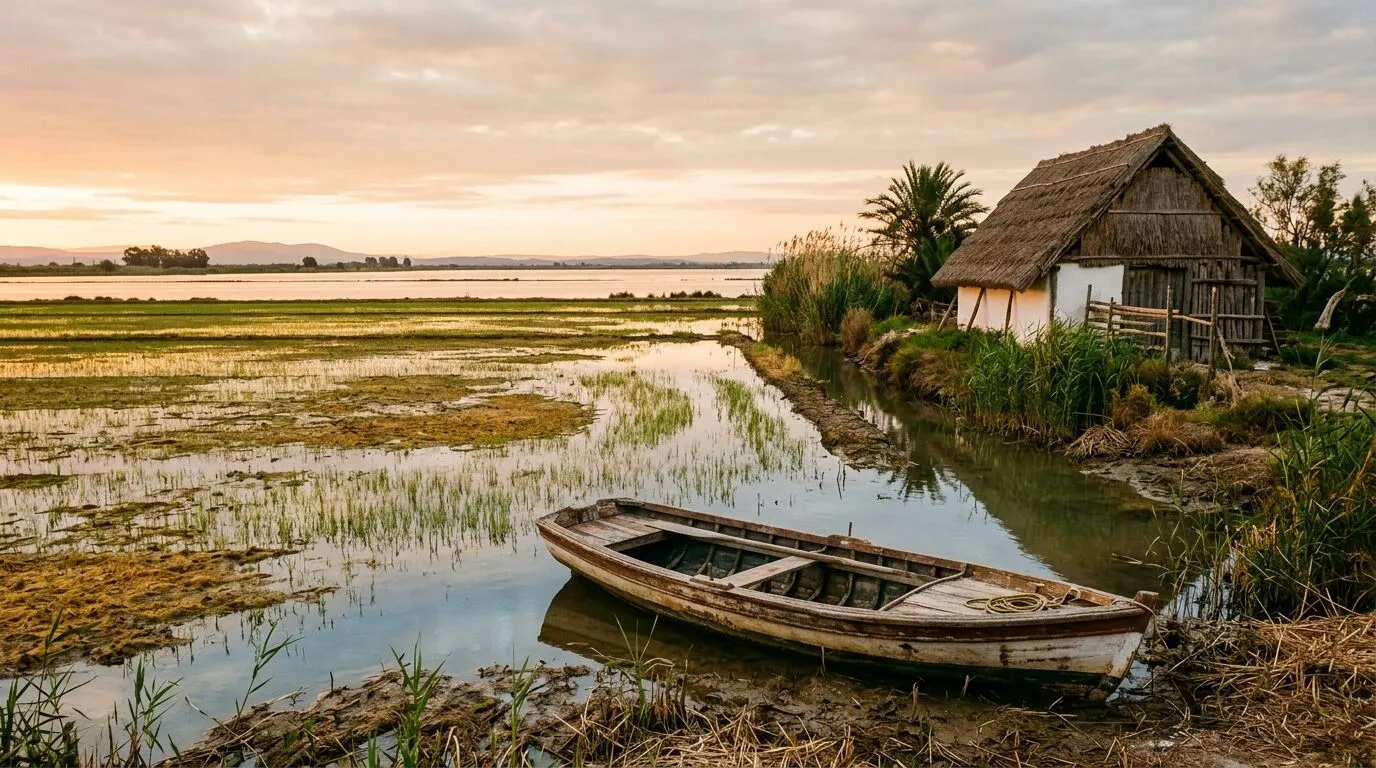
Arroz a banda is a seafood rice typical of Alicante, cooked in the stock left by a fish stewed beforehand and served separately from that fish. It’s a dry rice, with no meat, golden red in colour, and it always comes to the table with alioli (garlic mayonnaise). The Diccionari normatiu valencià defines it in exactly those terms: rice, fish and shellfish, where the rice “is served apart” from the fish used for the stock, cooked in a paella pan and dry.
What “a banda” means
In Valencian, a banda means “apart” or “on the side”. One pot gives you two dishes: first the fish is simmered with potato and vegetables, then the rice is cooked in the paella pan with the stock the fish has left behind. The fish is eaten on its own with its potato and alioli, and the rice on its own too. Alicante’s tourist board food guide sums it up as a humble fishermen’s dish that made it possible to “get two dishes out of one cook”.
Origins: food from the fishing boats
Arroz a banda was born on fishing boats and in fishermen’s homes. The stock was made with morralla, small, bony rockfish that didn’t fetch much at the fish market but make a wonderfully flavourful stock. Over time it found its way into restaurants, and today Alicante’s tourist board describes it as one of the most popular rice dishes in the city and a fixture on almost every menu in Alicante.
What goes into it
- Short-grain rice (bomba, sénia or similar).
- Rockfish stock: a fumet made with cabracho (scorpionfish), gallina, cintas or whatever the fish market has that day.
- Salmorreta, Alicante’s sofrito of tomato, garlic and ñora pounded in a mortar.
- Cuttlefish, squid or peeled prawns, depending on the cook.
- Saffron and olive oil.
- Alioli, which here is part of the dish, not a garnish.
The Diputació de València recipe uses cuttlefish, onion, garlic and tomato, with a rockfish stock made with potato, bay leaf and tomato. The Alicante version relies on ñora; the Diputació’s Valencian version, on onion. Both are arroz a banda.
How it differs from other rice dishes
| Arroz a banda | Arroz del senyoret | Caldero | Paella valenciana | |
|---|---|---|---|---|
| Stock | Fish | Fish | Fish | Water, cooked with the meat and vegetables |
| Texture | Dry | Dry, nearly always | Soupier | Dry |
| What’s in it | Very little; the fish is served separately | Peeled seafood and fish, mixed in | Local fish (red mullet, gallina…); the fish is served separately | Chicken, rabbit, flat green beans and garrofó |
| Served with | Alioli | Depends on the cook | Boiled potato and alioli | No sauce |
Senyoret uses the same stock, but everything is cleaned and goes into the rice. And the caldero of Tabarca, the island just off Alicante, is also served in two parts – rice on one side, fish with potato and alioli on the other – but it’s named after the iron pot (caldero) the fishermen cooked it in, and it usually comes out soupier.
Different names in different places
Watch out if you’re eating with people from the Murcia region. There, “arroz a banda” means what Alicante would call a senyoret, and the Alicante arroz a banda is known as caldero, like the caldero of the Mar Menor. Same language, swapped dishes: ask first what everyone is expecting.
Arroz a banda at a group meal
It’s a very forgiving rice for groups: the stock is made in advance and the rice is cooked live in the paella pan, with the socarrat right at the end. As everything in it comes peeled and cut up, guests can eat it standing or sitting without battling with shells. At Xepep it’s one of the rice dishes we cook for paella delivery for groups and for paella catering and show cooking. To work out the shopping, see our guide to how much rice per person: with so little else in an arroz a banda, the rice per portion goes up slightly.
For more vocabulary from the table and the fiesta, explore Caldero.