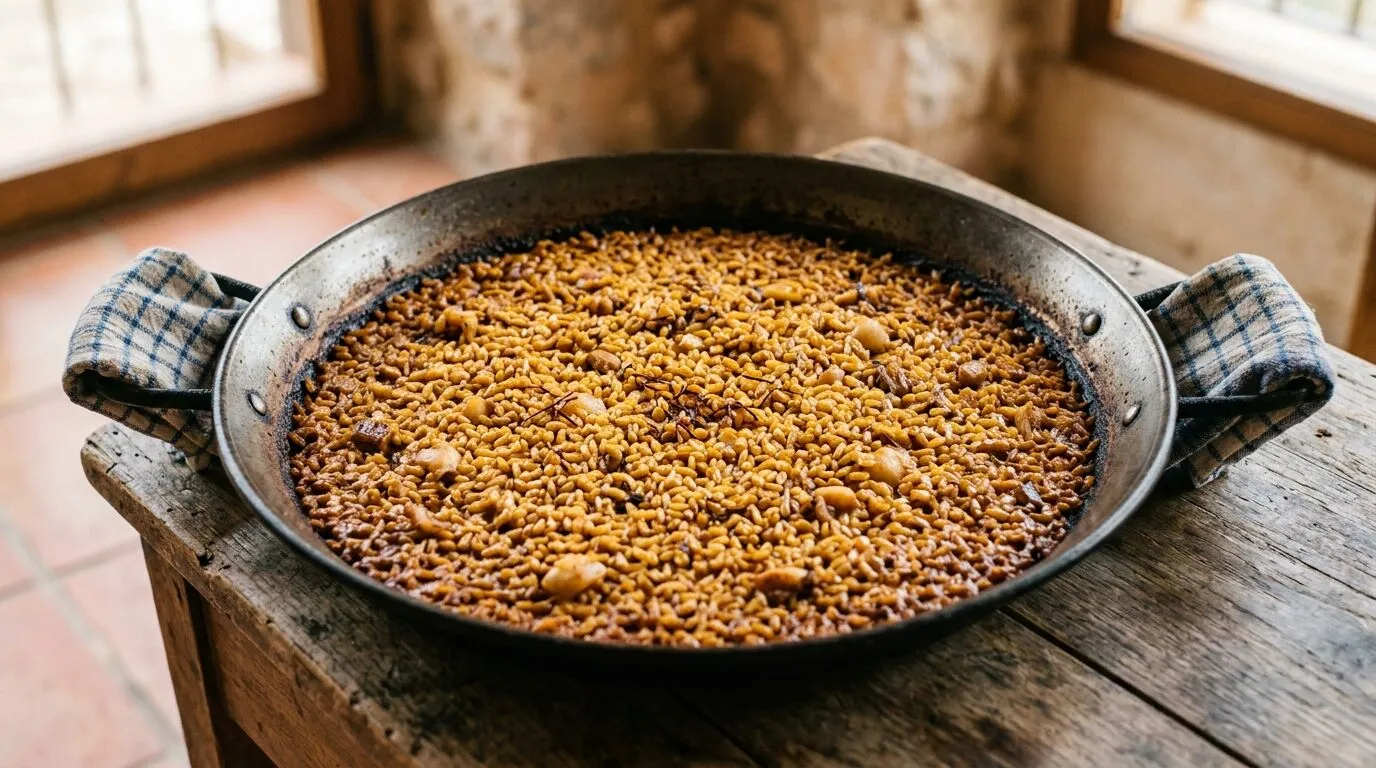

Arroz a banda
Yield: 4 servings
Suggested paella pans: 1 × 40 cm Glossary
Are there 40 or more of you? We cook rice dishes live for groups
Large paella pans need less liquid. Sources
Ingredients
Rice
- 400 gRound-grain rice
- 800 mlFish fumet (alternative to the stock below) (alternative to stock)
- 2 pcsÑoras (dried sweet peppers)
- 4 clovesGarlic
- 100 gChopped tomato
- 1 pcsSmall onion
- to tasteSepionet (baby cuttlefish)
- 1 tbspSweet paprika
- to tasteOlive oil
- to tasteSalt
- to tasteSaffron
- to tasteLemon
- to tasteAllioli
Stock
- 1 kg–1.5 kgMixed rockfish
- 300 gPotato
- 500 gOnion
- 1 leafBay leaf
- to tasteUnpeeled garlic
- to tasteWater
Ingredients
- Fish fumet (alternative to stock): Rockfish or small mixed fish (morralla) — 600 g
- Fish fumet (alternative to stock): Water — 800 ml
- Fish fumet (alternative to stock): Onion — 1 pcs
- Fish fumet (alternative to stock): Leek — 1 pcs
- Fish fumet (alternative to stock): Carrot — 1 pcs
- Fish fumet (alternative to stock): Celery — 1 sprig
- Fish fumet (alternative to stock): Garlic — 1 clove
- Fish fumet (alternative to stock): Bay leaf — 1 leaf
- Fish fumet (alternative to stock): Black peppercorns — 1 pcs
- Fish fumet (alternative to stock): Extra virgin olive oil — 1 tbsp
- Fish fumet (alternative to stock): Lemon juice — 0.5 tbsp
- Fish fumet (alternative to stock): Fresh parsley — to taste
- Fish fumet (alternative to stock): Salt — to taste
Steps
- 1Boil the 300 g, the 500 g, the to taste and the 1 leaf in water. When they are almost done, add the 1 kg–1.5 kg and salt, and top up with water if needed. If you would rather start from ready-made 800 ml, heat it up and skip this step and the next.15 min
- 2Take out the fish with the potato and onion and set it aside: that is the banda. Strain the stock and keep it boiling next to the paella pan; you want just enough to cook the rice, because a stock stretched too far turns out thin.
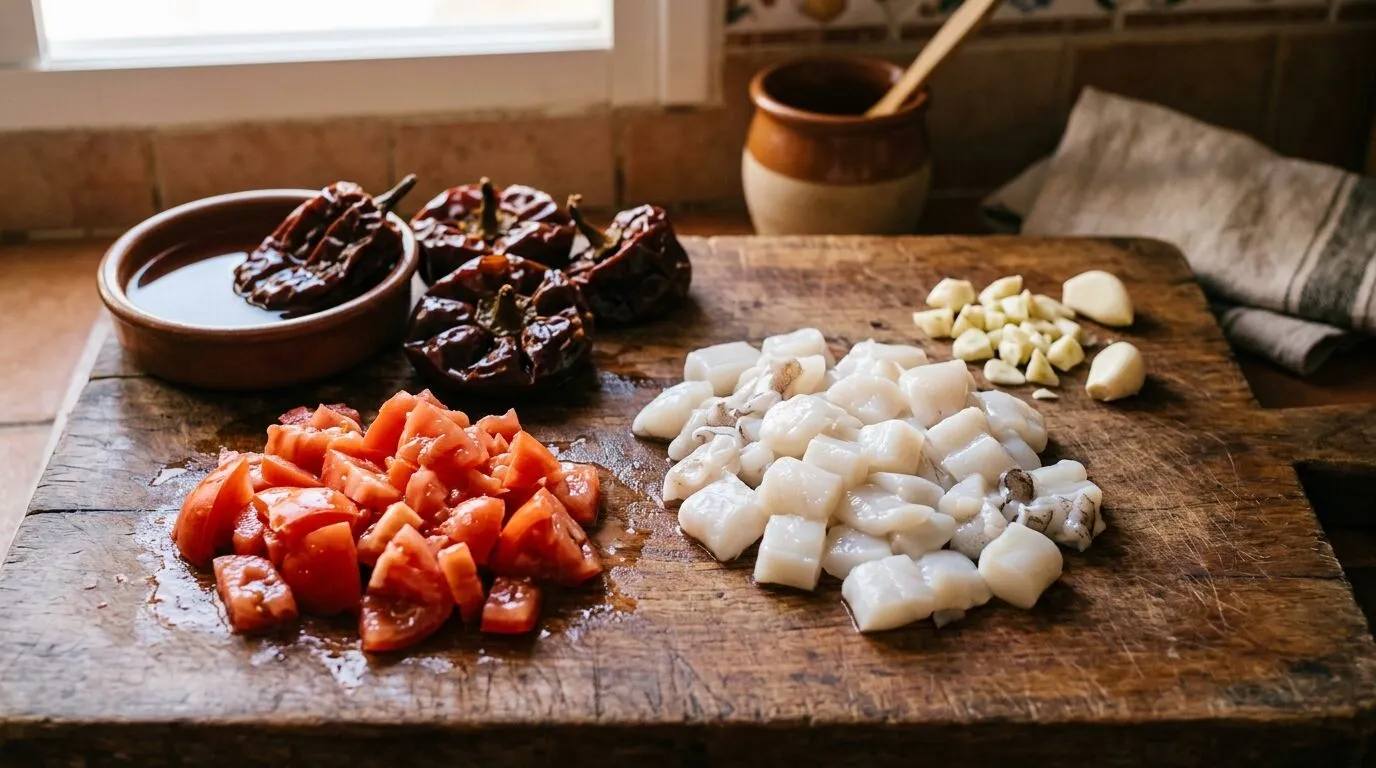
- 3Fry the 2 pcs in a little to taste, take them out and chop them together with some of the 4 cloves. Set that paste aside.
- 4In the paella pan, with the to taste very hot, fry a few cloves of garlic and, before they take colour, add the 100 g, the chopped 1 pcs and the to taste. Stir it round and add the ñora paste.
- 5Add the 400 g, mix it well with everything, sprinkle over the 1 tbsp and the to taste and pour in the boiling stock straight away, spreading the grains over the whole pan.
- 6Cook over a high heat at first and lower it as the grain dries. Once the stock is in, don’t stir. Keep a little boiling stock to hand in case the rice dries out too soon.19 min
- 7Take it off the heat and let it rest for a few minutes before serving.5 min
- 8Serve the rice with wedges of to taste and a touch of to taste on the side. The fish, boned and with its potato and onion, goes on another dish, dressed with allioli or another sauce.
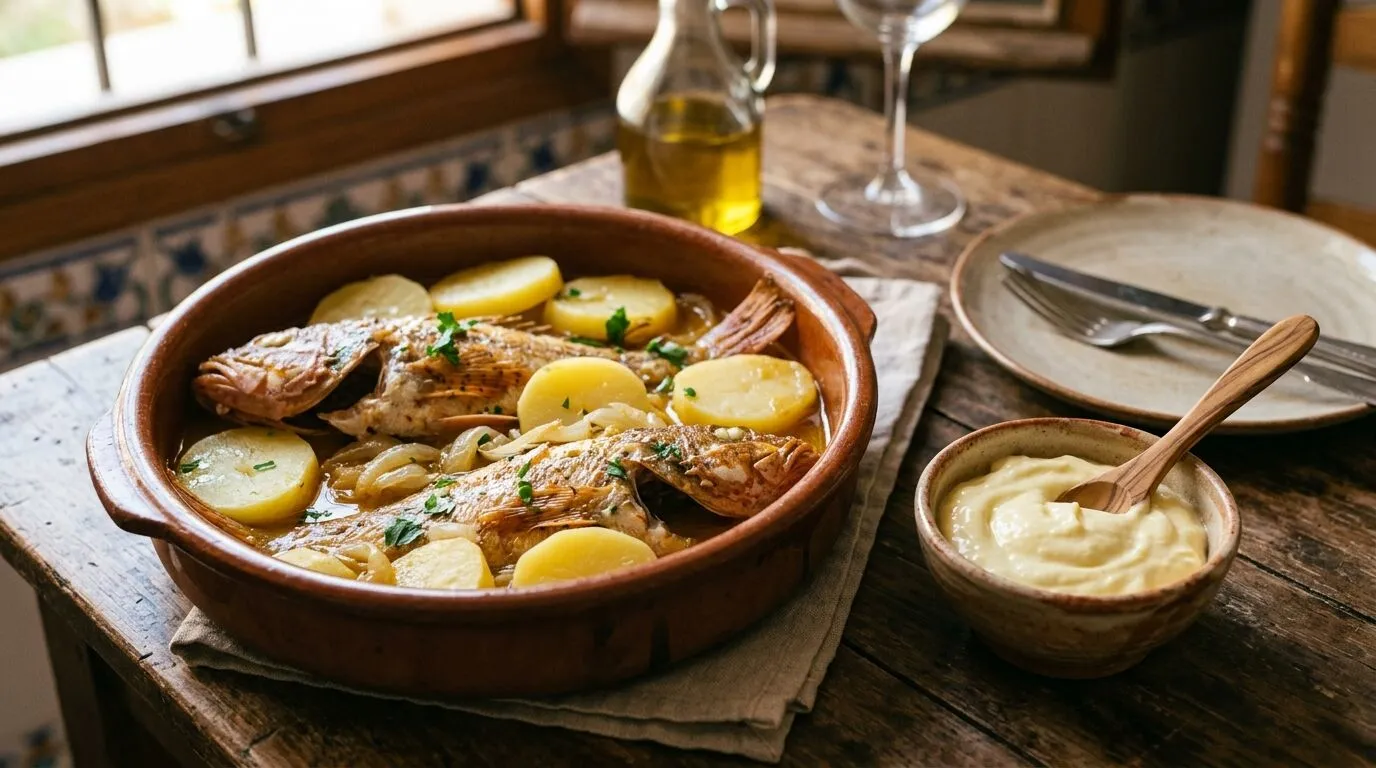
Arroz a banda is won or lost in the stock, and the stock in the fish. This recipe follows the classic order: first a short stock with the rockfish and only then the rice. To see how rice reached this coast, read our history of rice in Spain.
The stock and where the proportion comes from
The stock is made with potato, onion, unpeeled garlic and bay leaf, and the fish goes in when the rest is almost done. Martí Domínguez’s book mentions one to one and a half kilos of mixed rockfish (scorpionfish, blackbelly rosefish, monkfish, weever) and ten to fifteen minutes of cooking. No more is needed: rockfish gives up what it has very quickly.
The proportion deserves an explanation. You will see different figures around: Directo al Paladar uses three times as much stock as rice and Martí Domínguez’s book uses twice. We have gone with the latter because it is the base source’s and because the Turismo de Alicante guide uses the same in its Alicante rice. For 400 g of rice, about 800 ml. In a fish rice dish the stock is the star, so don’t overdo the water when you make it: a stretched stock turns out thin.
If you already have a fumet made, use it in the same quantity: the recipe card works it out for you. You save the first step, but you lose the banda.
The banda: what is served apart and how
The fish you take out of the stock isn’t thrown away. Boned and with its potato and onion, it makes a second course, dressed with allioli or another of the sauces Martí Domínguez mentions: vinaigrette, mayonnaise, romesco. The original version, according to Turespaña, served only the rice; the fish could be eaten separately. What doesn’t change is the split: rice in the pan and fish on another dish, never mixed together. For another fish dish with a picada of almond, garlic and bread, try the suquet de peix from Vinaròs.
Allioli isn’t compulsory either, but in many homes it is part of the ritual: the rice is eaten stirred in with a little. And lemon wedges on the table freshen up a dish that, being so intense, benefits from them.
Paella pan, heat and a dry finish
It is made in a wide paella pan, with the rice in a thin layer spread over the whole surface. The sofrito goes in this order: garlic that doesn’t get as far as browning, tomato, onion and baby cuttlefish, and the ñora paste last, which we take from the Turespaña recipe. High heat when the stock goes in, and gentler and gentler as the grain dries. It works well with bomba rice or a similar round-grain rice. Once the stock is in, don’t stir: what counts is letting the rice cook by itself; any toasted layer left at the bottom is the socarrat. If you are interested in the difference between dry, creamy and soupy, you will find it in creamy, soupy and dry rice.
A note on the name: in Murcia, “arroz a banda” doesn’t mean this dish; the entry what arroz a banda is explains the mix-up.
Mistakes you pay for on the plate
- Weak stock. If the stock is made from rockfish that isn’t very fresh or ends up tasteless, the rice tastes of nothing. Better a little stock, and good.
- Burnt ñora. Fry it just enough; if it darkens, it turns the whole sofrito bitter.
- Overcooked rice. When there are only a few minutes left, taste the grain. If it is already done, take the pan off the heat: the resting will do the rest.
- Too much in the pan. The more that goes in, the less room there is for the grain. In arroz a banda, the fish is outside for a reason.
If there are lots of you at the table
The stock is prepared in advance and the rice is made live, in large paella pans with the heat well spread. To work out the shopping, there is the guide to how much rice per person. And if there are 40 or more of you, we cook rice for groups live: it is all in paella and show cooking.
History and variations
It is fishermen’s food: from the same pot came two dishes, the rice cooked in the stock and the fish served apart, “a banda”, as Turismo de Alicante recalls. The glossary entry explains the name and compares it with the senyoret and the caldero.
Alicante: The Turismo de Alicante guide gives salmorreta, made with ñora pepper, garlic and tomato, as the base of most Alicante rice dishes. Sources
Valencia: The Diputació recipe starts from cuttlefish, onion, garlic and grated tomato, and from the stock the rockfish was cooked in. Sources
Tips
Measure the stock for the rice: what is left over from the fish has to be just enough, because a stock stretched too far turns out thin. Sources
Keep boiling stock close by in case the rice dries out before it is cooked. Sources
Serve the rice with lemon wedges, and the allioli alongside: in plenty of places it is eaten stirred in with a little. Sources
Arroz a banda
Frequently asked questions
What fish goes into the stock for arroz a banda?
Assorted rockfish. Martí Domínguez’s book speaks of one to one and a half kilos of scorpionfish, blackbelly rosefish, monkfish or weever, which goes in when the potato, onion, garlic and bay leaf are almost done and cooks for ten to fifteen minutes. Then it is lifted out, boned and served apart: that is the banda. If you already have fumet made, use the same amount.
How much stock does arroz a banda need?
Two measures of stock to one of rice: for 400 g of rice, about 800 ml. That is the proportion in Martí Domínguez’s book, which warns that the stock has to be just enough so it doesn’t turn out thin. Directo al Paladar goes up to triple. This recipe sticks to Martí Domínguez’s and doesn’t mix the two.
Is it always served with allioli?
Not always, but nearly. According to Turespaña, in its original version only the rice was served, with the fish apart if you wanted it. And Martí Domínguez’s book notes that in quite a few places it is a ritual to eat it stirred in with a little allioli. Put it on the table and let everyone decide.
What do I do with the fish that comes out of the stock?
You take it out, bone it and serve it as a second course with the potato and onion from the stock itself. Martí Domínguez’s book dresses it with sauces such as allioli, vinaigrette or mayonnaise. That is the banda: two courses from a single pot.
Sources
- J. Martí Domínguez, Els nostres menjars: arròs a banda (Vicent Baldoví’s website, uv.es)
- Arroz a banda (Turespaña, spain.info)
- Arroz a banda (Directo al Paladar)
- Traditional arroz a banda recipe (València Turisme, Diputació de València)
- Alicante, gastronomía y producto (Turismo de Alicante, 2022)
- Arroz a banda (Wikipedia, supporting the names used in Murcia)
Glossary terms
Recipes
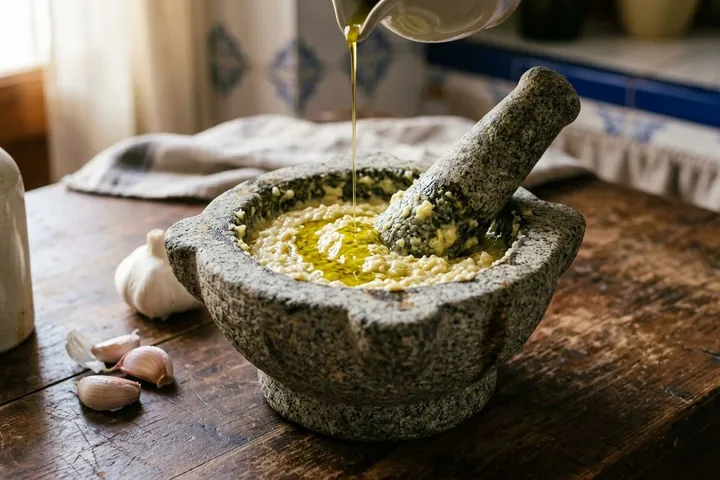
Mortar allioli
Traditional allioli is made in a mortar with just garlic, olive oil and salt. No egg, plenty of patience: the classic partner for arroz a banda and fideuà.
Total time: 20 min
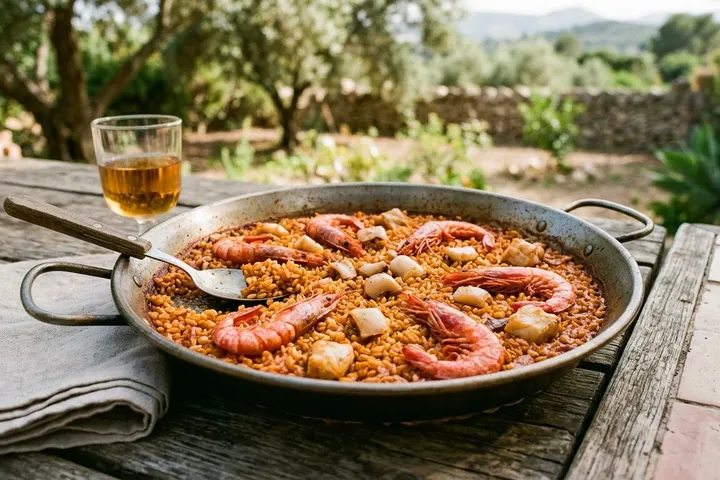
Arroz del senyoret (peeled seafood rice)
Arroz del senyoret for 4: cuttlefish, peeled king prawns and monkfish in a reddish sofrito, twice as much fish stock as rice, all ready to eat with a spoon.
Total time: 50 min
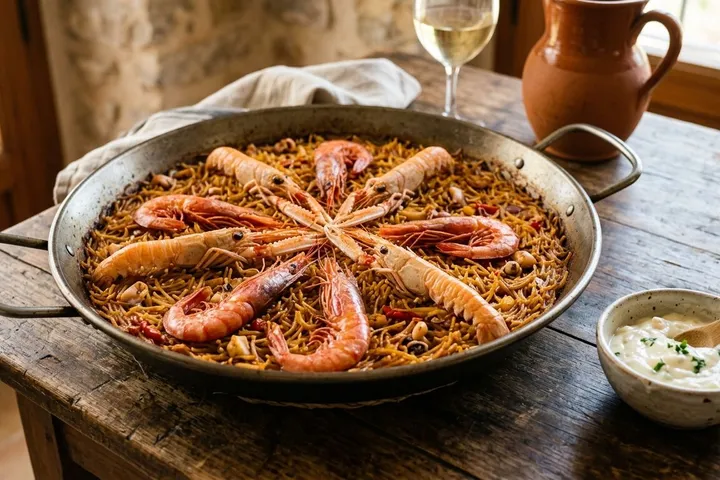
Fideuà de Gandia
Fideuà de Gandia for 6: 600 g of number 3 noodles, about 2 litres of rockfish stock, monkfish, cigalas and red prawns, cooked in a paella pan, with allioli.
Total time: 17 min
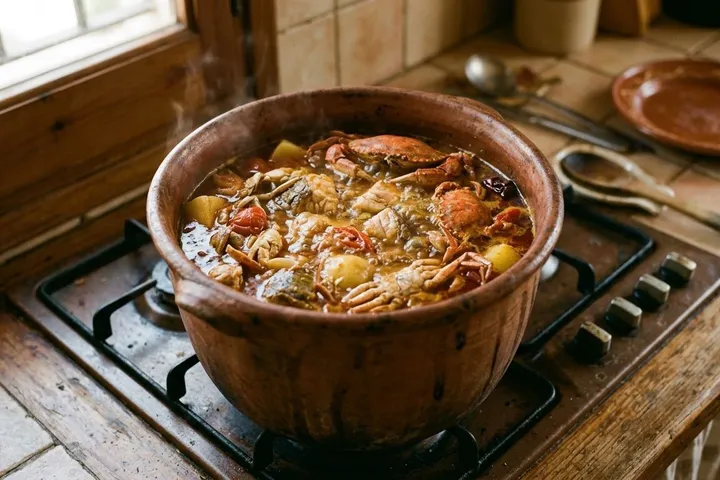
Fish fumet
Homemade fumet is cold water, fish bones and a few vegetables, cooked gently, skimmed and strained. It is the liquid base of seafood rice dishes.
Total time: 35 min
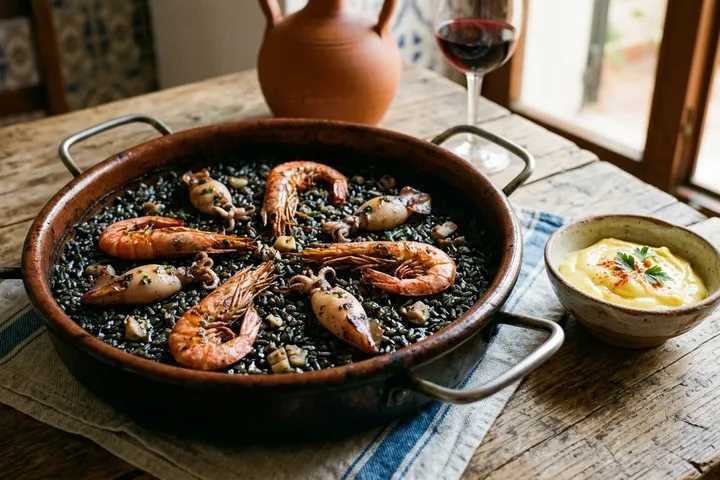
Black rice (arroz negro)
Black rice for 4: baby cuttlefish, ink, small-fish fumet and bomba rice, finished in the oven at 180 °C and served with allioli.
Total time: 30 min