
Mortar allioli
Yield: 6 servings
Are there 40 or more of you? We cook rice dishes live for groups
Large paella pans need less liquid. Sources
Ingredients
Sauce
- 2 clovesGarlic
- 500 mlExtra virgin olive oil
- to tasteCoarse salt
Ingredients
Steps
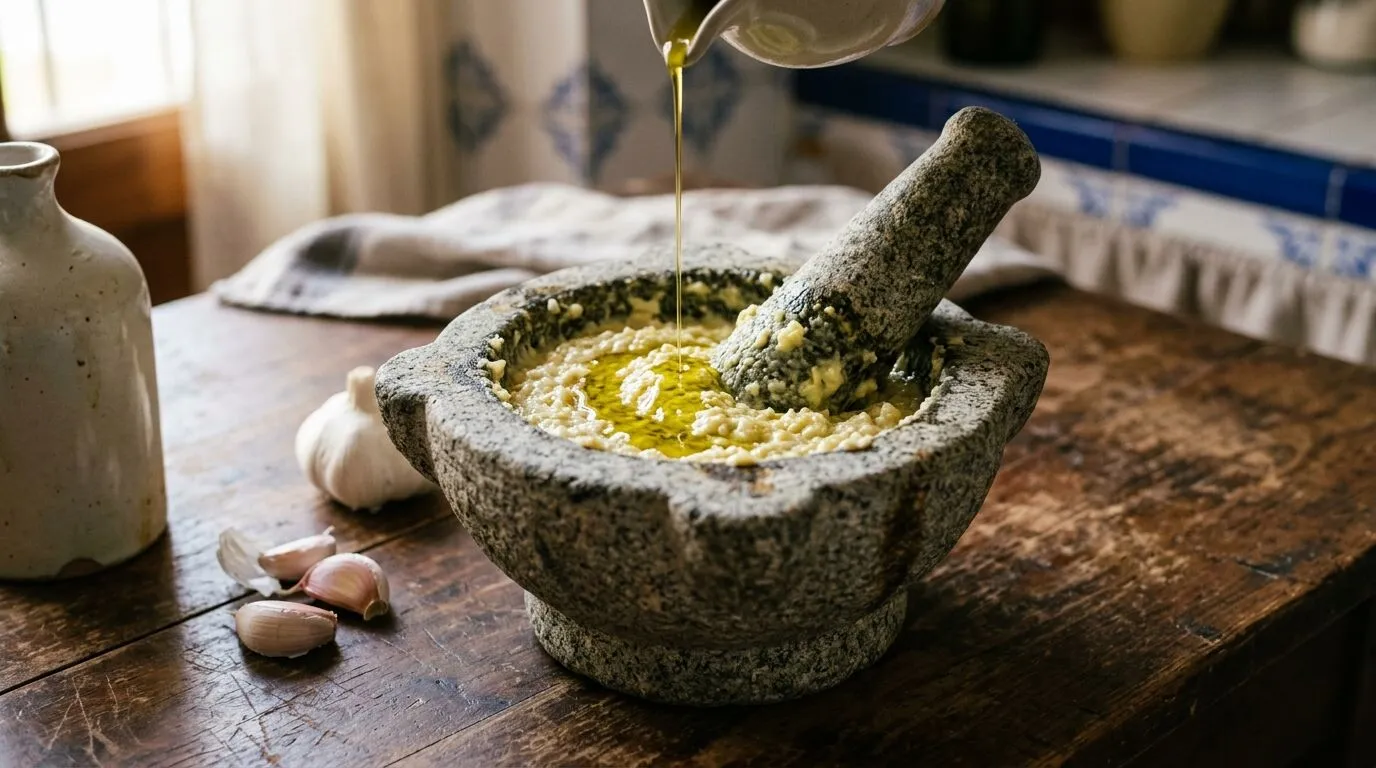
- 1Chop 2 cloves into small pieces and remove the green germ if it has one, so the allioli doesn’t repeat on you.3 min
- 2Put it in the mortar with a few grains of to taste, which stop the garlic jumping about, and pound from top to bottom until you have a paste.5 min
- 3Add 500 ml drop by drop, without stopping. The juice the garlic gives off as you crush it helps the sauce bind.
- 4As you go, turn the pestle and rub the sauce against the bottom of the mortar, always in the same direction.
- 5Keep adding the oil little by little as the sauce thickens, until it is all used.12 min
- 6Stop when the sauce is firm and comes away from the sides of the mortar.
- 7If it splits, add a few drops of water and stir vigorously in circles until it comes back together.
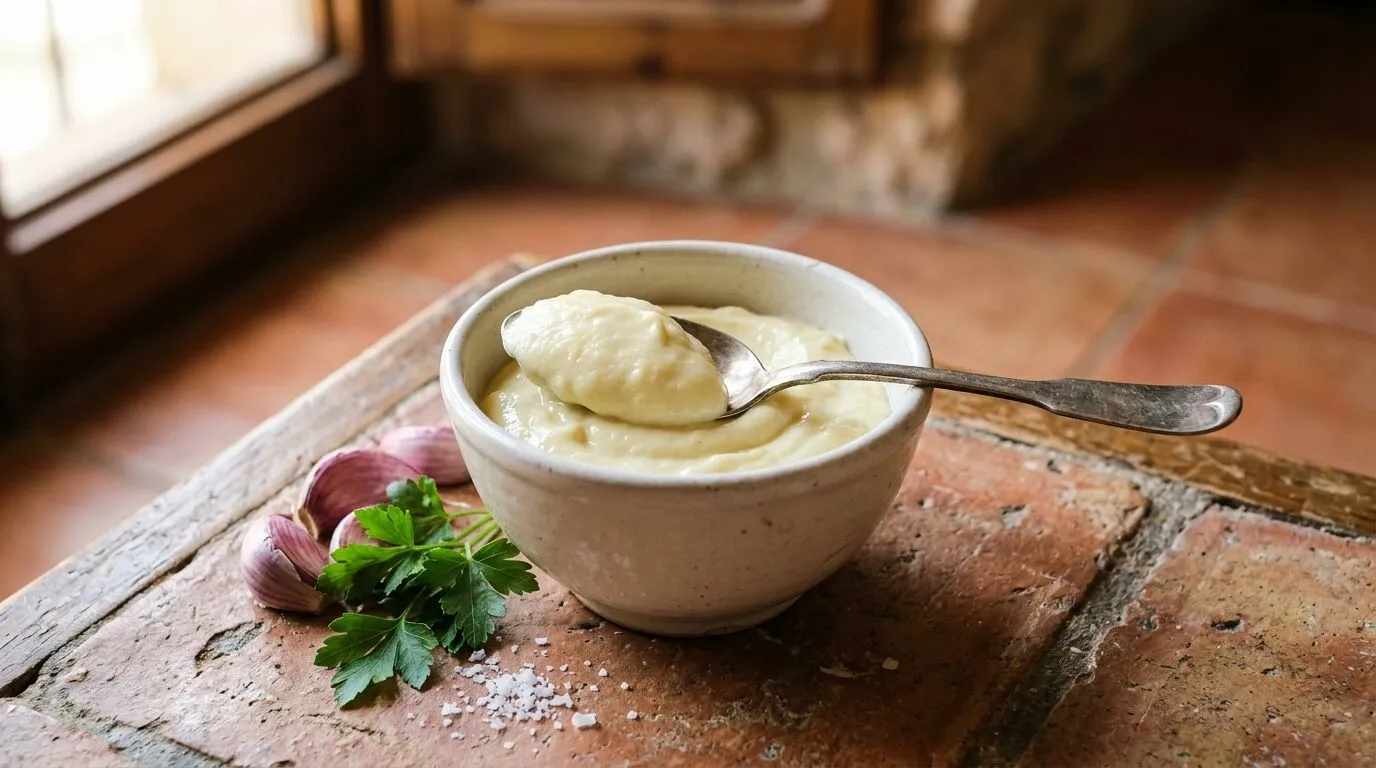
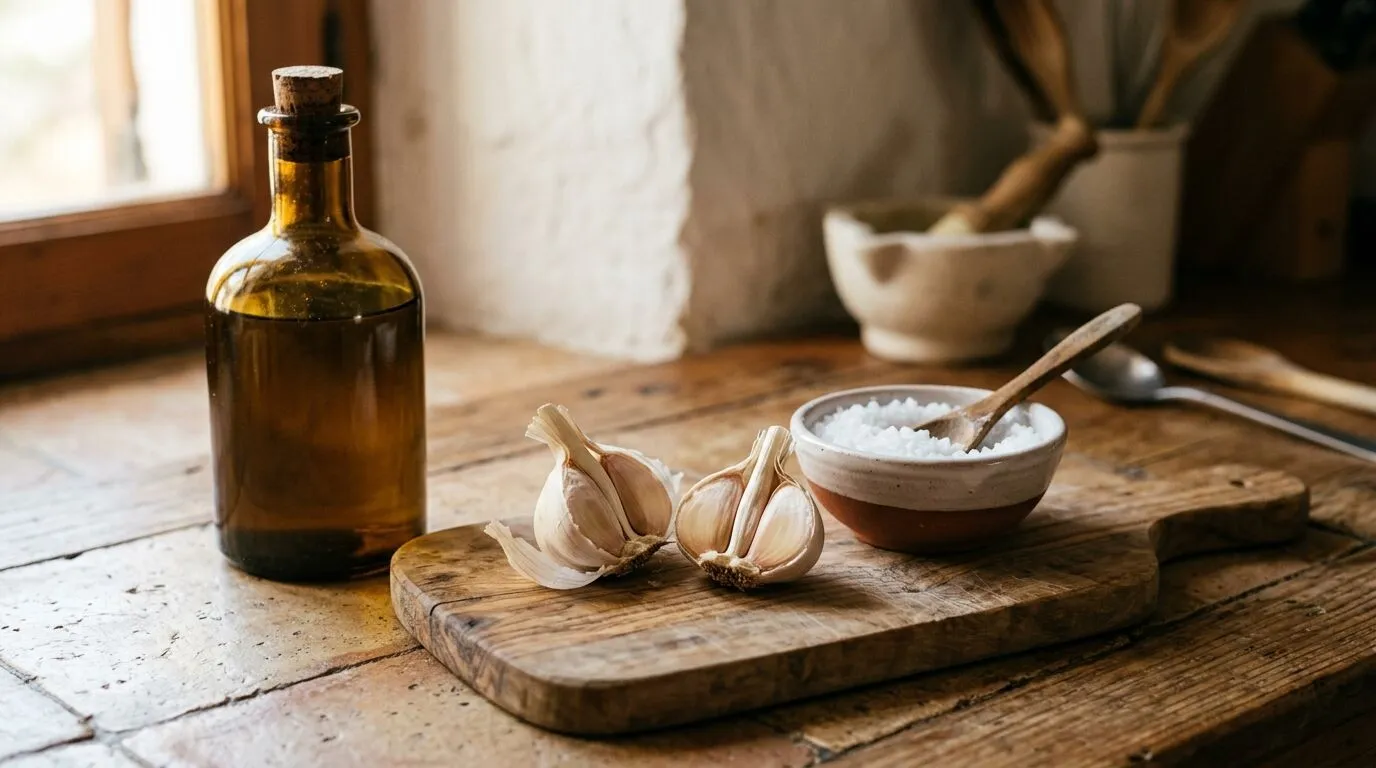
Mortar allioli takes three things: garlic, olive oil and salt. Allioli is the spelling in the Valencian standard dictionary; alioli, with a single “l”, is the one people search for most, and it is the same dish.
Why this recipe has no egg
There is an old argument, and it is best to put it on the table. The Valencian standard dictionary (AVL) defines allioli as a sauce of chopped garlic beaten with oil “and, generally, also with egg yolk”. Cookery sources go the other way. The Turismo de Alicante food guide says the original recipe is an emulsion of garlic, olive oil and salt, and Directo al Paladar points out that what has egg in it is mayonnaise. Valencia Bonita goes further: with egg or milk, in their view, it shouldn’t be called allioli at all.
This page follows the mortar version, the one the cookery sources give as the original. If you want something easier to bind, yolk, a little vinegar or a hand blender are the home remedies Consumer mentions. These are variations, and with egg the sauce joins the list of allergens that must be declared; allioli made of garlic, oil and salt contains none of them.
The mortar and a steady hand
The whole trick is patience with the oil. First you make a fine paste from the garlic and coarse salt, which also stops the garlic jumping about as you pound it. Then comes the oil, always in the same direction: Directo al Paladar adds it drop by drop from start to finish and Valencia Bonita talks about a very thin thread. What doesn’t work is pouring it in a steady stream.
Allow about twenty minutes and a fair bit of arm: medium difficulty, according to Directo al Paladar. If the sauce splits, don’t throw it away. A few drops of water and a vigorous stir usually bring it back.
On how much garlic, the sources don’t agree. Directo al Paladar uses two cloves for about 500 ml of oil; Valencia Bonita talks about three or four and recommends good-quality olive oil, extra virgin if you want a more intense flavour. Start with the proportion on this page and taste: more garlic, more punch.
What to serve it with
It is the classic accompaniment to fish rice dishes. Directo al Paladar mentions it with the caldero, arroz a banda and fideuà; the Turismo de Alicante guide adds black rice. In the recipe collection you will find it alongside the arroz a banda recipe, black rice, fideuà de Gandia and arroz del senyoret. A spoonful on the edge of the plate, and everyone mixes it in to taste. The “all” in the eel all i pebre is a different garlic: it is fried, and that stew has no allioli.
It also goes well with potatoes, grilled fish or meat, according to Directo al Paladar.
If there are 40 or more of you, we cook rice for groups live: see paella and show cooking.
History and variations
Its origin is disputed and no open source settles it, so we don’t credit it to anyone here. On the egg there are two schools: the Valencian standard dictionary describes it as “generally” made with yolk, while Turismo de Alicante, Valencia Bonita and Directo al Paladar give garlic, oil and salt as the original recipe. This page follows the egg-free, mortar version.
Tips
Remove the green germ from the garlic before you crush it: it is what makes allioli repeat. Sources
Add the oil drop by drop and without stopping: Directo al Paladar warns that a thin stream can be too much and split the sauce. Sources
Always stir in the same direction so the oil doesn’t gather in the middle of the mortar. Sources
Mortar allioli
Frequently asked questions
Why has my allioli split?
Almost always because too much oil goes in at once. Directo al Paladar recommends adding it drop by drop and warns that even a thin stream can be too much. If it splits, add a few drops of water and stir vigorously in circles. Keeping to one direction also helps the oil to blend in.
Does allioli have egg in it?
It depends who you ask. Turismo de Alicante, Valencia Bonita and Directo al Paladar give garlic, oil and salt, with no egg, as the original. The Valencian standard dictionary defines it as garlic and oil and, “generally”, yolk as well. At home some people add yolk or milk so it doesn’t split. If you are cooking for someone with an egg allergy, ask which version has been made.
What is the difference between allioli and mayonnaise?
Mayonnaise has egg and traditional allioli doesn’t: just garlic, oil and salt, bound by hand in the mortar. Directo al Paladar considers garlic stirred into mayonnaise a substitute, even though plenty of places make it that way. The flavour changes too: garlic and oil alone is very strong, so much so that Consumer suggests yolk to soften it.
Sources
- Directo al Paladar: how to make alioli
- Valencia Bonita: allioli (traditional method without egg)
- Consumer: making traditional alioli
- AVL, Diccionari Normatiu Valencià: allioli (“generalment, també amb rovell d’ou”)
- Alicante, gastronomía y producto (Turismo de Alicante, 2022): alioli, the original recipe of garlic, olive oil and salt
Glossary terms
Recipes
Arroz a banda
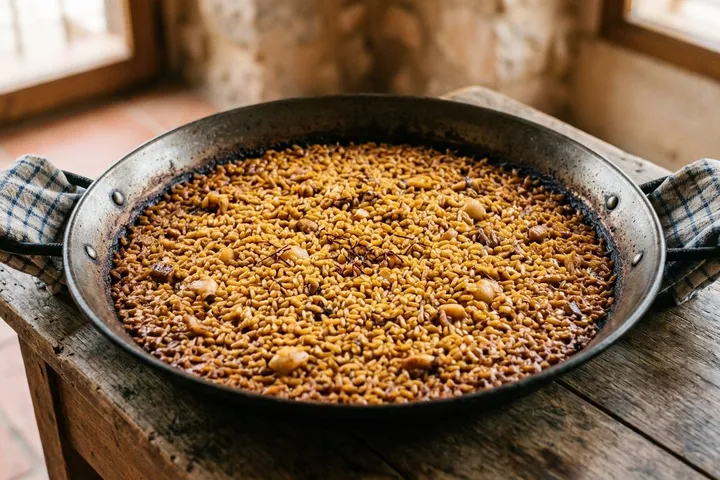
Arroz a banda for 4: ñora and baby cuttlefish sofrito, double the fish stock to rice, dry in the paella pan, fish served apart with potato and allioli.
Total time: 24 min
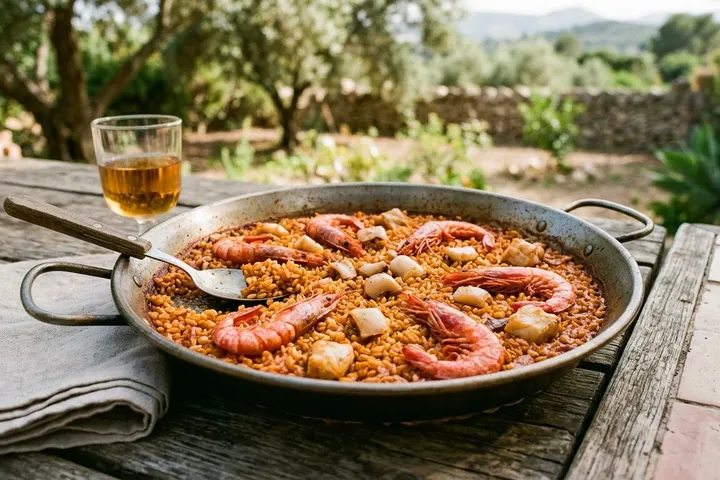
Arroz del senyoret (peeled seafood rice)
Arroz del senyoret for 4: cuttlefish, peeled king prawns and monkfish in a reddish sofrito, twice as much fish stock as rice, all ready to eat with a spoon.
Total time: 50 min
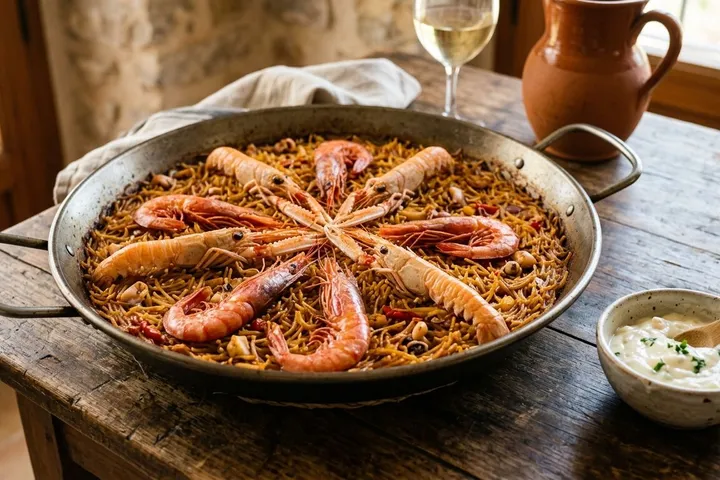
Fideuà de Gandia
Fideuà de Gandia for 6: 600 g of number 3 noodles, about 2 litres of rockfish stock, monkfish, cigalas and red prawns, cooked in a paella pan, with allioli.
Total time: 17 min
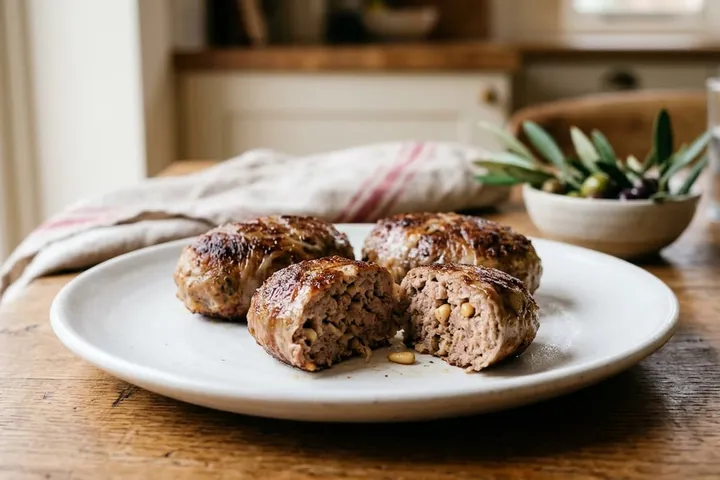
Figatells
Figatells or fardeles for 4: balls of pork liver, lean pork and belly with pine nuts and aniseed, wrapped in mantellina and browned on a griddle.
Total time: 15 min
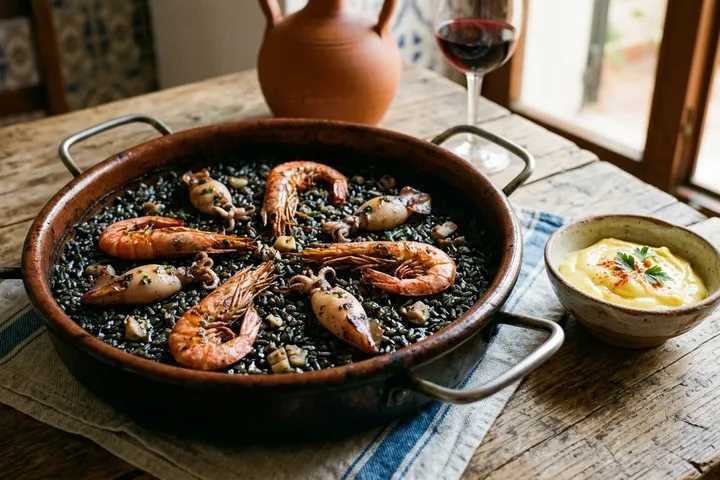
Black rice (arroz negro)
Black rice for 4: baby cuttlefish, ink, small-fish fumet and bomba rice, finished in the oven at 180 °C and served with allioli.
Total time: 30 min