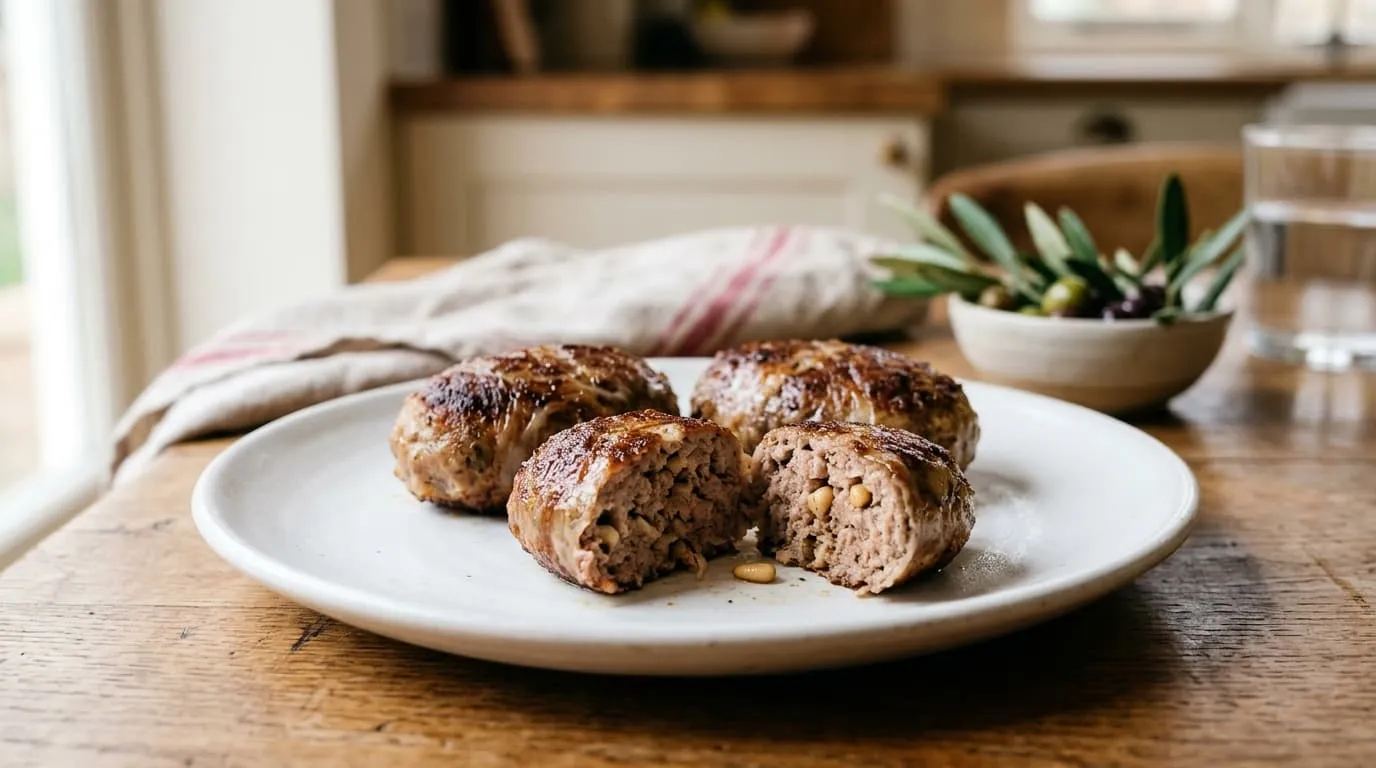

Figatells
Yield: 4 servings
Are there 40 or more of you? We cook rice dishes live for groups
Large paella pans need less liquid. Sources
Ingredients
Figatells
- 200 gMinced lean pork
- 300 gPork liver
- 100 gPork belly
- 50 gPine nuts
- 1 pcsEgg
- 1 cloveGarlic clove, very finely chopped
- 1 tspAniseed
- to tasteFresh parsley
- to tasteMantellina (pork caul fat, also called crepineta, redaño or telilla; or lamb)
- to tasteExtra virgin olive oil
- to tasteSalt
- to tastePepper
Ingredients
Steps
- 1Ask the butcher to mince the pork liver together with the minced lean pork and the pork belly.
- 2Put the three meats in a bowl with the pine nuts, the egg, the garlic clove, very finely chopped, the aniseed and the fresh parsley. Mix well and spread the mixture out to season it to taste with salt and pepper.
- 3Shape balls a little bigger than traditional meatballs, pressing firmly so that they do not fall apart later.
- 4Cut pieces of mantellina, stretch them out on the table and put a ball of meat on each.
- 5Close each piece, wrapping the meat well.
- 6Leave the figatells to rest in the fridge until the moment you eat them.
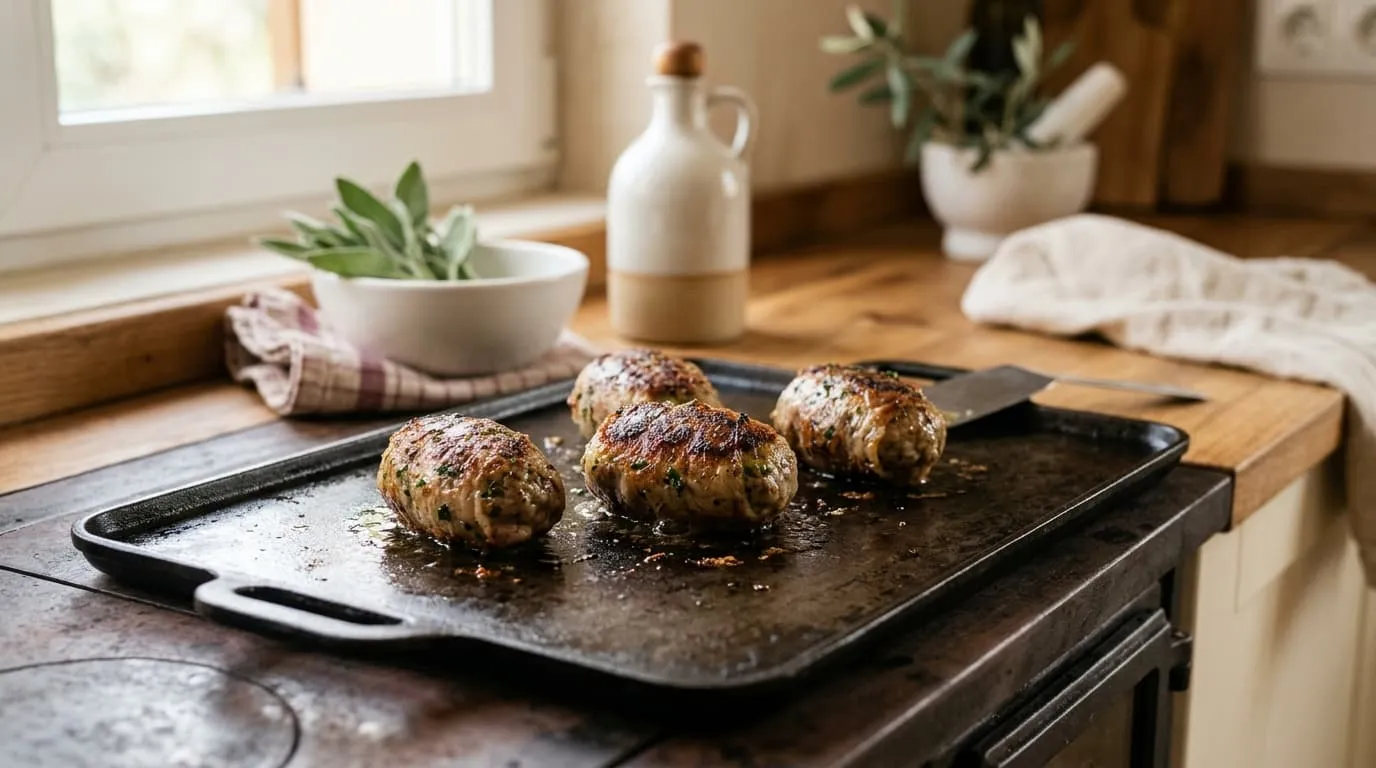
- 7When you are going to eat them, cook them on the griddle with a few drops of extra virgin olive oil until they are well browned on the outside on both sides.5 min
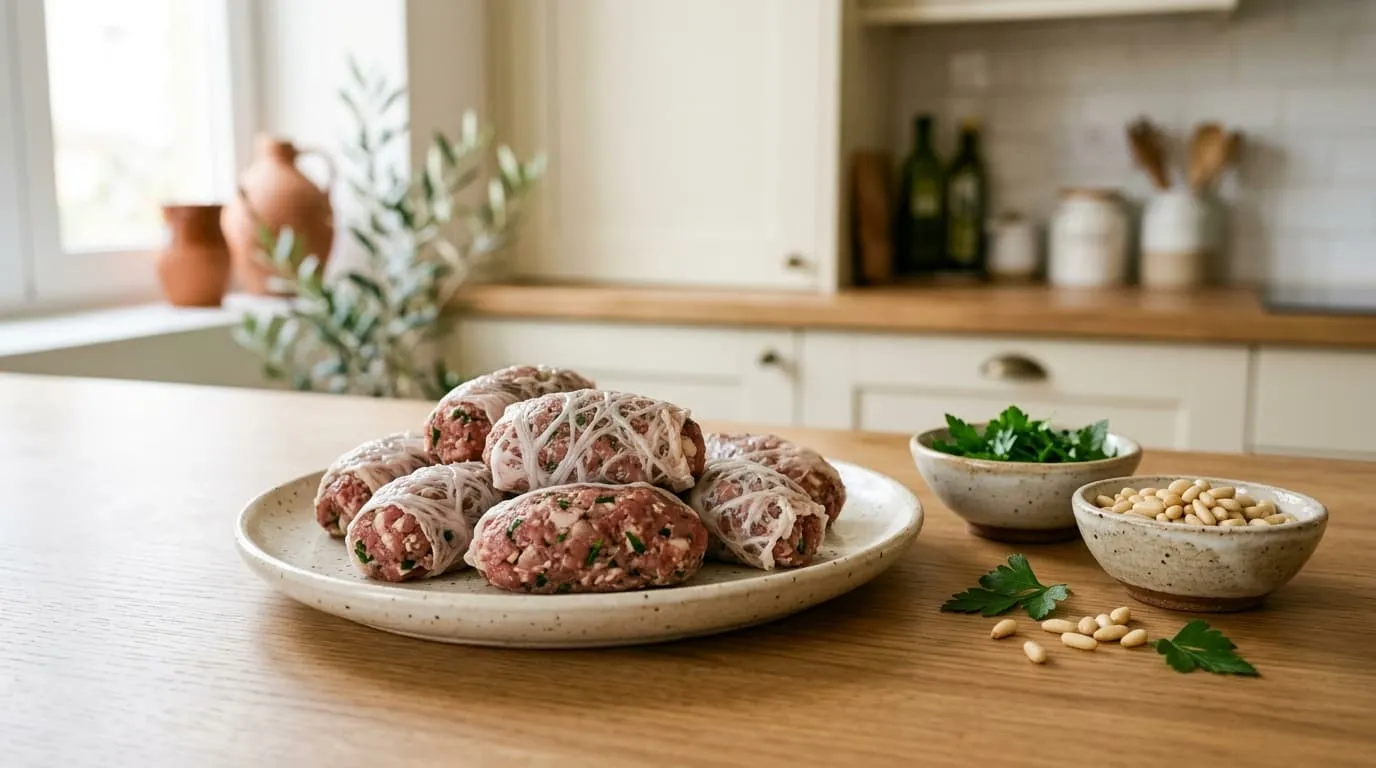
Figatells, also called fardeles, are balls of minced pork with liver, wrapped in a thin membrane and cooked on the griddle. The recipe is the one from Directo al Paladar, for four people, and it is the base source of this recipe card.
Liver, lean pork and belly
The mixture is built on three kinds of pork: liver, lean pork and belly. The recipe does not have you mince them at home: it asks the butcher to mince the three together, so the first stop is the butcher’s. It is best to order ahead, and to ask on the same visit for the membrane for wrapping.
The rest of the list is short: pine nuts, one egg, one very finely chopped garlic clove, aniseed and parsley, with salt and pepper. The seasoning is adjusted to taste, according to the method. As they contain liver, egg and pine nuts, go over the 14 allergens if you are serving them to guests.
The mixture
The three minced meats go into a bowl along with the pine nuts, the egg, the garlic, the aniseed and the parsley. The method says to mix well and spread the mixture out to season it with salt and pepper to taste. Mixing thoroughly is what distributes the egg, the garlic and the pine nuts throughout the meat, and it is what gives each ball its uniformity.
The ball and the mantellina
With the mixture ready, balls are shaped a little bigger than traditional meatballs. The recipe insists on pressing them firmly so that they do not fall apart later. Each ball is placed on a piece of mantellina, the thin membrane that serves as the wrapping, stretched out beforehand on the table.
The source allows other names for that wrapping: crepineta, redaño or pork telilla, and also lamb. That is what you should ask for at the butcher’s along with the mincing. Close each piece, wrapping the meat well, and put them together on a tray as you finish them.
Fridge, griddle and freezing
The figatells are left to rest in the fridge until the moment they are eaten. The source gives no resting time, so what matters is for the kitchen to be ahead of the service and for you not to leave them until the last moment.
To cook them, they are done on the griddle with a few drops of oil, until they are well browned on the outside on both sides. It is a short cooking time, about 5 minutes according to the recipe’s header, and it needs no more technique than watching the browning.
If you have any left over, the source says that any you are not going to cook can be frozen uncooked, for later. It is the only storage instruction the recipe gives.
How to organise the kitchen
It is a dish with a lot of handwork and little fire. Before starting, have the bowl, the mantellina to hand and a tray for leaving the figatells once wrapped. Take your time over the wrapping, because it is the part that takes the longest, and leave the griddle for the end, when the guests are already seated.
How much time you really need
The header adds up to 15 minutes: 10 of preparation and 5 of cooking. That figure does not include the time at the butcher’s for the mincing or the rest in the fridge, which has no stated time. If you want them for a meal at a particular time, make the figatells in advance and leave the griddle for the moment of serving.
How to eat them and what else to serve
Directo al Paladar proposes several ways to enjoy them: as nibbles, plated like a homemade burger, in a bread roll or with salad, or inside more elaborate dishes. If you like dipping, there is our allioli. And if you want another Valencian recipe to share at the same table, see the tomato and pepper coca.
Details of the mixture worth looking after
Three practical points from the method. Mix well before shaping the balls, so that the egg, the garlic and the pine nuts are spread through the meat. Press with your hands as you shape them, which is what stops them falling apart. And close each piece of mantellina well, because the wrapping is what keeps the ball whole until the griddle.
If the meal is for a group
If you are organising a group meal, see how we handle local fiestas and ask for a quote with what you need.
History and variations
Directo al Paladar calls them figatells or fardeles and includes them among the recipes of the Valencian Community, although its page also tags them with Aragon. In another of its articles it defines them as “the little-known artisan sausage packed with offal of Valencian gastronomy”.
Tips
Ask the butcher to mince the liver, the lean pork and the pork belly together. Sources
Press the balls firmly as you shape them and wrap them carefully so that they do not fall apart later. Sources
Any figatells you are not going to cook can be frozen uncooked, for later. Sources
Figatells
Frequently asked questions
What is mantellina and can it be replaced?
It is the wrapping that closes each ball of meat. Directo al Paladar speaks of crepineta, mantellina, redaño or pork telilla, or lamb, and does not propose any other substitute. The practical thing is to ask for it at the butcher’s at the same time as the mincing, and have it ready before shaping the balls.
Can figatells be frozen?
Yes, according to the base source: any you are not going to cook can be frozen uncooked, for later. It is the only storage instruction the recipe gives; it does not say how long they keep or how to defrost them, so there you rely on your own cooking judgement.
How much time should you really allow?
The Directo al Paladar header adds up to 15 minutes: 10 of preparation and 5 of cooking. But the recipe first goes through the butcher, who minces the meat, and through the fridge, where the figatells rest for no stated time, so the dish takes longer than that figure. Plan the rest with room to spare before the griddle.
Sources
Glossary terms
Recipes
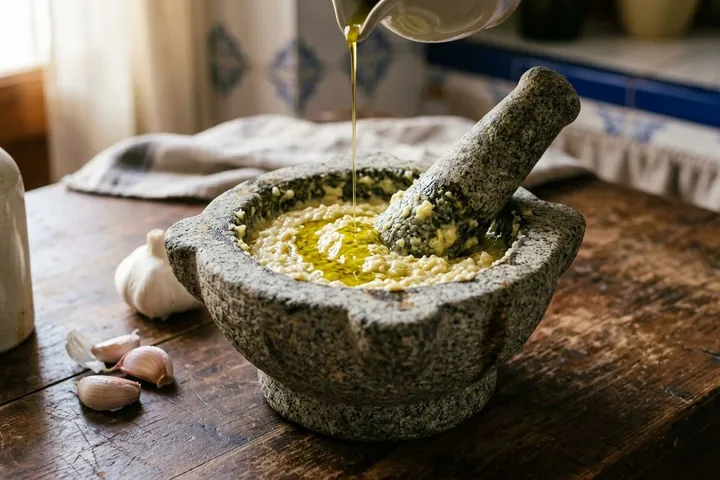
Mortar allioli
Traditional allioli is made in a mortar with just garlic, olive oil and salt. No egg, plenty of patience: the classic partner for arroz a banda and fideuà.
Total time: 20 min
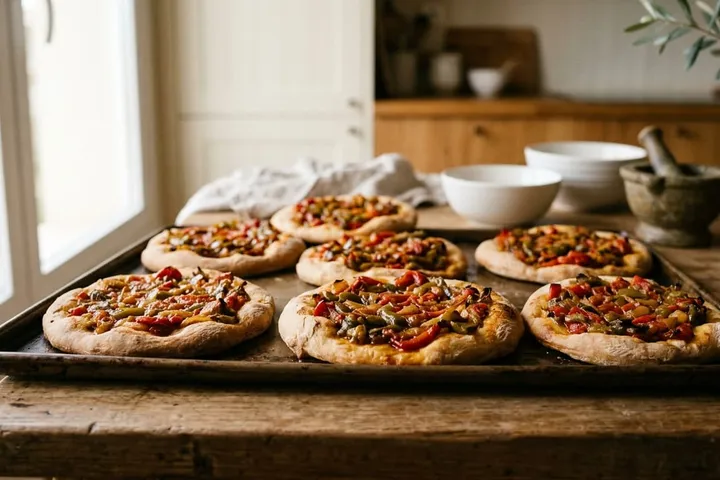
Tomato and pepper coca
Tomato and pepper coca for 8 pieces: oil and water dough that doubles as it proves, well-drained sofrito and a 190 °C oven for 25 to 30 minutes.
Total time: 150 min