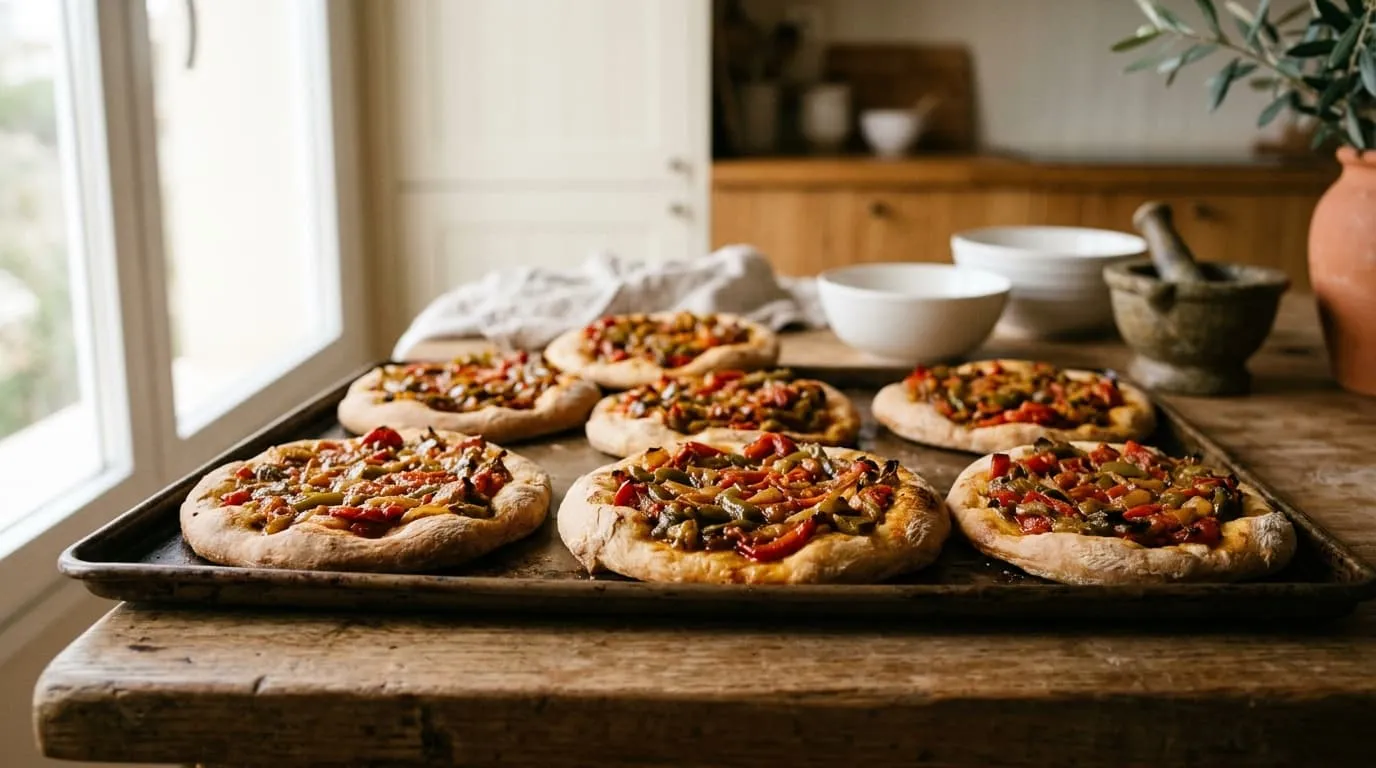

Tomato and pepper coca
Yield: 8 pieces
Are there 40 or more of you? We cook rice dishes live for groups
Large paella pans need less liquid. Sources
Ingredients
Dough
- 500 gWheat flour
- 25 gFresh baker’s yeast
- 200 mlLukewarm water
- 100 mlOlive oil
- to tasteSalt (for the dough)
Filling
- 500 gTomatoes
- 2 pcsOnions
- 2 pcsGreen peppers
- 2 pcsRed peppers
- to tasteExtra virgin olive oil (for the sofrito)
- to tasteSalt (for the sofrito)
- 1 tbspSweet paprika
Ingredients
Steps
- 1Dissolve the crumbled baker’s yeast in the lukewarm water.
- 2Put the wheat flour on the work surface or in a large bowl and make a volcano with a well in the centre.
- 3Pour into the well the water with the yeast, the olive oil and the salt.
- 4Knead with your fists until you have an even, elastic dough that does not stick to your fingers or the surface.
- 5Cover the dough with a cloth and leave it in a warm place, for one to two hours, until it doubles in volume.120 min
- 6Wash, peel and very finely chop the tomatoes and the onions. Chop the green peppers and the red peppers too, and leave them to drain raw in a colander.
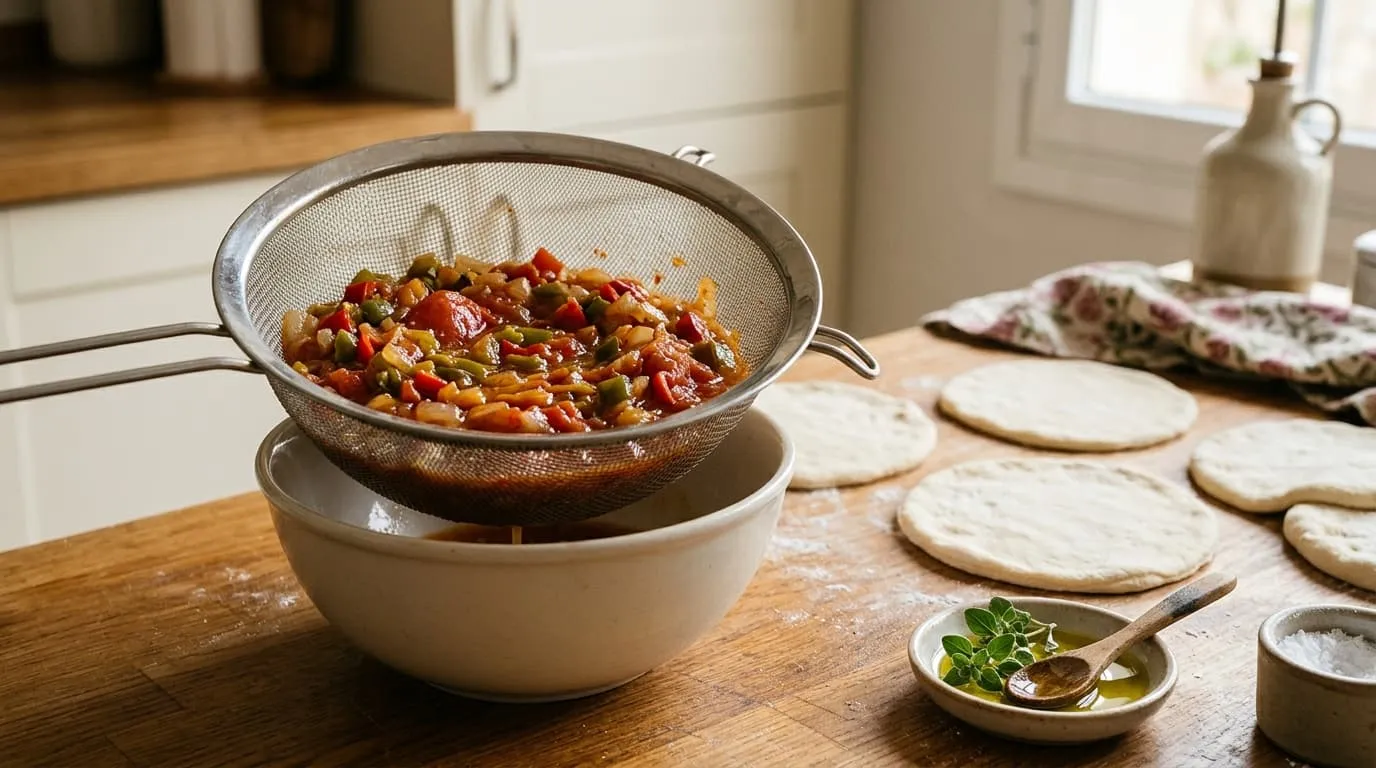
- 7Fry everything in a pot with extra virgin olive oil, season with salt and mix in the sweet paprika at the end. Tip the sofrito into the colander until it releases all its liquid.
- 8Divide the dough into balls the size of a lime. With your hands greased with oil, flatten each one from the centre towards the edges.
- 9Cover each coca with the sofrito, drizzle them with a splash of oil and bake at 190 °C for 25 to 30 minutes, depending on the thickness of the dough. If they do not all fit, bake in batches.30 min
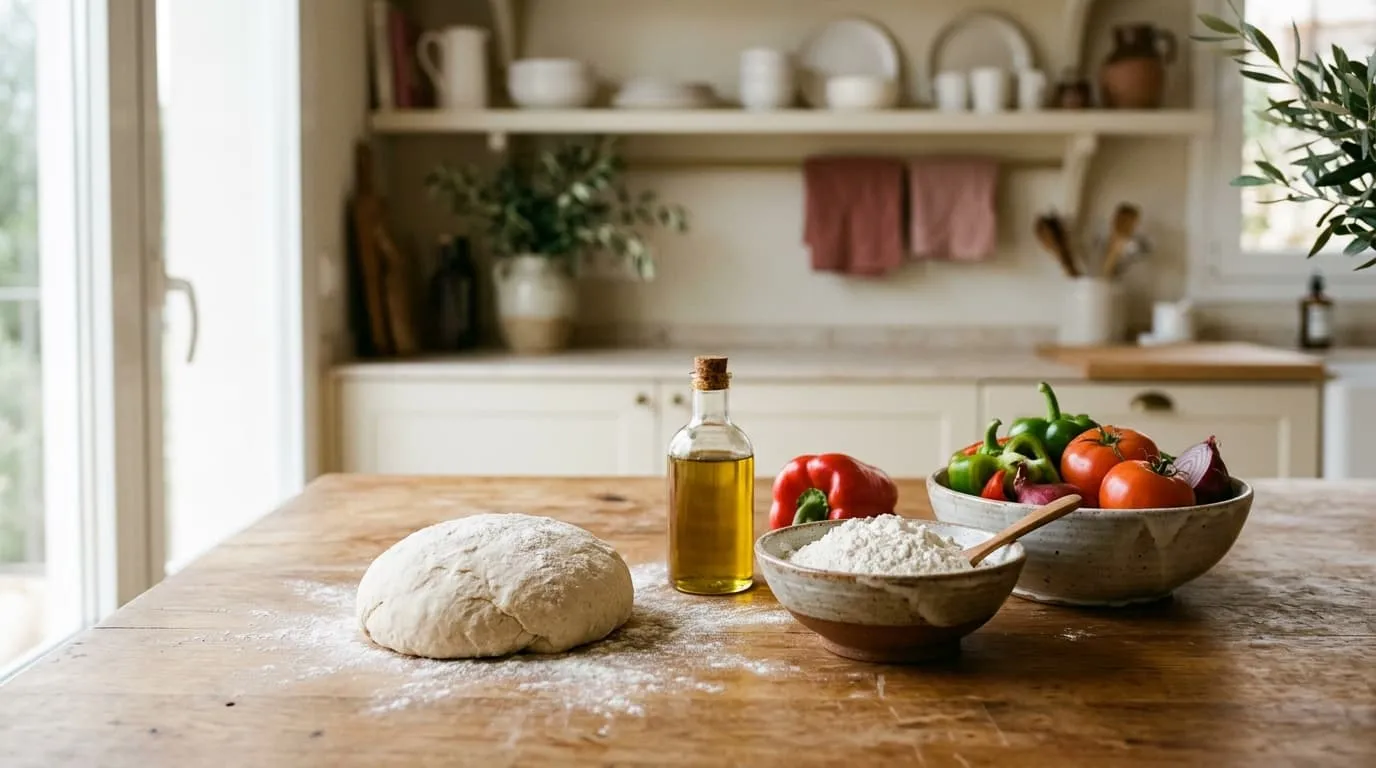
A tomato and pepper coca needs very little from the pantry: flour, water, oil and chopped vegetables. What sets it apart from any other coca lies in two steps that seem minor, the proving of the dough and the draining of the filling. This recipe card follows the recipe from “Entraré a la cuina”, the recipe book from the Caroig-Xúquer area, and tells you what the book takes for granted.
The volcano dough: the technique and the right point
The book says to heap the flour into a volcano with a well in the centre, and to pour into it the water with the yeast, the oil and the salt. Knead with your fists until the dough is even and elastic. The sign it gives that the dough is ready is very practical: it sticks neither to your fingers nor to the surface where you work it.
Then cover it with a cloth and leave it in a warm place for one to two hours, until it doubles in volume. Allow the full two hours and watch the dough, not the stopwatch: if the afternoon is cold it will take longer, and no hurry will make it rise sooner.
Fresh yeast, following traditional practice
This recipe follows traditional practice: the “rent” that is crumbled and dissolved in lukewarm water is fresh pressed baker’s yeast. The recipe’s 25 g are kept.
As a guide, dried baker’s yeast weighs approximately one third as much: 25 g fresh yeast is equivalent to about 8 g dried yeast.
Draining twice: the key to the filling
Tomato, onion and peppers are washed, peeled where needed and chopped very finely. The peppers, in addition, are left to drain raw in a colander. Then everything goes into the pot with a few spoonfuls of olive oil and salt, and when the sofrito is done it goes back to the colander so that it releases all its liquid.
The book insists on the two passes, and it makes sense: any liquid that is not drained beforehand ends up on the dough and leaves it soft in the middle. Give the colander time, which is a time the header does not count, and spread the filling when it no longer drips.
The paprika and what is left out
The book’s versions differ: Spanish makes sweet paprika a fixed ingredient and offers 16 anchovies or 125 g of tuna as optional; Valencian gives a choice of 16 anchovies or a tablespoon of paprika, with 25 g of optional tuna. The dough balls also differ: lemon-sized in Spanish and lime-sized in Valencian. This recipe follows the Valencian version with paprika and lime-sized balls, without fish or pine nuts. As a cooking note, stir the paprika in at the end of the sofrito; the book does not say when to add it. Pepper appears only in the instruction to season, with no quantity in the list. If you add fish or nuts, check the 14 allergens.
Small pieces or two big ones
The recipe makes two big coques or eight small ones. For the small ones, make balls the size of a lime and flatten each one from the centre towards the edges with your hands greased with oil; for two big ones, split the dough in half. Here we choose eight pieces. Cover with the sofrito, drizzle with oil and bake at 190 °C for 25 to 30 minutes, depending on the thickness of the dough. If your oven cannot take them all at once, it is better in batches than crowded: that way they brown evenly.
If you like the genre, the tuna coca and the mollitas coca are other savoury cocas from our recipes to compare with.
How much time to really set aside
The book’s header speaks of 90 minutes of preparation and 30 of oven, 120 in total. With a proving that can reach two hours, and a sofrito and a draining that are not timed, the real count is longer. To organise yourself: put the dough to prove and, while it rises, make the sofrito and leave it in the colander. When the dough has doubled, all that is left is to shape, assemble and bake.
If the meal is for a large group
If you are organising a group meal, see how we handle local fiestas and get a quote.
History and variations
Coques are part of every town and every family, with very different shapes, toppings and names: thin, long, round, baked or fried with a hole in the middle, as in the Safor. The book “Entraré a la cuina” also mentions coques with cured meats (longanizas, butifarras, sobrasada) and with local vegetables, such as aubergine, peas or spinach.
Tips
Knead until the dough sticks neither to your fingers nor to the table: that is the point the book gives before covering it to prove. Sources
Drain the peppers raw and then the finished sofrito: the filling must release all its liquid before going on the dough. Sources
Flatten each ball from the centre towards the edges with your hands greased with oil, and adjust the oven time (25 or 30 minutes) to the thickness you have ended up with. Sources
Tomato and pepper coca
Frequently asked questions
How much time should I set aside for this coca?
More than the book’s header says, which speaks of 120 minutes in total. The proving alone can take up to two hours, and the sofrito and its draining in the colander have no set time. A good plan is to put the dough to prove and, in the meantime, make the filling and leave it to drain; the oven is 25 or 30 minutes at the end.
Can I make two big cocas instead of eight small ones?
Yes, the book gives both options: two big coques or eight small ones. For the big ones the dough is split in half and two balls are formed; for the small ones, eight the size of a lime. In both cases the oven is at 190 °C for 25 to 30 minutes, depending on the thickness of the dough. The recipe card uses eight pieces.
What happens if I do not drain the vegetables well?
The book asks for draining twice, the peppers raw and the finished sofrito, so that it releases all its liquid before it goes on the dough. If you skip the colander, that water ends up on top of the coca. It is the least glamorous part of the process and the one most worth respecting; give it time before assembling.
Sources
Glossary terms
Recipes
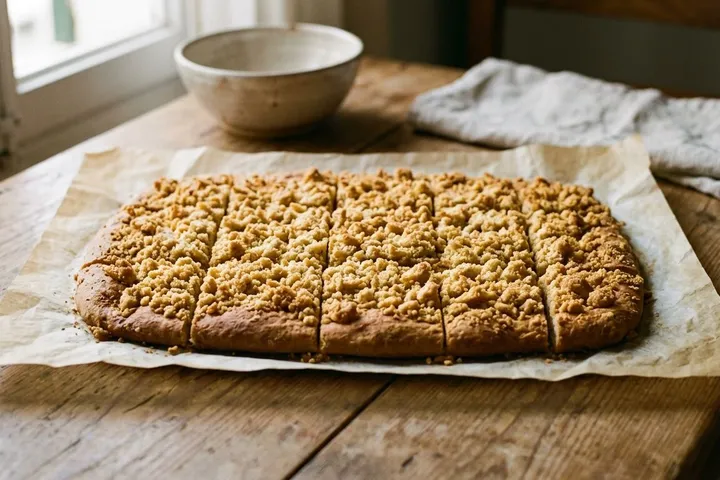
Coca de mollitas
Savoury coca de mollitas: a dough of flour, water and oil topped with crunchy crumbs of flour, oil and salt, baked for 20 to 25 minutes at 180 °C.
Total time: 25 min
Tuna coca (coca amb tonyina)
Tuna coca for 500 g of flour: dough made by pouring boiled oil, water and aniseed over the flour, tuna belly, onion and pine nut filling, and a 200 °C oven.
Total time: 40 min