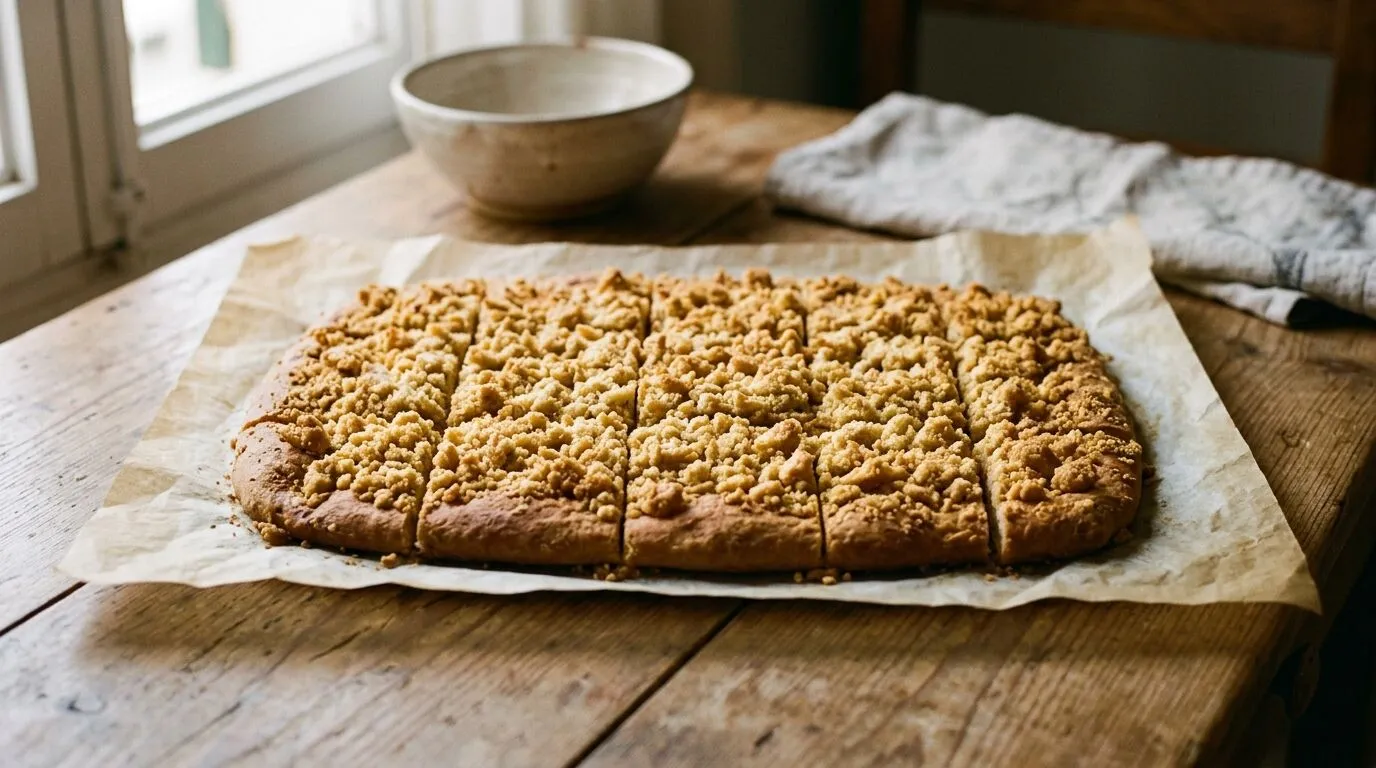

Coca de mollitas
Yield: 1 pieces
Are there 40 or more of you? We cook rice dishes live for groups
Large paella pans need less liquid. Sources
Ingredients
Dough
- 250 gWheat flour for the dough
- 100 mlWater
- 75 mlOlive oil for the dough
- 1 tspBaking powder
- pinchSalt for the dough
Crumb
- 130 gFlour for the mollitas
- 50 mlOlive oil for the mollitas
- pinchSalt for the mollitas
Ingredients
Steps
- 1Preheat the oven to 180 °C.
- 2Mix the 250 g, the 1 tsp, the 75 ml, the pinch and the 100 ml until you have a smooth dough. Knead it a little.
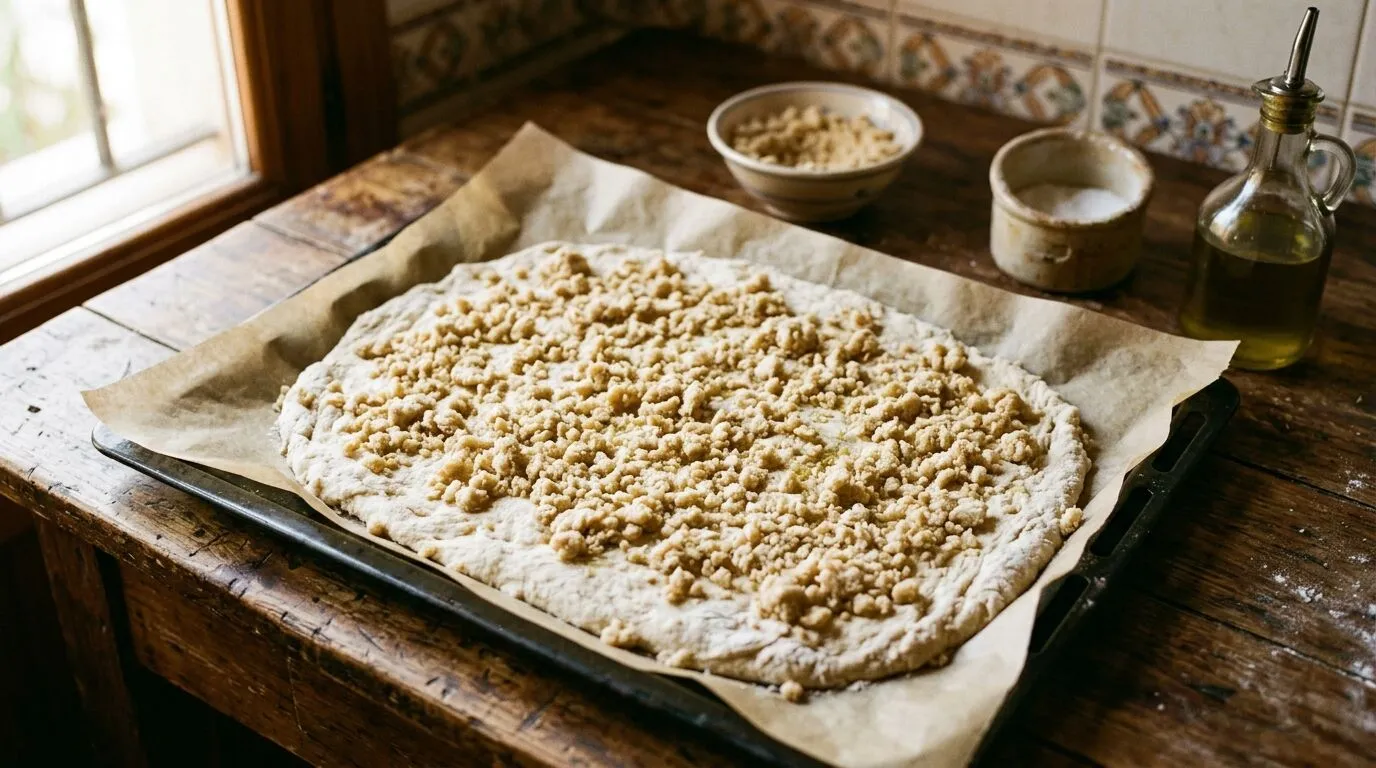
- 3Roll the dough out on a tray lined with baking paper.
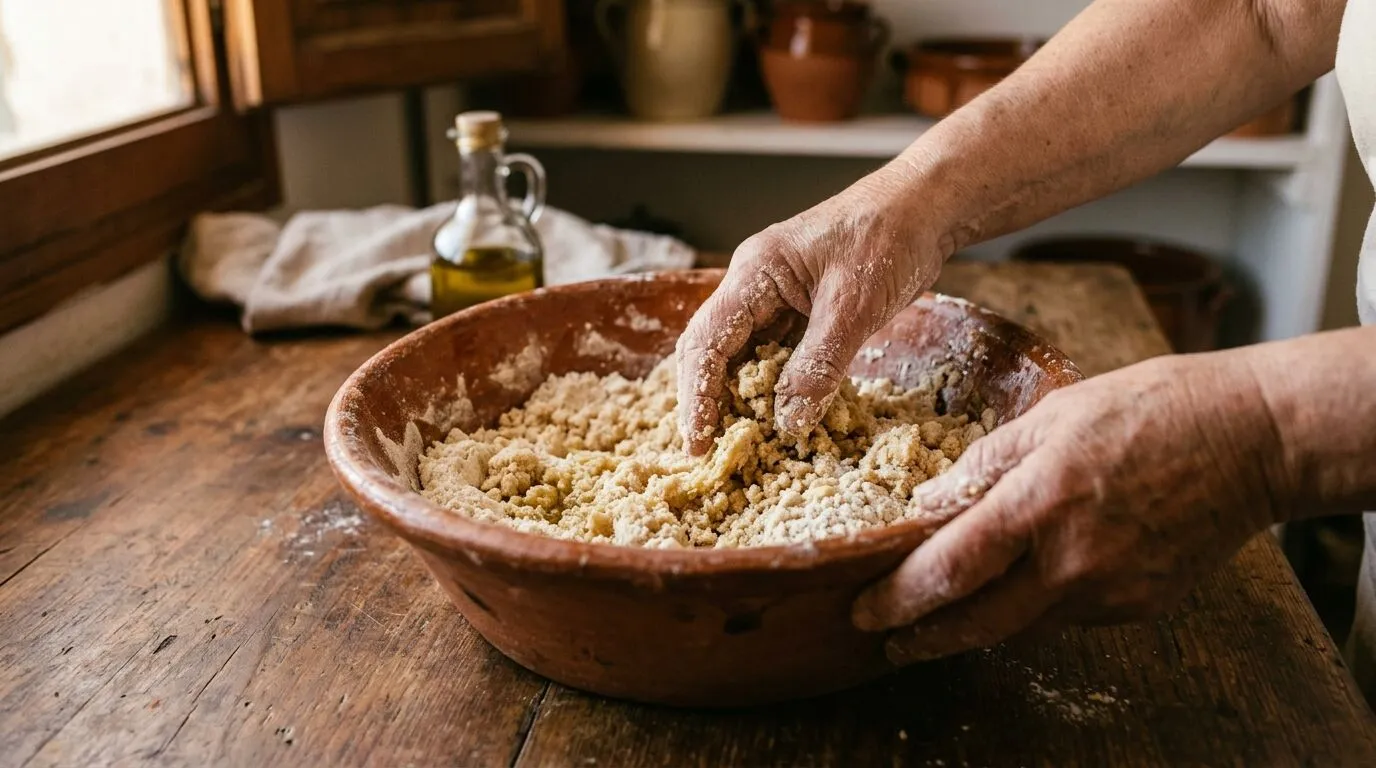
- 4In a bowl, rub the 130 g, the 50 ml and the pinch together with your fingers until crumbs form.
- 5Scatter the mollitas evenly over the whole surface of the dough.
- 6Bake for 20 to 25 minutes, until the coca is golden and crisp.25 min
- 7Serve it hot or lukewarm.
Coca de mollitas looks like a plain flatbread until you break it: the base stays soft and the crumbs on top, toasted and crunchy, melt in the mouth. It is a savoury coca, among the simplest in Alicante cooking, and needs no filling. What defines it is that topping.
What mollitas are and why this coca is savoury
Mollitas are flour, oil and salt rubbed with the fingers until they form small lumps. Nothing more. There is no sugar in the dough or in the crumbs, so the coca isn’t a sweet: it is a kind of savoury flatbread, as the El Español Alacant recipe we follow as our base describes it. The Crevillent guide to cocas, which also records the coca de mollitas, treats it in the same register, with flour, water and salt.
It is worth saying because “coca” sometimes makes people think of sponge cake. If what you are looking for is something sweet, see the llanda sponge cake, which is a tray-baked sponge. And if you want another savoury Alicante coca, but with a filling, the tuna coca is the one for the Hogueras.
A simple dough and crumbs rubbed with the fingers
The dough has wheat flour, water, olive oil, a pinch of salt and a teaspoon of baking powder. It is mixed, kneaded a little and rolled out on the tray over baking paper. The source asks for no resting or proving: from the table to the oven.
The crumbs are what need most care. Rub them with your fingertips, as you would for shortcrust pastry, until you see small, uneven lumps. Scatter them over the whole dough, edges included, so every piece has its crunchy share.
Oven: 180 °C and watching the colour
The source gives 180 °C and 20 to 25 minutes, until the coca is golden and crisp. The oven is what toasts the crumbs, so don’t take the coca out too soon: if you remove it pale, the mollitas stay soft. Every oven runs differently; look at the colour and, if it isn’t golden at 20 minutes, give it a few minutes more.
The Crevillent municipal guide (2024) speaks of a hotter oven, between 200 and 220 °C, for a coca de mollitas built on a puff pastry base. That is another coca, with another base, and we haven’t mixed its data with this recipe’s.
How to eat it: on its own, with cured sausage or with tomato
It is served hot or lukewarm. On its own is how you best enjoy the texture, but El Español’s recipe names three companions: cured sausage, cheese and grated tomato with tuna. It also mentions olives and a good local wine. Some people top it with anchovies, cured sausage or grated tomato, and that is already a variation on the classic recipe, which has only the base and the mollitas.
It is cut into squares and passed around on the tray, so it works well on a table for nibbling.
The 2025 coca de mollitas contest
Coca de mollitas made the newspapers in October 2025. On the 18th of that month, the Avenida de la Constitución in Alicante hosted a contest in which 26 bakeries and baking workshops prepared a coca that the notary measured at 108.2 metres. The local police estimated some 10,000 people. It was an event within the programme of Alicante, Spanish Capital of Gastronomy 2025.
It was an event of 2025. Coca de mollitas, by contrast, is made in the province’s ovens all year round.
For a group
One tray is enough for a few people to nibble on; for a meal with many, several batches are made and spread around the table. If there are lots of you, we cook for groups with set-up and bar: see cooking and bar for fiestas.
History and variations
It is a coca from the province of Alicante: El Español describes it as a traditional Alicante recipe, very common at family gatherings, and says it is sold freshly baked in local bakeries and ovens. On 18 October 2025 the Avenida de la Constitución in Alicante hosted a coca de mollitas contest that the city council measured at 108.2 metres.
Alicante: The classic recipe has only the base and the mollitas; there are versions with anchovies, cured sausage or grated tomato. Sources
Tips
Line the tray with baking paper before rolling out the dough: it bakes on it. Sources
Make the mollitas by rubbing with your fingers until they are crumbs; that texture is what comes out crunchy. Sources
Take it out when it is golden and crisp; the source gives 20 to 25 minutes, so go by the colour more than the clock. Sources
Coca de mollitas
Frequently asked questions
What are mollitas?
They are the crunchy crumbs that cover the coca: a mixture of flour, oil and salt rubbed with the fingers until it forms small lumps and scattered over the dough before baking. Hence the name of the coca. In this recipe, the mollitas use half the flour of the dough, with a little oil and salt, and are baked with it.
Is it a sweet or savoury coca?
Savoury. Neither the dough nor the mollitas contain sugar in any of the sources consulted, neither El Español’s, which we follow here, nor the Crevillent guide to cocas. It is a kind of savoury flatbread, which is why it is eaten with cured sausage, cheese or grated tomato with tuna, and not as a dessert. If you want a sweet coca, the llanda one is a sponge cake.
What is the difference between coca de mollitas and coca amb tonyina?
Coca de mollitas is a dough base with crumbs on top, without a filling. Coca amb tonyina has a filling of tuna belly, onion and pine nuts between two layers of dough, and is the one for the Hogueras of Alicante. Both are savoury Alicante cocas, but they are made and eaten differently, and each has its own recipe in the recipe book.
What do you eat coca de mollitas with?
According to El Español, it is eaten on its own or with cured sausage, cheeses or grated tomato with tuna, and also with olives and a good local wine. It is a coca for a quick supper, for family gatherings, afternoon snacks and lunches, and can be served hot or lukewarm.
Sources
Recipes
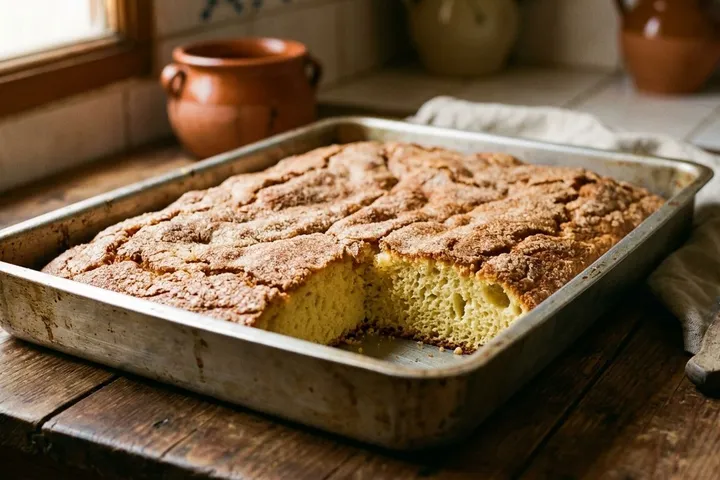
Coca de llanda
Coca de llanda, the Valencian tray-baked sponge: eggs and sugar beaten, milk, flour, gaseosa and oil, sugar on top and 35 minutes at 180 °C.
Total time: 65 min
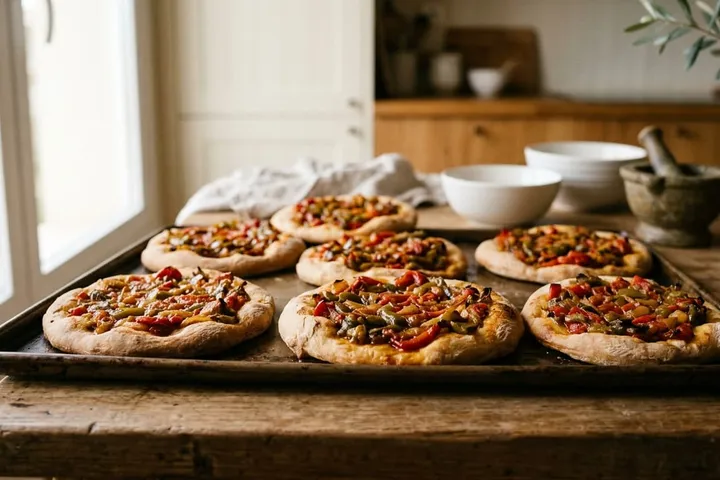
Tomato and pepper coca
Tomato and pepper coca for 8 pieces: oil and water dough that doubles as it proves, well-drained sofrito and a 190 °C oven for 25 to 30 minutes.
Total time: 150 min
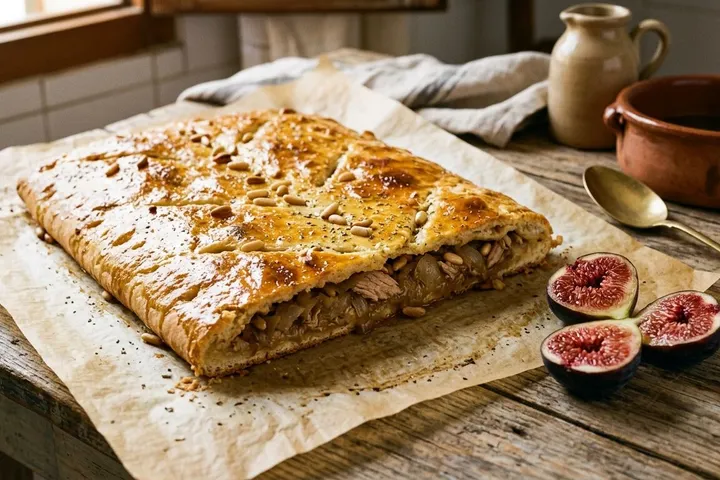
Tuna coca (coca amb tonyina)
Tuna coca for 500 g of flour: dough made by pouring boiled oil, water and aniseed over the flour, tuna belly, onion and pine nut filling, and a 200 °C oven.
Total time: 40 min