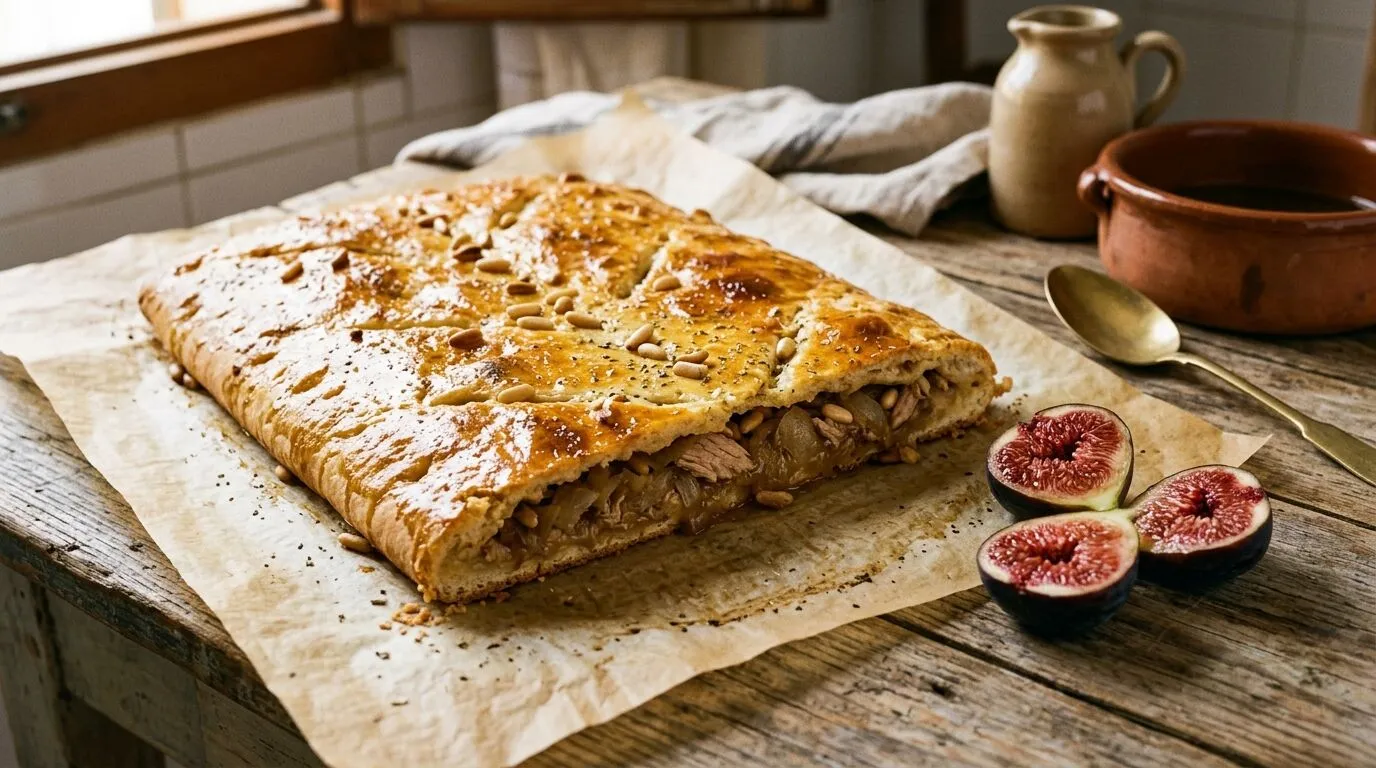

Tuna coca (coca amb tonyina)
Yield: 1 pieces
Are there 40 or more of you? We cook rice dishes live for groups
Large paella pans need less liquid. Sources
Ingredients
Dough
- 500 gPlain flour
- 130 mlWater
- 250 mlOlive oil
- 65 mlDry aniseed spirit (anís seco)
- 5 gSalt
Filling
- 250 gTuna belly (ventresca)
- 1 pcsOnion
- 30 gPine nuts
- to tasteSweet paprika (optional)
- to tasteEgg, for glazing
Ingredients
Steps
- 1Put the 250 ml, the 130 ml and the 65 ml on the heat and bring them to the boil.
- 2Pour the hot liquids over the 500 g mixed with the 5 g and beat until you have a firm dough.
- 3Fry the 1 pcs in a frying pan with a little oil until soft and golden.
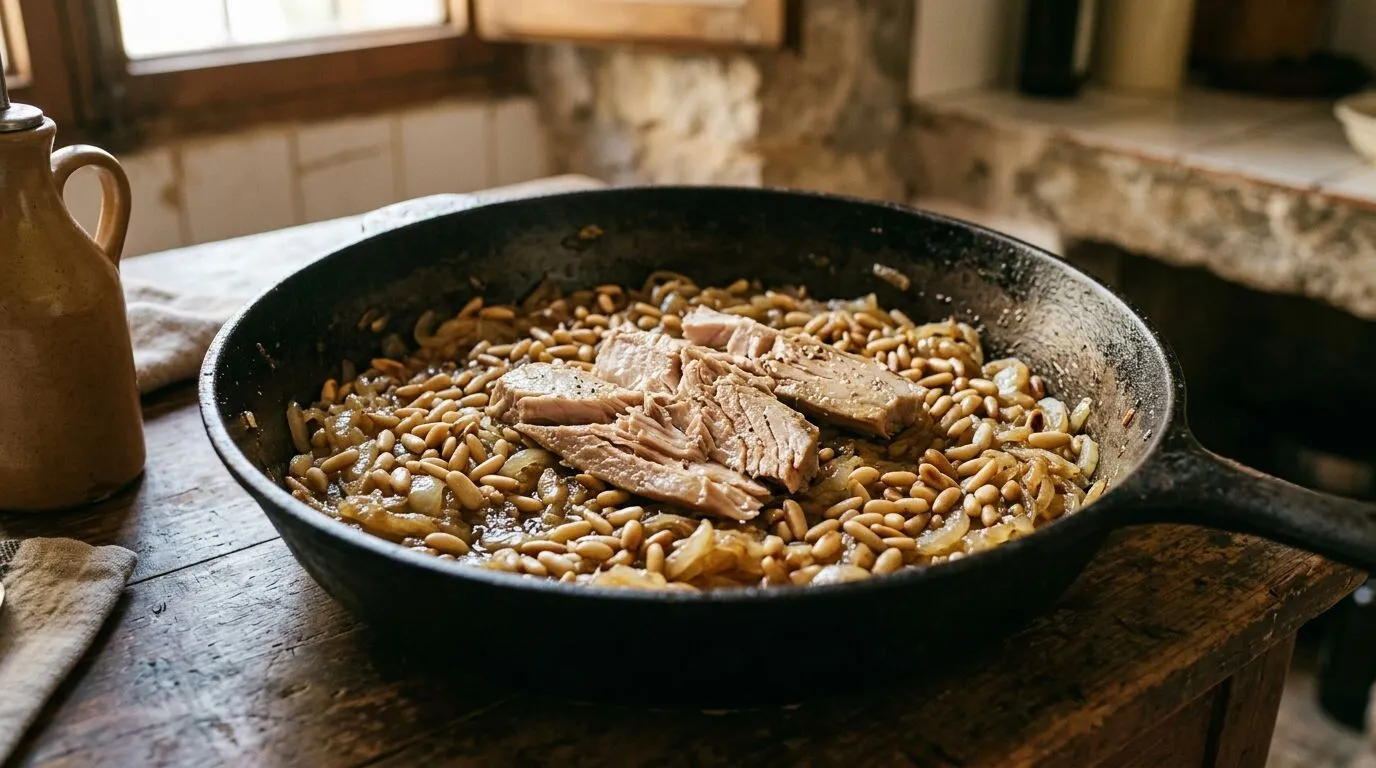
- 4Mix the fried onion with the 250 g and the 30 g, and add the to taste if you want it.
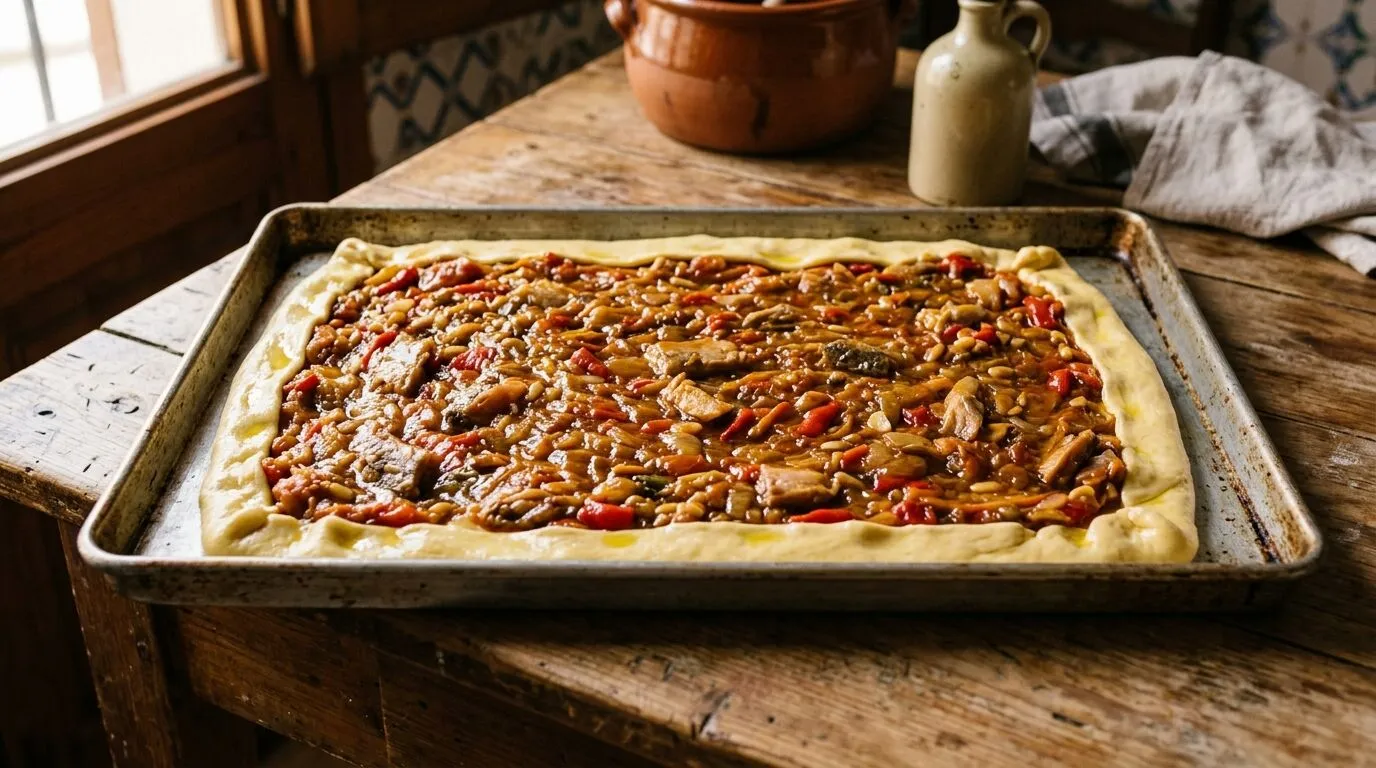
- 5Roll out part of the dough in a tin or on a tray, thinner than the piece you keep back for the lid, so the filling cooks through properly.
- 6Spread the filling over the base and cover it with the other layer of dough.
- 7Brush the surface with beaten to taste so it comes out glossy and golden.
- 8Bake for about 40 minutes at 200 °C, until the lid is well browned.40 min
The coca amb tonyina looks like an Alicante empanada (a large savoury pie), but it is not made like one: the dough has no yeast and no resting time: it is scalded. The boiling liquids are poured over the flour, you beat it, and it becomes a dough that rolls out thin. The hard part is not the dough. The hard part is not overdoing the filling and letting it cook through.
A dough made on the hob, not by hand
There is no yeast and no resting here. The oil, water and dry aniseed spirit go on the heat, and when they boil they are poured over the flour. You beat it and bring it together. This is Alicante Turismo’s recipe and, with a few differences, the one other Alicante cooks share, such as Mayte en la Cocina’s.
A warning we think is important: the Alicante Turismo sheet prints the liquids in “cl” (125 cl of water, 250 cl of oil, 65 cl of aniseed spirit) for half a kilo of flour. That would be 2.5 litres of oil, and no dough could take it. El Periòdic, which reproduced the recipe, copies it the same way. We read it as millilitres (125, 250 and 65 ml), which fits other recipes from the area: Mayte en la Cocina makes the same scalded dough with 150 ml of water, 250 ml of oil and 50 ml of dry aniseed spirit for 500 g of flour. It is declared on this page as a units error, so that you do not take the printed figure.
The filling: tuna belly, onion and pine nuts
Alicante Turismo names the filling (tuna belly, fried onion, pine nuts and an optional sweet paprika) but gives no quantities. The ones you see on this page, 250 g of tuna belly, half an onion and 30 g of pine nuts, come from El Periòdic, which published the same recipe in June 2023 attributing it to the Alicante Tourism Department. They are a guide, not a dogma.
And when it comes to the filling, every household does it differently. Bonviveur uses one medium onion for 250 g of tuna; Mayte en la Cocina, a kilo and a half of onion for the same amount of tuna. The more onion, the sweeter and juicier the filling; with little, the tuna dominates. Choose according to how you want your coca: more tuna or more onion.
There is another difference with the tuna that is worth knowing. The base source speaks of belly; other recipes use tonyina de sorra, which is salted, and they do not agree on whether it has to be soaked. If you buy it that way, ask at the shop.
Thin base, thicker lid, and the oven
The base goes thinner than the lid, and that is not a whim: it is how the filling cooks through without the dough underneath staying raw. The lid gets beaten egg on top to brown it, and it bakes for about 40 minutes at 200 °C, according to Alicante Turismo. Mayte en la Cocina bakes at 180 °C and Bonviveur at 190 °C; watch the colour of the lid more than the clock.
The classic mistake is making the base as thick as the lid: the filling never quite cooks through and the coca turns out heavy.
When and with what you eat it
The coca is a Hogueras dish. The night of 20 June, in the middle of the plantà (when the fiesta’s monuments are set up), is when tradition has it eaten, and it goes with brevas. What the fiesta is about is told on the calendar page for the Hogueras of Alicante; what the monument that is set up is, in the glossary entry on the foguera or hoguera; and where it is eaten, in the one on the Hogueras barraca. If you like fiesta baking, in the recipe collection you have the mona de Pascua and the pumpkin fritters. If you want another savoury Alicante coca, the coca de mollitas is topped with crunchy crumbs of flour, oil and salt.
For a crowd
A big coca will do for several people to share; for a whole fiesta committee you have to repeat the batch and scale up the filling carefully. If there are lots of you, we cook for groups with set-up and bar: for your committee, see kitchen and bar for fiestas.
History and variations
The savoury coca of the Hogueras of Alicante. According to Alicante Turismo, tradition has it eaten on the night of 20 June, during the plantà, with bacores (early figs, or brevas); El Periòdic calls it “the favourite supper of the festeros” (the people who take part in the fiestas). The glossary explains what a hoguera is.
Alacant: Other Alicante recipes use tonyina de sorra, a salted tuna, and load far more onion: Mayte en la Cocina uses a kilo and a half for 250 g of tuna. Sources
Tips
Make the base thinner than the lid, so the filling cooks through properly. Sources
Boil the oil, water and aniseed spirit together and pour them hot over the flour; the dough has to come out firm. Sources
Serve it with bacores, or brevas: it is what Alicante Turismo mentions for 20 June. Sources
Tuna coca (coca amb tonyina)
Frequently asked questions
When do you eat coca amb tonyina?
According to Alicante Turismo, tradition has it eaten on 20 June, during the plantà of the Hogueras. El Periòdic describes it as the favourite supper of the festeros that night and adds that it can be found in practically every bakery in the city of Alicante. The dates of the fiesta, year by year, are on the Hogueras calendar page.
What do you have with coca amb tonyina?
Alicante Turismo serves it with bacores, which is what brevas, the early fruit of the fig tree, are called in the area, and speaks of “les bacores fresques” on the table of the plantà. Mayte en la Cocina, in her recipe, also serves it with brevas and adds a good Monastrell wine. With that and the coca, supper on the night of the 20th is sorted.
Which cut of tuna goes into coca amb tonyina?
Alicante Turismo speaks of tuna belly (ventresca), and that is the one used on this page. Other Alicante recipes, such as those from Bonviveur or Mayte en la Cocina, use tonyina de sorra, which is salted tuna. Bonviveur warns that at the shop they may advise you to soak the salt out in water; Mayte says hers comes in oil and does not need it. Ask when you buy it.
Sources
Glossary terms
Recipes
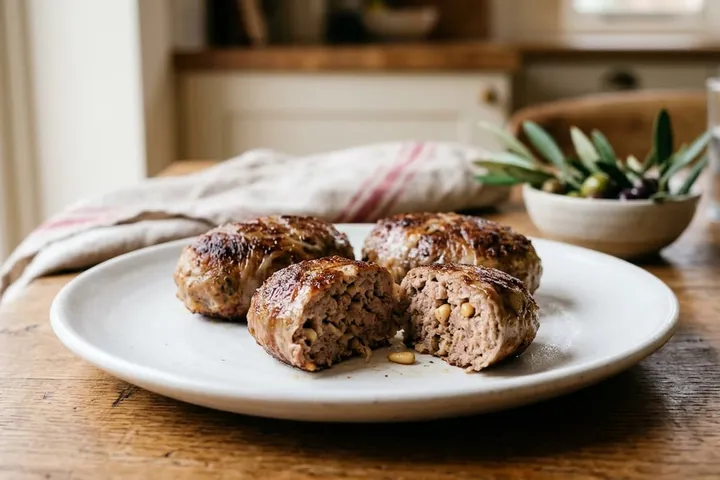
Figatells
Figatells or fardeles for 4: balls of pork liver, lean pork and belly with pine nuts and aniseed, wrapped in mantellina and browned on a griddle.
Total time: 15 min
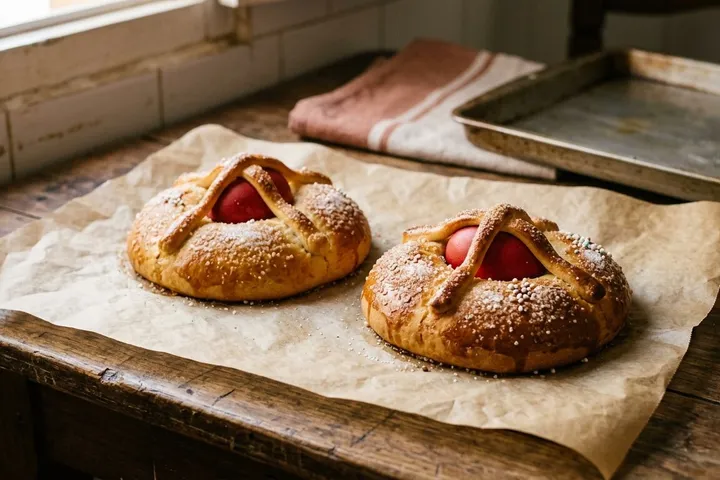
Mona de Pascua
Mona de Pascua for about 8 people: overnight starter, dough with orange blossom water and orange, a dyed egg in each, strips in a cross and a 180 °C oven.
Total time: 25 min
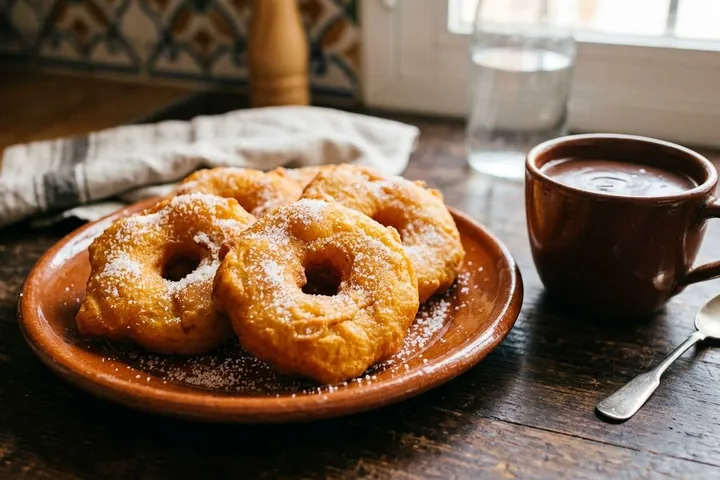
Pumpkin fritters (bunyols de carabassa)
Pumpkin fritters for about 12: roasted pumpkin, strong flour and fresh yeast, 30 minutes’ rest, fried with a hole in the middle and sugar on top.
Total time: 90 min
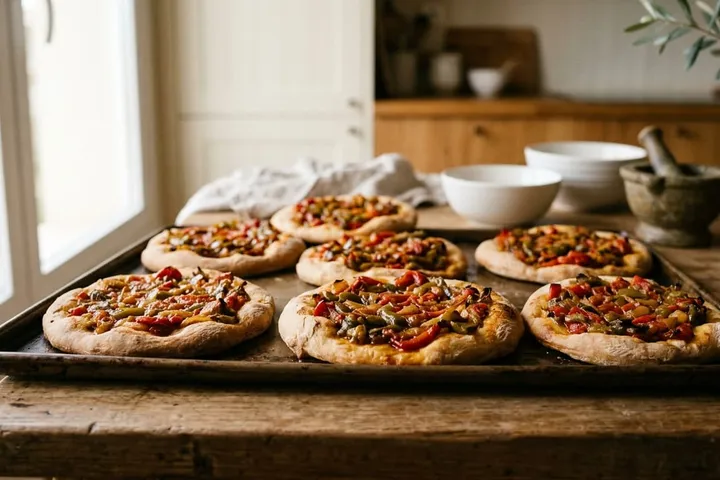
Tomato and pepper coca
Tomato and pepper coca for 8 pieces: oil and water dough that doubles as it proves, well-drained sofrito and a 190 °C oven for 25 to 30 minutes.
Total time: 150 min