
Mona de Pascua
Yield: 2 pieces
Are there 40 or more of you? We cook rice dishes live for groups
Large paella pans need less liquid. Sources
Ingredients
Starter (made the day before)
- 100 gStrong bread flour for the starter
- 60 mlWater for the starter
- 10 gFresh baker’s yeast for the starter
Dough
- 400 gStrong bread flour
- 10 gFresh baker’s yeast
- 3 pcsEggs
- 150 gSugar
- 80 gOlive oil
- 10 gSalt
- 1 tspHoney
- 1 tspOrange zest
- 15 mlOrange blossom water
Decoration
- 2 pcsEggs for dyeing
- 1 pcsEgg white
- 1 tspSugar for sprinkling
- to tasteFood colouring
- to tasteVinegar
Ingredients
Steps
- 1The day before, dissolve the 10 g in the 60 ml, add it little by little to the 100 g, cover the bowl and keep it in the fridge overnight.
- 2Take the starter out and let it come to room temperature. Mix it with the 400 g, the 10 g and the 3 pcs.
- 3Gradually work in the 150 g and the 80 g; then the 10 g, the 15 ml, the 1 tsp and the 1 tsp. Knead until the dough is elastic and stops sticking.
- 4Leave the dough to rest in an oiled bowl, covered and somewhere warm, until it doubles in size.
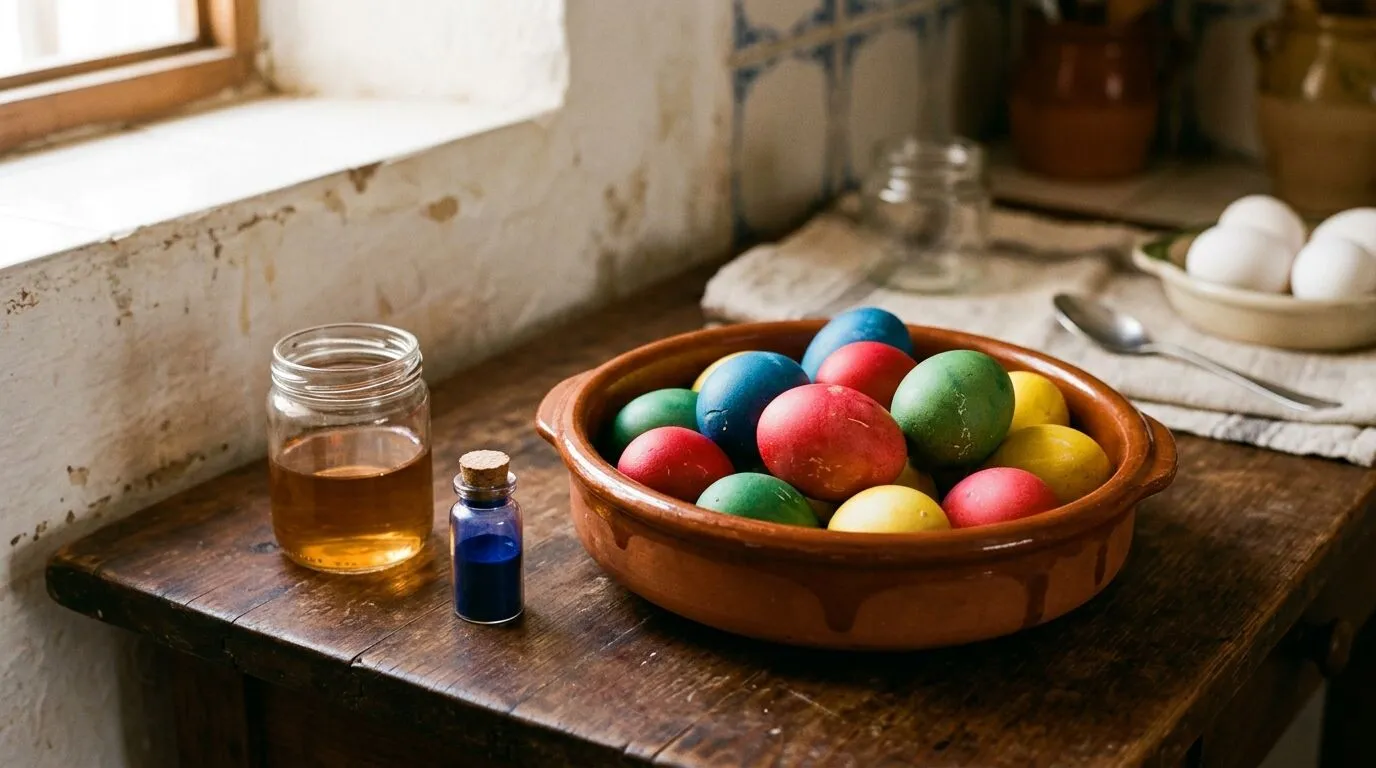
- 5Meanwhile, boil the 2 pcs for 10 minutes and transfer them to a glass of water with a few drops of to taste and the to taste, to dye them.10 min
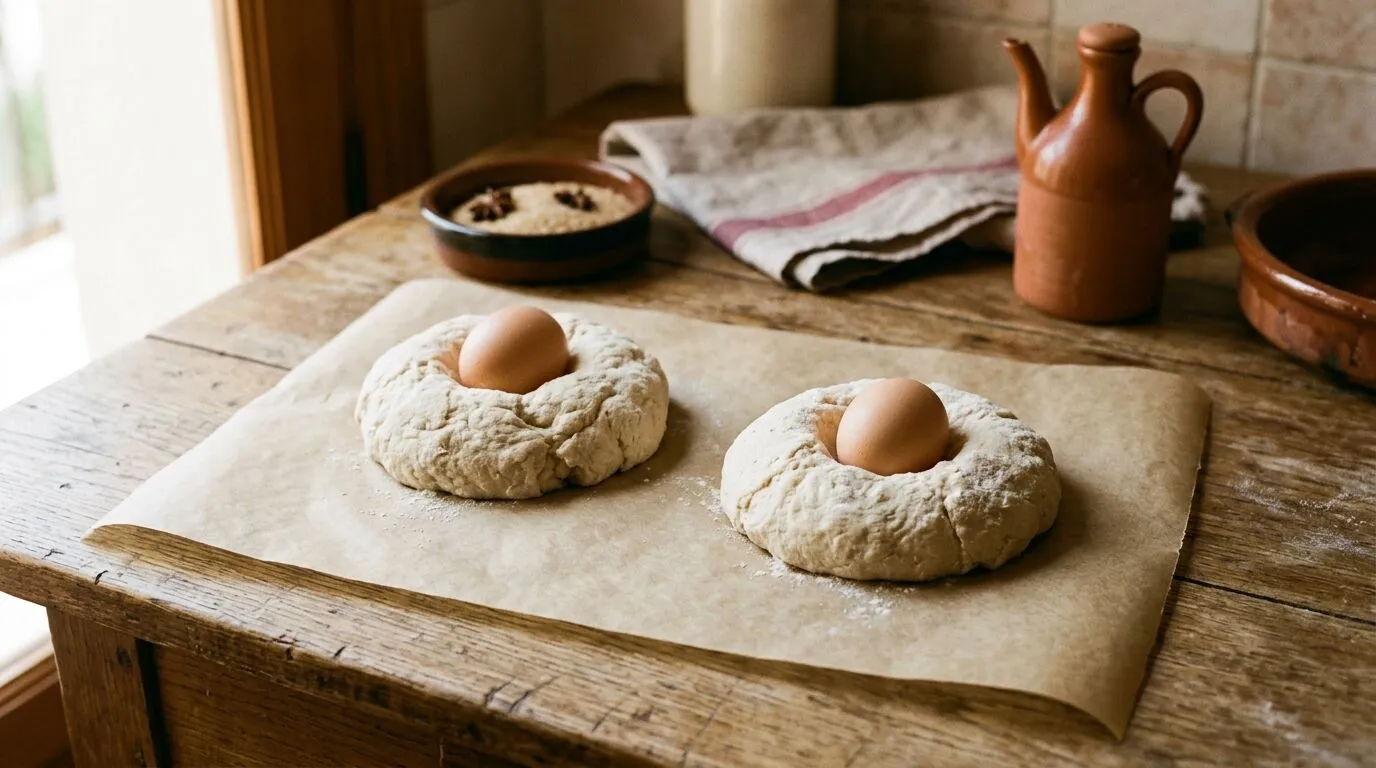
- 6Divide the dough in two, keeping a little back for the strips. Shape each part into a ball, make a hollow and rest a dyed egg in it. Move them to a tray lined with baking paper and preheat the oven to 180 °C.
- 7Roll the reserved dough into thin strips and lay them in a cross over each egg.
- 8Brush with 1 pcs, cover and let it rise again, away from draughts, until it doubles.
- 9Brush again and sprinkle with the 1 tsp mixed with a few drops of orange blossom water.
- 10Bake for 25 minutes at 180 °C.25 min
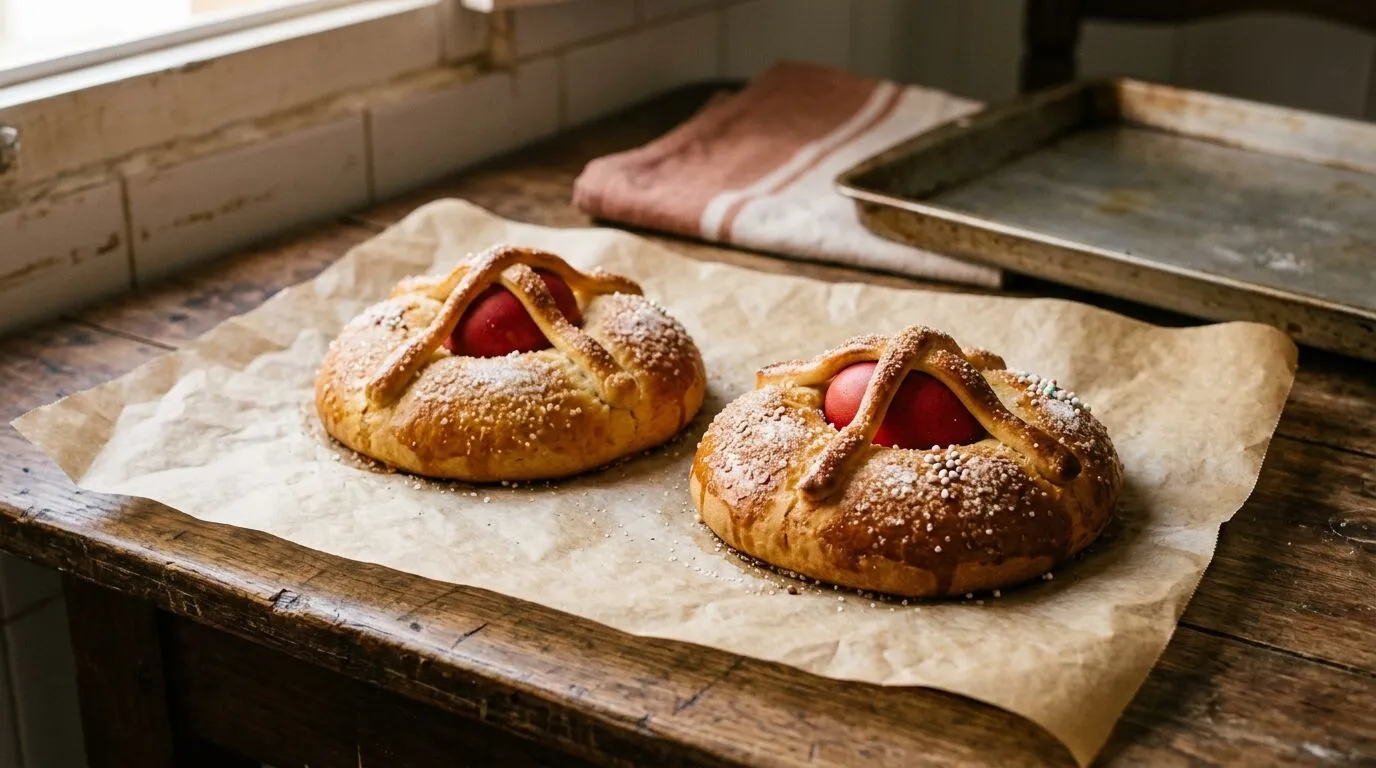
The mona de Pascua is one of those bakes made to share and to give. The one on this page comes from Alicante Turismo: a tender dough, scented with orange and orange blossom water, with a boiled, dyed egg left on show in the middle of the piece. These quantities make two monas and, according to the source, serve about eight people. Alicante Turismo gives about 75 minutes, but the recipe also needs a starter made the night before and two rises with no fixed time, until the dough doubles: it is a recipe for an unhurried day, not a quick afternoon job. The quantities come in three groups, the starter, the dough and the decoration, so they do not get mixed up.
A starter made the day before
What sets this recipe apart is the starter. The night before, strong flour, water and fresh baker’s yeast are mixed and left in the fridge. The next day it is mixed with the rest of the flour, more yeast and the eggs. It is not sourdough: it is a short, overnight starter made with fresh baker’s yeast. Following traditional practice, this recipe uses fresh pressed baker’s yeast, keeping the original quantities: 12 g for the starter and 12 g for the dough.
As a guide, use approximately one third of the weight in dried baker’s yeast: about 4 g for the starter and 4 g for the dough.
The dough has more in it than it seems: olive oil, honey, grated orange zest and orange blossom water, as well as the sugar and salt. It is kneaded until it is elastic and stops sticking, and then left to rise until it doubles. Do not be in a hurry over that part.
The egg: boiled, dyed and in its hollow
The eggs are boiled for 10 minutes and moved to a glass of water with a few drops of vinegar and food colouring, where they take on the colour. Then each one is rested in a hollow made in the ball of dough, and from a piece of dough you have set aside you roll thin strips that cross over the egg. They are then brushed with egg white and the mona rises a second time, covered and away from draughts, until it doubles.
In Alicante the mona is usually elongated, though round ones exist too, and figures such as lizards are made with the egg in the mouth. And the egg, according to the Alicante Turismo page itself, is cracked on your companion’s forehead when they least expect it.
Oven and finish
Bake at 180 °C for 25 minutes. Before it goes in, the mona is brushed again and sprinkled with sugar mixed with a few drops of orange blossom water, which is the finish the source asks for.
When it is eaten, and with whom
Here the tradition is twofold. On Easter Sunday, the godfather gives the mona to his godchild after Mass. For the outing to eat it, the sources do not agree on the day. Valencia Bonita speaks of the Monday: two or three families or a group of friends meeting somewhere to eat it and, where it applies, a paella or a torrà (a barbecue) is never missing. The dates and the public holiday, year by year, are on the Easter Monday page. Alicante Turismo places the outdoor merienda on Easter Sunday itself and recalls the custom of going to eat the mona on the threshing floor or in the countryside, with kites, skipping and the song “La Tarara”. In the city of Alicante, according to the same source, many people meet in the Tossal park, at the foot of San Fernando Castle.
If you are after other fiesta sweets, in the recipe collection you have the pumpkin fritters of Fallas, and the coca amb tonyina of the Hogueras, which is savoury but just as tied to its day. Among the sponge cakes, the coca de llanda, the Valencian tray-baked sponge; and for dipping in horchata, the fartons.
For a crowd
The page works out quantities for the number of monas you want, but when there are lots of mouths to feed it is worth thinking about the table as a whole: something sweet, rice and drinks. If there are lots of you, we cook for groups and local fiestas: you will find it under local fiestas.
History and variations
According to Valencia Bonita, the godfather gives the mona to his godchild on Easter Sunday, after Mass; Alicante Turismo presents it as a custom of the past. Valencia Bonita adds that on Easter Monday two or three families or a group of friends get together to eat it, and that outing to the countryside ended up giving its name to the “Día de la Mona” (Mona Day).
Alacant: In Alicante the mona is usually elongated, though round ones exist too, and figures such as lizards are made with an egg in the mouth. Sources
Tips
Make the starter the day before and keep it in the fridge overnight; take it out to come to room temperature before mixing it. Sources
Let the dough rise until it doubles in size, covered and somewhere warm, and do the same with the second rise, away from draughts. Sources
Knead until the dough is elastic and stops sticking to your hands before leaving it to rest. Sources
Mona de Pascua
Frequently asked questions
When should the mona be given?
According to Valencia Bonita, tradition is that the godfather gives the mona to his godchild on Easter Sunday, after Mass; Alicante Turismo tells it as a custom of the past and places the outdoor merienda (afternoon snack) on that same Sunday, with a playful gesture: cracking the mona’s egg on your companion’s forehead. Valencia Bonita keeps Easter Monday for the group outing, which it calls the “Día de la Mona”.
How do you make a mona de Pascua?
You make a starter of flour, water and fresh baker’s yeast the day before and keep it in the fridge. The next day you knead it with flour, eggs, sugar, oil, honey, orange and orange blossom water, and leave it to double. You divide it in two, place a boiled, dyed egg in each ball, cross strips of dough over it, let it rise again and bake for 25 minutes at 180 °C.
Why is it called the Día de la Mona?
Valencia Bonita says that the food of Easter Monday and the custom of going out to the countryside to eat it with the family ended up giving the “Día de la Mona” (Mona Day) its name. We do not give an etymology for the word “mona”: we have not found a reliable source that explains it.
Sources
Recipes
Panquemado sweet bread
Panquemado for 4: yeast-risen sweet bread with citrus zest, two provings until doubled, glazed with egg and sugar, baked at 200 °C for about 25 minutes.
Total time: 315 min
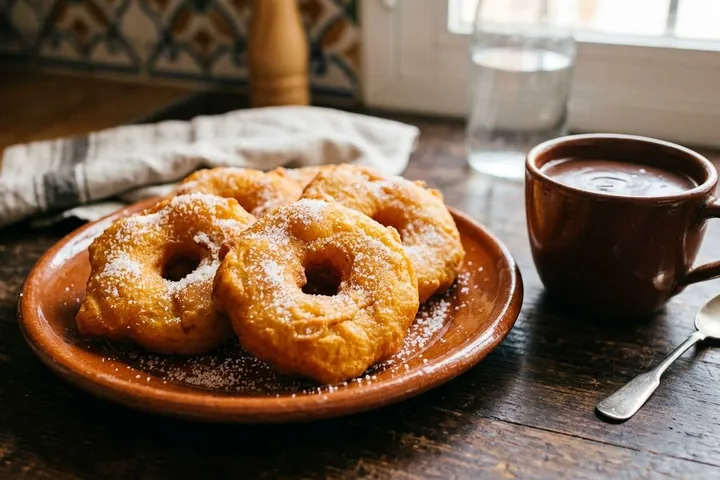
Pumpkin fritters (bunyols de carabassa)
Pumpkin fritters for about 12: roasted pumpkin, strong flour and fresh yeast, 30 minutes’ rest, fried with a hole in the middle and sugar on top.
Total time: 90 min
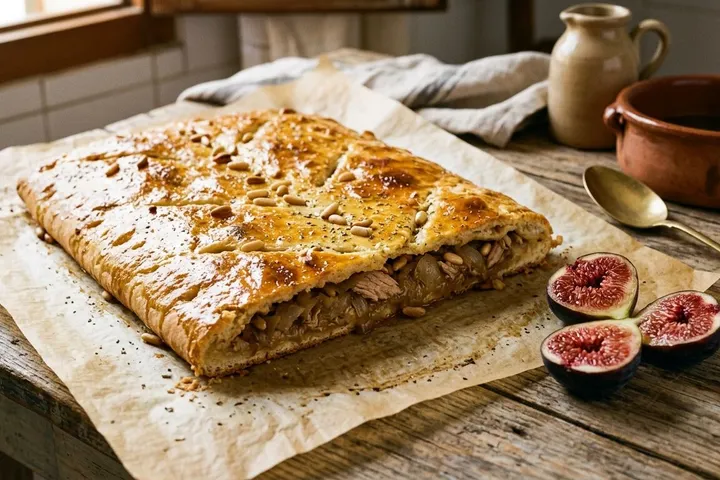
Tuna coca (coca amb tonyina)
Tuna coca for 500 g of flour: dough made by pouring boiled oil, water and aniseed over the flour, tuna belly, onion and pine nut filling, and a 200 °C oven.
Total time: 40 min
Served at…
- Easter Sunday · Sources
- Easter Monday · Sources