
Fartons
Yield: 10 pieces
Are there 40 or more of you? We cook rice dishes live for groups
Large paella pans need less liquid. Sources
Ingredients
Dough
- 50 mlLukewarm water
- 25 gFresh baker’s yeast
- 300 gStrong flour
- 1 pcsEgg
- 50 gSugar
- 3 gSalt
- 50 mlSunflower oil
Glaze
- 100 gIcing sugar for the glaze
- 30 mlWater for the glaze
Ingredients
Steps
- 1Dissolve the 25 g in the lukewarm 50 ml.
- 2Sift the 300 g into a large bowl, add the 50 g and the 1 pcs, pour in the water with the yeast and knead inside the bowl.
- 3When the dough comes away from the sides, add the 50 ml and the 3 g. Move it to the worktop and knead for about two minutes, until smooth. Shape it into a ball, put it back in the bowl, cover it with a cloth and leave to rest.30 min
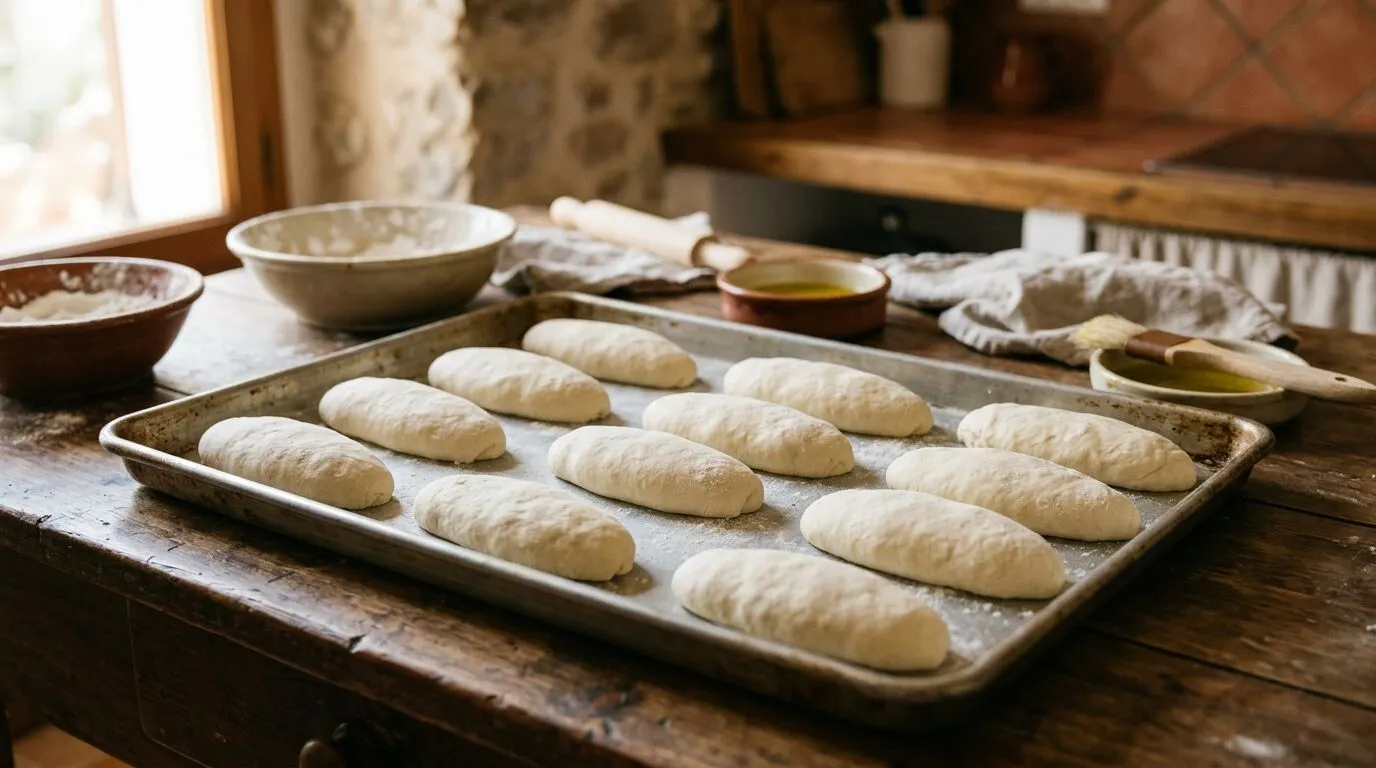
- 4Divide the dough into 10 portions and leave them to rest for another 5 minutes, covered. Roll each one out with a rolling pin into an oval shape and roll it up along the long side.5 min
- 5Place them on a tray lined with baking paper, cover them and let them prove until they double in volume. It can take two or three hours, depending on the temperature of the kitchen.
- 6With the oven preheated to 225 °C, top and bottom heat, put the tray in, lower to 200 °C and bake for 12 minutes.12 min
- 7Meanwhile, mix the 100 g with the 30 ml until there are no lumps.
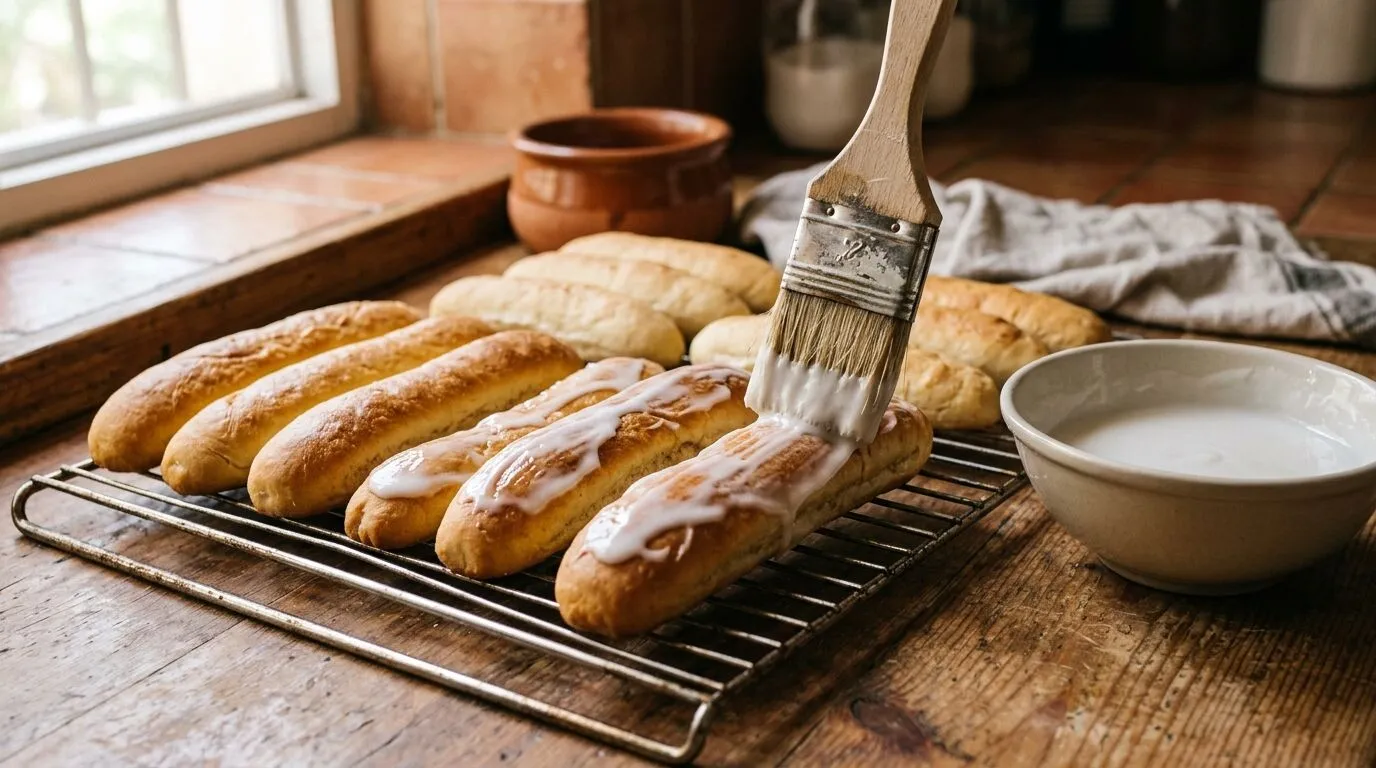
- 8When you take them out of the oven, brush them with the glaze while still hot, all over the surface, and leave them to cool before eating.
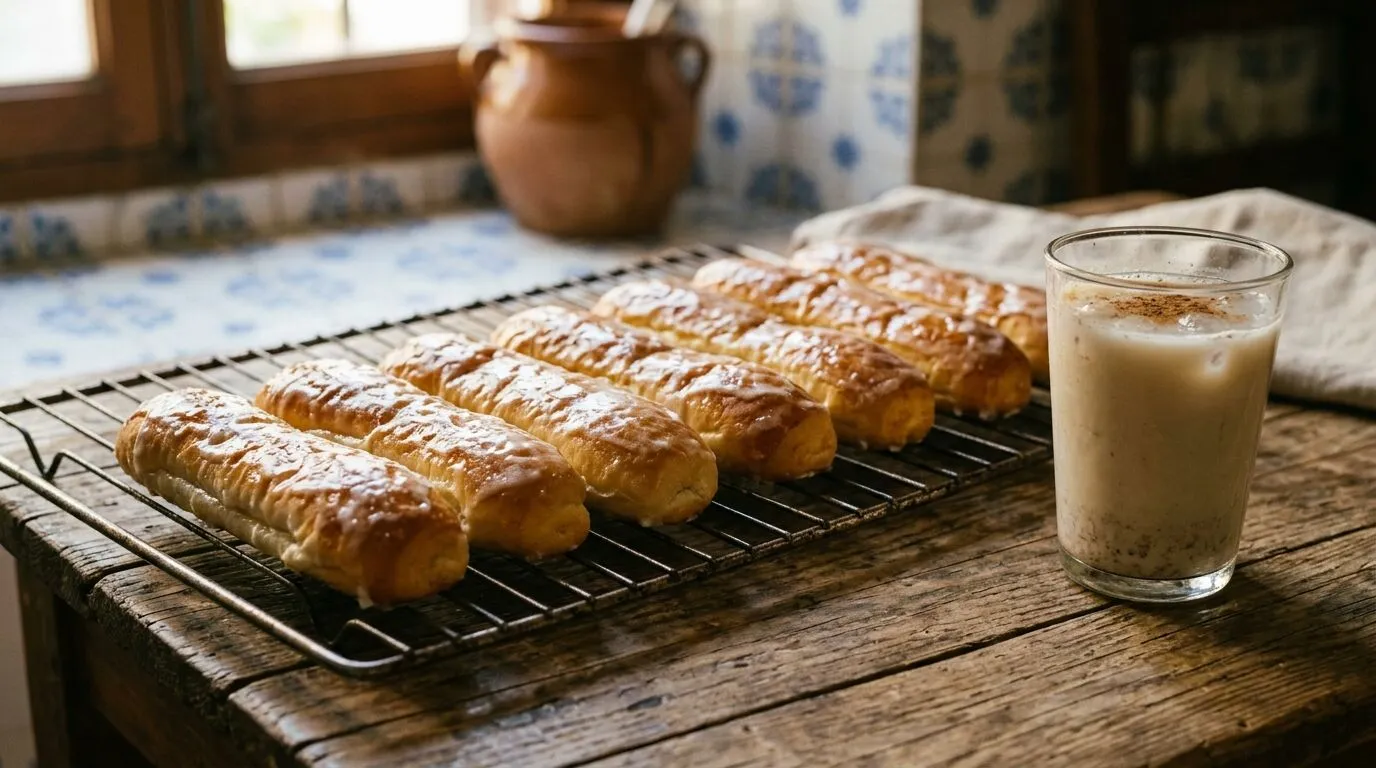
Fartons are a long bun, tender inside and glossy with sugar outside, made for dipping. It is a sweet from Alboraya, the home of horchata (the tiger nut drink), and is eaten above all in summer. This recipe is a homemade one for 10 pieces, with the resting times that matter.
A tender dough, with egg and oil
The base is a dough of strong flour with fresh yeast, egg, a little sugar and sunflower oil. It is kneaded first without the oil, until it comes away from the sides of the bowl; the oil and the salt go in afterwards, and it is worked for about two minutes on the worktop until smooth.
We follow the Directo al Paladar recipe because it is the one that gives all the quantities. Valencia Plaza records another, traditional one, with more flour and more eggs, but it doesn’t give the amount of water, and without that figure it can’t be made in full. That is why they are kept apart, without mixing figures: the traditional one stays in the variations, as a reference.
Shaping the rolls: oval and rolled along the long side
The dough is divided into 10 portions, which rest for 5 minutes, covered. Each one is rolled out into an oval with the rolling pin and rolled up along the long side. That gesture gives the typical long shape, similar to a rosquilleta, but more tender, which is what Valencia Plaza says the horchata makers of Alboraya were after.
They are placed on the tray over baking paper, covered and left until they double in volume. According to Valencia Plaza, the original sweet started from the dough of the Valencian panquemao, made lighter and longer, and with a glaze. Valencia Plaza gives no further details of that dough; the one in this recipe is Directo al Paladar’s.
Time is what matters: resting and proving
This recipe asks for patience. The dough rests for half an hour, the portions for five minutes more and the proving on the tray takes between two and three hours, depending on the temperature of the kitchen. In total, about three hours of resting for 35 minutes of work and 12 in the oven. There is no point in rushing: if the fartons haven’t doubled, they will come out dense.
Oven and glaze: hot on hot
The oven is preheated to 225 °C, with top and bottom heat; the tray goes in, the heat is lowered to 200 °C and they bake for 12 minutes. The glaze is icing sugar and water, mixed until there are no lumps, and it is brushed on as soon as the fartons come out, still hot, so it settles thin and glossy. Then, leave them to cool before eating.
When they are eaten and with what
Fartons are for breakfast and afternoon snacks. With horchata in the hot months, and in winter with hot chocolate, coffee or herbal teas, according to Directo al Paladar. Valencia Plaza puts them on summer afternoons and evenings with horchata. The sources place them in summer and at snack time, not at a particular celebration.
Directo al Paladar adds leche merengada, also typical of Valencia, and recommends them for staving off hunger in the middle of the afternoon.
A note on the name: Fartons Polo is a brand of Grupo Polo, which dates its origin to 1939 in Titaguas and its move to Alboraya in 1960 (the brand’s website). Here we are talking about the sweet, not the brand.
If you like baking, in the recipe book you have the llanda sponge cake, the pumpkin fritters and the mona de Pascua. For a breakfast or afternoon-snack table for a company, see the ideas in corporate coffee breaks.
For many guests
One batch makes ten fartons; for a group you have to repeat the recipe or scale it. If there are lots of you, we cook for groups with set-up and bar: see cooking and bar for fiestas.
History and variations
Fartons come from Alboraya. Valencia Plaza says the horchata makers searched for years for a sweet to dip in horchata and that the Polo family, after passing through Algemesí, managed it in the 1960s: the shape of a *rosquilleta*, but more tender. They used the dough of the *panquemao*. The traditional version that newspaper records has 500 g of flour, 3 eggs and 25 g pieces, without giving the water.
Valencia: Valencia Plaza’s traditional recipe has 500 g of flour, 60 g of sugar, 80 g of sunflower oil, 25 g of fresh yeast and 3 eggs, with 25 g pieces at 180 °C for about 7 minutes; it doesn’t give the water. Sources
Tips
Let them double in volume before baking: it can take two or three hours, depending on the temperature of the kitchen. Sources
Brush on the glaze as soon as they come out of the oven, while the fartons are hot. Sources
Roll them up along the long side of the oval dough, for the characteristic long shape. Sources
Fartons
Frequently asked questions
What ingredients do fartons contain?
The dough has strong flour, fresh baker’s yeast, lukewarm water, egg, sugar, salt and sunflower oil. On top, a glaze of icing sugar and water. This is the Directo al Paladar recipe, for 10 pieces. The traditional version recorded by Valencia Plaza uses more flour, more eggs and doesn’t give the water, so it hasn’t been mixed with this one.
When are fartons eaten?
At breakfast and for afternoon snacks, and above all in summer: Valencia Plaza places them with horchata on summer afternoons and evenings, and Directo al Paladar serves them with tiger nut horchata in the hot months. In winter, according to the same source, they go with hot chocolate, coffee or herbal teas. They are not a sweet tied to a particular fiesta.
Who invented fartons?
According to Valencia Plaza, the Polo family, in Alboraya, in the 1960s. They were looking for a sweet that went well with horchata: shaped like a *rosquilleta* but more tender, made with the dough of the *panquemao* and with a glaze. Fartons Polo is today a brand of Grupo Polo; here fartons is the name of the sweet, not of the brand.
Sources
Recipes
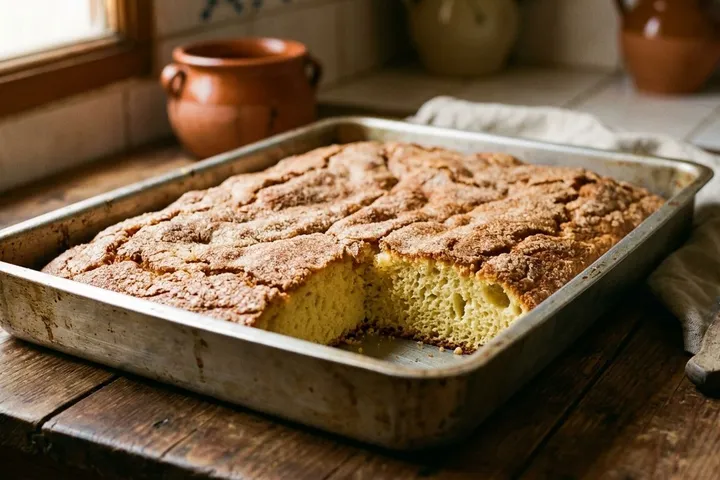
Coca de llanda
Coca de llanda, the Valencian tray-baked sponge: eggs and sugar beaten, milk, flour, gaseosa and oil, sugar on top and 35 minutes at 180 °C.
Total time: 65 min
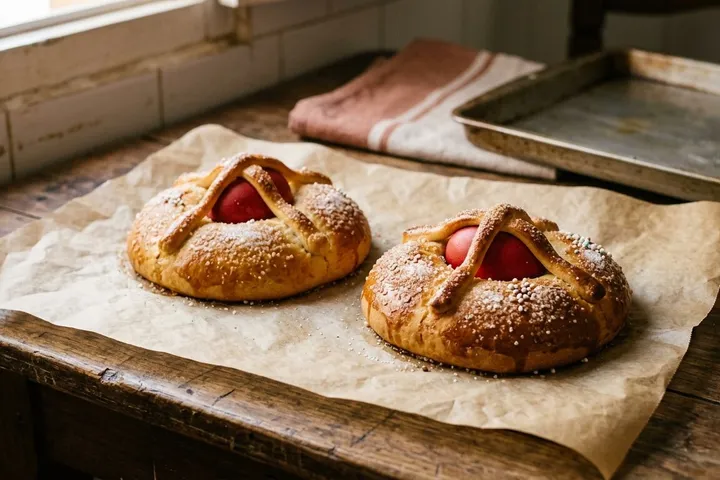
Mona de Pascua
Mona de Pascua for about 8 people: overnight starter, dough with orange blossom water and orange, a dyed egg in each, strips in a cross and a 180 °C oven.
Total time: 25 min
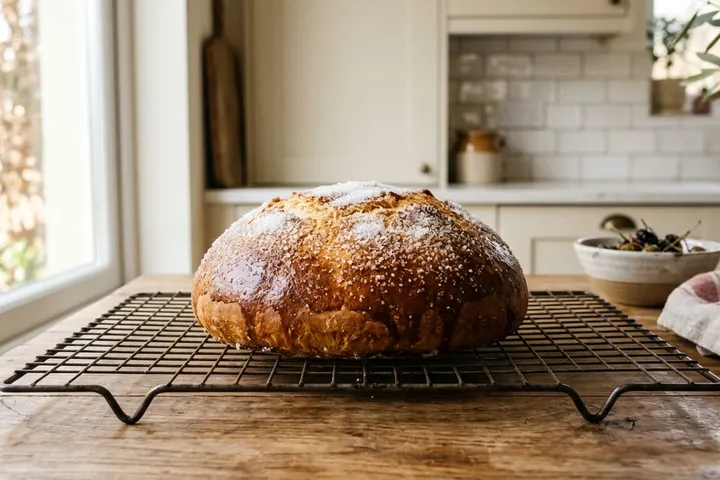
Panquemado sweet bread
Panquemado for 4: yeast-risen sweet bread with citrus zest, two provings until doubled, glazed with egg and sugar, baked at 200 °C for about 25 minutes.
Total time: 315 min
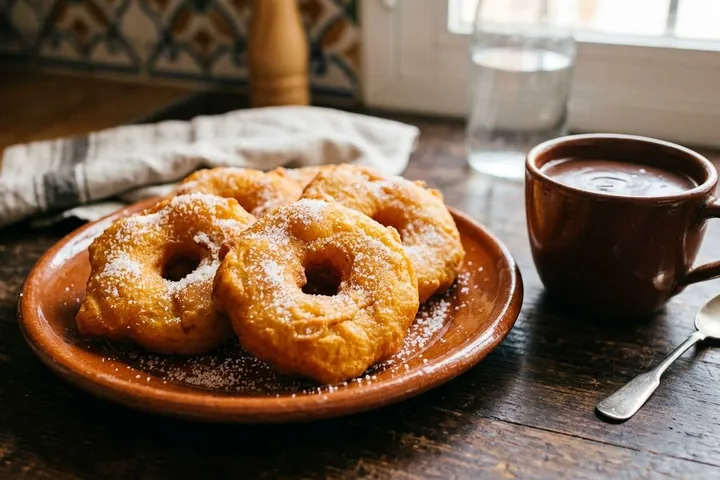
Pumpkin fritters (bunyols de carabassa)
Pumpkin fritters for about 12: roasted pumpkin, strong flour and fresh yeast, 30 minutes’ rest, fried with a hole in the middle and sugar on top.
Total time: 90 min