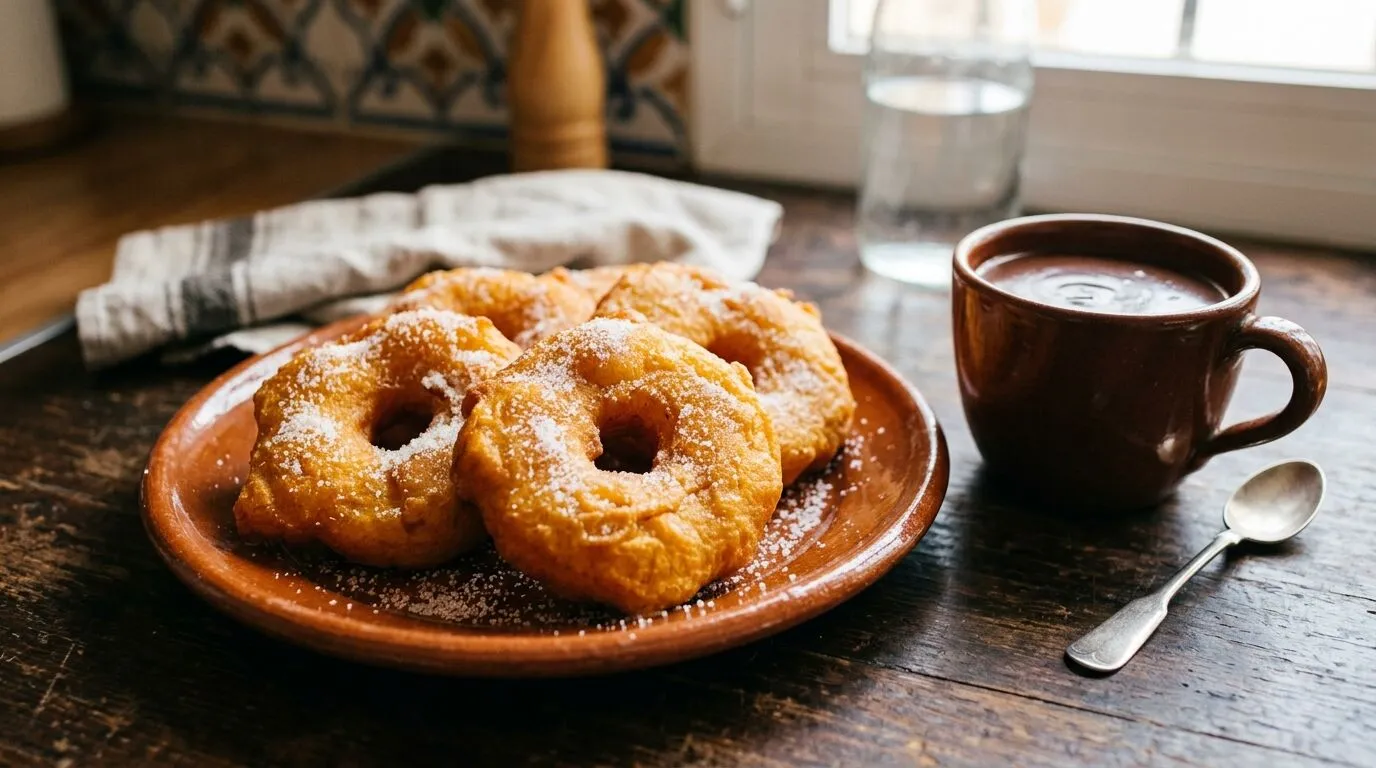

Pumpkin fritters (bunyols de carabassa)
Yield: 12 pieces
Are there 40 or more of you? We cook rice dishes live for groups
Large paella pans need less liquid. Sources
Ingredients
Dough
- 500 gRoasted pumpkin (flesh only)
- 250 gStrong bread flour
- 25 gFresh yeast
Frying and serving
- to tasteSunflower or seed oil, for frying
- to tasteSugar
Ingredients
Steps
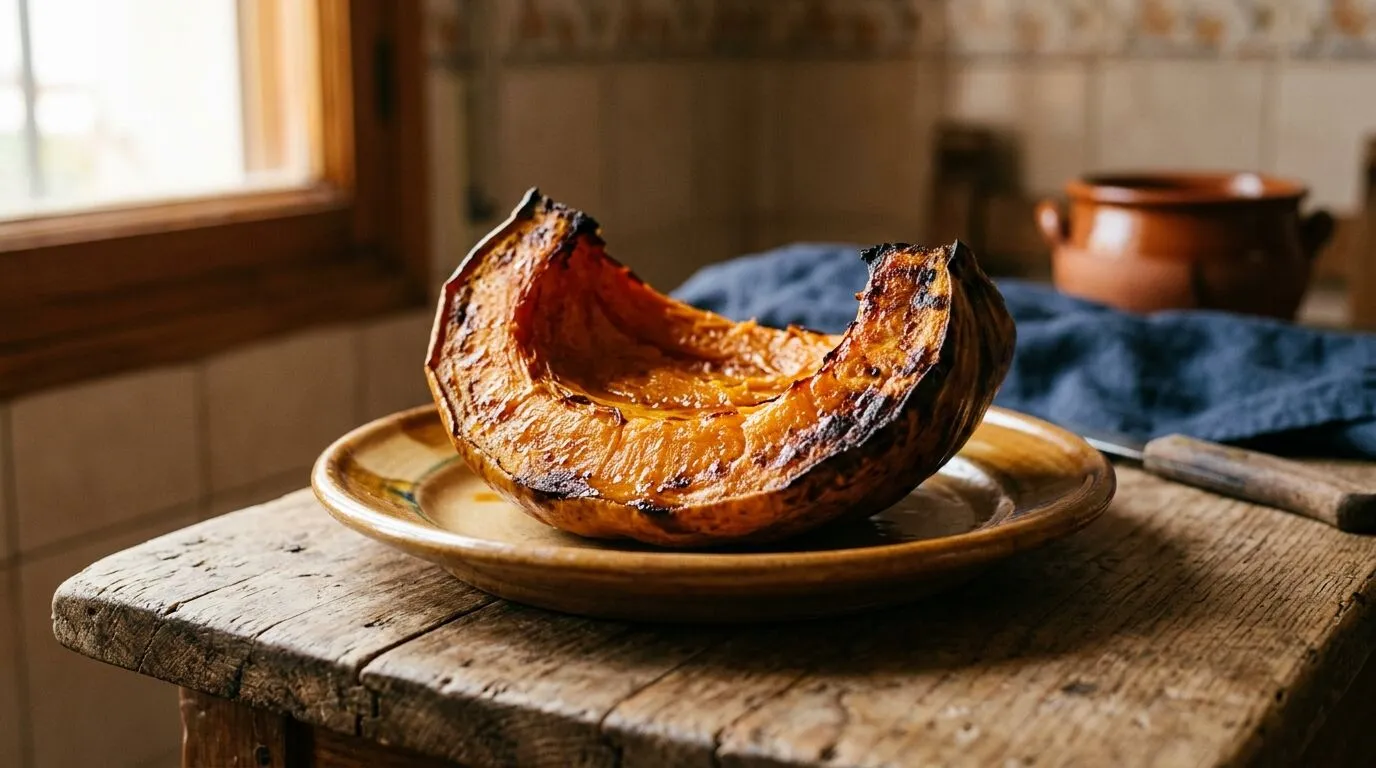
- 1Cut the 500 g in half, leave the seeds in and set it on baking paper. Roast it at 180 °C for a little over an hour, watching the colour so it does not burn.60 min
- 2Take it out of the oven, scoop out the flesh with a spoon, without skin or seeds, and let it cool.
- 3Mash the cold flesh to a purée, with your hands or in a mortar.
- 4Break up the 25 g with a little of the 250 g, mix it into the purée until no lumps show and add the rest of the flour. If the pumpkin is not sweet enough, add some to taste too.
- 5Mix to a smooth dough and leave it to rest for about 30 minutes, until it ferments and rises.30 min
- 6Heat the to taste over a moderate heat; wait about two minutes, until it smokes.
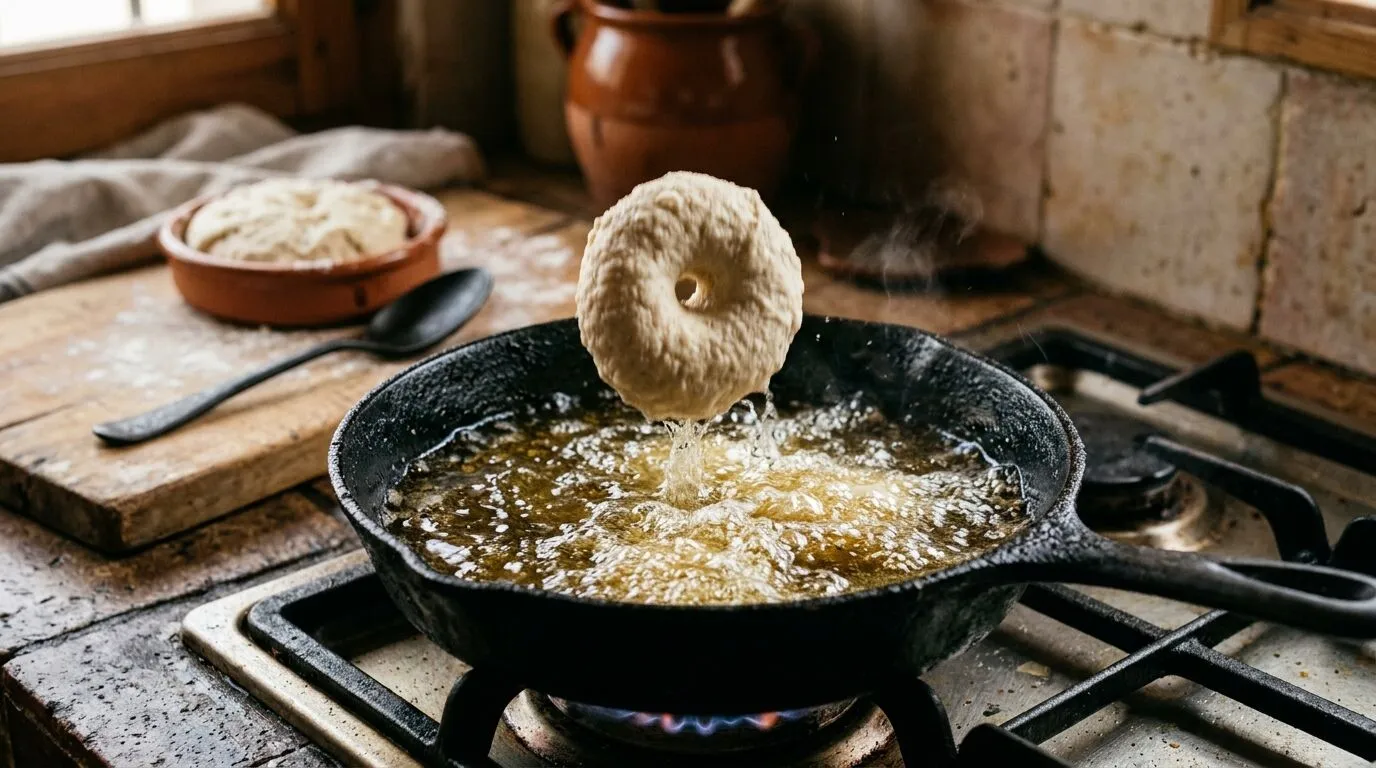
- 7Flour your hands or wet them with warm water. Take as much as fits in a tablespoon, shape it into a ball and make a hole in it with your thumb.
- 8Drop it into the oil. Move it with a long stick so the hole does not close, and turn it with a spatula without letting it brown too much.
- 9Drain them on kitchen paper and serve with to taste on top.
Pumpkin fritters are counted by the dozen. The base recipe on this page comes from Valencia Bonita and makes about 12; the other one, Convega’s from the Vega Baja, we give in the text as a variation, because it is made differently and is not used in the quantity calculator. One is not good and the other bad: they are two ways of making them.
Two ways to reach the same fritter
The big difference is how the pumpkin is cooked. Valencia Bonita roasts it, seeds in and at 180 °C for a little over an hour, and then scoops out only the flesh. That hour is the cooking time marked on this page; the frying goes by eye, by colour. The dough contains flour, preferably strong, and fresh yeast, no egg, and rests for about 30 minutes. Convega’s recipe book peels and boils the pumpkin, keeps the water it was boiled in, whisks the egg whites to stiff peaks and adds yolks, sugar and orange zest; the dough rises for an hour, is fried in small pieces and rolled in plenty of sugar.
There is a coincidence we like: both use twice as much pumpkin as flour. In Valencia Bonita’s it is 500 g of roasted flesh to 250 g of flour; in Convega’s, 2 kg of pumpkin to 1 kg. We do not give Convega’s other figures: the oil is printed as “1/2 litros”, and the half tablespoon of yeast for a kilo of flour does not fit the 25 g that Valencia Bonita asks for 250 g. We have declared this on the page and not put in a figure of our own making. Nor does Convega give a yield, so we do not know how many fritters it makes.
Getting them right: orange, not white
Valencia Bonita insists on one point: the fritter should come out more orange than whitish, because it is made of pumpkin and not of flour. And it quotes the warning of El Tio Visantico about those bought outside the home: “els posaran molta farina i poca carabassa” (they will put in lots of flour and little pumpkin). That is why roasting matters: roasted flesh concentrates more flavour and colour than pumpkin boiled in water or cooked in the microwave. If the pumpkin does not have enough sugar, or if the guests have a sweet tooth, you can add some to the dough, as well as the sugar that goes on top. Nor is there any need to take the pumpkin out of its skin before roasting: it is roasted whole, cut in half, and scooped out afterwards.
Frying with a hole
The oil, sunflower or seed, goes over a moderate heat. When it smokes, you flour your hands or wet them with warm water, take a portion, shape a ball and make the hole with your thumb. In the oil, the long stick helps the hole not to close and the spatula to turn them without browning them too much. Drain on kitchen paper and sprinkle with sugar.
When they are eaten and with what
Valencia Bonita presents them as the typical sweet of the Fallas (Valencia’s March fiesta of fire and monuments) and serves them, on cold days, with a good cup of chocolate. If you do not know the fiesta from the inside, the glossary explains what a casal faller is. In the Vega Baja, Convega places them at times such as San José or All Saints, when the pumpkin season begins. The 19th of March and its public holiday are on the calendar: 19 March. For the rest of the fiesta repertoire, in the recipe collection you have the mona de Pascua and the coca amb tonyina of the Hogueras. And for dipping in horchata, the fartons.
For a crowd
A dozen disappears in no time. If there are lots of you and it is your fiesta, we cook for the neighbourhood or casal fiesta, with set-up and bar.
History and variations
A Fallas sweet: Valencia Bonita calls it a typical Fallas sweet and serves it with a cup of chocolate. Convega’s recipe book, from the Vega Baja, places it at times such as San José or All Saints. The glossary explains what a casal faller is.
el Baix Segura: Convega’s recipe book, from the Vega Baja, peels and boils the pumpkin instead of roasting it, adds egg yolks, sugar and orange zest, folds in whisked egg whites, lets the dough rise for an hour and fries small pieces that it rolls in plenty of sugar. Sources
Tips
The fritter should come out orange, not whitish: if it comes out white, it has too much flour and too little pumpkin. Sources
Roast the pumpkin rather than boiling it: it gives more flavour and colour than the microwave or water. Sources
Move the fritter with a long stick while it fries so the hole does not close. Sources
Pumpkin fritters (bunyols de carabassa)
Frequently asked questions
How long do you rest the dough for pumpkin fritters?
It depends on the recipe. Valencia Bonita rests the dough for about 30 minutes, the time the fresh yeast needs to ferment and rise. Convega’s recipe book, in the Vega Baja, rests it for an hour, with boiled pumpkin and whisked egg whites. If you follow this page, allow half an hour and fry once the dough has risen.
What do you have with pumpkin fritters?
They are served with sugar on top and, on cold days, with a cup of hot chocolate, which is the company Valencia Bonita mentions. If the pumpkin is not sweet enough, the recipe lets you add some sugar to the dough, as well as the sugar that is sprinkled on top.
When are pumpkin fritters eaten?
At Fallas, according to Valencia Bonita, which calls them a typical Fallas sweet. Convega’s recipe book, from the Vega Baja, speaks of times such as San José or All Saints, when the pumpkin season begins. The dates for 19 March and its public holiday are on the calendar page.
Why do mine come out white or floury?
Because they have too little pumpkin. Valencia Bonita warns that the fritter should be more orange than whitish, and quotes the warning of El Tio Visantico about those bought outside the home: “els posaran molta farina i poca carabassa” (they will put in lots of flour and little pumpkin). Roasting the pumpkin instead of boiling it gives more colour and flavour, and keeping the proportion on this page, 500 g of pumpkin to 250 g of flour, helps.
Sources
Glossary terms
Recipes
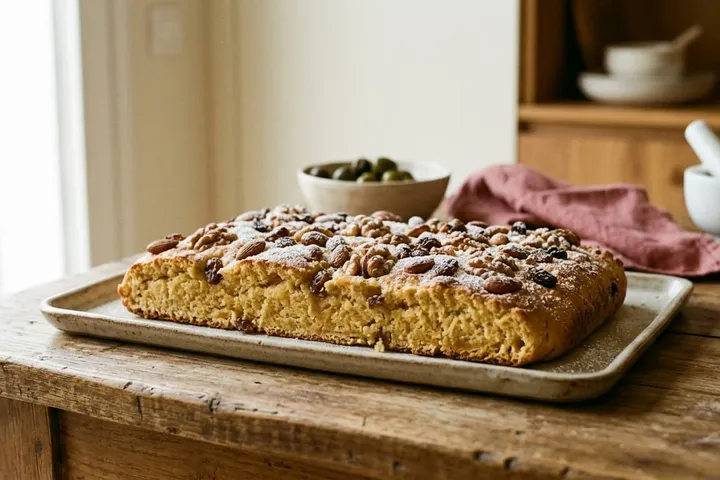
All Saints fogassa
All Saints fogassa for 12: sweet potato and aniseed dough proved until doubled, nuts and raisins on top and a 180 °C oven; the proving has no set time.
Total time: 85 min
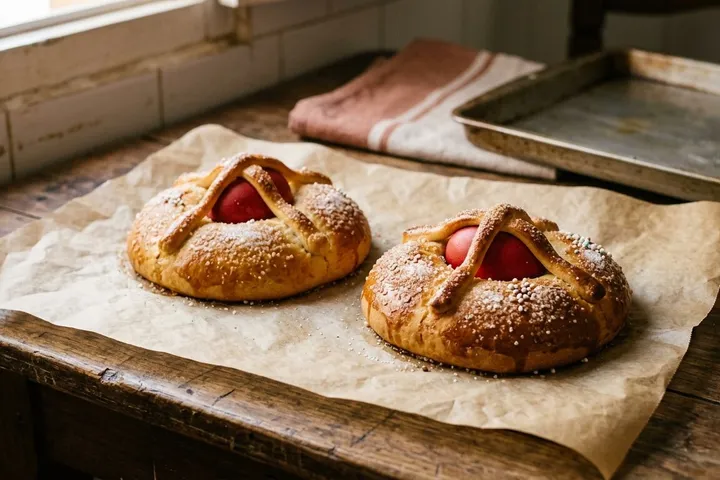
Mona de Pascua
Mona de Pascua for about 8 people: overnight starter, dough with orange blossom water and orange, a dyed egg in each, strips in a cross and a 180 °C oven.
Total time: 25 min
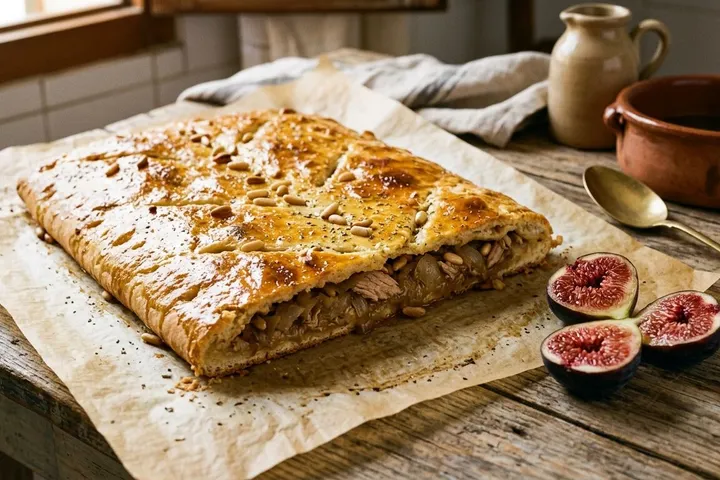
Tuna coca (coca amb tonyina)
Tuna coca for 500 g of flour: dough made by pouring boiled oil, water and aniseed over the flour, tuna belly, onion and pine nut filling, and a 200 °C oven.
Total time: 40 min
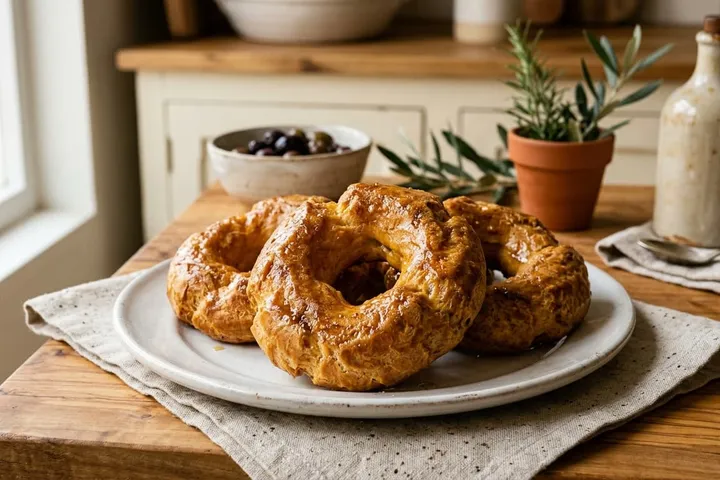
Vega Baja almojábanas
Vega Baja almojábanas: dough scalded with water, oil and flour, eggs kneaded by hand, oven and an orange blossom honey bath. Convega recipe, 15 pieces.
Total time: 35 min
Served at…
- Fallas · Sources
- San José (St Joseph’s Day) · Sources