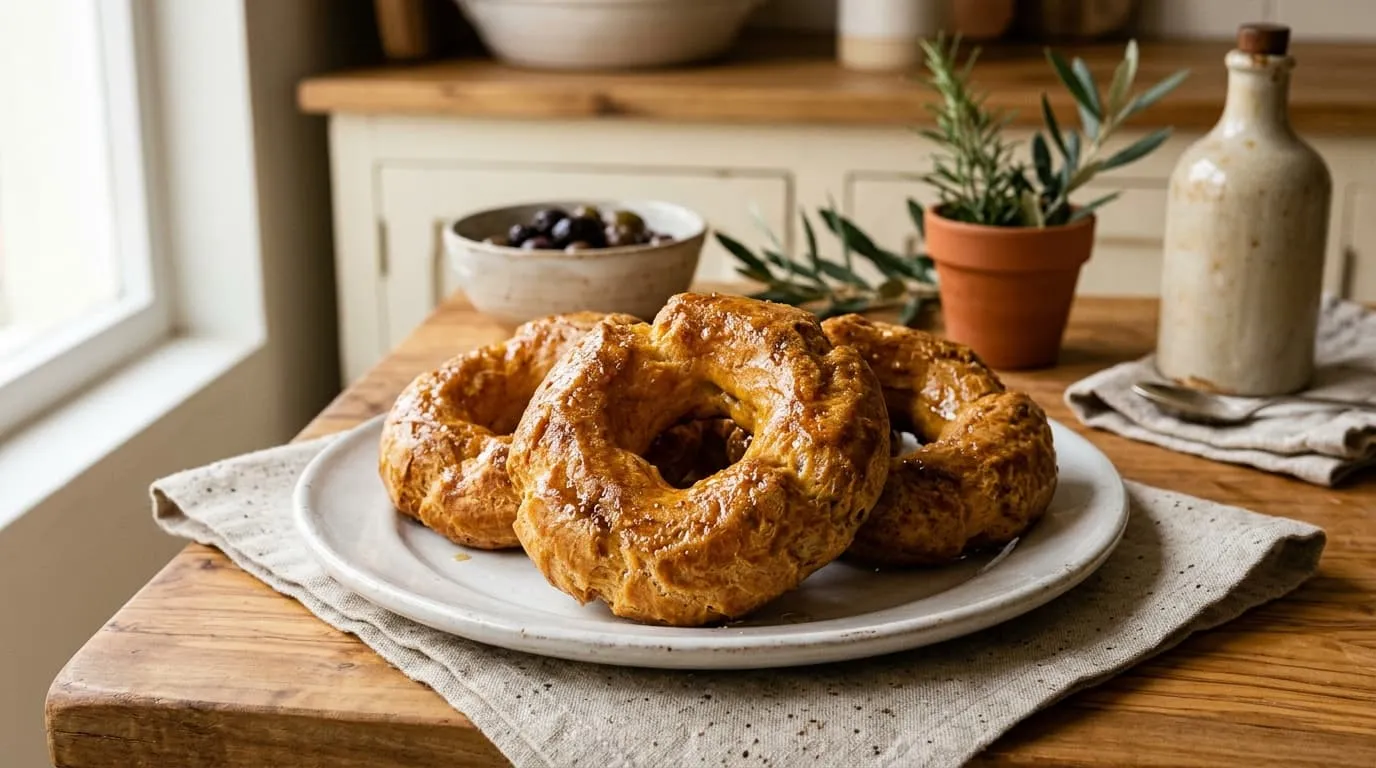

Vega Baja almojábanas
Yield: 15 pieces
Are there 40 or more of you? We cook rice dishes live for groups
Large paella pans need less liquid. Sources
Ingredients
Dough
- 1.5 lWater
- 500 mlOlive oil
- 1 kgFlour
- 24 pcsEggs
Honey glaze
- to tasteOrange blossom honey
- to tasteWater (to thin the honey)
- to tasteSugar
Ingredients
Steps
- 1Mix the water with the olive oil, pour it into a frying pan and put it on the heat until it boils.
- 2When the water and oil are boiling, add the flour to scald it, stirring until you have an even mixture.
- 3Let the dough cool.
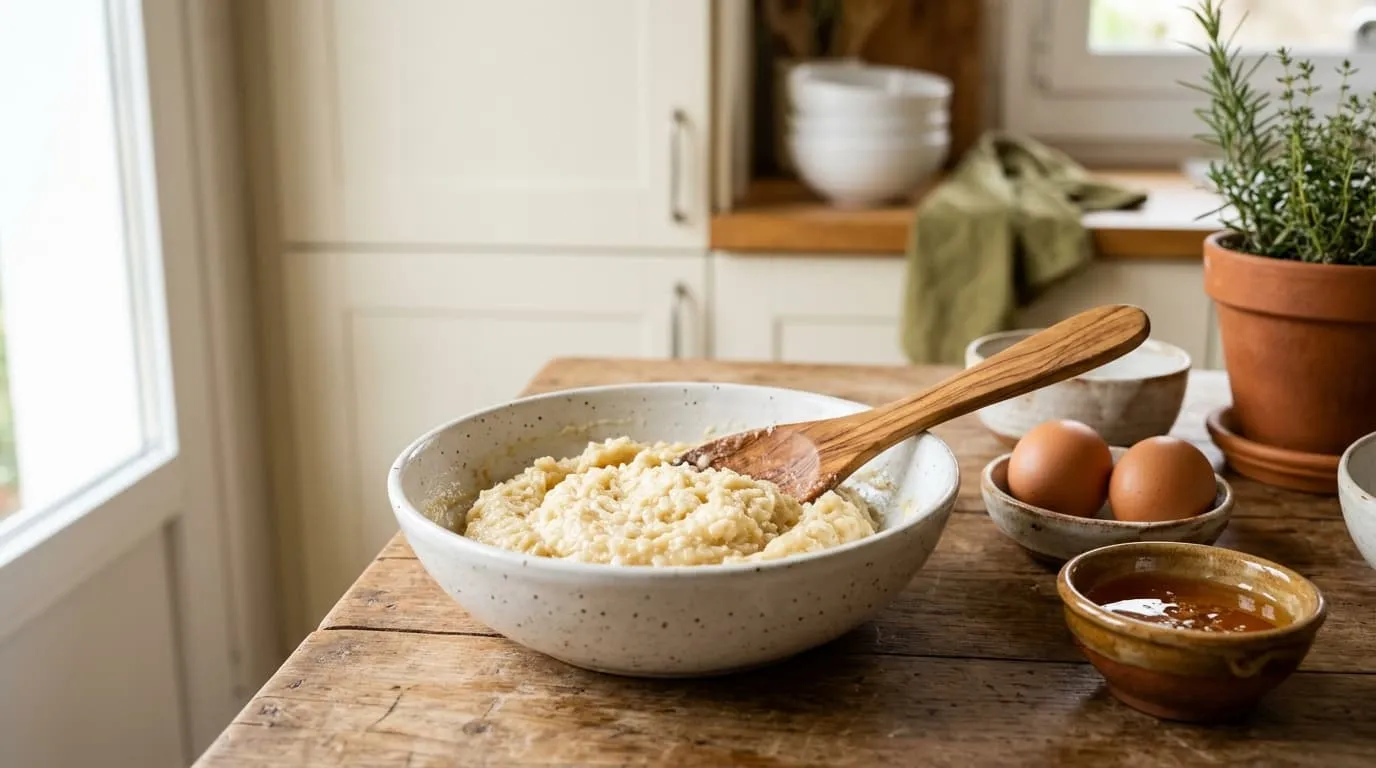
- 4Add the eggs gradually while kneading with your hands. It is a very sticky dough: keep wetting your hands so that it does not stick too much.
- 5Cooking note: divide the dough into rounded portions on the baking tray.
- 6Bake at 270 °C for 30 to 35 minutes.35 min
- 7When they are ready, take them out of the oven and wait for them to cool.
- 8Bring the orange blossom honey to the boil, thinned with water, and let it dilute.
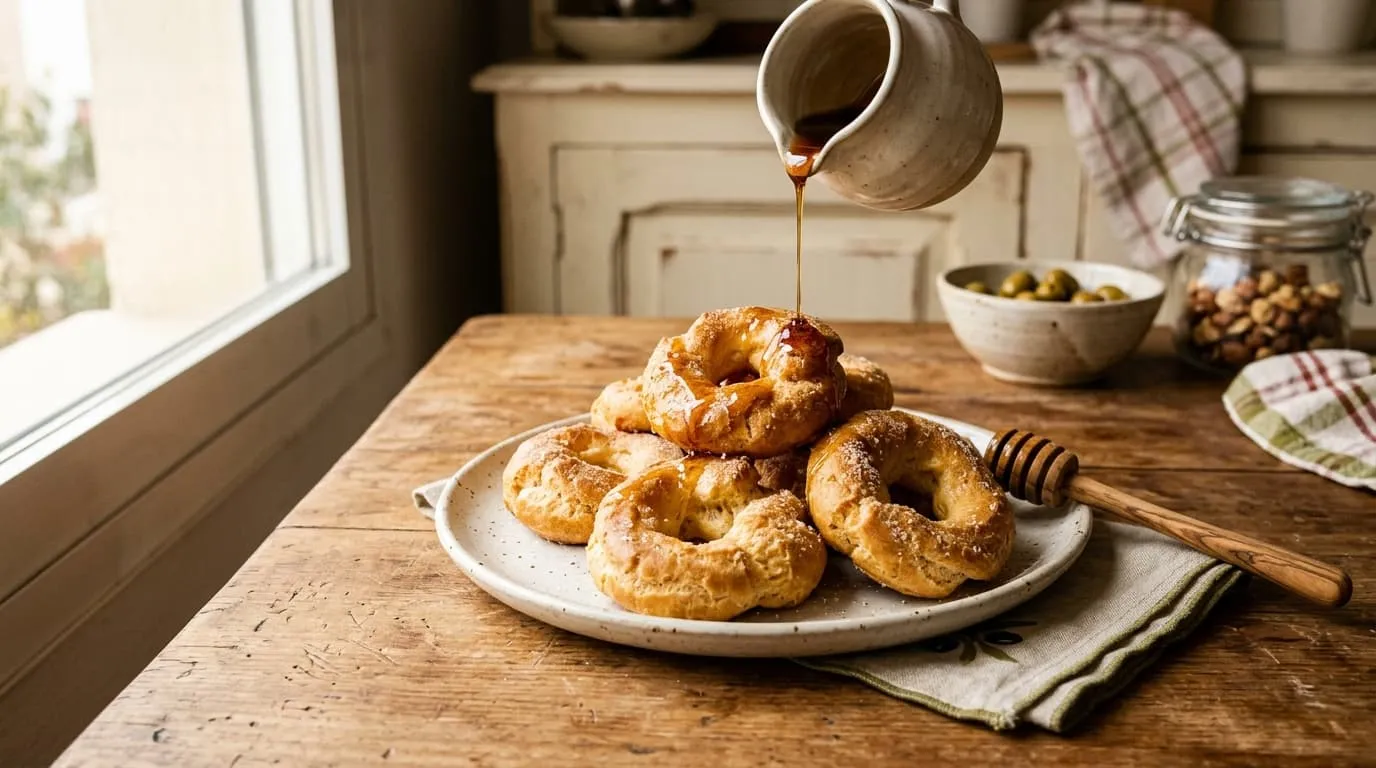
- 9When the honey is lukewarm, coat each almojábana in it and sprinkle with sugar on top, to taste.
Vega Baja almojábanas are not like a sponge cake or a fritter: the flour is scalded with boiling water and oil, kneaded with eggs, baked at a high heat and dipped in orange blossom honey. We follow the recipe from the Convega recipe book, which makes 15 pieces, just as it is published.
A village bakery sweet
Convega presents them as an artisan sweet of Arabic origin that is eaten all year round. They were traditionally the dessert at weddings, christenings, communions, birthdays and fiestas in the district’s villages. They are made in bakeries and confectioners’ shops, and the recipe book recalls that the recipe has been handed down from generation to generation. They are round in shape and are dipped in artisan orange blossom honey, and they are also called almojábenas.
A scalded dough
The water and the oil are mixed, poured into a frying pan and put on the heat until they boil. At that moment the flour is added to scald it, stirring constantly until you get an even mixture. There is no further mystery: the dough contains water, oil, flour and eggs, and the sweetness comes afterwards with the honey.
Next the dough has to cool. The recipe book gives no time for this, so the sensible thing is to wait until you can work it comfortably with your hands before moving on to the eggs.
The eggs and wet hands
The eggs are added gradually while you knead with your hands. The dough is very sticky, and the recipe book recommends wetting your hands so that it does not stick too much. It is best to do so from the first egg and not wait until your fingers are caked in dough, because it is harder to regain control once it has stuck.
Convega specifies 24 eggs for a kilo of flour. Have them ready before you start kneading and work on a large surface. The book mistakenly repeats the egg instruction in two consecutive steps: add the eggs only once, little by little, as you knead. This is the book’s quantity, rather than an estimate based on the size of the eggs.
Shaping, oven and cooling
Convega describes the almojábanas as round and gives a yield of fifteen pieces, with no weight or diameter per piece. As a cooking note, you can divide the dough into fifteen portions and shape them round on the tray, leaving space between them. This way of dividing and arranging the dough is practical guidance for handling it, rather than a size or a shaping instruction specified by the book.
The baking is done at 270 °C for 30 or 35 minutes. This is a very high temperature, so it is worth knowing in advance how far your oven goes. Afterwards they are taken out and left to cool before the bath, a wait the source does not quantify either.
The orange blossom honey bath
The orange blossom honey is brought to the boil thinned with water and left to dilute. The recipe book gives no proportions. When the honey is lukewarm, each almojábana is dipped in it and sprinkled with sugar on top, to taste. That sugar is not in the list of ingredients, although the last step does call for it.
How much time you need
The recipe book’s header speaks of 60 minutes, an approximate figure that is not split between the phases. Only the baking carries minutes, 30 to 35; the scalding, the cooling of the dough, the kneading, the cooling of the pieces and the bath do not. Allow more than an hour and do not plan on eating them fresh from the oven, because they have their wait before the bath.
Almojábanas contain egg and flour, and the bath contains honey: go over the 14 allergens if you are going to share them.
How to organise yourself
According to the recipe book, you will need a frying pan for the water and oil, a wooden spatula for stirring and a baking tray. Buy with a little to spare, because the egg list is long. Start with the dough, which needs to cool, and leave the honey bath for when the pieces are already cold.
Other sweets to compare
If you like traditional Valencian sweets, there are also the pumpkin fritters and the sweet potato pastissets.
For big tables
A fiesta sweet is usually thought of for many people. If you are organising a group meal, see how we handle local fiestas and ask for a quote with what you need.
History and variations
Convega describes them as an artisan sweet of Arabic origin, “the name gives it away”, eaten all year round. They were traditionally the dessert at weddings, christenings, communions, birthdays and village fiestas in the Vega Baja. They are also called almojábenas, are round in shape and are dipped in artisan orange blossom honey.
Tips
Keep wetting your hands as you knead: it is a very sticky dough. Sources
Scald the flour, stirring until you have an even mixture, and let the dough cool before adding the eggs. Sources
Coat the almojábanas in the lukewarm honey once they are cold, and sprinkle the sugar on at the end. Sources
Vega Baja almojábanas
Frequently asked questions
How do you scald the flour for this dough?
The water and oil are put to boil in a frying pan and, when they come to the boil, the flour is added and stirred until the mixture is even. Then the dough has to cool before the eggs are added with your hands, wetting them so that the dough does not stick.
What proportion of water and honey goes into the bath?
Convega gives no proportion: it says that the orange blossom honey is brought to the boil thinned with water until it dilutes, and that the almojábanas are dipped in it when it is lukewarm. That is why on the recipe card it appears as water to thin the honey, with no quantity. The sugar is sprinkled on at the end, to taste.
How many almojábanas does the recipe make?
The recipe book speaks of 15 pieces for 1 kg of flour, 24 eggs, 1.5 litres of water and 500 ml of oil, with the oven at 270 °C for 30 or 35 minutes. It gives no weight or diameter per piece, so the size you make them will change the final number.
Sources
Glossary terms
Recipes
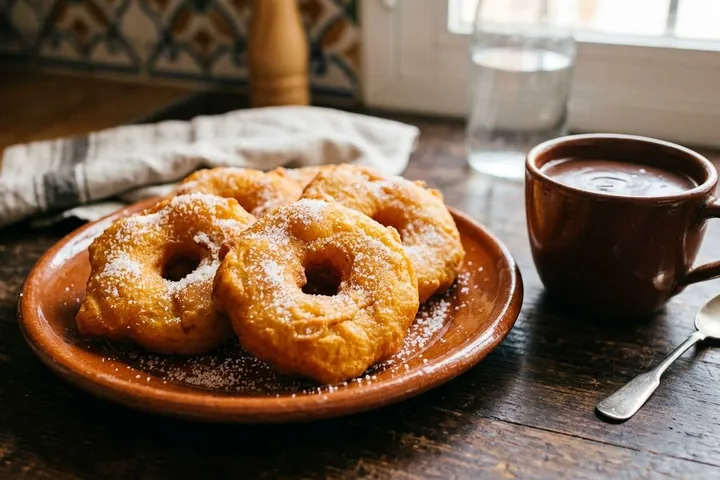
Pumpkin fritters (bunyols de carabassa)
Pumpkin fritters for about 12: roasted pumpkin, strong flour and fresh yeast, 30 minutes’ rest, fried with a hole in the middle and sugar on top.
Total time: 90 min
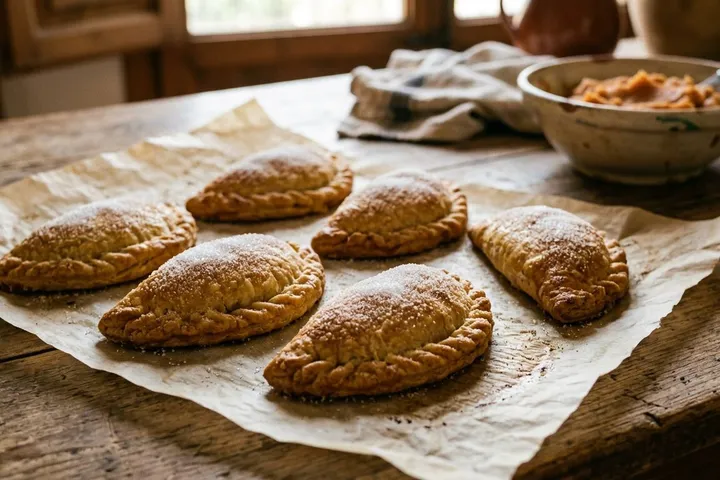
Sweet potato pastissets (pastissets de moniato)
Half-moon sweet potato pastries: a dough of spirit, oil and flour, a lime and cinnamon filling made the day before, baked until golden at the edges.
Total time: 765 min