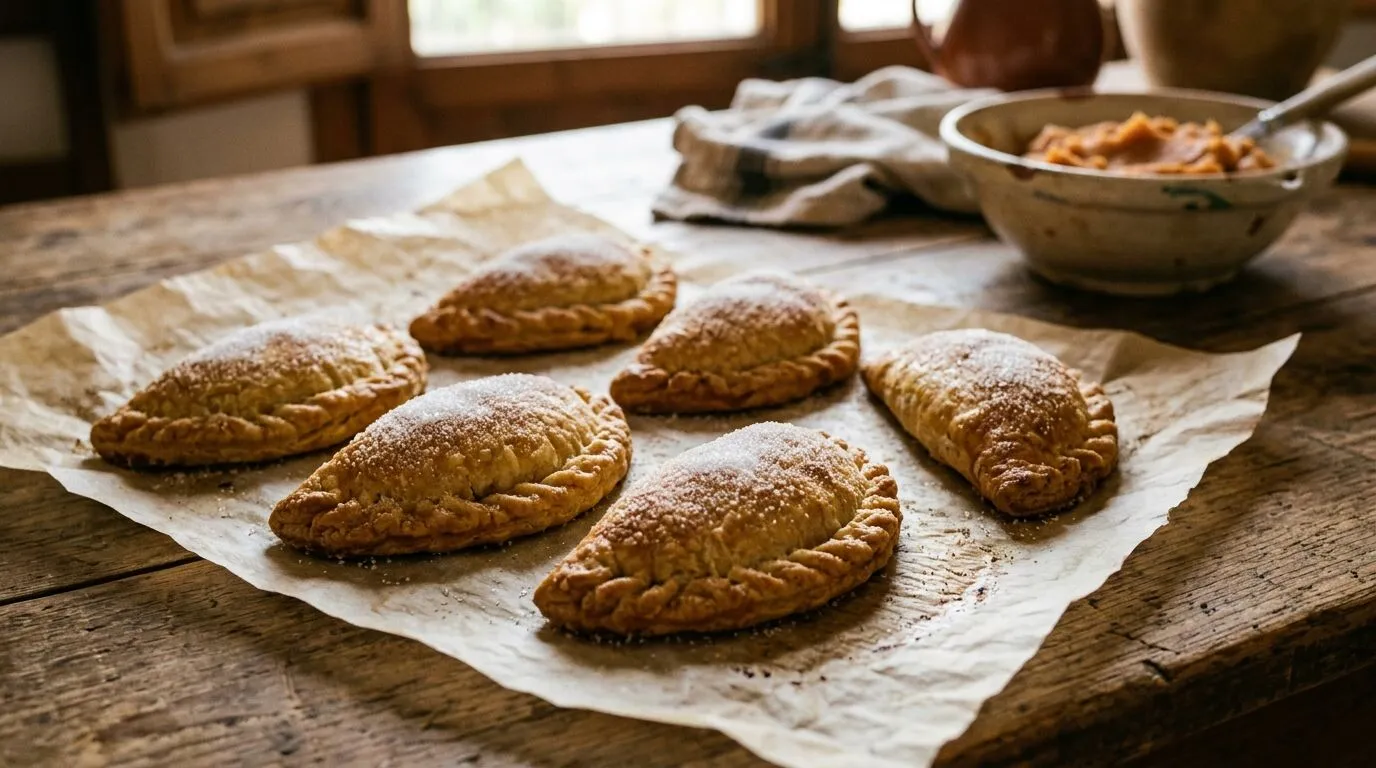

Sweet potato pastissets (pastissets de moniato)
Yield: 18 pieces
Are there 40 or more of you? We cook rice dishes live for groups
Large paella pans need less liquid. Sources
Ingredients
Filling
- 2 pcsSweet potato (moniato)
- to tasteLime
- 1 sprigCinnamon stick
- to tasteSugar for the filling
Dough
- 75 mlAguardiente or other strong spirit
- 75 mlOlive oil
- 35 gSugar for the dough
- 250 gFlour
- 1 pcsEgg
Finishing
- to tasteSugar for sprinkling (optional)
Ingredients
Steps
- 1Peel the 2 pcs and cut them into cubes. Boil them in plenty of water for about 15 minutes or until tender; the time depends on the size of the pieces.15 min
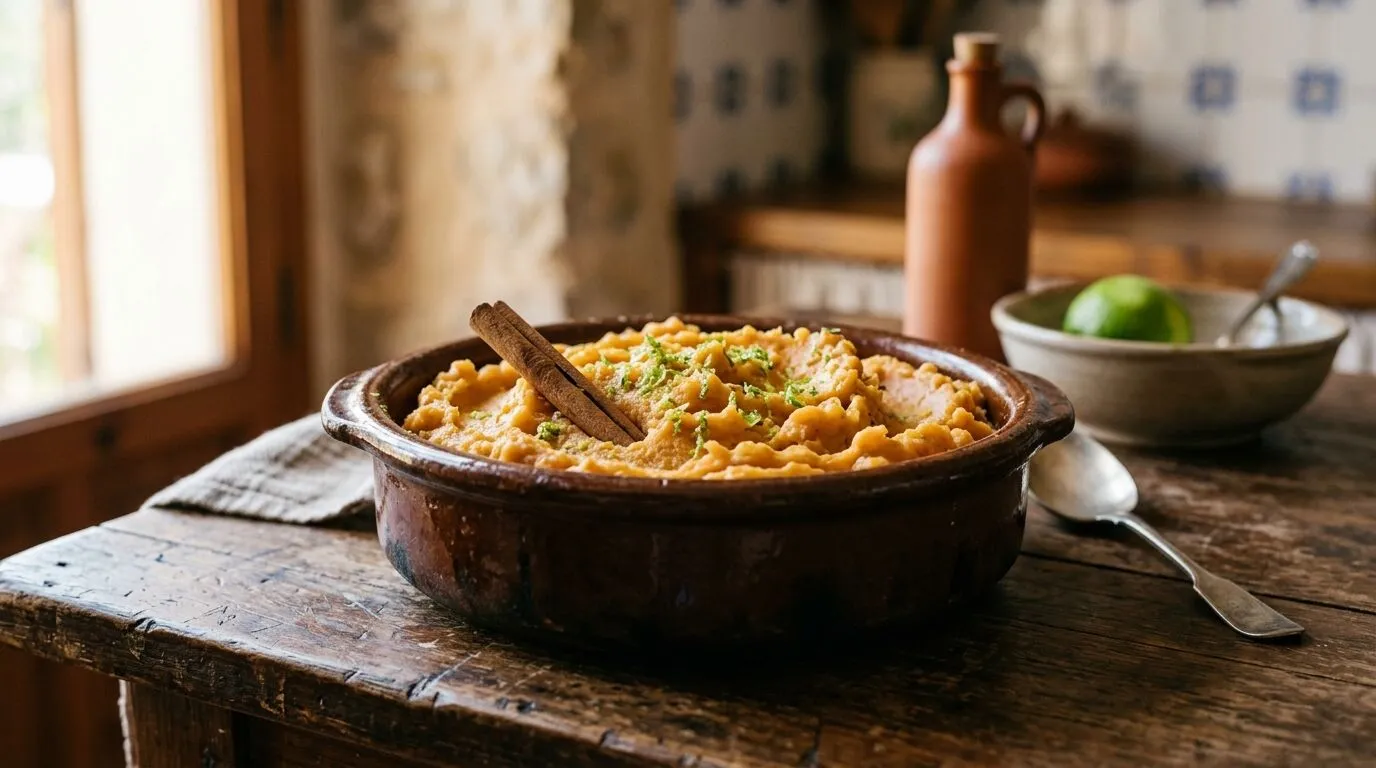
- 2Drain the sweet potato and, in the same pan, mash it with the zest of the to taste. Add the to taste and the 1 sprig and cook it for about 10 minutes over a medium heat, stirring constantly so the sugar does not burn.10 min
- 3Take the pan off the heat and let the filling cool completely. It is best to make it the day before and keep it in the fridge overnight.
- 4In a deep bowl, mix the 75 ml with the 75 ml. Add the 35 g and a little 250 g and stir.
- 5Keep adding the 250 g little by little, stirring and working the dough.
- 6Roll out the dough with a rolling pin, thin but so that it does not break when folded. Cut circles of 10 centimetres with a cutter and remove the offcuts.
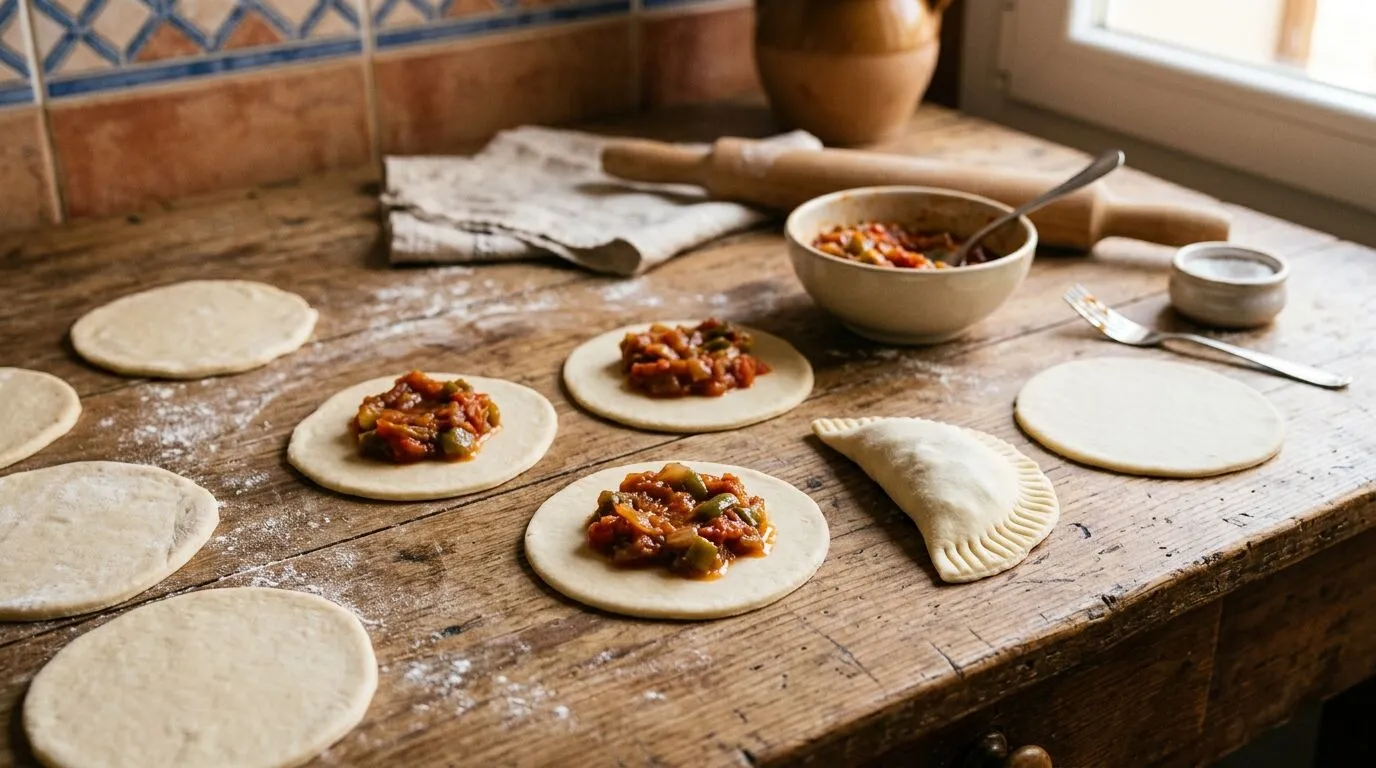
- 7Put a little filling in the centre of each circle and fold it over on itself. Press the edges and seal them with a fork; repeat with all the dough.
- 8Place the pastissets on a tray lined with baking parchment or a silicone mat and brush them with the beaten 1 pcs so they shine. If you like them with a sweet crust, sprinkle the to taste on now.
- 9Bake at 200 °C for 15 to 20 minutes, or until the edges start to turn golden. Take them out and let them cool before eating them.20 min
Pastissets de moniato, or sweet potato pastries, are one of the Valencian Community’s Christmas sweets: a golden half-moon, thin pastry and a sweet potato filling with cinnamon. This is the recipe from the Turisme la Vall d’Uixó recipe book, with its quantities; the base does not count pieces and, with circles of 10 centimetres, you get about 18, the figure Directo al Paladar gives for an almost identical dough. All you need is sweet potato, flour, oil and a spirit.
Which recipe we follow and why
There are several recipes and they are not as alike as you might expect. Valencia Bonita publishes a recipe attributed to the Agència Valenciana de Turisme with half a kilo of sugar in the dough, cazalla (an aniseed spirit) warmed in a small pan and an oven at 220 °C for 25 minutes. Directo al Paladar uses 35 g of sugar, aniseed liqueur and sweet wine, and 180 °C for about 15 minutes. The one in the Vall d’Uixó recipe book, which we follow, has 35 g of sugar, aguardiente and oil, and bakes at 200 °C for 15 to 20 minutes.
We have not been able to check the Agència Valenciana de Turisme sheet, because its website does not publish the text of the recipe, only a PDF and a video. So we have taken the Vall d’Uixó one as the base, which does give all the quantities and which agrees on the essentials with Directo al Paladar’s, and we have left the other as a doubtful figure, unused. The rule is simple: choose one dough and do not mix it with the others.
The filling: made the day before
The sweet potato filling is boiled, mashed and cooked again with sugar, cinnamon and lime. The recipe asks for two small sweet potatoes, peeled and cubed, about 15 minutes in plenty of water, until tender; the exact time depends on the size of the pieces. Two things matter. First: stir constantly while it cooks, so the sugar does not burn. Second: it must be completely cold when you fill the pastries. It is best to make it the afternoon before and leave it in the fridge overnight. Valencia Bonita warns of the same thing and recalls that the preserve thickens as it cools.
One more thing: the recipe gives no quantity of sugar for the filling, and Directo al Paladar uses 150 g for every 400 g of sweet potato. Start from one of the two references and adjust to your taste. And the lime in the Vall d’Uixó recipe can be lemon, as in Valencia Bonita.
The dough: spirit, oil and flour
The dough is made by mixing the spirit with the oil, adding the sugar and the flour little by little. It is rolled out thin, but so that it does not break when folded, and cut into circles of 10 centimetres. It contains aguardiente or another strong spirit; in Valencia Bonita it is cazalla. It is a sweet with alcohol, so if children or anyone who cannot drink it are going to eat it, let people know at the table.
Shaping, baking and serving
A teaspoonful of filling in the centre of each circle, as the Vall d’Uixó recipe says, fold, press the edge and seal with a fork. With more filling, the half-moon is hard to close. Brushed with beaten egg, with sugar on top if you want them as Directo al Paladar does, and into the oven until the edges turn golden; leave them to cool before eating them. They are eaten at any time of day, above all with coffee or with mistela (sweet grape must fortified with alcohol), and they keep well for several days, according to the Agència Valenciana de Turisme.
If you are setting a Christmas table, they go well with the winter stews: see the cocido con pelotas and the Christmas pelotas that go with it.
If there are lots of you at the table
A dessert made the night before is a real help at a long lunch. If there are lots of you, we organise the company Christmas lunch, and the guide to when to book the company Christmas lunch saves you rushing.
History and variations
According to the Agència Valenciana de Turisme, the pastisset de moniato is a small pastry in the shape of a semicircle, easy to find in Castelló, València and Alacant, above all as Christmas approaches, and made with ingredients of clear Arab influence. Valencia Bonita gives it as “of Arab origin, possibly”. It is eaten at any time of day, best with coffee or with mistela.
Valencian Community: Directo al Paladar, which gives them as typical of the Valencian Community, flavours the dough with sweet aniseed liqueur and sweet wine, sprinkles sugar on before the oven and bakes them at 180 °C for about 15 minutes. Sources
Tips
Make the filling the day before and keep it in the fridge overnight: it has to be completely cold when you fill the pastries. Sources
Stir the filling constantly as it cooks so the sugar does not burn. Sources
If you warm the spirit in a small pan, be careful: cazalla (an aniseed spirit) can catch fire. Sources
Sweet potato pastissets (pastissets de moniato)
Frequently asked questions
What do you fill pastissets de moniato with?
With sweet potato boiled and mashed with sugar and cinnamon. The Vall d’Uixó recipe adds lime zest; Valencia Bonita, lemon. The filling is cooled completely before use and, better still, made the day before so it spends the whole night in the fridge and is properly cold when you fill the pastries.
Are they baked or fried?
They are baked. The Vall d’Uixó recipe bakes them at 200 °C for 15 to 20 minutes, until the edges turn golden; Directo al Paladar, at 180 °C for about 15 minutes, and Valencia Bonita, at 220 °C for 25. None of the three recipes fries them; Valencia Bonita admits that some people fry them, though it bakes them. Keep an eye on the oven for the last few minutes: the golden edge is the sign to take them out.
How long do pastissets de moniato keep?
Several days. The Agència Valenciana de Turisme says it is a pastry that keeps wonderfully as the days go by, although the usual thing is that they are eaten sooner. It does not give an exact number of days. The same sheet suggests them at any time of day, above all with coffee or with mistela, so a tray made ahead will do for the whole week of the festivities.
What is the difference between pastissets de moniato, sweet potato cakes and pastissets de Nadal?
It is the same sweet under three names: pastissets de moniato in Valencian, pasteles or pastelitos de boniato in Spanish and pastissets de Nadal (Christmas pastissets) for the time of year they are made. Be careful about searching for “pastissets” alone: that name is shared by other pastries from other places. With “moniato” or “boniato” you know they have a sweet potato filling.
Sources
- Flavours of La Vall d’Uixó: a recipe book of the most typical dishes, pastissets de moniato (Turisme la Vall d’Uixó)
- Pastissets de moniato (Agència Valenciana de Turisme, Comunitat Valenciana)
- Pastissets de moniato, or Christmas pastissets (Valencia Bonita)
- Sweet potato and anise pastries (Directo al Paladar)
Recipes
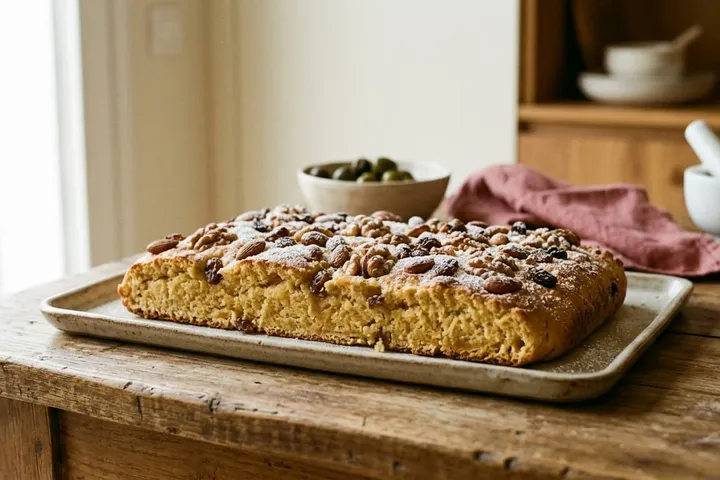
All Saints fogassa
All Saints fogassa for 12: sweet potato and aniseed dough proved until doubled, nuts and raisins on top and a 180 °C oven; the proving has no set time.
Total time: 85 min
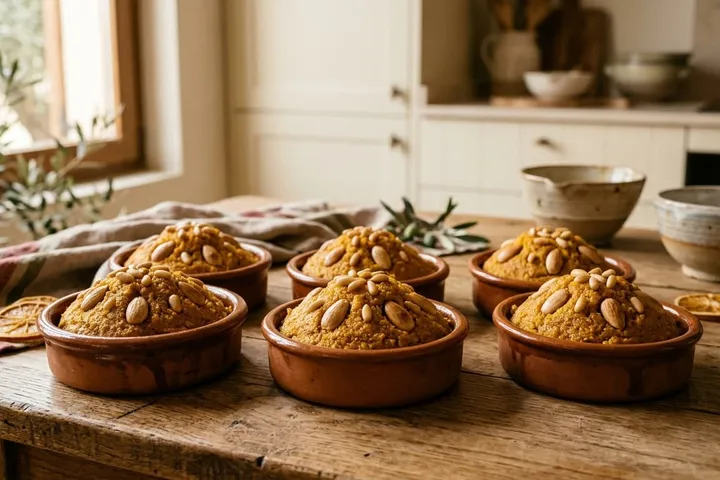
Arnadí pumpkin dessert
Arnadí pumpkin dessert for 6 moulds: pumpkin roasted, then drained overnight, cooked with sugar, almonds and egg yolks, then baked at 180 °C and 150 °C.
Total time: 185 min
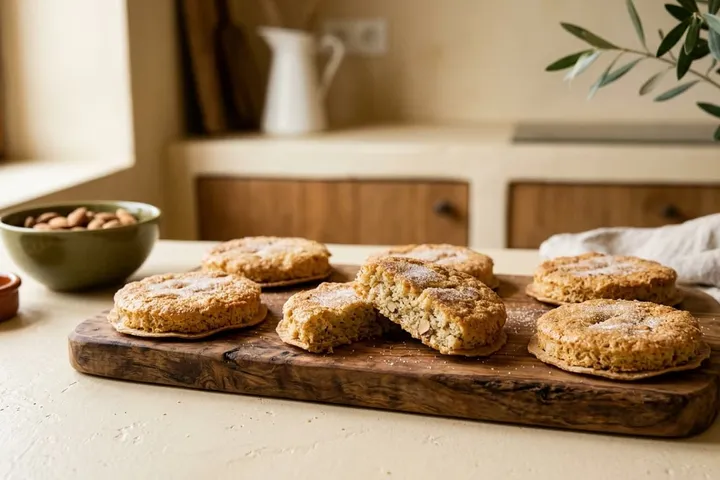
Coca Cristina
Coca Cristina for 6: meringue, ground almonds, flour and milk on wafers of about 15 cm, baked at 180 °C until lightly golden.
Total time: 40 min
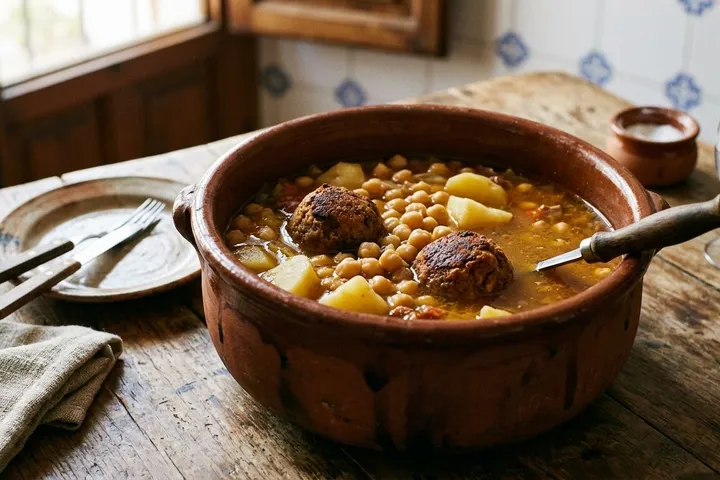
Cocido con pelotas
Winter stew from the Vega Baja: meat in cold water, soaked chickpeas, one potato and one or two pelotas per person, and the broth with a squeeze of lemon.
Total time: 1560 min
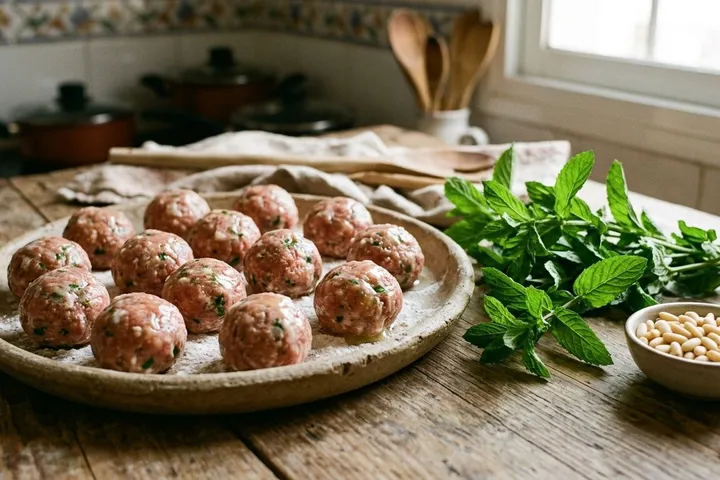
Pilotes de Nadal (Christmas meatballs)
Pork, bread, spearmint, cinnamon and pine nut meatballs, dipped in egg white and frozen, that end up in the cocido, a noodle soup or a brothy rice.
Total time: 25 min
Vega Baja almojábanas
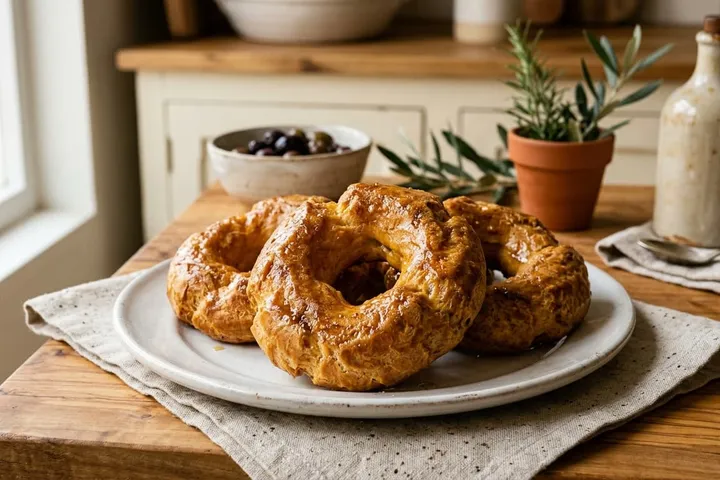
Vega Baja almojábanas: dough scalded with water, oil and flour, eggs kneaded by hand, oven and an orange blossom honey bath. Convega recipe, 15 pieces.
Total time: 35 min
Served at…
- Christmas · Sources