
Arnadí pumpkin dessert
Yield: 6 tins
Are there 40 or more of you? We cook rice dishes live for groups
Large paella pans need less liquid. Sources
Ingredients
Arnadí
- 3 kgPumpkin
- 2 pcsLemons (zest only)
- 5 mlOrange juice
- 3 pcsEgg yolks
- 300 gSugar
- 250 gGround almonds
- to tasteWhole almonds
- 1 tbspGround cinnamon
- to tastePine nuts (optional)
- to tasteSugar (for sprinkling)
- to tasteCinnamon (for sprinkling)
Ingredients
Steps
- 1The day before, roast the pumpkin in the oven at 180 °C for an hour and a half. It is best done slowly, so that it evaporates as much liquid as possible.90 min
- 2Peel it, remove the seeds and mash the flesh with a fork until you have a fine, even paste with no lumps. Remove the stringy fibres, put the flesh in a cloth bag and leave it hanging overnight so that it drains by itself.
- 3The next day, add the sugar to the flesh and mix very well; you can use a food mill to help.
- 4Put the mixture in a pot over a very low heat and stir constantly while you work in the ground cinnamon, the zest of the lemons and the orange juice.
- 5Without stopping stirring, add the ground almonds and the previously beaten egg yolks. Mix everything and cook for about 15 minutes.15 min
- 6Transfer the mixture to a large earthenware dish, or divide it among small individual earthenware dishes, and shape it into a pyramid with a spatula.
- 7Preheat the oven to 180 °C. Meanwhile, decorate the whole surface with pine nuts and whole almonds, raw or lightly browned.
- 8Sprinkle the surface with a mixture of sugar and cinnamon.
- 9Bake for 5 minutes at 180 °C. Lower the oven to 150 °C and cook for 45 minutes to 1 hour, until it takes on a golden colour. Take it out and let it cool before serving.60 min
Arnadí is a pumpkin sweet with almonds and cinnamon, and its difficulty lies not in the technique but in the calendar: it takes two days. This recipe card follows the recipe from “Entraré a la cuina”, the book from the Caroig-Xúquer area, and tells you what has to be ready the day before.
The day before: roast and drain
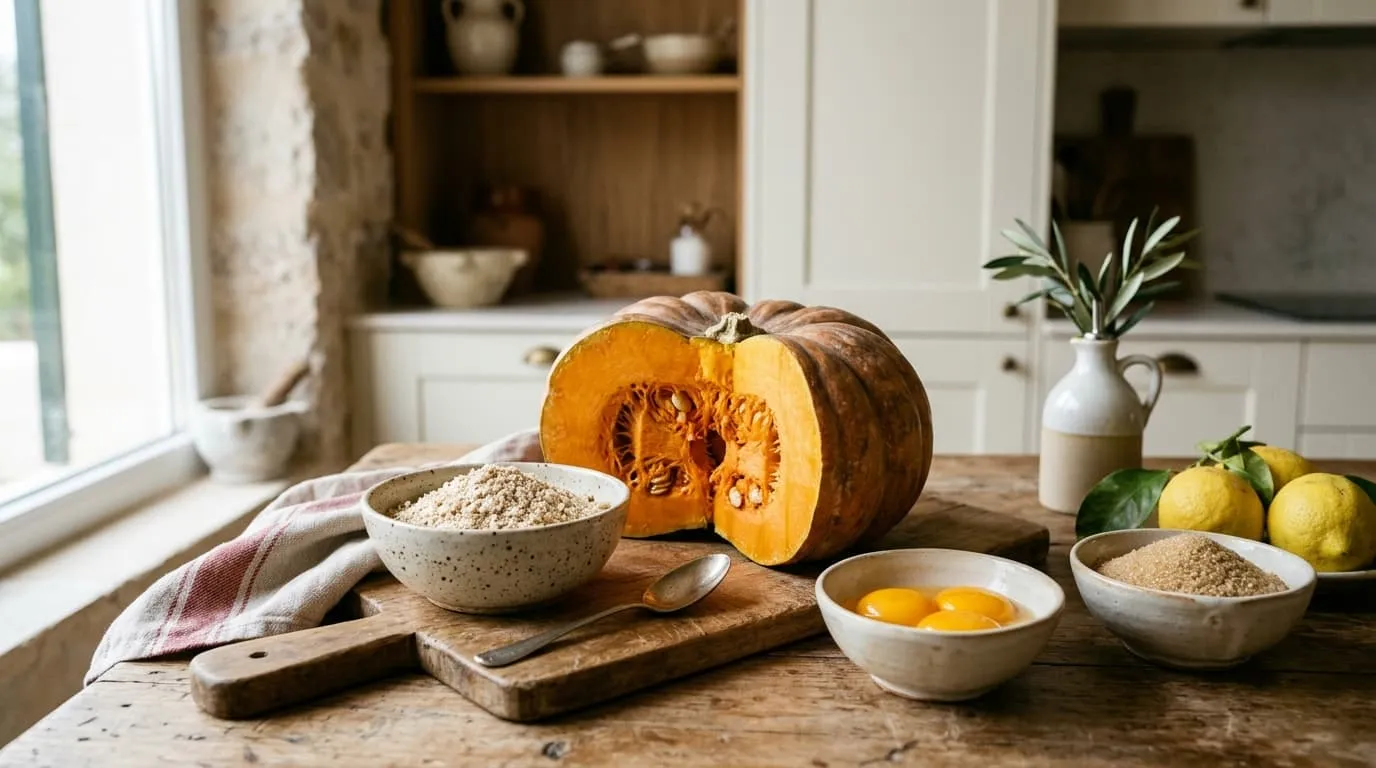
It all starts with a pumpkin of about 3 kg that is roasted in the oven at 180 °C for an hour and a half. The book insists it be done slowly so that it evaporates as much liquid as possible. When it is roasted, it is peeled, the seeds are removed and the flesh is mashed with a fork until you have a fine, even paste with no lumps. The stringy fibres are removed, the flesh is put in a cloth bag and left hanging overnight so that it drains by itself.
This is the part that counts most: getting a mixture with no liquid in it is, according to the book, one of the secrets of this sweet. The 3 kg in the list are those of the whole pumpkin before roasting.
The next day: the pot
With the flesh already drained, it is mixed with the sugar, and if you want some help, with a food mill. The mixture goes into a pot over a very low heat, and from that moment you do not stop stirring: the cinnamon, the zest of the lemons and the orange juice go in, and then the ground almonds and the previously beaten yolks. It is about 15 minutes of cooking in the pot, always stirring.
The book’s list asks for three yolks and the pot step speaks of four; here the three from the list are used.
The book’s two versions differ on flavourings: the Spanish recipe uses a tablespoon of cinnamon and the zest of two lemons; the Valencian recipe uses a teaspoon and two limes. Use the Spanish combination for this recipe: one tablespoon of cinnamon and two lemons. These are different quantities of cinnamon and different citrus fruits, rather than alternative names for the same ingredients.
Shaping and decorating
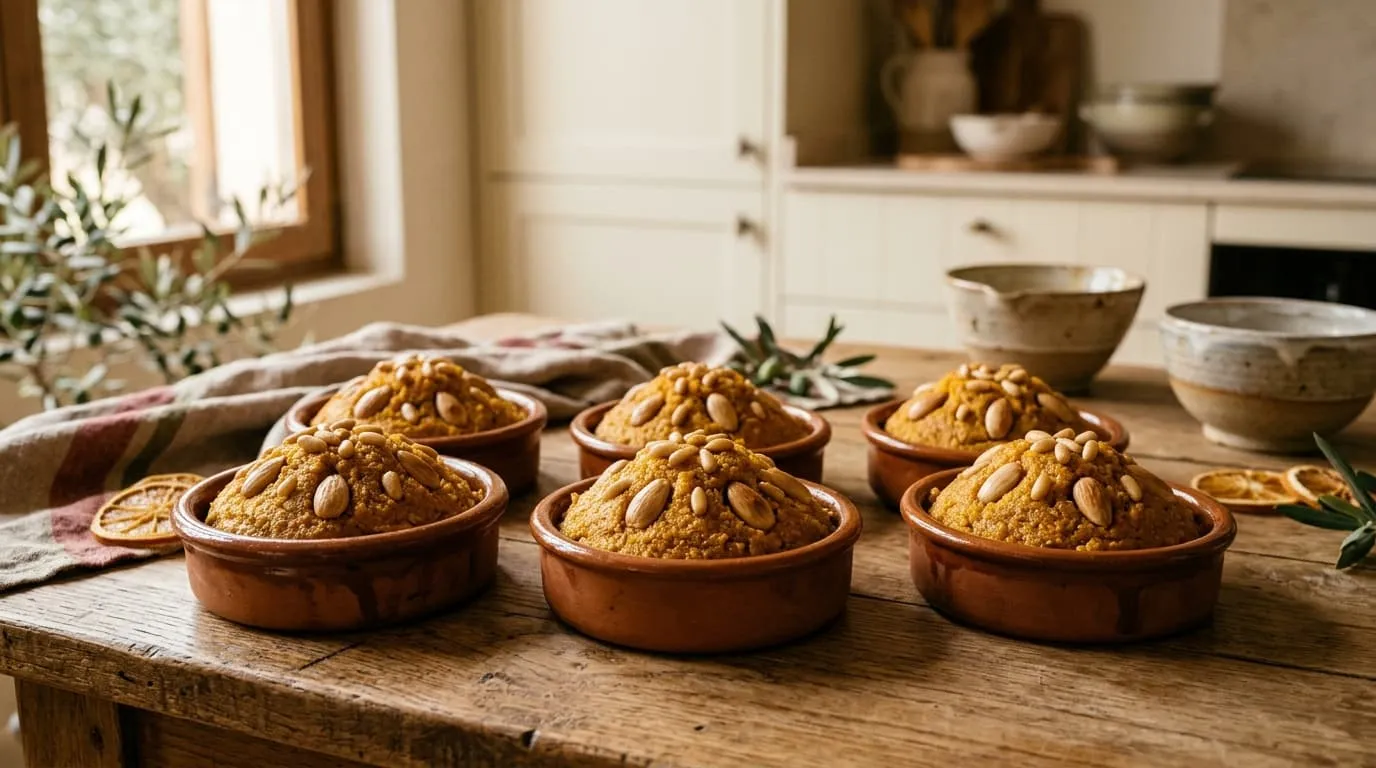
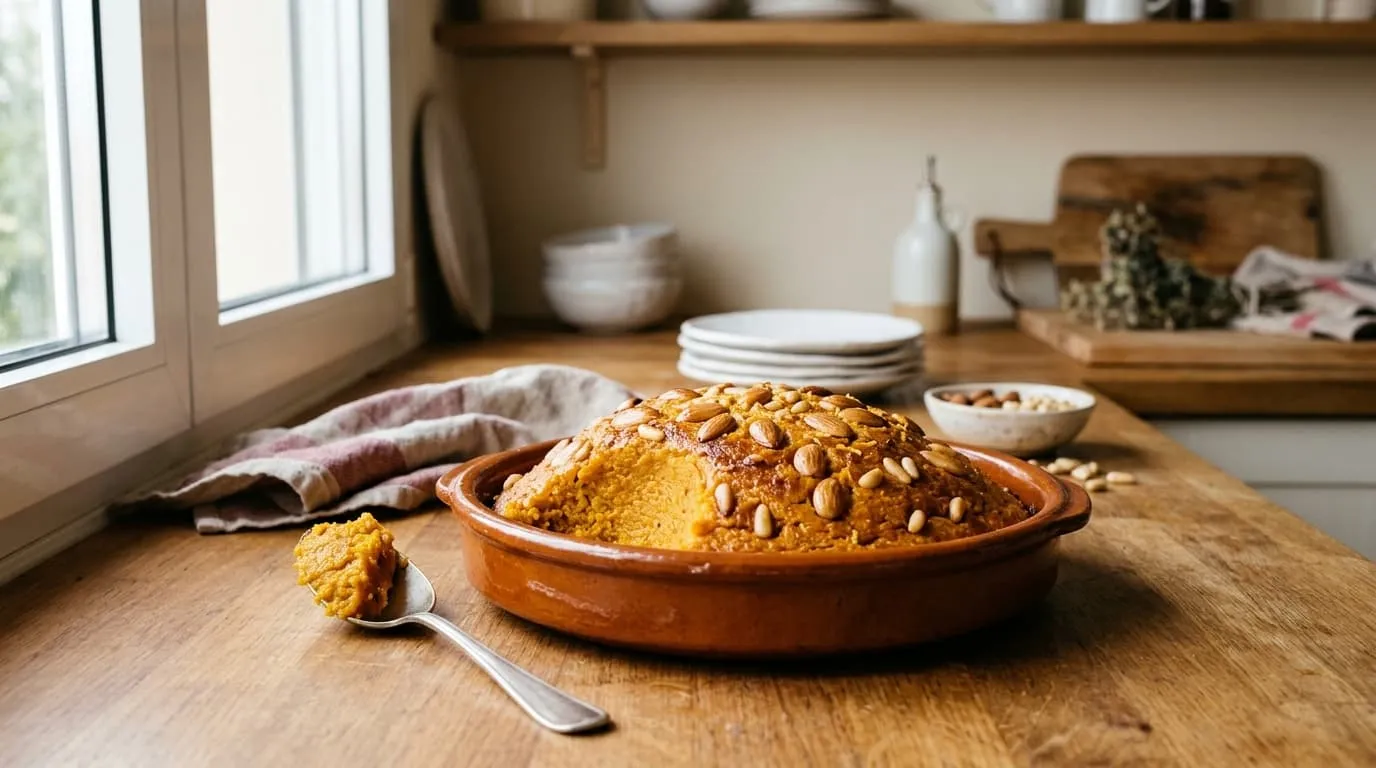
The mixture is divided into a large earthenware dish or small individual earthenware dishes, and shaped into a pyramid with a spatula. While the oven heats to 180 °C, the surface is decorated with pine nuts and whole almonds, raw or lightly browned; the book says that, if they are browned, a little is enough because they finish cooking in the oven. Lastly, sugar and cinnamon are sprinkled on.
These quantities fill one large dish or six individual dishes. For the large dish, use the whole mixture; for individual portions, divide it between the six dishes. Changing the format does not mean reducing the ingredients: the book offers both presentations for the same recipe. Shape the surface with a spatula before adding the nuts, sugar and cinnamon.
The oven: two temperatures
The baking has two stretches. First 5 minutes at 180 °C and then the oven is lowered to 150 °C for a time that runs from 45 minutes to an hour. The sign is not the clock but the colour: when the arnadí takes on a golden tone, it is done. Then it is taken out and left to cool. In total, the recipe card adds up 170 minutes of cooking, at the high end: 90 of roasting, 15 in the pot, 5 at 180 °C and up to 60 at 150 °C. It does not include the overnight draining or the final cooling, which the book does not quantify, so allow for them separately.
Holy pumpkin and holy sweet potato
The book says that in some towns of the Ribera del Xúquer the same sweet is made with sweet potato, and that they are known as holy pumpkin and holy sweet potato, being the ritual desserts of Holy Week. If you are interested in the sweet potato version in another format, there are the sweet potato pastissets, and for another sweet from the same book with sweet potato in the dough, the All Saints fogassa. It contains almonds, egg and, if you add pine nuts, more nuts: check the 14 allergens before serving it.
If the meal is for a group
With this sweet you have to plan the day before, because arnadí cannot be rushed. If you are organising a group meal, see how we handle local fiestas and get a quote.
History and variations
“Entraré a la cuina”, the recipe book from the Caroig and Xúquer area, says that in some towns of the Ribera del Xúquer the same sweet is also made with sweet potato. They are known as holy pumpkin and holy sweet potato, as they are the ritual desserts made and eaten during Holy Week.
Tips
Roast the pumpkin slowly: that way it evaporates as much liquid as possible, which is one of the secrets of this sweet. Sources
Remove the stringy fibres from the flesh and hang it in a cloth bag overnight: that way it drains naturally and you end up with a mixture that has no liquid in it. Sources
If you decorate with fried pine nuts and almonds, brown them only a little: they finish cooking in the oven. Sources
Arnadí pumpkin dessert
Frequently asked questions
How long does arnadí really take?
Quite a bit more than the book’s header suggests. The pumpkin has to be roasted the day before, an hour and a half at 180 °C, and the flesh drained overnight. The next day it is 15 minutes in the pot, 5 in the oven at 180 °C and up to an hour at 150 °C. The recipe card adds up 170 minutes of cooking, at the high end, not counting the draining or the cooling.
Why is the flesh hung overnight?
Because the book leaves it hanging in a cloth bag, or in a cushion cover, so that it drains naturally and you end up with a mixture that has no liquid in it, which is one of the secrets of this sweet. Before that you have to peel the pumpkin, remove the seeds and stringy fibres and mash the flesh with a fork until it is a fine paste.
How do I know the arnadí is done?
The book bakes it first for 5 minutes at 180 °C and then lowers it to 150 °C for between 45 minutes and an hour. The sign it gives is not the clock but the colour: when the arnadí takes on a golden tone, it is cooked. Then it is taken out and left to cool before serving.
Sources
Glossary terms
Recipes
All Saints fogassa
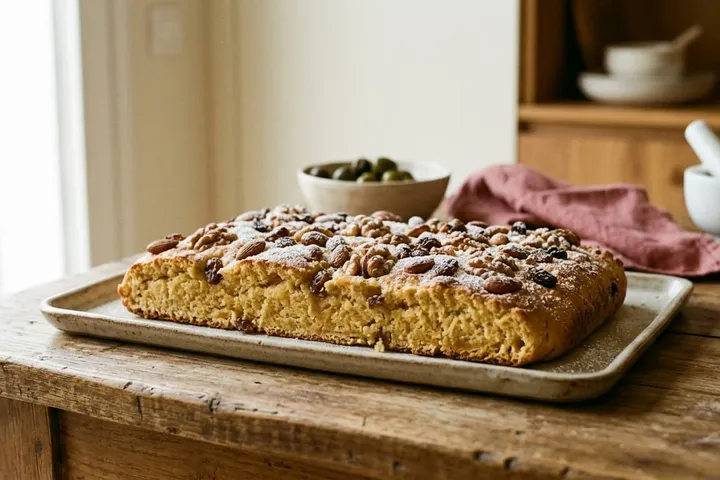
All Saints fogassa for 12: sweet potato and aniseed dough proved until doubled, nuts and raisins on top and a 180 °C oven; the proving has no set time.
Total time: 85 min
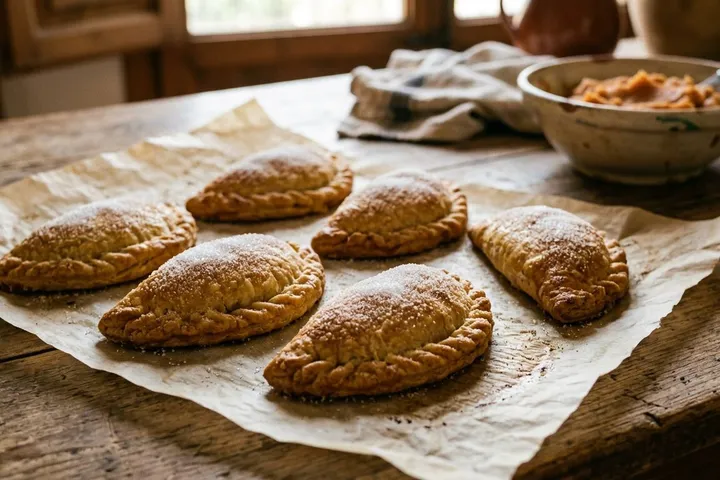
Sweet potato pastissets (pastissets de moniato)
Half-moon sweet potato pastries: a dough of spirit, oil and flour, a lime and cinnamon filling made the day before, baked until golden at the edges.
Total time: 765 min