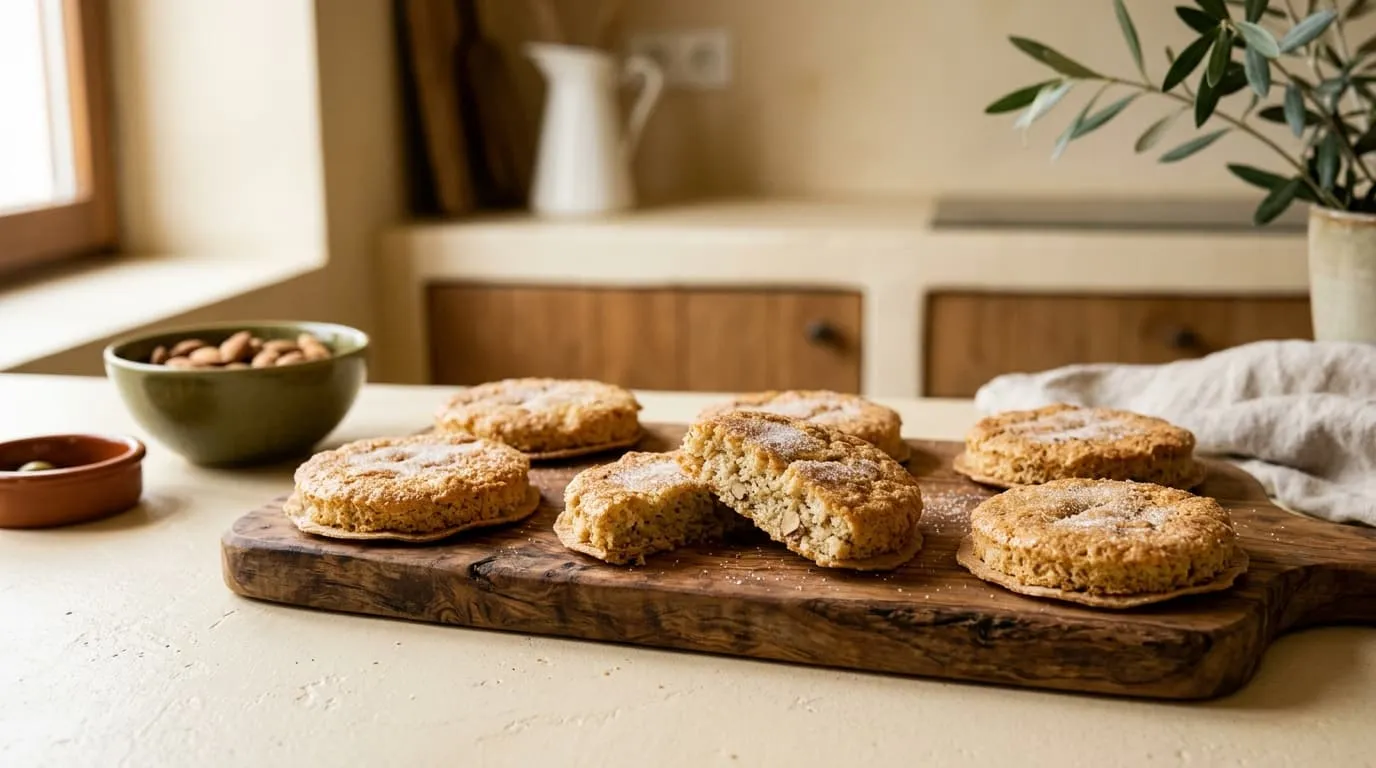

Coca Cristina
Yield: 6 pieces
Are there 40 or more of you? We cook rice dishes live for groups
Large paella pans need less liquid. Sources
Ingredients
Dough
- 1 pcsEgg
- 130 gWhite sugar (for the meringue)
- 1 pcsLemon (zest only)
- pinchGround cinnamon
- 130 gGround almonds
- 130 gWheat flour
- 1 pcsRaising agent for baking (double sachet of powdered gaseosa)
- 130 gWhole milk
- 6 pcsWafers of about 15 cm
- 30 gWhite sugar (for sprinkling)
Ingredients
Steps
- 1Separate the white from the yolk of the egg and set both aside.
- 2Whisk the white with the white sugar until you have a firm, glossy meringue.
- 3Add the yolk, the zest of the lemon and a pinch of ground cinnamon, and mix with the spatula using folding movements.
- 4In another bowl mix the ground almonds, the wheat flour and the raising agent for baking.
- 5Add that dry mixture and the whole milk to the bowl of meringue little by little and alternately, with folding movements so as not to lose the air, until the batter is even, slightly thick and with no traces of flour.
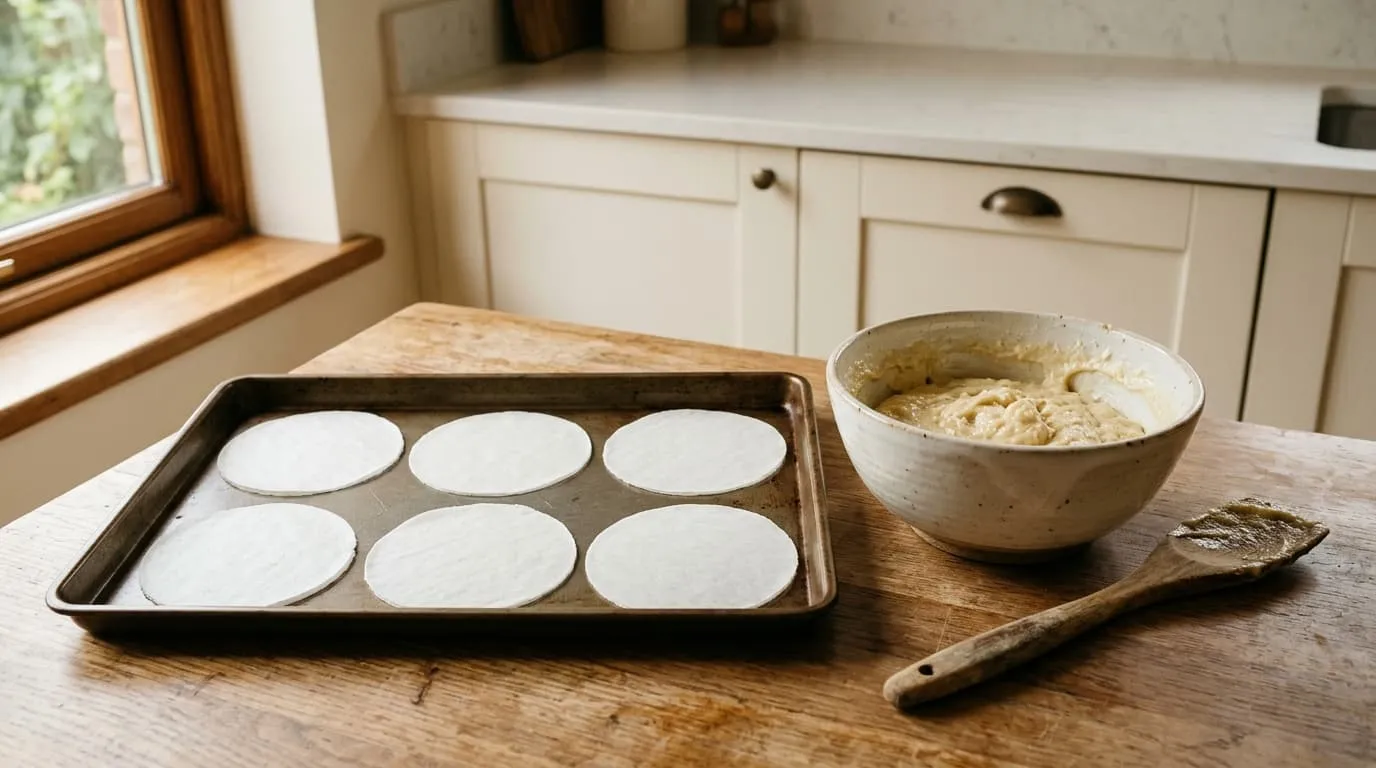
- 6Preheat the oven to 180 °C with top and bottom heat. Line the trays with baking parchment and spread the wafers of about 15 cm over them in batches, depending on the space in your oven.
- 7Divide the batter equally over all the wafers in the batch and sprinkle the white sugar on top.
- 8Bake for 15 to 20 minutes, until the cocas are lightly golden.20 min
- 9Take them out of the oven and let them cool completely on a rack before serving.
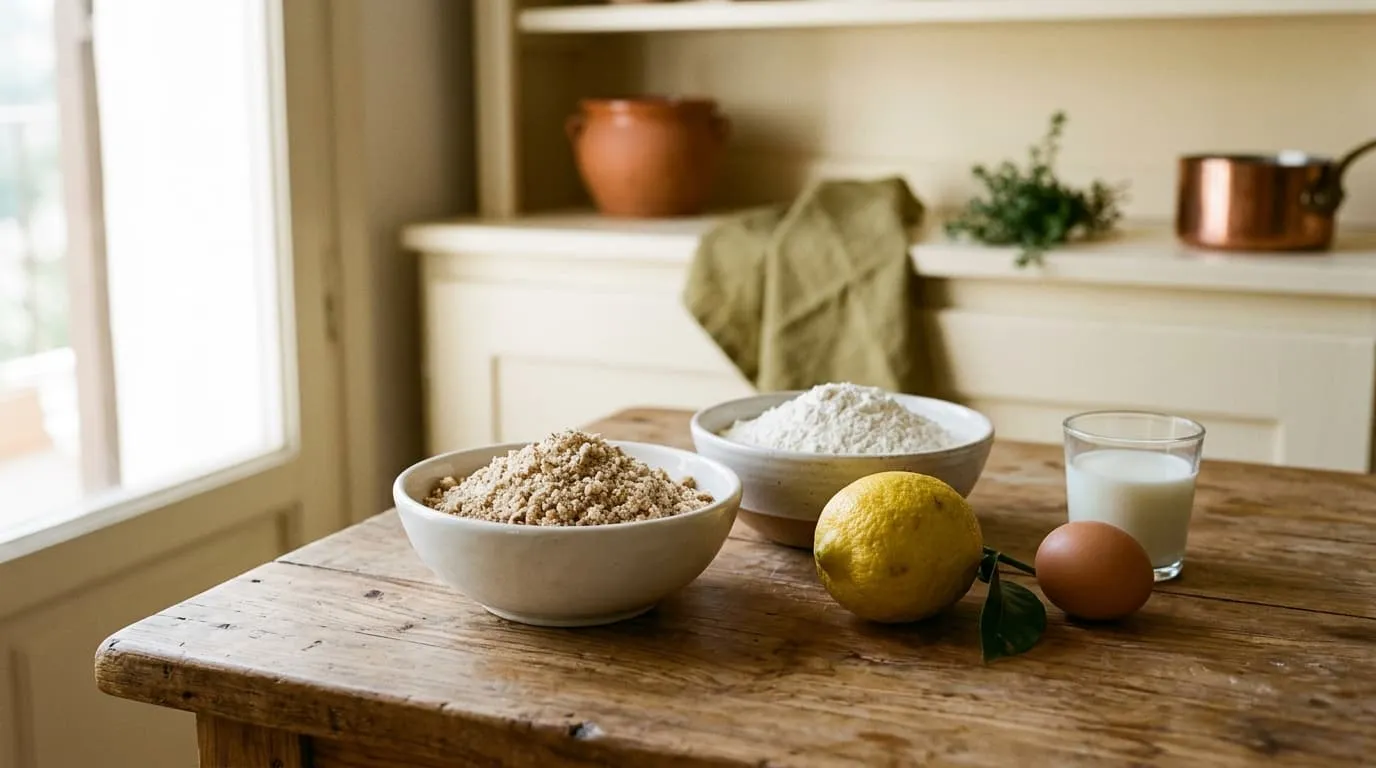
Coca Cristina is one of those recipes that seem harder than they are. It has few ingredients, the batter is made in two bowls and the only part that needs care is the first one: the meringue. This recipe card follows the Bon Viveur version, signed by Marina Corma, which uses milk, flour and a raising agent.
The meringue is the base of the batter
You start by separating the white from the yolk. The white is whisked with the sugar until you have a firm, glossy meringue; then the yolk, the lemon zest and a pinch of cinnamon go in, always with the spatula and with folding movements. Everything that follows depends on that meringue being firm and glossy.
What comes next is all about not knocking out that air. The ground almonds, the flour and the raising agent are mixed separately, and folded into the meringue little by little, alternating with the milk. Alternating means one part of dry, a little milk, another part of dry, and so on to the end. The batter is considered right when it is even and free of traces of flour, and it should be slightly thick, not runny.
The wafer and the baking parchment
The usual way is to make individual cocas, each on a wafer of about 15 cm. They are placed on trays lined with baking parchment and the batter is divided equally among all the wafers in the batch. It is a division by eye, so it is worth looking at the bowl and dividing with the spatula before putting anything down. If your oven cannot take all the trays at once, bake in batches and keep the rest of the batter in the bowl until its turn comes. A sprinkling of sugar on top completes the assembly.
Bon Viveur also says that, if there are no wafers, it is baked directly on baking parchment. And that a single big coca can be made on a larger wafer. With the big format, the recipe’s oven time is no longer an exact reference: watch the colour.
The oven: lightly golden, no more
The oven goes to 180 °C with top and bottom heat. The recipe’s header speaks of 15 minutes and the step of 15 to 20; this recipe card plans on the longer stretch. What matters is not the clock but the colour: the source asks for them to be lightly golden, without overdoing it, because that is how they come out juicy. When you take them out, let them cool completely on a rack before serving them.
Almonds, lemon and cinnamon: what you notice
The almond is the main ingredient and you notice it in the quantity: it weighs the same as the flour and the sugar of the meringue. The lemon goes in only as zest and the cinnamon is a pinch, so that it accompanies and does not lead. As it is a recipe with almonds, egg, gluten and milk, go over the 14 allergens before serving it at a table with guests.
With flour or without
The Diputación de Valencia recalls that some traditional coca Cristina recipes contain no flour and that today it is almost always added. The one on this recipe card does contain it, and also a raising agent: they are Bon Viveur’s quantities and they work together. If you like the contrast with another sweet coca, the llanda sponge cake goes a different way, and the sweet potato pastissets are another sweet from the Valencian Christmas.
How much time to allow
Between the preparation (20 minutes according to the source) and the oven (up to 20), count on about 40 minutes of work; the cooling on a rack has no set time, and you have to wait until they are completely cold. To serve them at the Christmas table, plan the batch with room to spare.
If the meal is for a group
One batch is enough for an afternoon snack at home. If you are putting together a company lunch at Christmas, see how we organise Christmas parties for companies and get a quote.
History and variations
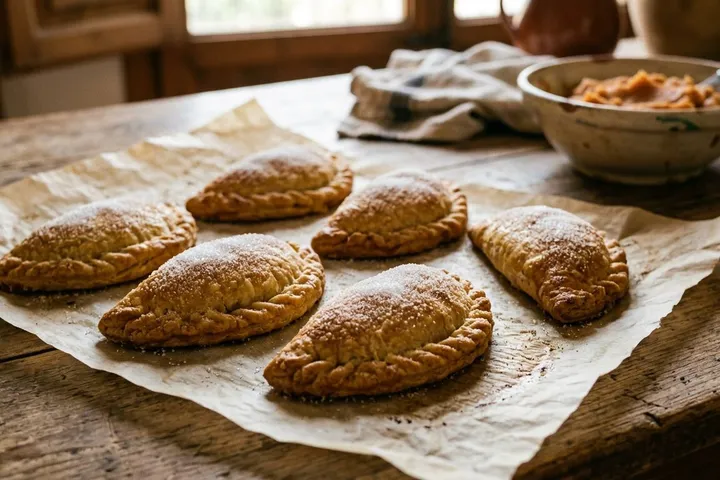
Bon Viveur describes it as a traditional dessert of Valencian baking, flat in shape, with almonds as the main ingredient. Depending on the area it has more or fewer almonds, raisins or walnuts in the dough, and sugar on top or not. It is usually made individually on wafers, although it can be baked all in one on a larger wafer.
Valencia: According to the Diputación de Valencia, some traditional recipes contain no flour, although today it is almost always added, and in some parts of the province it is known as coca d’ametló. Sources
Tips
Fold in the dry mixture and the milk alternately and with folding movements: that way you do not lose the air you whisked into the egg white. Sources
Watch the oven and take the cocas out when they are lightly golden, without overdoing it: Bon Viveur wants them juicy. Sources
If you cannot find wafers, you can bake the batter on baking parchment. Sources
Coca Cristina
Frequently asked questions
What do I do if I cannot find wafers?
Bon Viveur says the cocas can be baked directly on baking parchment. The usual way is to present them on wafers, and the recipe counts on them because that is how the individual ones are made. Today they are found in many ordinary supermarkets, but if there are none, the parchment sorts out the batch without changing anything else in the batter.
Can I make one big coca instead of several small ones?
Yes. Bon Viveur says the whole batter can be baked together on one larger wafer and presented as one big coca. The source gives no oven time for that format: the 15 to 20 minutes are those of the individual ones, so it is best to watch the colour more closely than the clock.
Does coca Cristina contain flour?
In the version on this recipe card, yes: flour together with ground almonds and milk. The Diputación de Valencia explains that some traditional recipes do not include flour, although today it is almost always used. If you want to try one without it, you need another recipe; it is not enough to take it out of this one, because the batter loses its balance.
Sources
Glossary terms
Recipes
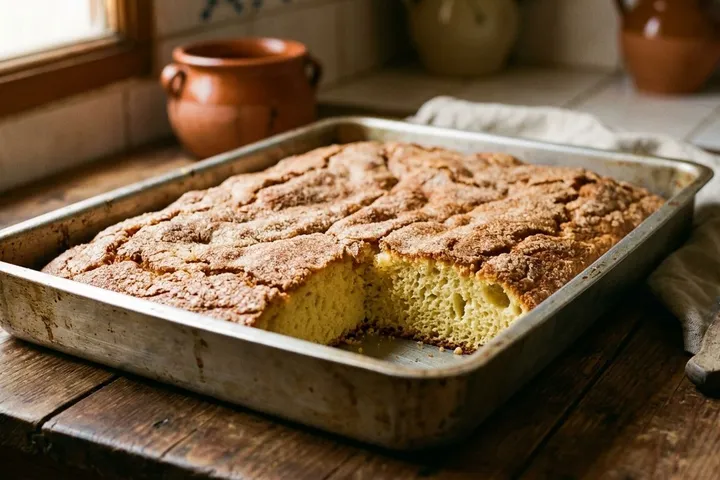
Coca de llanda
Coca de llanda, the Valencian tray-baked sponge: eggs and sugar beaten, milk, flour, gaseosa and oil, sugar on top and 35 minutes at 180 °C.
Total time: 65 min
Sweet potato pastissets (pastissets de moniato)
Half-moon sweet potato pastries: a dough of spirit, oil and flour, a lime and cinnamon filling made the day before, baked until golden at the edges.
Total time: 765 min