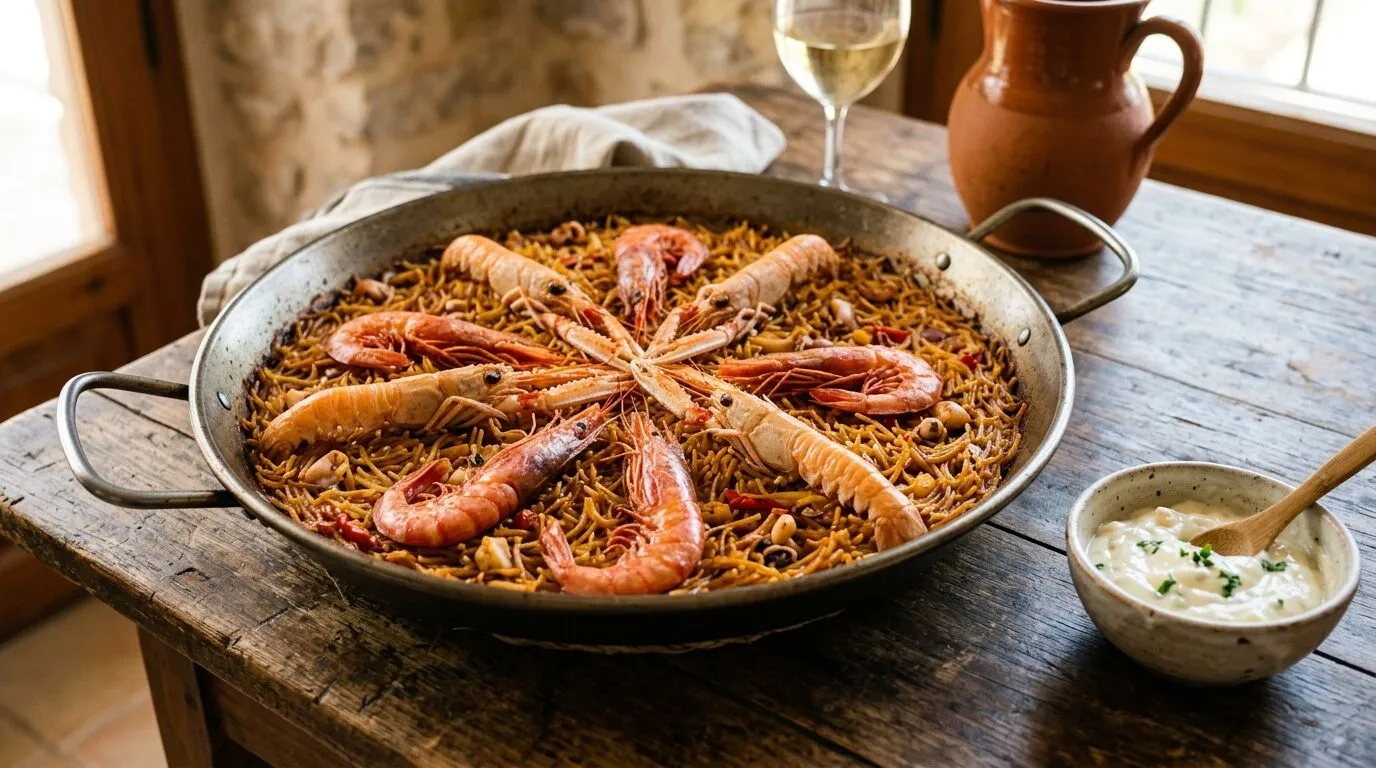

Fideuà de Gandia
Yield: 6 servings
Suggested paella pans: 1 × 60 cm Glossary
Are there 40 or more of you? We cook rice dishes live for groups
Large paella pans need less liquid. Sources
Ingredients
fideuà
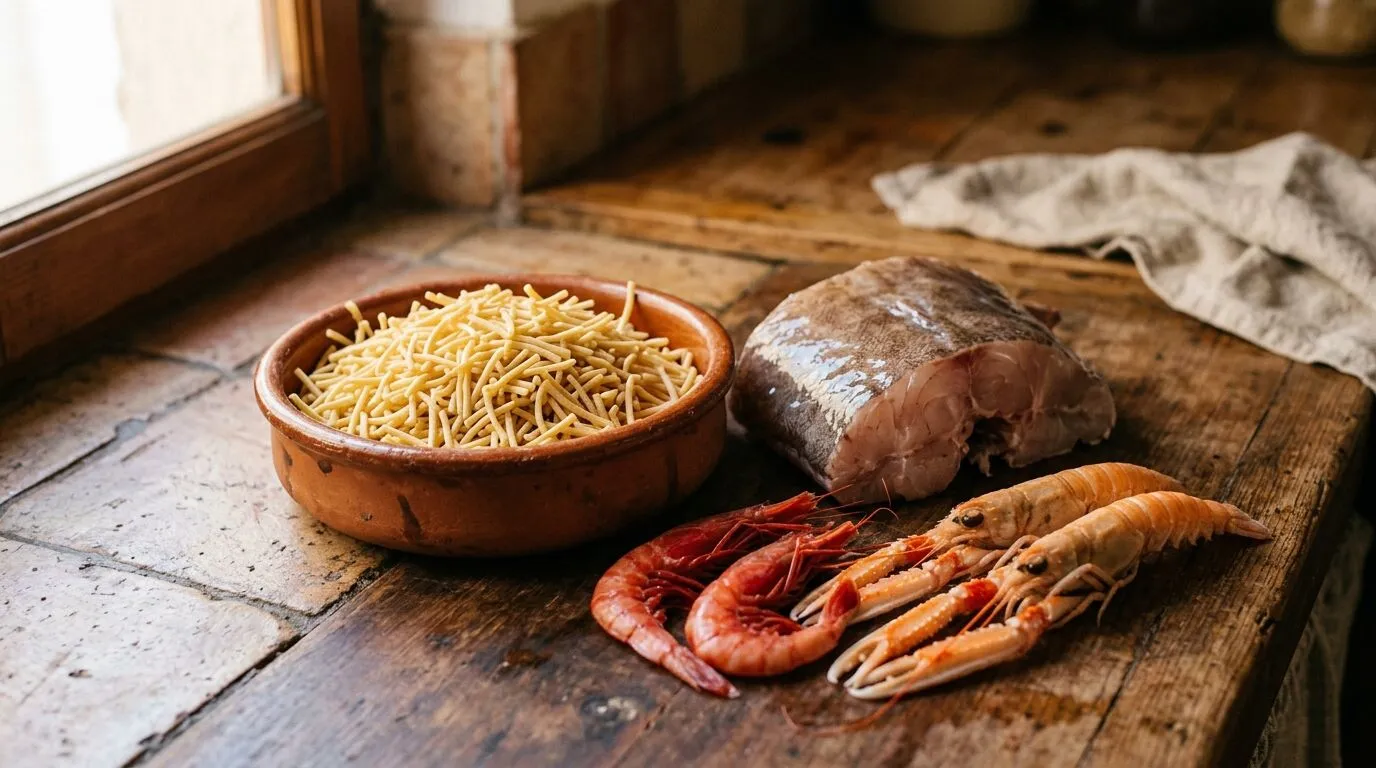
- 600 gNumber 3 noodles (fideo)
- 2 lRockfish stock (morralla)
- 500 gMonkfish
- 6 pcsGandia cigalas (langoustines)
- 6 pcsRed prawns
- 200 gChopped tomato
- 1 pcsGrated onion
- 1 cloveGarlic
- 30 gSweet paprika
- 150 mlVirgin olive oil
- to tasteSaffron threads
- to tasteSalt
- to tasteAllioli
Ingredients
- Fish fumet: Rockfish or small mixed fish (morralla) — 1.5 kg
- Fish fumet: Water — 2 l
- Fish fumet: Onion — 2 pcs
- Fish fumet: Leek — 1 pcs
- Fish fumet: Carrot — 2 pcs
- Fish fumet: Celery — 2 sprigs
- Fish fumet: Garlic — 3 cloves
- Fish fumet: Bay leaf — 1 leaf
- Fish fumet: Black peppercorns — 3 pcs
- Fish fumet: Extra virgin olive oil — 2 tbsp
- Fish fumet: Lemon juice — 1 tbsp
- Fish fumet: Fresh parsley — to taste
- Fish fumet: Salt — to taste
Steps
- 1Heat the 150 ml over a moderate heat in a paella pan of about 47 centimetres. Lightly fry the 6 pcs and the 6 pcs, and set them aside.
- 2In the same oil, brown the chopped 1 clove and the grated 1 pcs.
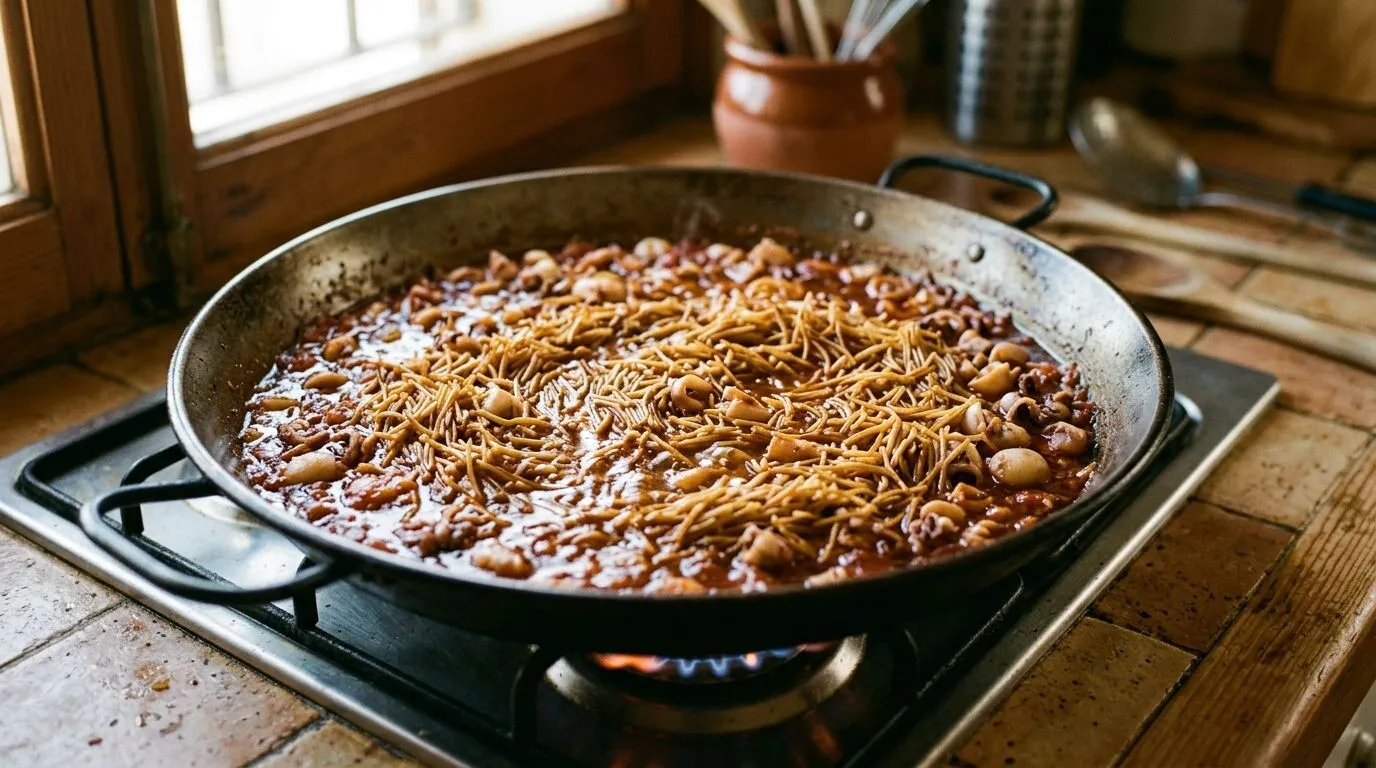
- 3Add the 30 g and the 200 g and stir them a few times so nothing burns.
- 4Add the 500 g and the to taste, stir a few times and pour in the 2 l, which must be very hot.
- 5Add the 600 g, correct the to taste and keep the heat on full for the first 5 minutes.
- 6Keep cooking until 10 to 12 minutes in total. For the last 3 minutes, spread the reserved prawns and cigalas on top.12 min
- 7Let the fideuà rest for 5 minutes and serve.5 min
- 8Bring the to taste to the table in a bowl, for whoever wants it.
Fideuà de Gandia is made with very few things, and all of them have to be in the right place: a good rockfish stock, a noodle of a set thickness and just the right time in the pan. The recipe follows that of Turisme Comunitat Valenciana, with quantities for six.
Number 3 noodles
The two institutional recipes, the Comunitat Valenciana one and the Diputació de València one, agree on using number 3 noodles, 600 g for six people. Those noodles take between 10 and 12 minutes to cook, and the timing of the whole recipe hangs on it. Not all cooks think alike: in a Directo al Paladar article, the honorary president of the Gandia fideuà gastronomic association argues for compact number 4, and the article notes that other cooks prefer number 2. We follow the institutional sources and use number 3. If you buy another size, adjust the minutes.
The stock, made in advance
The stock has its own recipe. The Diputació de València asks for 1.5 kg of morralla (small rockfish) from the Gandia fish market, with tomato, onion, ñora pepper, leek, carrot and parsley. The fish is fried first in hot oil, then the vegetables; 5 litres of cold water are added, it is skimmed when it comes to the boil and strained after 40 minutes. It is work to do ahead, and it is the flavour of the dish: without the stock, fideuà is just noodles with seafood.
If you’d rather not follow that recipe, our recipe collection has a fish fumet, also made with rockfish, which makes about 2 litres: exactly what this fideuà asks for with 600 g of noodles, a little over three times their weight. Turespaña, with another recipe, gives the same proportion. Both institutional recipes ask for the stock very hot when you pour it in; if you made it the day before, bring it to the boil. The glossary explains exactly what a fumet is.
Sofrito and heat
The sofrito is short: seafood sealed and set aside, then garlic and grated onion browned, then paprika and tomato, without letting it burn. The monkfish goes in with the saffron, and the stock after that. The first 5 minutes of cooking are at full heat; in the last 3, the red prawns and the cigalas you set aside are placed on top. The result is a dry fideuà that is left to rest before serving.
The paella pan in the recipe is 47 centimetres in diameter for this quantity: the noodles must be able to spread well over the bottom.
What it doesn’t include
In the same Directo al Paladar article, the honorary president of the association explains that in Gandia they always use cigala and monkfish, and that the original recipe contains no molluscs such as clams or mussels. We have found no other source that says it that way, so we give it under his name. The Comunitat Valenciana and Diputació recipes go the same way: neither includes clams or mussels.
Typical mistakes
- Overcooked noodles. Going over the time takes away the bite. Count from the moment the noodles go in and taste at 10 minutes.
- Too little stock. If the stock isn’t enough, the noodles stay raw. Keep more hot stock to hand.
- Seafood at the start. Prawns and cigalas cooked the whole time come out dry. They go on top, at the end.
- No rest. The final 5 minutes are not a formality: the noodles finish soaking up the stock.
At the table
Allioli (garlic and oil sauce) divides opinion. Neither Comunitat Valenciana nor the Diputació mentions it in their recipe; the Turismo de Alicante guide lists it among the dishes it goes with, with fideuà first, and in Directo al Paladar the honorary president of the Gandia association rules it out so as not to mask the flavour. That is why it goes on the side, in a bowl, for whoever wants it (see the allioli page). The history of the dish and its difference from paella are in the glossary entry on fideuà. If you like fish rice dishes, also look at the arroz a banda, which shares the rockfish stock, the arroz del senyoret and the black rice (arroz negro).
Fideuà for a group
It is made in a paella pan, in front of everyone, and finished in minutes, which is why it is so often requested for celebrations. To work out quantities, there is the guide to how much rice per person, which also works for noodles. And if there are 40 or more of you, we cook rice for groups live: it is all in paella and show cooking.
History and variations
In Gandia the story goes that fideuà was born on board a fishing boat from the Grau (the port): they were making a fishermen’s rice, realised there was no rice left and carried on with noodles. El Periòdic even gives the name of the boat, the “Santa Isabel”. The city has made it an emblem, and its international contest is now more than half a century old. The glossary compares it with paella.
Valencian Community: Turespaña publishes another version for 6 with cuttlefish, cigalas, prawns and monkfish, and a garlic and parsley paste halfway through cooking. Sources
Tips
Preferably use a paella pan of about 47 centimetres for this quantity: the noodles spread in a thin layer and cook evenly. Sources
Full heat for the first 5 minutes, and the prawns and cigalas on top only for the last 3. Sources
Let it rest for 5 minutes before serving: the noodles finish soaking up the stock. Sources
Fideuà de Gandia
Frequently asked questions
What is the best sofrito for fideuà?
The one for fideuà de Gandia is short: chopped garlic and grated onion browned in the oil, then sweet paprika and chopped tomato, stirring so the paprika doesn’t burn. Then the monkfish and the saffron go in, and finally the very hot stock. No peppers or other extras: the flavour comes from the stock.
Which noodles are used in traditional fideuà?
The recipes from the Comunitat Valenciana and the Diputació de València use number 3 noodles, which take between 10 and 12 minutes to cook. There is no unanimity: in Directo al Paladar, the honorary president of the Gandia fideuà gastronomic association argues for number 4, and some cooks prefer number 2. If you buy another size, check the time on the packet and adjust.
How do you make fideuà with a ready-made quick paella mix?
You can, but you end up with a different dish. The flavour of fideuà de Gandia is in the rockfish stock and the sofrito, and a mix doesn’t replace them. It is better to make the stock ahead, strain it and reheat it: it has to go into the pan very hot. The rest, as in the recipe.
How long should fideuà rest before serving?
Five minutes, off the heat. That is the rest the Turisme Comunitat Valenciana recipe sets, and Turespaña allows the same in its version. In that time the noodles finish soaking up the stock and the fideuà settles. Don’t skip it in a hurry: then take it to the table, with the allioli on the side for whoever wants it.
Sources
- Fideuà de Gandia (Turisme Comunitat Valenciana, recipe in PDF)
- Fideuà de Gandia (Turisme Comunitat Valenciana, recipe in PDF)
- Traditional fideuá de Gandia recipe (València Turisme, Diputació de València)
- Fideuá (Turespaña, spain.info)
- How a gastronomic slip-up gave birth to fideuà: Gandia and its international contest (El Periòdic)
- “Fideuada”, Diccionari normatiu valencià (AVL)
- Alicante, gastronomy and produce (Turismo de Alicante, 2022)
- Origin of the fideuá de Gandía and advice from its gastronomic association (Directo al Paladar)
Glossary terms
Recipes
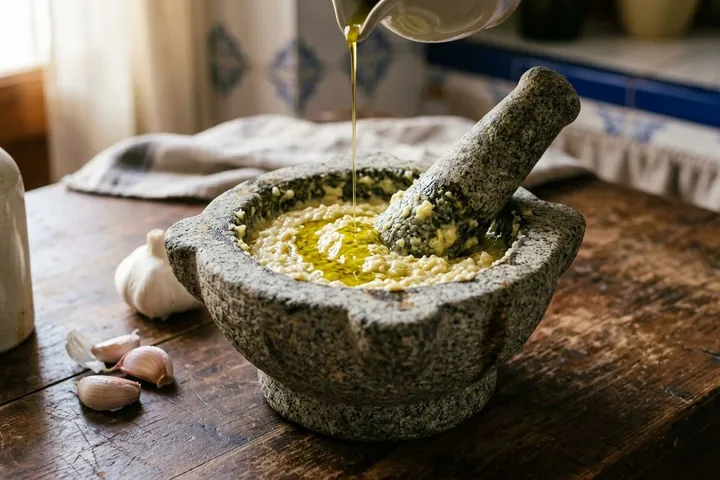
Mortar allioli
Traditional allioli is made in a mortar with just garlic, olive oil and salt. No egg, plenty of patience: the classic partner for arroz a banda and fideuà.
Total time: 20 min
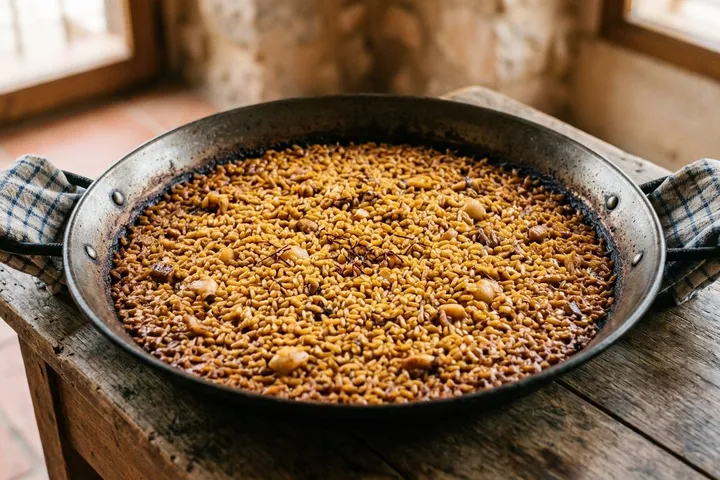
Arroz a banda
Arroz a banda for 4: ñora and baby cuttlefish sofrito, double the fish stock to rice, dry in the paella pan, fish served apart with potato and allioli.
Total time: 24 min
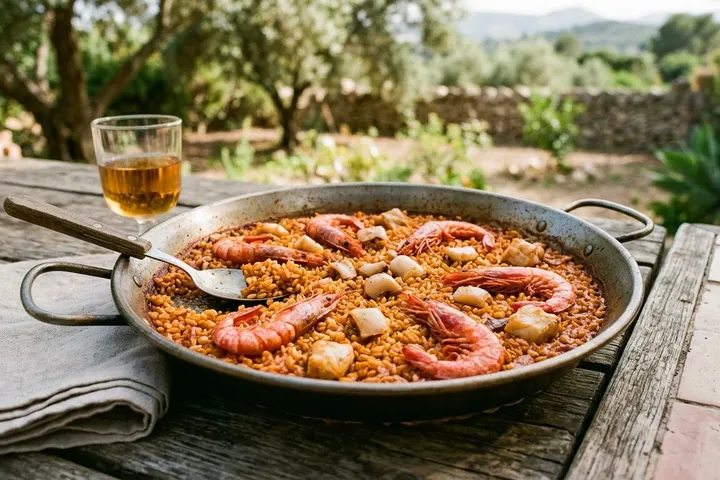
Arroz del senyoret (peeled seafood rice)
Arroz del senyoret for 4: cuttlefish, peeled king prawns and monkfish in a reddish sofrito, twice as much fish stock as rice, all ready to eat with a spoon.
Total time: 50 min
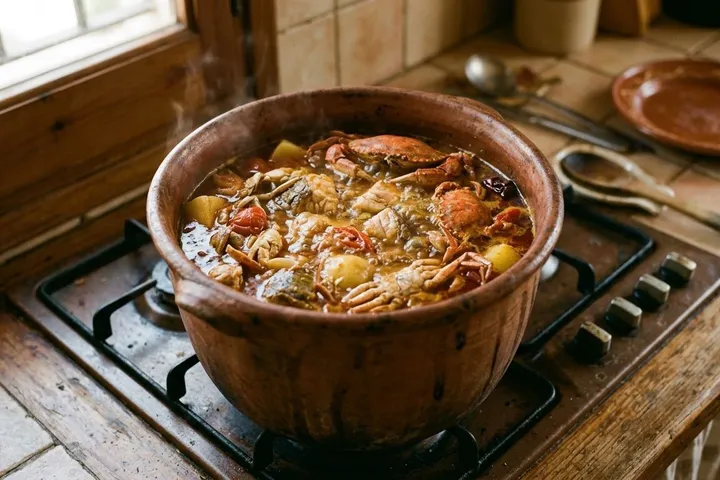
Fish fumet
Homemade fumet is cold water, fish bones and a few vegetables, cooked gently, skimmed and strained. It is the liquid base of seafood rice dishes.
Total time: 35 min
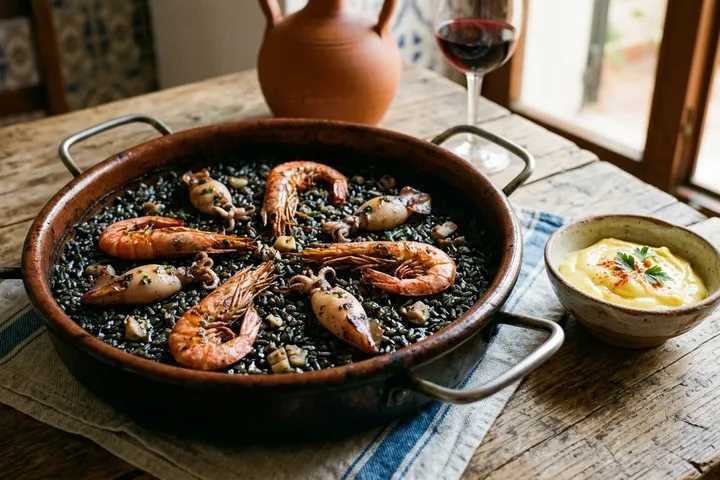
Black rice (arroz negro)
Black rice for 4: baby cuttlefish, ink, small-fish fumet and bomba rice, finished in the oven at 180 °C and served with allioli.
Total time: 30 min
Served at…
- International Fideuà and Gastronomy Contest of Gandia (Concurs Internacional de Fideuà de Gandia i Gastronomia) · Sources