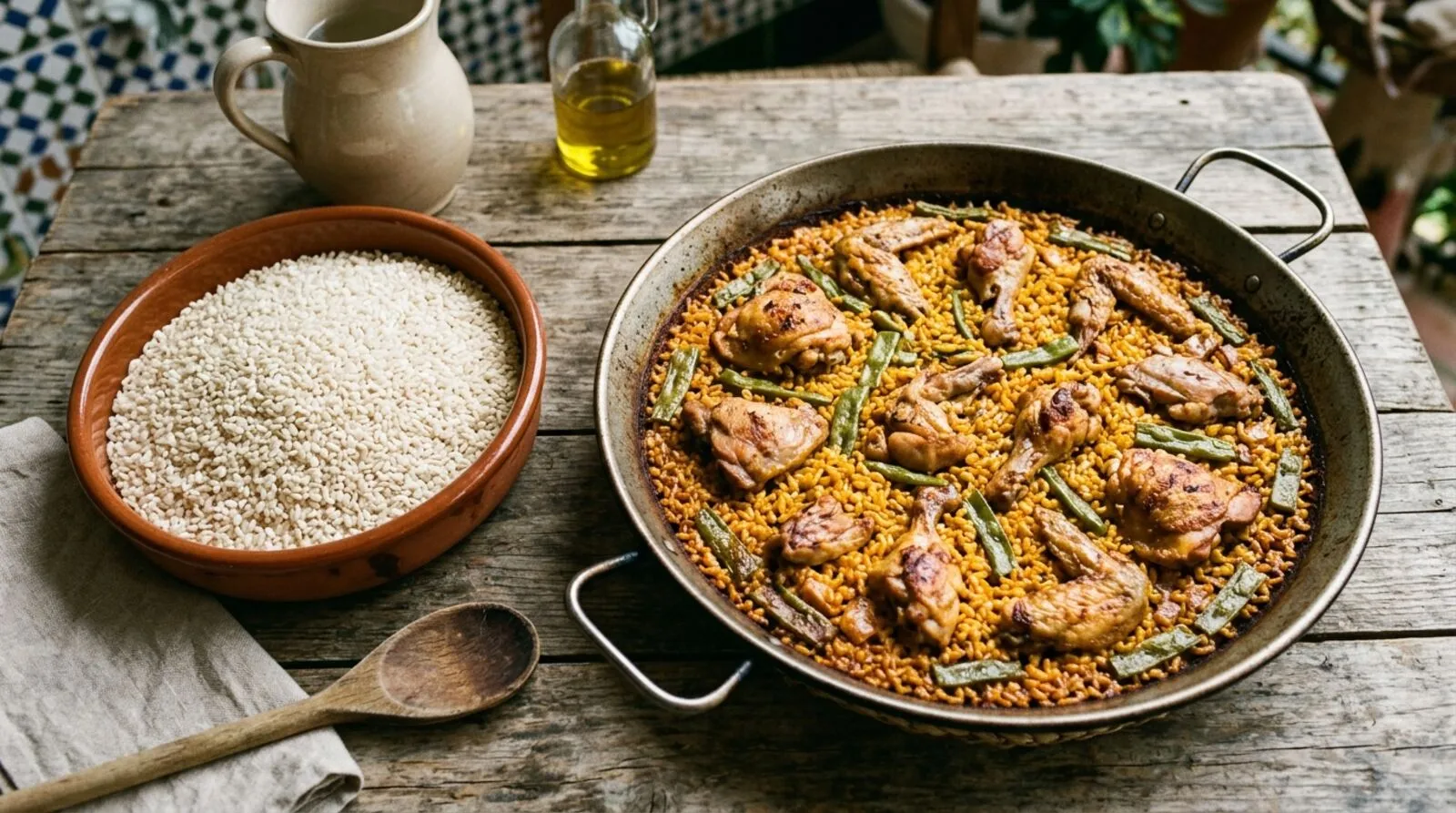
Socarrat is the thin, crunchy layer of toasted rice that sticks to the bottom of the paella pan once all the stock has cooked away. It isn’t burnt rice: it’s the grain that has toasted against the metal in the last few minutes, and it tastes of everything that’s been through the pan.
At any paella lunch there’s always someone who bags “the bit from the bottom” before they’ve even sat down. Scraping it up with a spoon is almost a ritual, so it’s worth knowing where it comes from.
What the word socarrat means
It comes from the Valencian verb socarrar, to scorch. The Alcover-Moll dictionary defines it as “cremat superficialment”, burnt on the surface. The Acadèmia Valenciana de la Llengua goes a step further and gives it a culinary meaning of its own: the bottom layer of rice in a paella or perol (a deep cooking pot), “una miqueta cremat però mengívol”. A little burnt, but good to eat.
The word has had other lives, too. The same Alcover-Moll lists “socarrat” as a nickname for the people of Xàtiva, Cocentaina and Culla, and as the name of the terracotta tile once laid between ceiling beams.
Why it forms
Noelia Pascual, who won the World’s Best Paella award in 2021 and runs the kitchen at Cachito in Elche, puts it like this: the stock needs a balance “between the fat we add, the protein and the sugars in the ingredients”, and “all of this is called the Maillard reaction”. With the heat, the sugars in the rice starch caramelise against the metal.
Paco Pérez, of Miramar, sums it up in one line: “It’s created with a stock rich in collagen and a final blast of high heat.” And rice cook Xesco Bueno sets the limits on both sides: with too little fat it struggles to form, and with too much it turns greasy.
How to get it
Socarrat is the very last step. The rice has to be properly cooked first; if there’s still stock in the pan and the grain is hard, sort that out before you think about the bottom.
Once the liquid has gone, it’s over to your ears and nose. “When there’s no stock left, we’ll start to hear that crackle,” says Pascual. These are the signs:
- The sound. The bubbling of the stock turns into a dry crackle, almost like frying. That’s when it starts to form.
- The smell. The moment it smells toasted, the paella comes off the heat. If you wait until you see smoke, you’ve left it too late.
- The spoon. Slide the tip into a corner and have a look: it should come up golden and crunchy, not black.
Pascual cooks over vine cuttings (sarmiento), “a really powerful sarmiento”, and the same Infobae report points out that it works on gas too, as long as the heat is high without overdoing it. Quique Dacosta agrees on the essentials: how you control the heat in those final minutes decides whether the toasting is a virtue or a fault. And while that’s happening, nobody touches the rice.
Socarrat or burnt paella?
| Socarrat | Burnt | |
|---|---|---|
| Colour | Golden to toasted | Black, in patches |
| Smell | Toasty, pleasant | Acrid, smoky |
| Flavour | Of the rice and its stock, only stronger | Bitter |
| Texture | Crunchy, lifts off in pieces | Hard, welded to the metal |
Socarrat in a paella for a crowd
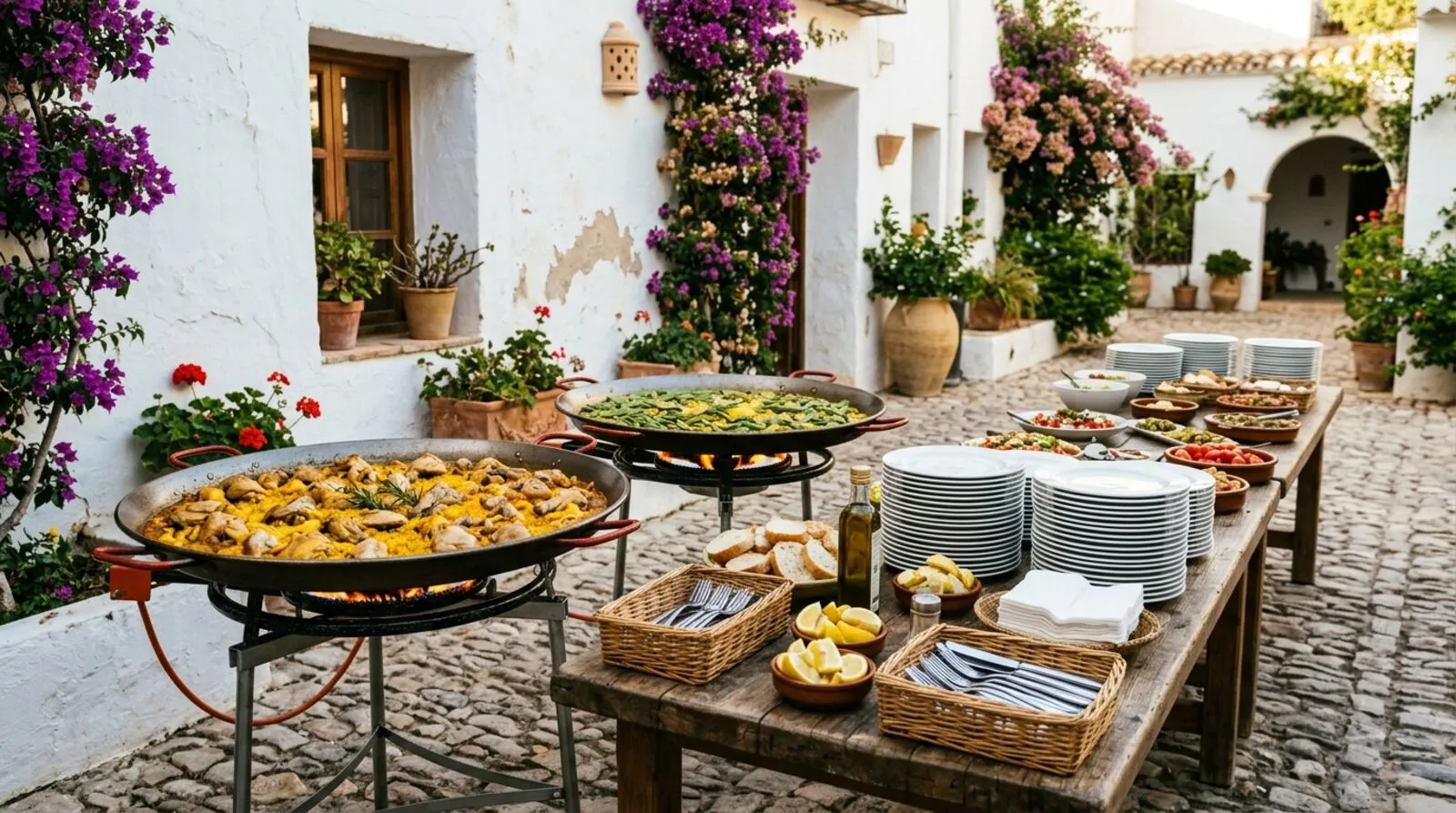
With fifty or a hundred people, socarrat isn’t something you can wing. A big paella pan means more surface to watch, and the heat has to reach evenly from the centre right out to the edges. That’s why, at large gatherings, the rice is split between several pans, each with someone keeping an eye on it in that final minute. If you’re the one organising, our guide to planning a paella for 100 people explains how to divide up the burners and the jobs.
At Xepep we bring the pans, the burners and the cook, and the rice is finished in front of your guests. See how our live paella and rice catering for groups works.