Plating (emplatar) is, according to the RAE, “placing the food on each diner’s plate before presenting it at the table”. Table service is how that plate reaches the diner: plated up in the kitchen or served by a waiter from a platter. At an event the two decisions go together and depend on how many guests there are, the space and the staff.
What plating is
It is the last step in the kitchen: each element in its place and at the right temperature. With ten guests one person can do it at an easy pace; with a hundred you need a plating line: several people in a row, each with their own task, and someone at the end checking that all the plates come out the same.
That is why plating at an event is nothing like plating in a restaurant. Here it is all about repetition: plate number eighty has to be the same as the first and arrive just as hot or cold.
Types of table service
Official waiter training in Spain (the professional certificate for restaurant services, published in the BOE) teaches four types of service, and the INCUAL qualification adds buffet assistance. This is how each one works:
| Service | How it works | When it fits at an event |
|---|---|---|
| Plated or American | The plate arrives ready from the kitchen | Many guests and a tight schedule |
| English (silver service) | The waiter serves from the platter onto the guest’s plate | Formal meals with experienced waiting staff |
| French | The waiter presents the platter and guests help themselves | Formal meals and small groups |
| Gueridon or Russian | Carved, portioned or finished at a side table, in front of the guests | Few guests and a dish worth the show |
We cover the buffet and self-service, where each guest serves themselves from a table, in what is catering.
Who is served first
It is one of the questions we get asked most, and there is no official rule: it depends on the protocol of the occasion. At a celebration, the practical approach is to agree it beforehand with whoever is organising (the guests of honour, the top table, the eldest guests) and make sure the waiting staff know. What works in practice is for each table to be served completely and in one go, so nobody is left watching the next table eat.
Plating and service at a celebration
For celebrations we offer three ways of eating, and each calls for a different service:
- Starters to share and a main course at the table. The starters go in the middle; the main course arrives plated.
- Drinks reception and food stations. More movement and less formality: nothing is plated here; food is served on trays or from tables.
- Live paella or rice, with an aperitif before and dessert after.
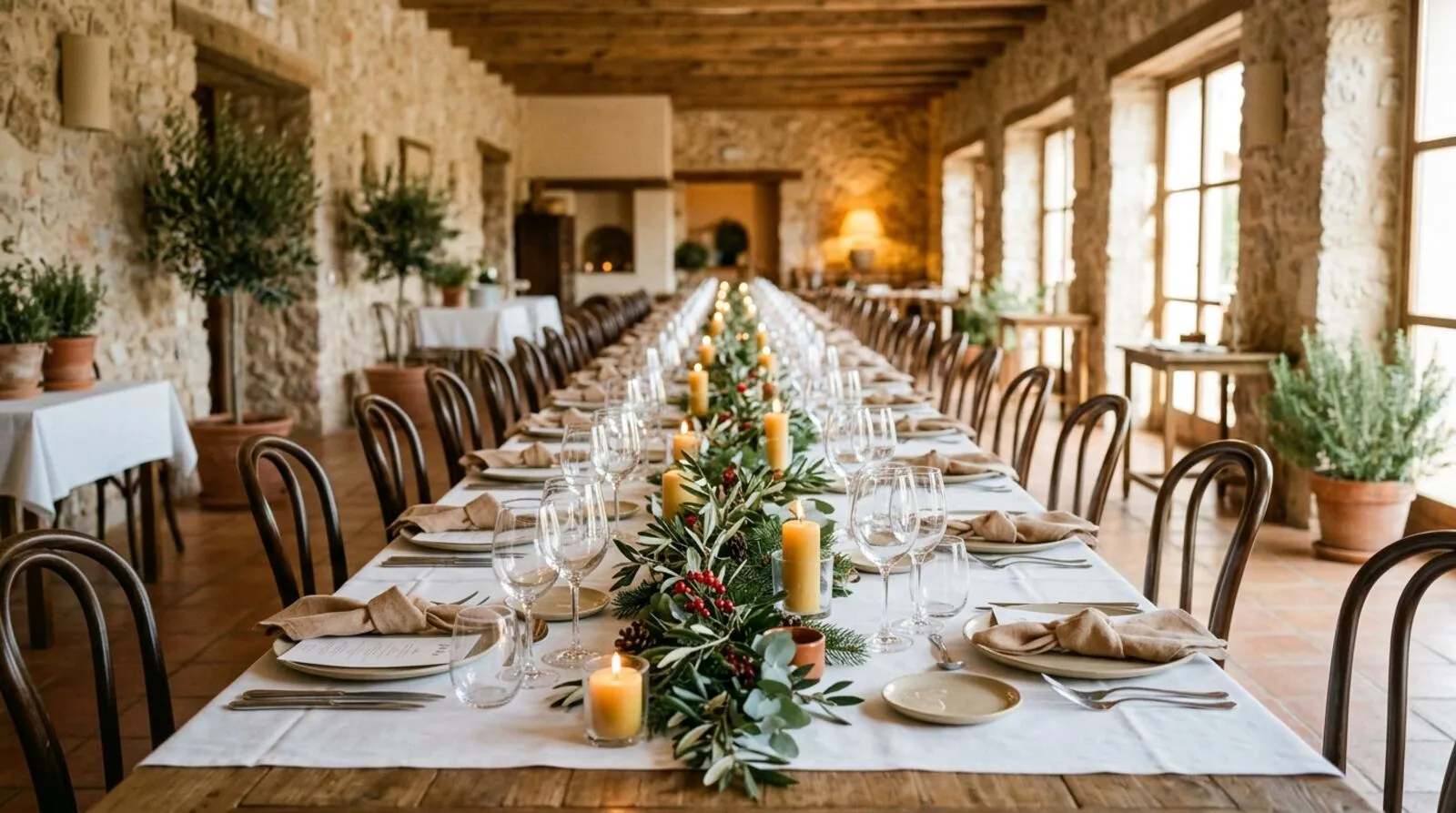
For a formal celebration we set up a dining room with glassware, linen and waiting staff. And you can choose: just the food, the set-up, or set-up and service.
What to decide beforehand
- How many of you there are and how much space there is. A plating line needs work tables and a clear aisle to the dining room.
- The temperature. A hot dish for a crowd goes out in batches; a cold one is kept cold until it is served (see the cold chain).
- Special diets. A gluten-free or dairy-free dish is prepared, labelled and served separately so it never gets mixed up with the rest (read about the 14 allergens and cross-contamination).
- The pace. If the room cannot wait, food goes out table by table, not all at once.
All of this starts the day before, with the mise en place: without it, no plating goes well.
Tell us what you are celebrating, how many of you there are and how you picture the meal, and get a quote for your celebration.