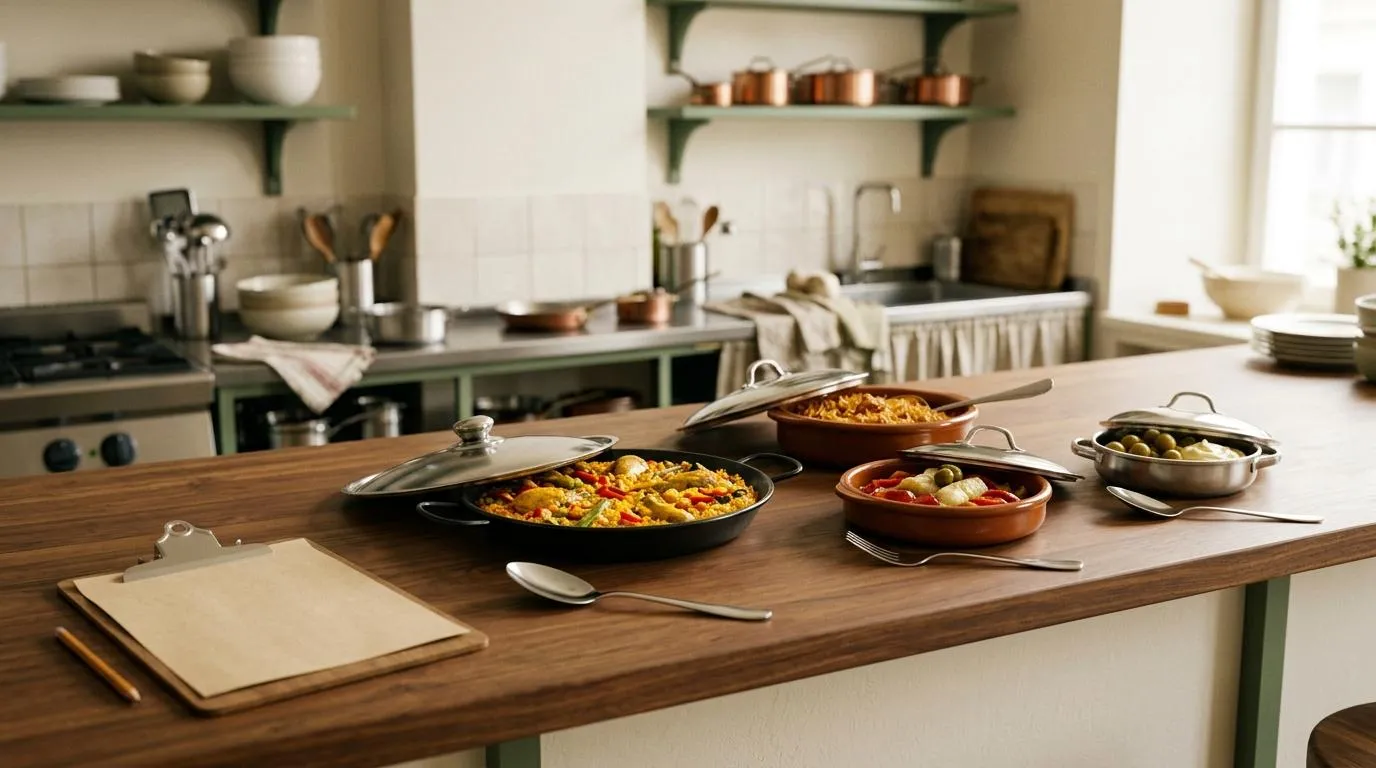
Cross-contamination (contaminación cruzada) is the transfer of micro-organisms or other substances, such as allergens, from a food, a person, a utensil or a surface to another food that was clean. In catering, where a lot of food is cooked at once, it is one of the risks that most needs watching.
What cross-contamination is
AESAN (the Spanish food safety agency) explains it in its summer campaign with a clear example: cooked food can be contaminated again through contact with raw food or with objects that have touched them before, such as knives, boards, surfaces or cloths. It adds that tea towels and dishcloths can be an excellent vehicle for contamination, and that kitchen paper is a better choice.
The law puts it in its own way. Regulation (EC) No 852/2004 requires that, at all stages of production, processing and distribution, food be protected against any contamination likely to render it unfit for human consumption or harmful to health.
And since 2021 it spells this out for allergens: Regulation (EU) 2021/382 added to Regulation (EC) No 852/2004 that equipment, vehicles or containers that have touched any of the 14 allergens may not be used for food that does not contain that allergen unless they have been cleaned first and checked for any visible trace.
How it happens
| Route | Example in a catering kitchen |
|---|---|
| Food to food | Raw food dripping onto cooked food in the cold room or on a tray |
| Utensils and surfaces | The same board or the same knife for raw chicken and for salad |
| Hands | Moving from one food to another without washing your hands |
| Cloths and dishcloths | A cloth that goes from a dirty surface to a clean one |
| Equipment | Frying oil or a griddle shared with another preparation |
| Steam | An allergen-free dish in the same bain-marie or hot trolley as one that contains the allergen |
| Service | One pair of tongs or one ladle for two different dishes |
Cross-contamination and allergens
With allergens the enemy changes: it is no longer germs but traces, and it takes very little for a “gluten-free” dish to stop being gluten-free. The 2015 allergen management guide for tourist accommodation sets out measures that apply to any events kitchen:
- Thoroughly wash the containers and utensils that will touch the dish.
- Wash your hands well before handling it and, if you wear gloves, use a pair just for that dish.
- Do not season by dipping your hand into the spice container.
- Fry in oil that has not previously been used with the allergen you want to avoid, and clean the griddle thoroughly.
- Keep allergen-free ingredients in closed containers and, as far as possible, separate from the rest.
- Do not keep those dishes in hot trolleys or bains-marie alongside others that may contain the allergen, because of the steam.
- Identify and protect the dish until it is served, with its own utensils if necessary.
- If the allergen turns up in a dish, throw it away: removing the ingredient does not remove the contamination.
Do possible traces have to be flagged? Regulation (EU) No 1169/2011 treats information on the possible unintentional presence of allergens (the typical “may contain”) as voluntary information, which must never mislead or be ambiguous. What is mandatory is information on allergens used as ingredients: the 14 allergens. And the guide makes it clear: if a customer is told that a dish is free of an allergen, you must be able to guarantee it, cross-contamination included.
How it is avoided in catering
- Separate raw and cooked food in the cold room, in transport and in preparation, and keep cooked food covered.
- Separate boards and utensils, or a thorough wash between uses.
- Wash your hands often, and always when switching tasks.
- Kitchen paper rather than cloths.
- Dishes for allergy sufferers prepared separately, labelled and with their own utensils.
- Keep temperatures under control: the cold chain and cross-contamination are watched together.
All of this is part of the business’s HACCP (APPCC) plan. The 2015 guide itself states that establishments that regularly offer allergen-free dishes must include procedures for preventing allergen contamination in their HACCP plan.
At your events
If someone in your group has an allergy or coeliac disease, asking for “a dish without” is not enough: ask how it is prepared and how it is served. Tell us when you get a quote; at Xepep we plan for special diets and allergies in advance. And you will find a summary of what the law requires on allergen information under Regulation 1169/2011.
Sources
- AESAN: Prevenir intoxicaciones alimentarias en verano
- Guía para la gestión de alérgenos en establecimientos de alojamiento turístico (marzo de 2015)
- EUR-Lex: Reglamento (CE) 852/2004, texto consolidado (incluye el Reglamento 2021/382)
- Diario Oficial de la UE (copia del BOE): Reglamento (UE) 1169/2011, artículo 36