In the Moors and Christians fiestas, kábila is a word with two uses: in some towns it’s a comparsa’s clubhouse, and in others, such as Abanilla, it’s the name for each fiesta group on the Moorish side. Both meanings come from cabila, a Berber tribe.
Where the word comes from
The RAE dictionary lists cabila as a Berber tribe and says it probably comes from Moroccan Arabic qbila, which in turn comes from Classical Arabic qabīlah. The fiesta borrows it, nearly always spelt with a k and an accent.
The kábila as a comparsa’s clubhouse
According to the literature on the fiesta, each comparsa has its “cuartel, maset, kábila, capitanía or meeting place”. In towns that use this word, the kábila does the same job as the cuartelillo: it’s where festeros (fiesta members) meet, eat, get ready for the parade and welcome their guests.
The kábila as a group: Abanilla
In Abanilla (Murcia), the fiesta is organised differently. According to a study in the journal Náyades, when the Moors and Christians were revived (in 1972 a visiting filà from Sax paraded, and the following year the town’s own two sides were already turning out), the groups were named after places and episodes from local history: Jaira, Muzalé, Omeyas de Mahoya and Al’Bayada on the Moorish side; Calatrava, Almogávares, Caballeros del Cid and Santa Ana on the Christian side. On the Moorish side they talk about a kábila (the Kabila Jaira, for example) and on the Christian side a mesnada (the Calatrava mesnada), which had the castle backdrop for the old embajadas in its cuartelillo.
Kábila, comparsa, filà and cuartelillo
| Word | What it means | Where |
|---|---|---|
| Comparsa | The group of festeros on one side | The most widely used |
| Filà | The same group | Alcoy and other Valencian-speaking towns |
| Kábila | The comparsa’s clubhouse, or the Moorish group | Depends on the town (in Abanilla, the group) |
| Cuartelillo | The clubhouse | Elda and many other towns |
In fiesta talk the meanings blur easily, because the clubhouse is the heart of the group’s life. If you’re writing to a committee, use the word they use.
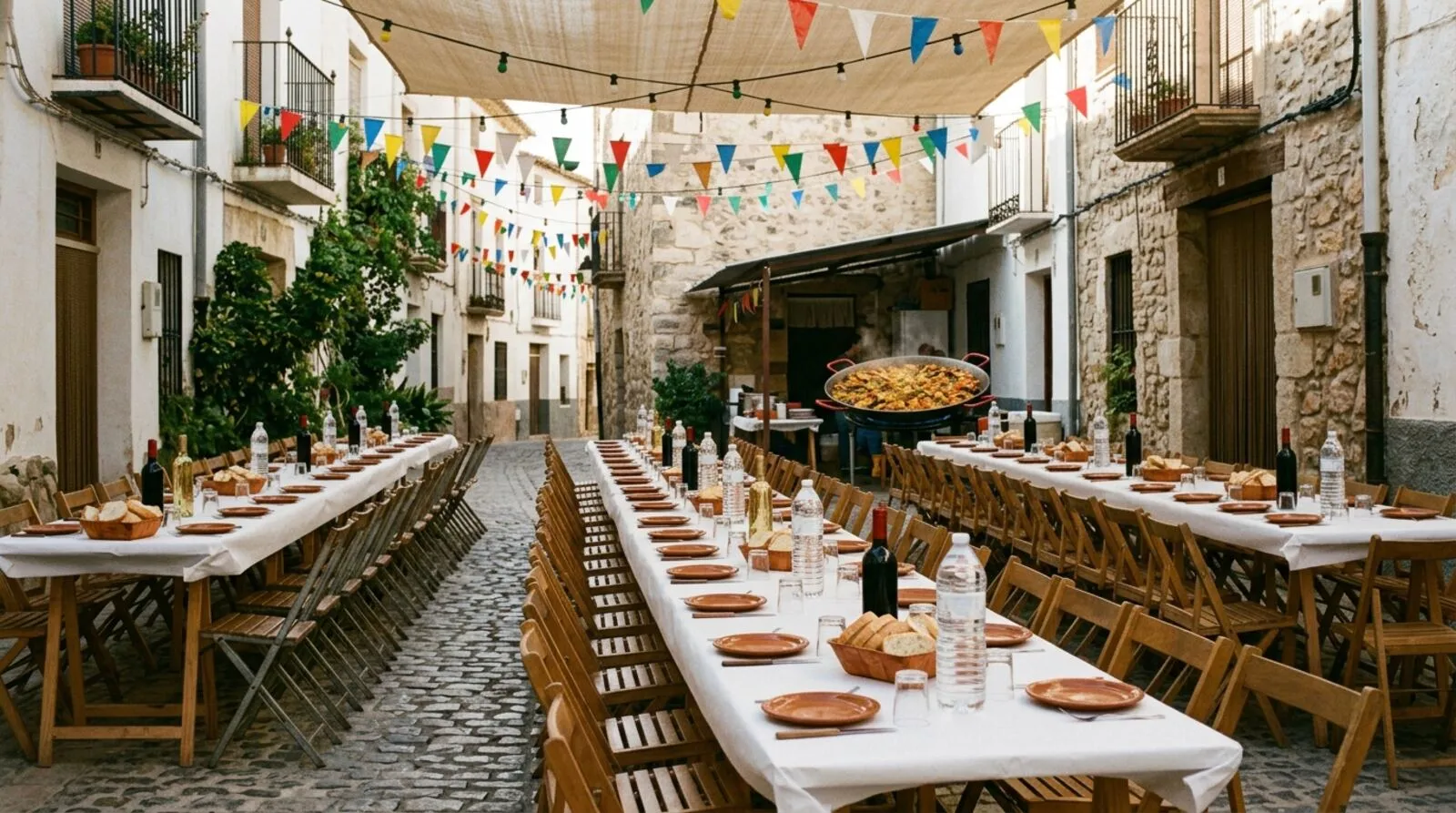
The kábila at mealtimes
Whether it’s a clubhouse or a group, the kábila is where the fiesta family sits down to eat during the fiestas. For a get-together lunch or drinks and nibbles, what matters most is the venue: what kitchen there is, what water and electricity connections the premises have and how many people it holds. At Xepep we cater meals for comparsas and cuartelillos, adapting the service to the premises. If you’re organising it yourselves, have a look at our article on the comparsa or filà meal.