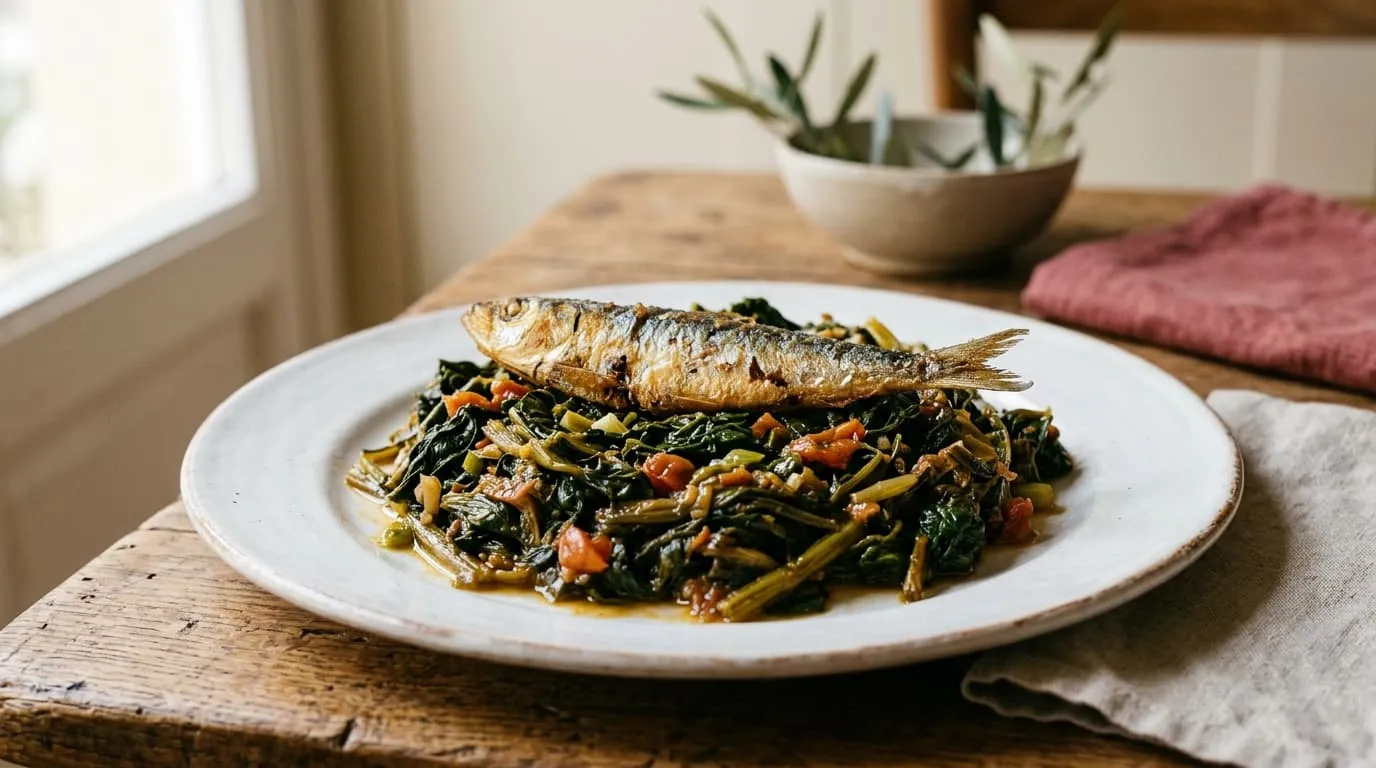

Camarrojas greens with sardines
Yield: 4 servings
Are there 40 or more of you? We cook rice dishes live for groups
Large paella pans need less liquid. Sources
Ingredients
Vegetables
- 500 gChard
- 500 gCamarrojas (cerrajas)
- 500 gTomato
- 4 pcsSalted sardines (sardinas de bota)
- to tasteGreen garlic
- to tasteExtra virgin olive oil
- to tasteSalt
Ingredients
Steps
- 1Wash the chard and the camarrojas very thoroughly. Keep the stalks and stems too: nothing is thrown away in this dish.
- 2Boil the greens for about 12 minutes in a large pot.12 min
- 3Drain them very well in a colander and set them aside on a serving dish, undressed.
- 4In a frying pan with extra virgin olive oil, fry the salted sardines and take them out.
- 5In that same oil, add the drained greens, the tomato and the green garlic cut into small pieces, taking care that the garlic does not burn. Adjust the salt only if needed.
- 6Put the sardines back in, plate up and serve.
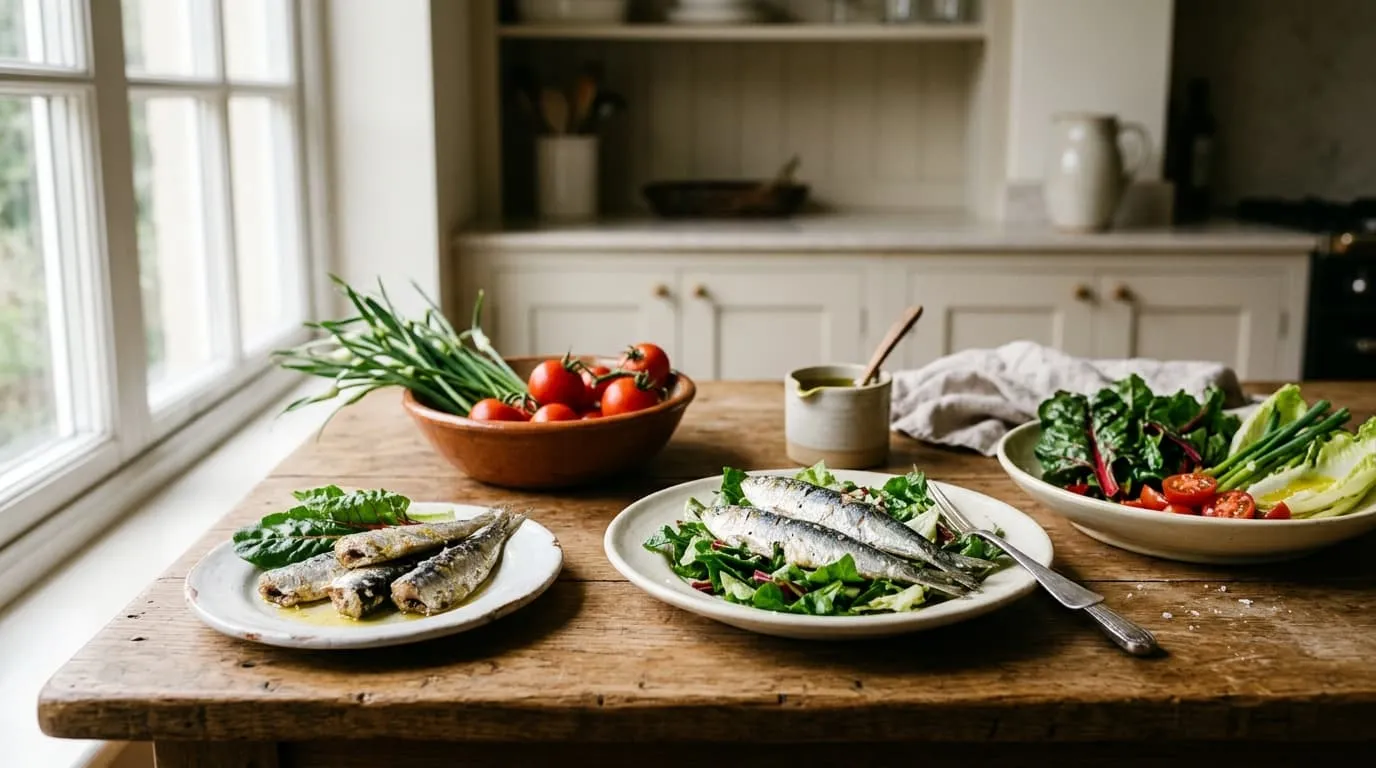
Some vegetable dishes ask only for good ingredients and a little order at the stove. This one from the Vega Baja is one of them: you boil, drain well and finish in the pan where the sardines were fried first. We follow the Convega recipe book, for four people, at medium difficulty and with 30 minutes as a guide.
Where camarrojas come from
The camarroja is a variety of wild chicory, Cichorium intybus, and Convega presents it as one of the most representative leafy greens of the Vega Baja del Segura. It is gathered along the edges of paths and on the banks of the irrigation channels and drains of the river, and is easily recognised by its blue flowers. In the district it is also known as cerraja or cerrajón de la huerta.
If you cannot gather them yourself, the recipe book sends you to the market: the ingredients can be found in any market in the towns of the Vega Baja. Ask for camarrojas and chard, which the recipe book’s list also calls bleas.
The dish uses salted sardines, that is, fish. If you are cooking for guests, go over the 14 allergens before serving.
Boil and drain before the pan
The first step looks minor and it is the one that organises everything else. Wash the chard and the camarrojas well, and do not throw away the stalks or stems: the recipe book uses them and sums it up in one sentence: “here everything is used”. Then they go into the large pot for about 12 minutes.
Next, drain them very well in a colander and set the greens aside on a serving dish. It is worth taking this seriously: the greens go into the pan undressed, so the less water they carry, the more the sauté will feel like frying and the less like boiling.
If you do not want sardines, the recipe book itself offers a simpler version: the greens just boiled, dressed with oil and lemon.
Sardines first, then the greens
The order in the pan is the key. First the sardines are fried and taken out. Then, in that same oil, the undressed greens, the tomato and the green garlic cut into small pieces are added. At the end the sardines go back into the pan and you can plate up and serve.
There is one warning worth remembering: the garlic is cut into small pieces and you must take care that it does not burn. It goes into the hot oil with the tomato, so do not walk away from the pan at that moment.
Salt appears in the list of ingredients without saying when. Here it is adjusted while sautéing and to your taste, and with salted sardines the sensible thing is to taste before adding more: this is a cook’s judgement, not an instruction from the recipe book. As for the tomato, the recipe book does not say how to cut it either, so you decide the cut that blends best with the greens.
How much time you need
Convega’s header speaks of 30 minutes for the whole recipe, a cooking guide that is useful for planning. The only time in the method is the boiling, about 12 minutes; the washing, the frying of the sardines and the sautéing carry no minutes. If it is your first time making the dish, have ready before lighting the stove the utensils the recipe book calls for: a knife, a large pot, a colander, a frying pan and a dish.
The ñoras in the list
The recipe book’s list includes two ñoras from Guardamar del Segura, but no step explains when or how they go in, and that is why they are not used here. If you want to try them, that will be your own decision about the base recipe.
To round off the table
If you enjoy vegetable cooking like this, our recipes also include the borreta alcoyana and the rice with Swiss chard.
If you have to organise a group meal
This recipe is sized for four people. If the meal is for a group, for example at a village fiesta, see how we organise the service in local fiestas and ask for a quote with the details of the day.
History and variations
According to Convega, the camarroja is one of the most representative leafy greens of the Vega Baja del Segura, and its recipe book offers it in a 30-minute, medium-difficulty dish that uses the stalks and stems: “here everything is used”. Anyone who cannot gather them will find them in any market in the district’s towns.
Tips
Wash the vegetables well and keep the stalks and stems: Convega’s recipe uses them in the dish. Sources
Drain the boiled greens very well in a colander before moving them to the pan, where they go in undressed. Sources
Cut the green garlic into small pieces and keep an eye on the pan: the recipe warns that it must not burn. Sources
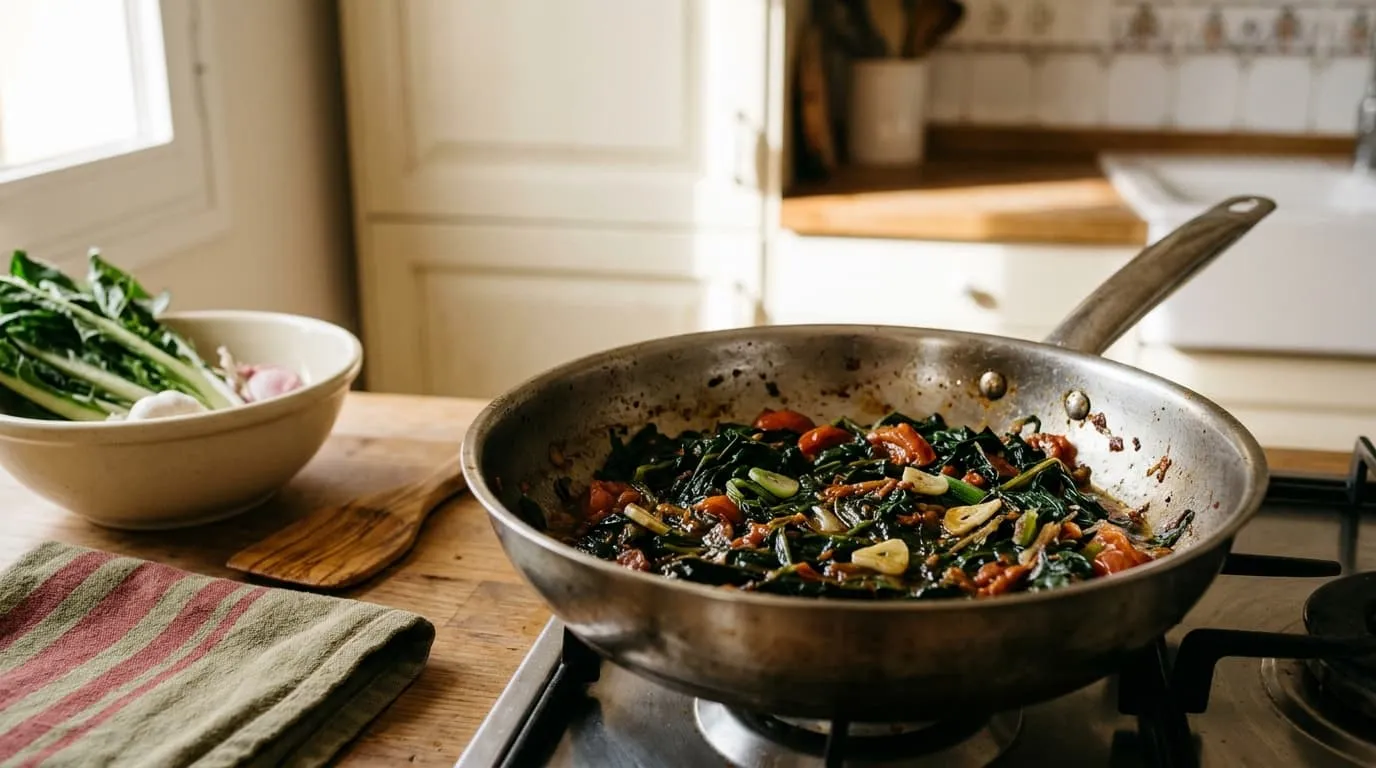
Camarrojas greens with sardines
Frequently asked questions
Can camarrojas be eaten just boiled?
Yes. Convega gives it as an alternative: after boiling them for about 12 minutes and draining them very well, if you simply want them boiled, you dress them with oil and lemon. The version with sardines is the next step, in which the undressed greens go through the oil the fish were fried in first.
Why are the sardines fried first and not the greens?
Because the greens are finished in that same oil. Convega says to fry the sardines, take them out and, in the oil that is left, add the undressed greens, the tomato and the garlic in small pieces. The sardines go back into the pan at the end, just before plating up and serving.
What if I cannot find camarrojas?
Convega says the ingredients can be found in any market in the towns of the Vega Baja, and that the camarroja is also known as cerraja or cerrajón de la huerta. If you live far from the district, ask at your greengrocer’s using those names. The recipe book does not suggest any other vegetable in its place.
Sources
Glossary terms
Recipes
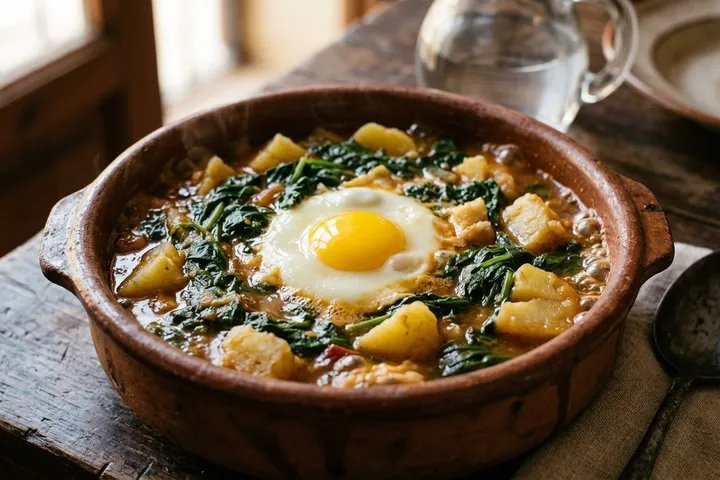
Borreta from Alcoy
Borreta from Alcoy for 4: soaked salt cod, cracked potato, spinach and ñora peppers in a thick stew, with an egg set at the end and served straight away.
Total time: 1480 min
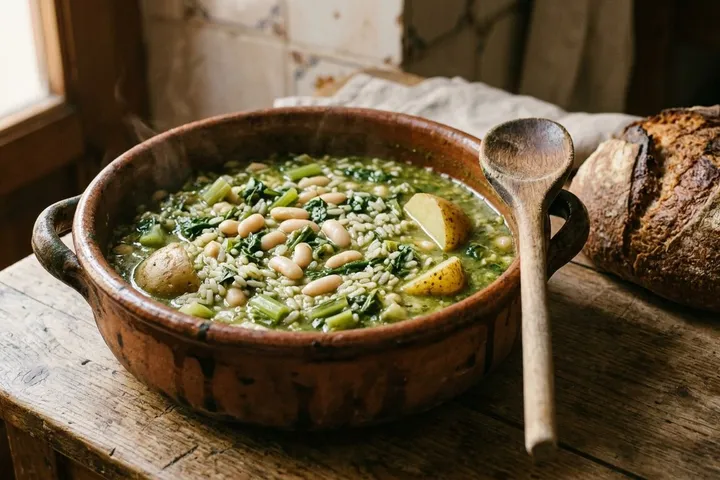
Rice with Swiss chard and white beans (arròs amb bledes)
A meat-free spoon-dish rice: soaked white beans, Swiss chard, potato and saffron, with the rice added last. Pressure cooker or not; eat it straight away.
Total time: 625 min