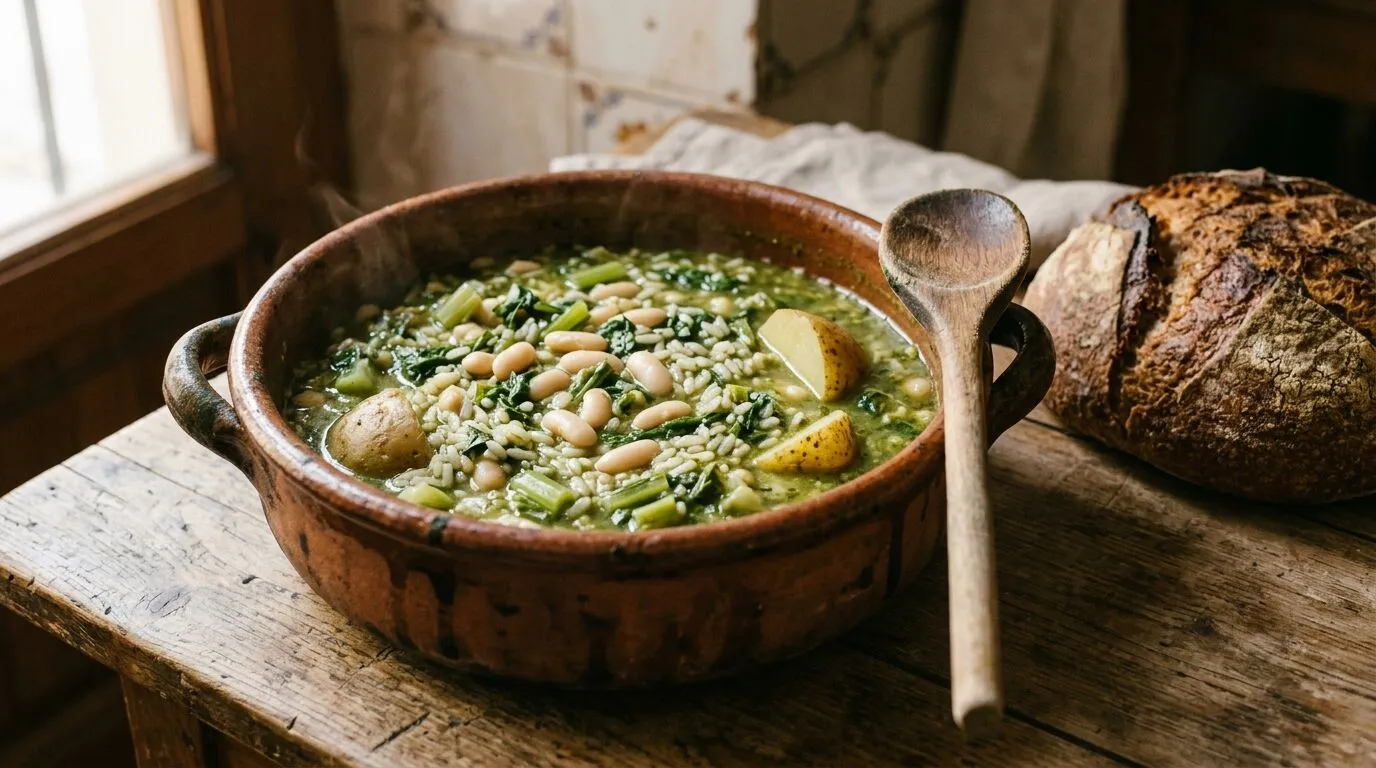

Rice with Swiss chard and white beans (arròs amb bledes)
Yield: 4 servings
Are there 40 or more of you? We cook rice dishes live for groups
Large paella pans need less liquid. Sources
Ingredients
Pulses and vegetables
- 150 gWhite beans
- 150 gSwiss chard
- 300 gPotato
- 1 pcsOnion
- 1 cloveGarlic
- 1 pcsGrated tomato
Rice and stock
- 150 gRound-grain rice
- 5 gSweet paprika
- pinchSaffron threads
- to tasteExtra virgin olive oil
- to tasteSalt
- to tasteOloroso sherry or white wine (optional)
- to tasteWater
Ingredients
Steps
- 1Leave the 150 g to soak in cold water overnight, 8 to 12 hours depending on the variety and how fresh they are. In the morning, drain off that water and rinse them.480 min
- 2In a deep pot, gently soften the chopped 1 pcs and the grated 1 clove in the to taste with a little to taste.
- 3Add the 5 g, taking care not to burn it, and straight away the 1 pcs. Fry for a couple of minutes, until it loses its water.
- 4Add the chopped 150 g and turn up the heat so they wilt down.
- 5Add the drained 150 g and, if you like, a splash of to taste. Cover with to taste, bring to the boil and knock the boil back with a splash of cold water. Cook with the lid on: about 50 to 60 minutes the traditional way, 20 in a pressure cooker.60 min
- 6Take the lid off and add the peeled, chopped 300 g together with the pinch. Cook with the lid on for another 25 minutes, or 10 in a pressure cooker.25 min
- 7Take the lid off, add the rinsed 150 g and cook uncovered for 18 to 22 minutes, depending on the variety, until the grain is just right and the stew is bound together.22 min
- 8Taste, adjust the to taste and let it rest for five minutes before taking it to the table.5 min
Rice with Swiss chard and beans is a spoon dish of pulses and vegetables, with the rice added at the end. This recipe makes it for four, with the quantities from Directo al Paladar, and explains what changes the result: the order in which everything goes into the pot and the timings, which differ with and without a pressure cooker.
The order of the pot
This is not made like a paella. Here the rice goes in last of all, and the beans first. First the beans, which are the toughest and need the longest; then the potato with the saffron; and finally the rice, uncovered, for 18 to 22 minutes. That is the order in the source, and it explains the timing of each stage.
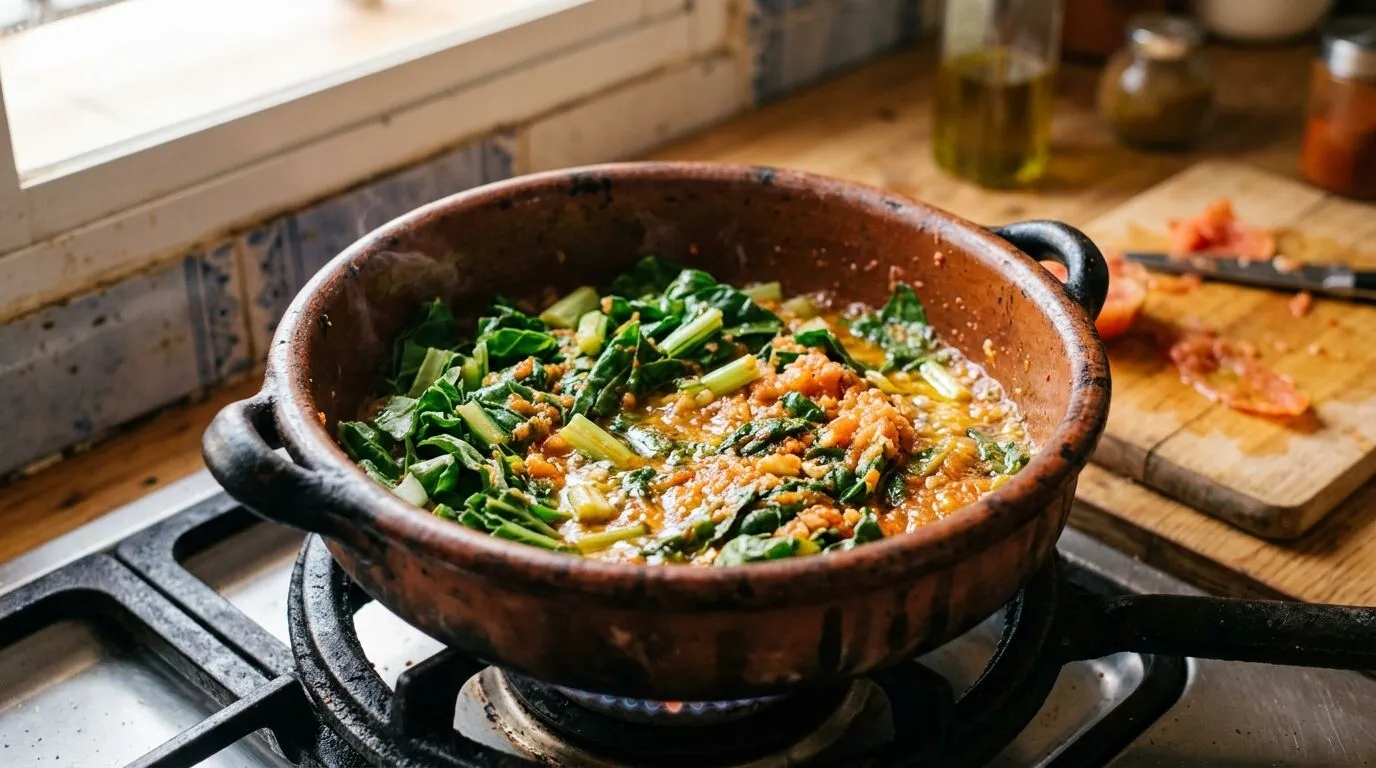
The stew starts with a sofrito of onion and garlic softened over a low heat, with the paprika added without letting it burn and the grated tomato reduced for a couple of minutes. The chard goes in chopped and over a high heat until it wilts down. The source gives the option of a splash of oloroso or white wine; it is optional.
How much liquid
The recipe gives no proportion of water: it says only “cover with water”, so here the water is up to you. What it does specify is to knock the beans’ boil back with a splash of cold water and to cook with the lid on. When the rice goes in, see how the pot is doing and adjust the liquid to your pan. For the difference between dry, creamy and soupy rice, see the entry on creamy, soupy and dry rice; this dish has a broth bound by the potato.
Two timings: traditional and pressure cooker
Directo al Paladar gives both ways of cooking. The beans, covered, take 50 to 60 minutes the traditional way or 20 in a pressure cooker. The potato with the saffron takes 25 minutes or 10. The rice is the same in both cases. With a pressure cooker you save almost an hour; without one, the dish takes its two hours of cooking. If you are really short of time, the source suggests ready-cooked pulses from a jar or soaking the beans for longer.
What to serve with it
At the table, good bread for mopping up and, if you fancy it, cumin seeds and a touch of sherry or cider vinegar. For dessert, Valencian mandarins, as the source suggests. It is eaten straight away, after the five minutes’ rest.
The ingredients and why they matter
There are few, and each has its role. The white beans give the stew its body, which is why they go in first and cook the longest. The chard, chopped, supplies the greens and wilts as soon as you turn up the heat. The potato, peeled and chopped (300 g, one large or two medium), binds the broth while it cooks with the saffron. And the rice, round-grain and rinsed, is 150 g for four, not much rice, because here the pulses are in charge. If you are cooking for more people, scale all the quantities at once in the recipe card.
The wine, oloroso or white, is optional. With or without it, the dish suits anyone keeping Lent, according to the source.
How long it takes in total
Allow about two hours and twenty-five minutes: 20 of preparation, two hours of cooking and five of resting, plus the overnight soak. With a pressure cooker it drops considerably, because the beans go from an hour to twenty minutes, but the sofrito, the chard and the final rice take their time either way. It is a rice for a leisurely spoon-dish day, not for a dinner in a hurry.
How it differs from other pot rices
If you already know the rice with beans and turnips, the difference is clear: that one has pork, this one has no meat at all. And compared with the brothy rice with chicken and rabbit, this is a rice of pulses and the vegetable garden. If winter is your season for pot dishes, the olla gitana of the Vega Baja shares the idea of a spoon dish with seasonal vegetables.
For many guests
A pot rice like this is eaten freshly made. To work out how much rice per guest, there is the guide to how much rice per person. If there are lots of you, we cook for groups: paellas and show cooking.
History and variations
This is a spoon-dish rice of the vegetable garden and of pulses, without a single slice of meat. Directo al Paladar presents it as a traditional Valencian recipe and says it suits vegans and anyone keeping Lent. The glossary entry explains the difference between dry, creamy and soupy rice.
Tips
To go faster, use ready-cooked pulses from a jar or soak the beans for longer. Sources
If you like, finish the dish with a few cumin seeds and a touch of sherry or cider vinegar. It is optional. Sources
Serve with good bread for mopping up and, for dessert, Valencian mandarins. Sources
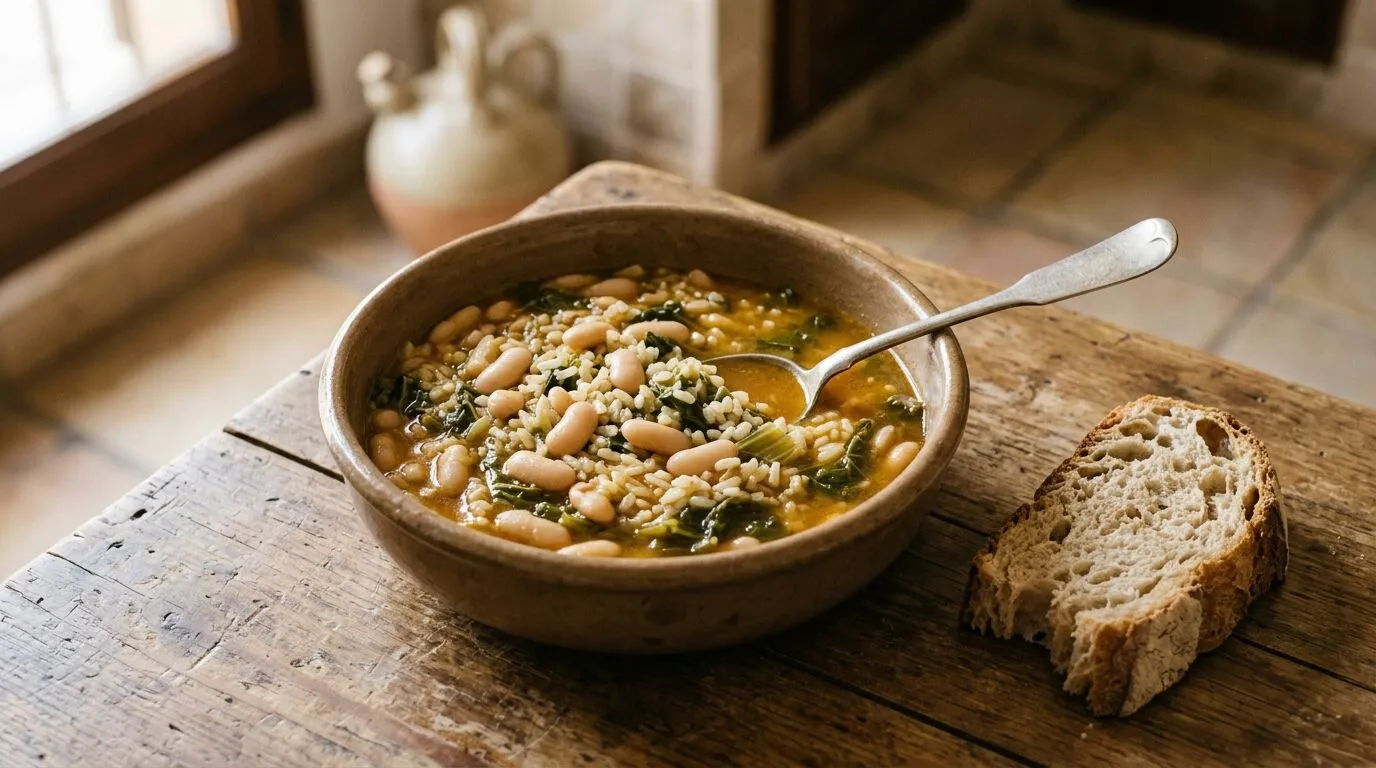
Rice with Swiss chard and white beans (arròs amb bledes)
Frequently asked questions
Can you make rice with Swiss chard in a pressure cooker?
Yes. The Directo al Paladar recipe gives both timings: the beans take 20 minutes in a pressure cooker against 50 to 60 the traditional way, and the potato with the saffron 10 minutes against 25. The rice is always finished separately, uncovered, for 18 to 22 minutes depending on the variety. It is ready much sooner, but the sofrito and the chard are done the same way.
Do you have to soak the beans for rice with Swiss chard?
Yes, the source soaks them overnight, 8 to 12 hours depending on the variety and how fresh they are, and throws that water away before stewing them. If you run out of time, the same recipe allows ready-cooked beans from a jar, which save a good part of the cooking.
Is it a vegan or Lenten dish?
According to Directo al Paladar, it suits vegans and people keeping Lent: it has beans, Swiss chard, potato, rice and olive oil, with no meat or fish. The wine is optional, so you can leave it out without the dish losing its plant-based character.
Sources
Glossary terms
Recipes
Arròs amb fesols i naps (rice with beans and turnips)
Arròs amb fesols i naps is a Valencian pot rice: pork, white beans, pencas and turnip cooked slowly, and the rice added at the end, without overdoing it.
Total time: 796 min
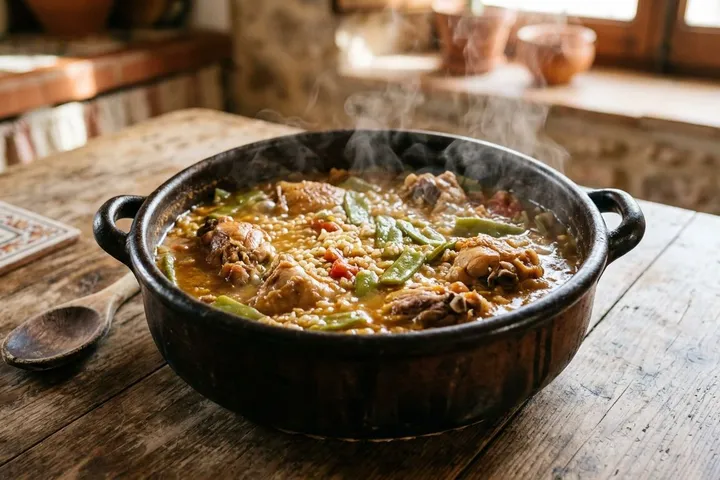
Brothy rice with chicken and rabbit (arroz caldoso)
Brothy chicken and rabbit rice is home-style spoon food: browned meat, flat green beans and garrofón, and rice cooked in four times its volume of water.
Total time: 47 min
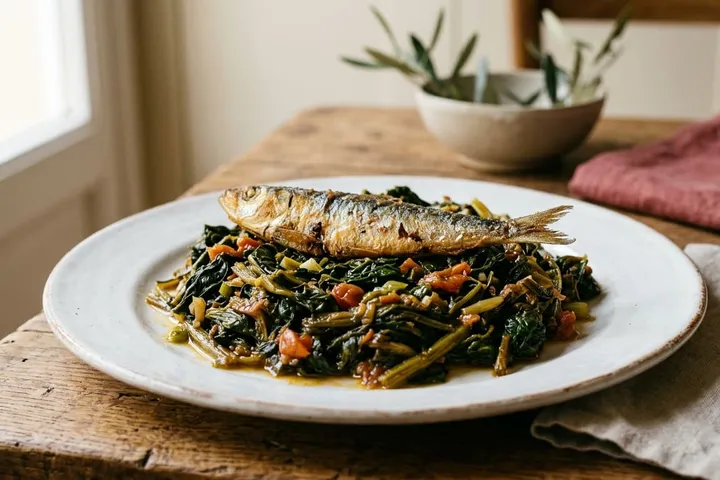
Camarrojas greens with sardines
Camarrojas and chard boiled, then sautéed with tomato and green garlic in the oil used to fry salted sardines: a Vega Baja greens dish for 4 people.
Total time: 30 min
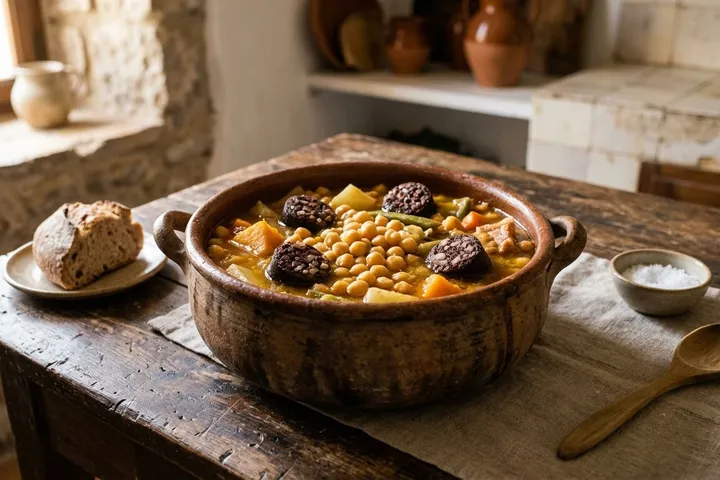
Olla gitana or olla viuda from the Vega Baja
An autumn and winter stew from the Vega Baja: chickpeas, seasonal vegetables, a flour sofrito, pork fat and onion black pudding. Once made meat-free.
Total time: 90 min