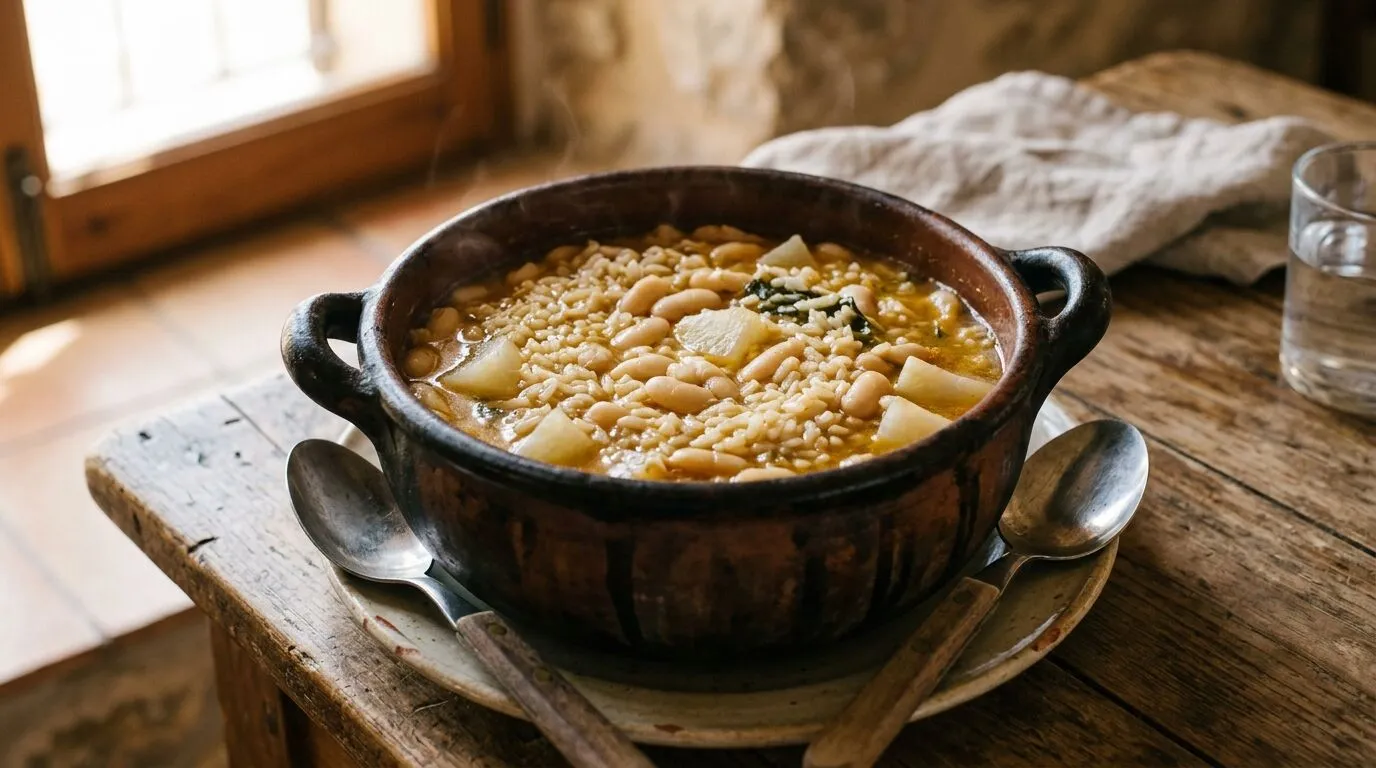

Arròs amb fesols i naps (rice with beans and turnips)
Yield: 4 servings
Are there 40 or more of you? We cook rice dishes live for groups
Large paella pans need less liquid. Sources
Ingredients
Rice
- 400 g–500 gRice
- to tasteWater
- to tasteSaffron threads
- to tasteSalt
Pot
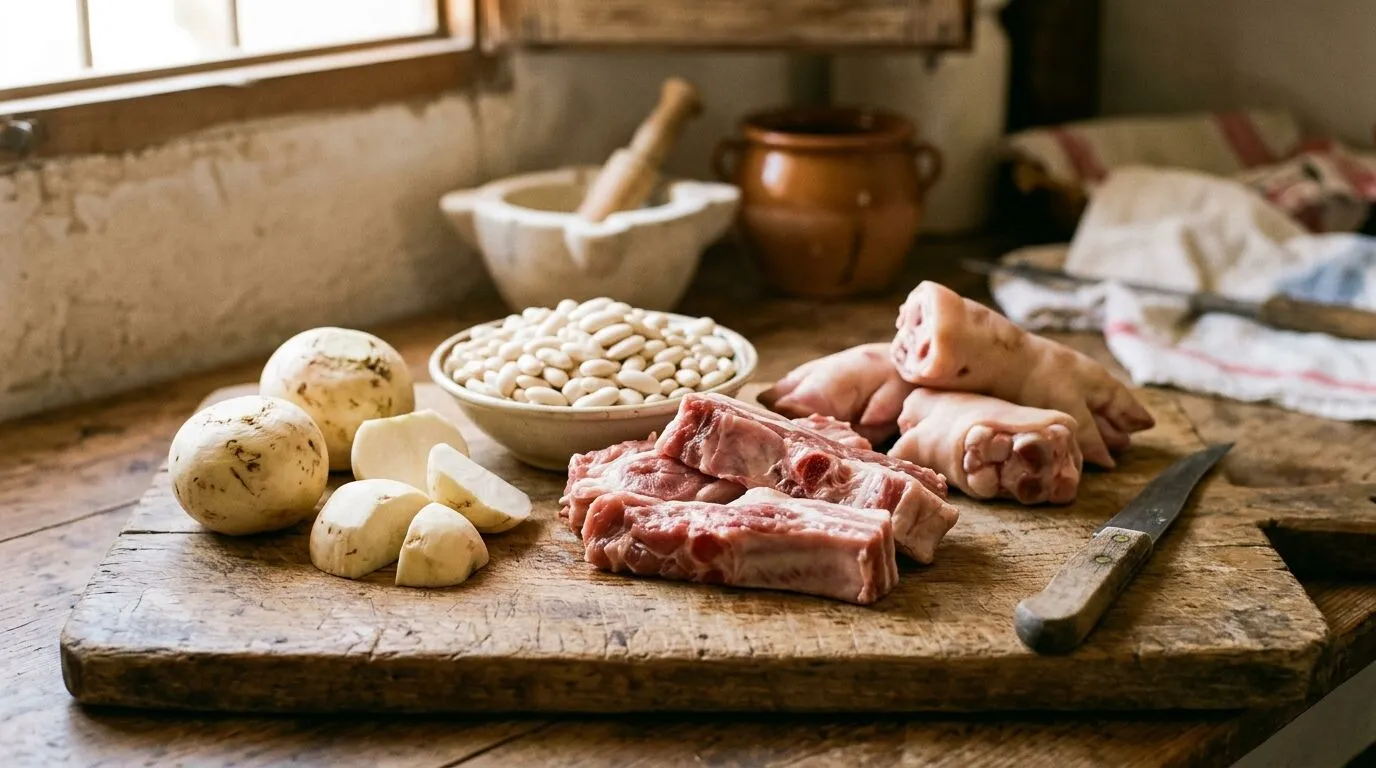
- 500 gPork, in pieces (rib, backbone and trotter)
- 200 gDried white beans
- to tasteSwiss chard stalks (pencas)
- 1 pcsTurnip
- 2 pcs–3 pcsNabicol
- to tasteOnion black puddings (optional)
- to tasteBlanquets (white sausages; optional)
Sofrito
- 1 pcsOnion
- 4 clovesGarlic
- 1 pcsTomato
- to tasteOlive oil
Ingredients
Steps
- 1Soak the 200 g for about 12 hours.
- 2In a large pot with to taste, put the 500 g, the beans, the to taste and the to taste. Cover, and when it boils skim off the foam.
- 3Let it boil, covered, for 45 minutes to 1 hour.60 min
- 4Add the chopped 1 pcs and 2 pcs–3 pcs.
- 5Separately, make a sofrito with to taste, a little to taste, the very finely chopped 1 pcs and 4 cloves and the grated 1 pcs, and add it to the stew. If you are using to taste or to taste, put them in now.
- 6Adjust the to taste. When everything is cooked, add the 400 g–500 g and cook it without overdoing it. The base recipe gives no time; Héctor Medina has it at 16 minutes.16 min
- 7Serve in an earthenware casserole if you like, piping hot and with the broth still loose.
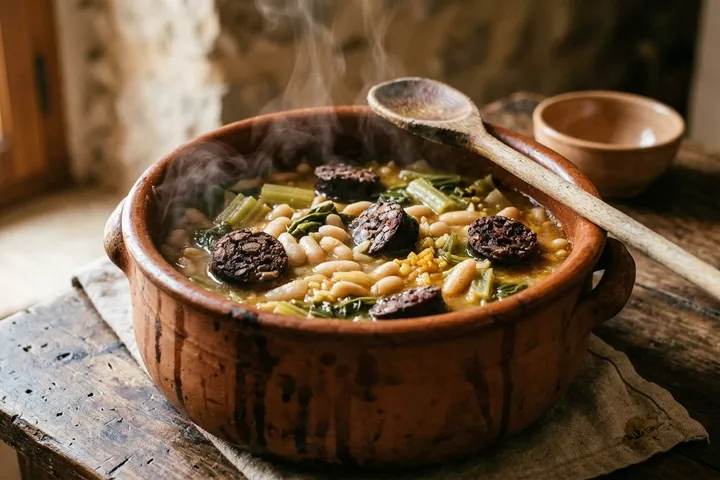
Arròs amb fesols i naps, rice with beans and turnips (arroz con judías y nabos in Spanish), is a brothy pot rice with pork, beans, turnip and nabicol. Valencia Bonita describes it as a typical Valencian winter dish, and here you have the recipe with its quantities for four.
A pot rice, not a paella-pan rice
Arròs amb fesols i naps is made in a pot, cauldron or casserole, not in a paella pan. According to Valencia Bonita, today it is cooked mostly in an earthenware casserole, though it recommends a cast-iron pot, a perol (a wide cooking pot) or a metal casserole for the extra capacity. It is a long-cooked stew eaten with a spoon, with the rice added at the end. The glossary entry on creamy, soupy and dry rice explains where each one sits according to the broth.
The base recipe, from Valencia Bonita, gives neither the amount of water nor the time for the rice. For the rice time we turned to other recipes we could open, and we say where each figure comes from.
Pork and beans first
The order matters. First goes everything that takes time: the pork (rib, backbone and trotter, or a piece of belly), the soaked beans, the saffron and the pencas. It is cooked covered and, when it boils, the foam is skimmed off. Then, after 45 minutes to an hour of boiling and not before, the turnip and the nabicol go in.
Héctor Medina, in El Español, does it with different timings: two hours for the meat and beans over a low heat and 20 minutes more with the turnip, the napicol (as he writes it), the potato and the pencas. It is a recipe for eight diners, from his grandmother in Moncada.
How much rice and how much water
Here the sources do not agree, and it is best not to mix them. The base recipe asks for 400 to 500 g of rice for four and gives no water. Patricia Orduna, in El Español, uses 320 g for four with three litres of water and a pressure cooker; the rice, five minutes. Medina uses 400 g for eight with four litres, less than half the rice per diner of the base recipe. That is why the water on this page is left to your judgement: cover and adjust.
The rice goes in when everything else is cooked. Medina cooks it for 16 minutes: six over a high heat, five over a medium one and five over a low one, and stirs it so it releases starch and the broth ends up bound. If you would like another, simpler brothy rice, see the brothy rice with chicken and rabbit.
Turnip, nabicol, pencas and sofrito
The turnip and the nabicol are chopped. The pencas are mostly chard, though, according to the base recipe, they can come from another vegetable. The sofrito is made separately, with the onion and garlic very finely chopped and the tomato grated, and added to the stew. The onion black puddings and the blanquets are optional.
The name changes along the way. According to Valencia Bonita, in some districts it is called caldera, caldereta, olleta (although that usually has cracked wheat) or arròs junt. If the pork is swapped for beef, lamb or rabbit, or the beans for garrofó (a type of butter bean), warn people that it is already a similar recipe with another name.
Mistakes that cost you
The base recipe sums it up like this: the rice, “without overdoing it, just right”. Along the same lines, El Español’s headline on Medina sums up that the rice must not be left to stand. The other two mistakes are about patience: skipping the soak of the beans, which hydrate less well, and not skimming the foam at the first boil.
The vessel matters too. Valencia Bonita speaks of tall cauldrons, orange-wood fires and slow, gentle cooking; today any pot of good capacity will do, with the lid to hand.
How to serve it
It is served hot, with the broth still loose, in an earthenware casserole if you like. It is a winter dish and one for patron saint fiestas, from the Safor, the Ribera and l’Horta according to Valencia Bonita: the sources we have opened place it in Valencian lands, not in inland Alicante. If you like pot stews with turnip and pencas, look at the olleta de músic, from Alcoy, which has no rice. For another spoon rice with beans and greens, try the rice with Swiss chard and white beans.
If there are lots of you and you are cooking a big rice, in how much rice per person you will find how the quantities change for groups. And if there are 40 or more of you, we cook rice dishes for groups, live.
History and variations
Valencia Bonita describes it as a typical winter dish of Valencia, much loved in the Safor, the Ribera and l’Horta, and also served at patron saint fiestas. It used to be cooked in tall cauldrons over orange-wood fires, slowly. The glossary explains the difference between brothy, creamy and dry rice.
l'Horta Nord: Héctor Medina cooks his grandmother’s recipe, from Moncada, with pig’s ear, jowl, potato, napicol and more water, and stirs the rice to bind the broth. Sources
Tips
Soak the beans for about 12 hours: they hydrate better and keep a good size and quality. Sources
Skim off the foam when the pork and the beans come to the boil, and cook covered. Sources
Stir the rice as it cooks: according to Héctor Medina, that is how it releases starch and the broth ends up bound. Sources
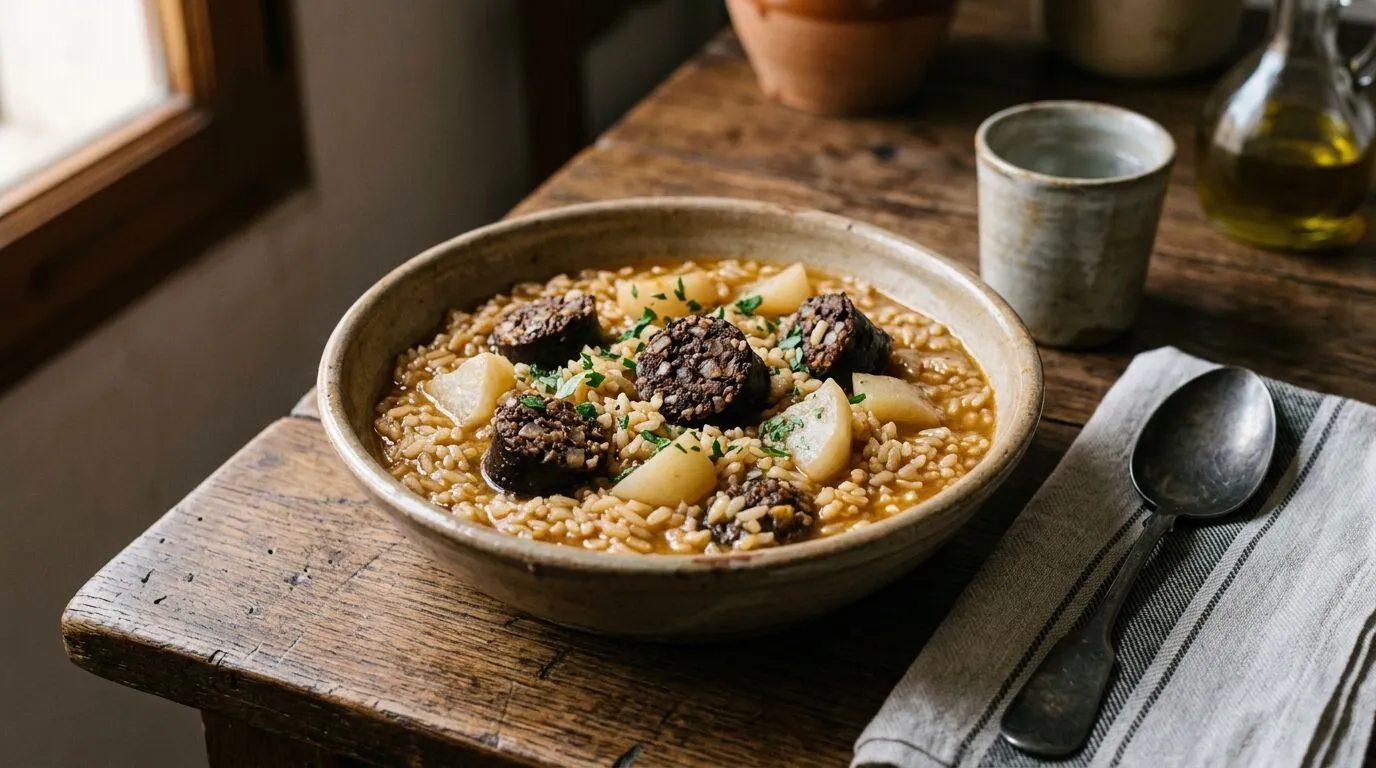
Arròs amb fesols i naps (rice with beans and turnips)
Frequently asked questions
What do you cook arròs amb fesols i naps in?
Valencia Bonita says that today it is cooked mostly in an earthenware casserole, and that the old way, which survives at fiestas, is the tall cauldron over orange-wood fire. For home it recommends a cast-iron pot, a perol or a metal casserole, for the capacity. The source does not mention a paella pan; with so much broth, a pot is better.
How much rice goes into arròs amb fesols i naps for four?
The base recipe asks for 400 to 500 g for four, that is, 100 to 125 g per person. Others give less: 320 g for four with three litres of water, or 400 g for eight with four litres. These are stews with plenty of broth, and the base recipe does not give the water; if you change the rice, adjust the water and taste it.
Do you have to soak the beans?
If they are dried, yes: the base recipe soaks them for about 12 hours, and that way they hydrate better and keep a good size. Héctor Medina and Patricia Orduna leave them overnight. The latter also allows for half a small tin of cooked white beans, and then no soaking is needed.
When is arròs amb fesols i naps eaten?
It is above all a winter dish, though Valencia Bonita says it is enjoyed all year round, and it is also prepared at patron saint fiestas, often in big cauldrons. Héctor Medina says that at his home they cook it in late August, for the Moncada fiestas.
Sources
Glossary terms
Recipes
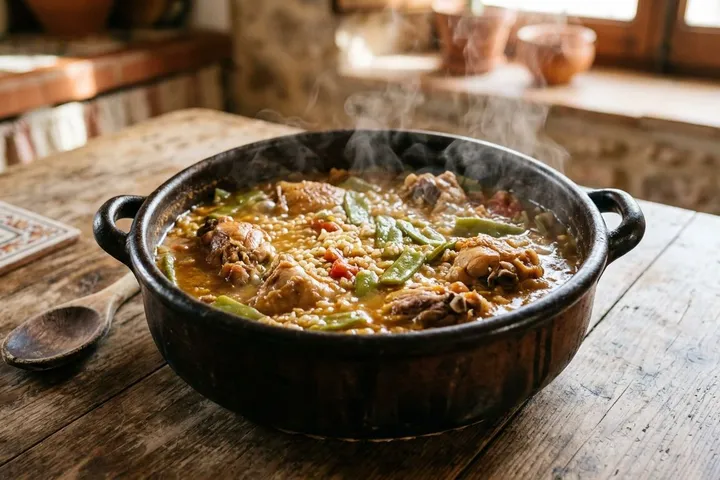
Brothy rice with chicken and rabbit (arroz caldoso)
Brothy chicken and rabbit rice is home-style spoon food: browned meat, flat green beans and garrofón, and rice cooked in four times its volume of water.
Total time: 47 min
Olleta de músic
Olleta de músic is Alcoy’s bean pot: Villena beans, pencas, turnip, pork ribs, offal and onion black pudding, cooked slowly, with no rice and no pumpkin.
Total time: 810 min