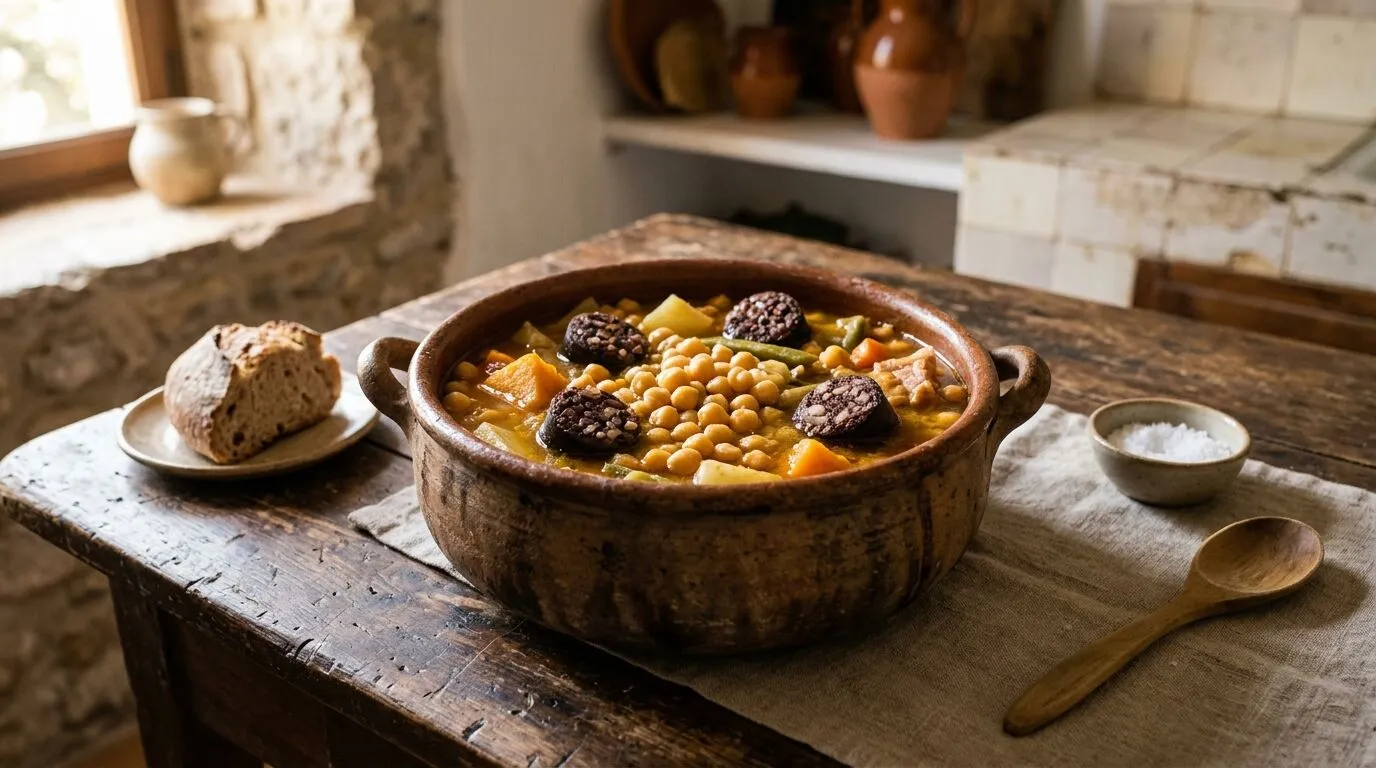

Olla gitana or olla viuda from the Vega Baja
Yield: 4 servings
Are there 40 or more of you? We cook rice dishes live for groups
Large paella pans need less liquid. Sources
Ingredients
Pot
- 250 gChickpeas
- 4 pcsPotatoes
- 100 gBajocas (green beans)
- 2 pcsVega Baja artichokes (if in season)
- 2 sprigsCelery
- 1 pcsParsnip (optional)
- 1 pcsPear, sweet potato or pumpkin (optional)
- 100 gTocino (pork fat)
- 4 pcsOnion black pudding (morcilla de cebolla)
- to tasteWater
Sofrito
- 2 pcsOnions
- to tasteTomato
- pinchPaprika
- 1 tbspFlour
- to tasteExtra virgin olive oil
- to tasteSalt
Ingredients
Steps
- 1Clean and chop the 100 g, the 2 sprigs and, if you are using them, the 1 pcs and the 1 pcs.
- 2In a frying pan, make a sofrito with the to taste, the chopped 2 pcs and to taste, a pinch of pinch and the 1 tbsp; season with to taste to taste.
- 3Put a pot of to taste on to boil and, when it is hot, add the vegetables, the sofrito and the 100 g. Take care that the parsnip doesn’t burn, because it turns bitter.
- 4Convega doesn’t say when the 250 g go in. If they are dried, soak them the day before and add them with the vegetables; if they are cooked, add them with the potato.
- 5Cook for an hour over a medium heat with the pot covered.60 min
- 6Prick the 4 pcs so it doesn’t fall apart and add it with the 4 pcs and, if they are in season, the 2 pcs. Keep cooking without the lid until the potato is done.
- 7Serve it piping hot: don’t let it go cold.
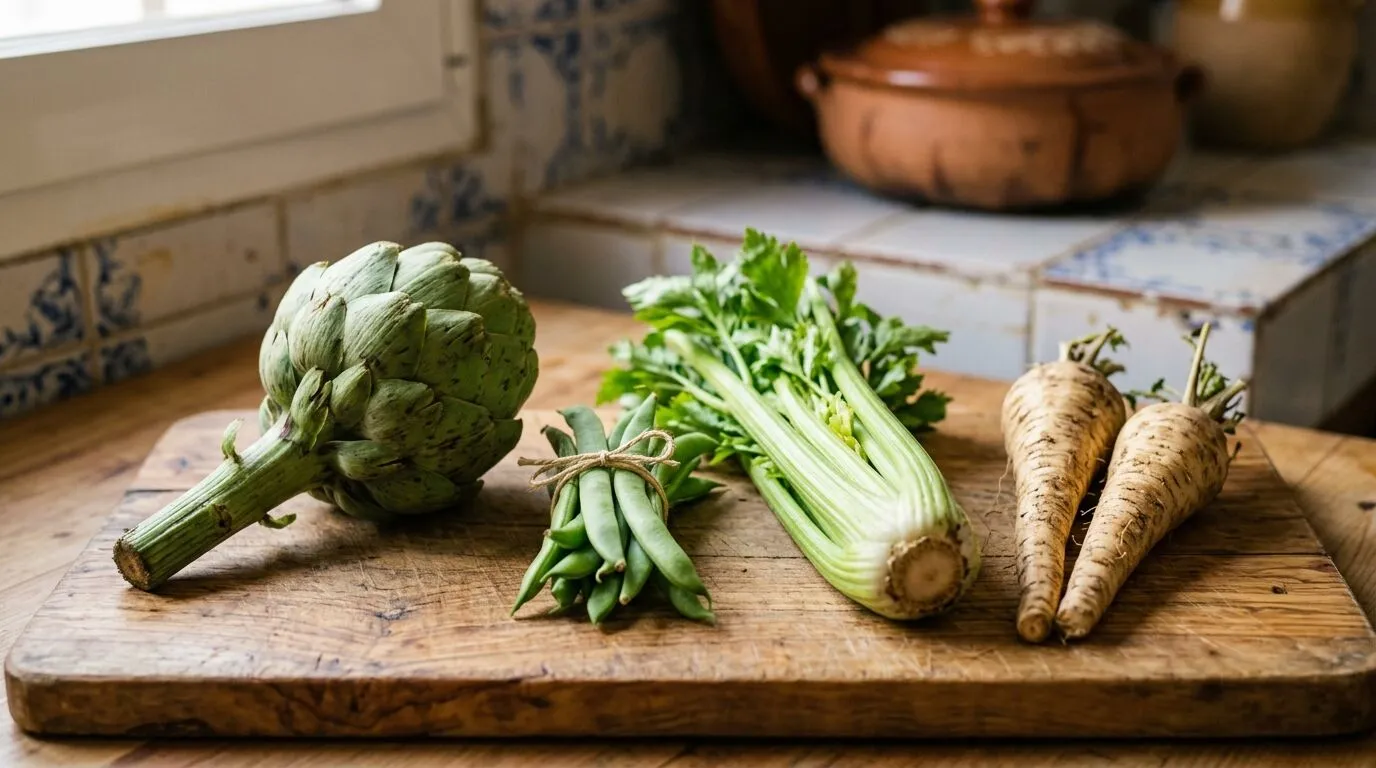
Olla gitana, or olla viuda, is the chickpea and vegetable stew of the Vega Baja del Segura for the colder months. This recipe follows Convega’s version, for four and in about 90 minutes. That recipe doesn’t say when the chickpeas go in or whether they are soaked; here we give you the cooking judgement to decide it.
Seasonal vegetables and chickpeas
Convega describes it as an autumn and winter dish, filling, with the smell and taste of traditional cooking. It says the base is very similar in every corner of the comarca. What changes is the rest: it allows pear, sweet potato or pumpkin for sweetness, and parsnip; if there are Vega Baja artichokes, they go in (their season runs from late November to March or April). Sometimes, to cleanse the system after the Christmas festivities, fresh celery or cardoon leaves are added.
The sofrito and the hour in the pot
A sofrito is made separately, in a frying pan, of oil with chopped onion and tomato, a pinch of paprika and a tablespoon of flour. The pot goes on with water and, when it is hot, the vegetables, the sofrito and the pork fat go in. The recipe gives no litres of water or quantity of tomato, so these are to taste. Then, an hour over a medium heat with the pot covered.
Beware of the parsnip: if it burns, it turns bitter. The chickpeas have to be in that pot, but Convega doesn’t say when: if they are dried, soak them the day before and add them with the vegetables; if they are cooked, with the potato.
The potato and the black pudding, at the end
The potato and the onion black puddings are added after the covered hour, and cooking continues without the lid until the potato is done. It is important to prick the black pudding before adding it so it doesn’t fall apart. And Convega closes the step with a “don’t let it go cold!”.
Gitana, viuda and the one from Murcia
Both, olla gitana and olla viuda, are the same dish in the Vega Baja. Originally it had no meat at all, and Convega doesn’t explain why it is called “viuda” (widow). It should not be confused with the Murcian olla gitana, which is a different recipe: the Directo al Paladar one has beans and chickpeas, pumpkin, green beans, pear and mint, with an optional picada of bread and almonds. The two are not mixed here.
With meat or without
The original version had no meat, and Convega notes that the meat additions are optional and work as a complement. In this recipe there are 100 g of pork fat and four onion black puddings; in other homes, a piece of pork. If you prefer the plain vegetable and pulse stew, leave out the pork fat and the black puddings. What doesn’t change is the base of chickpeas, potato and vegetables, and the sofrito with flour that binds the broth.
When to make it
It is a seasonal dish: autumn and winter, with Vega Baja artichokes when they are in season. Allow about 90 minutes in total, with the hour in the covered pot as the long stretch. Convega says of it that it allows for many variations depending on the time of year and personal taste: change the vegetables according to what you can find.
If you like the comarca’s spoon dishes
From the same Convega recipe book, another winter dish with chickpeas is the cocido with pelotas, which takes much longer. If you prefer a spoon dish without meat, the rice with Swiss chard and white beans is a dish of pulses and vegetables; and if you want another pot of pulses, there is the rice with beans and turnips.
For fiestas and group meals
If there are lots of you at a fiesta, we cook for groups: local fiestas.
History and variations
Convega calls it an autumn and winter dish with deep roots in the Vega Baja, and says its base is very similar in every corner of the comarca. Originally olla viuda had no meat: over the years a piece of pork or onion black pudding was added.
el Baix Segura: Convega allows versions with or without pear, parsnip, sweet potato or pumpkin, and notes that sometimes, to cleanse the system after the Christmas festivities, fresh celery or cardoon leaves are added. Vega Baja artichokes go in during their season, from late November to March or April. Sources
Tips
Prick the black pudding before adding it so it doesn’t fall apart. Sources
Watch that the parsnip doesn’t burn: if it does, it turns bitter. Sources
Pear, sweet potato or pumpkin are optional and add sweetness, depending on the season and your taste; the parsnip is optional too. Sources
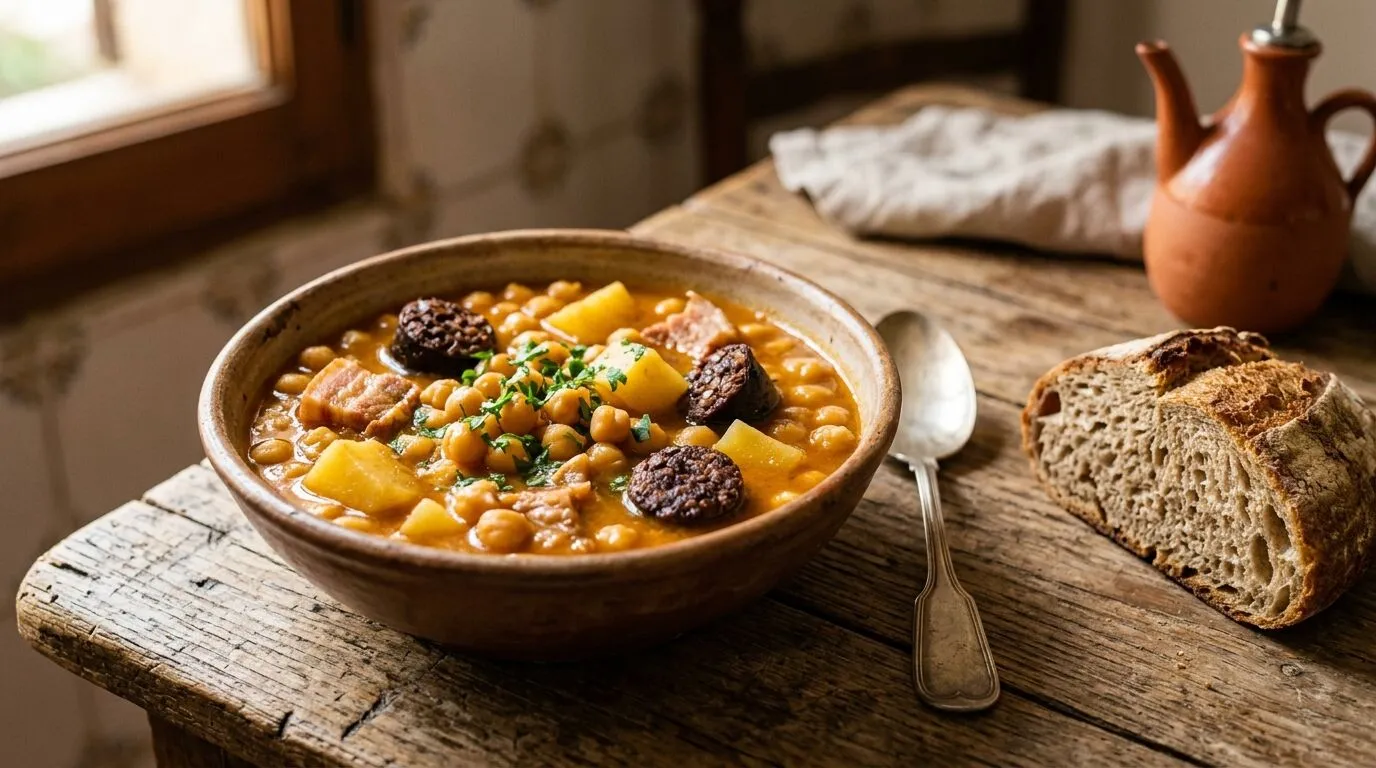
Olla gitana or olla viuda from the Vega Baja
Frequently asked questions
What goes into olla viuda or olla gitana from the Vega Baja?
According to Convega, for four: 250 g of chickpeas, potatoes, bajocas, seasonal artichokes, celery, two onions, tomato, a little paprika and a tablespoon of flour for the sofrito. As additions, pork fat and onion black pudding and, optionally, parsnip and pear, sweet potato or pumpkin. It is a vegetable and pulse stew, with the meat as a complement.
Why is it called olla viuda?
Convega doesn’t explain the name, but gives a clue: originally olla viuda had no meat, and over the years a piece of pork or onion black pudding was added. What it does confirm is that olla gitana and olla viuda are the same dish in the comarca, with a very similar base in every town.
Does olla gitana contain meat?
The original version doesn’t. Convega says the meat was added over the years and today works as an optional complement: pork fat and onion black pudding in this recipe, or a piece of pork in other homes. If you are cooking for vegetarians, leave out the pork fat and the black pudding and keep the sofrito and the vegetables.
Sources
Glossary terms
Recipes
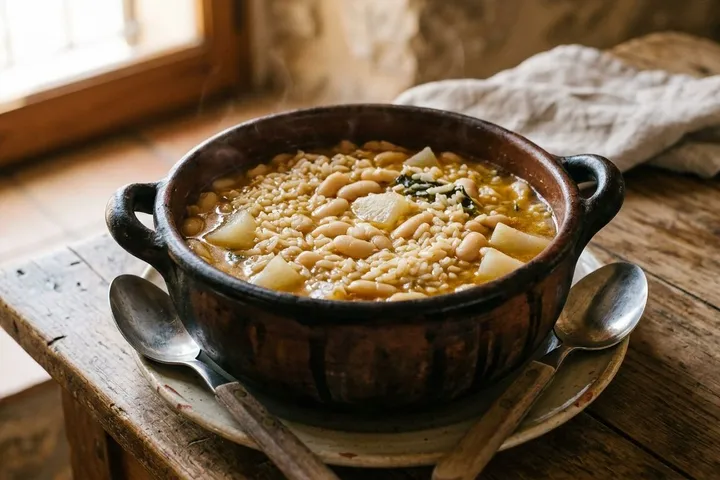
Arròs amb fesols i naps (rice with beans and turnips)
Arròs amb fesols i naps is a Valencian pot rice: pork, white beans, pencas and turnip cooked slowly, and the rice added at the end, without overdoing it.
Total time: 796 min
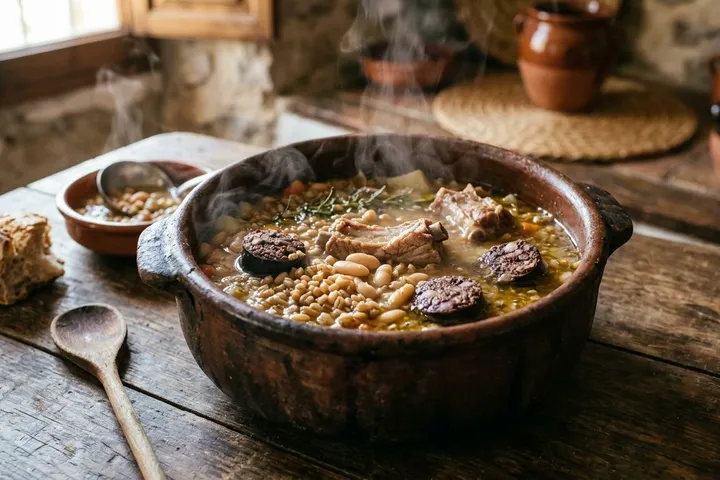
Blat picat (olleta de blat)
Blat picat is a hearty olleta made with cracked wheat, beans, pork and vegetables instead of rice: soak the night before, then cook long and slow.
Total time: 900 min
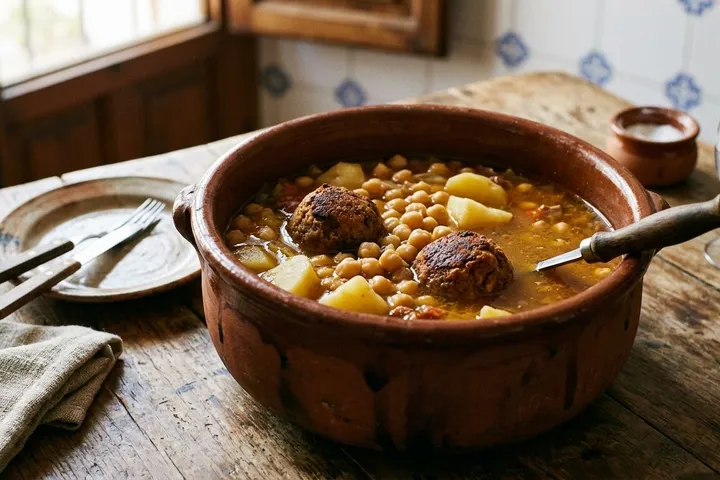
Cocido con pelotas
Winter stew from the Vega Baja: meat in cold water, soaked chickpeas, one potato and one or two pelotas per person, and the broth with a squeeze of lemon.
Total time: 1560 min
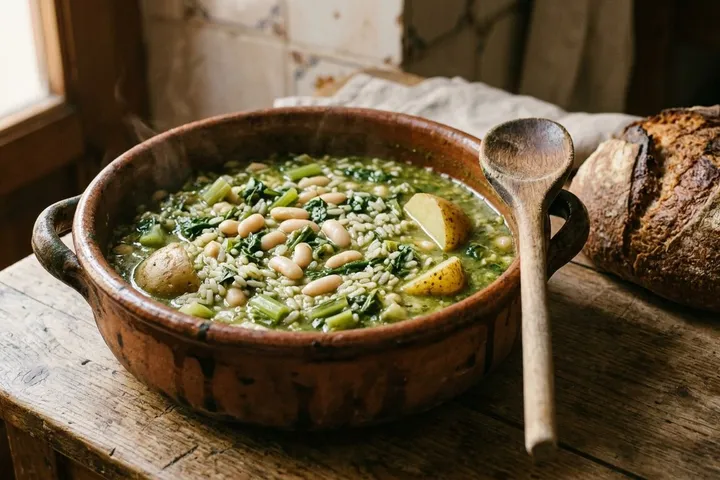
Rice with Swiss chard and white beans (arròs amb bledes)
A meat-free spoon-dish rice: soaked white beans, Swiss chard, potato and saffron, with the rice added last. Pressure cooker or not; eat it straight away.
Total time: 625 min