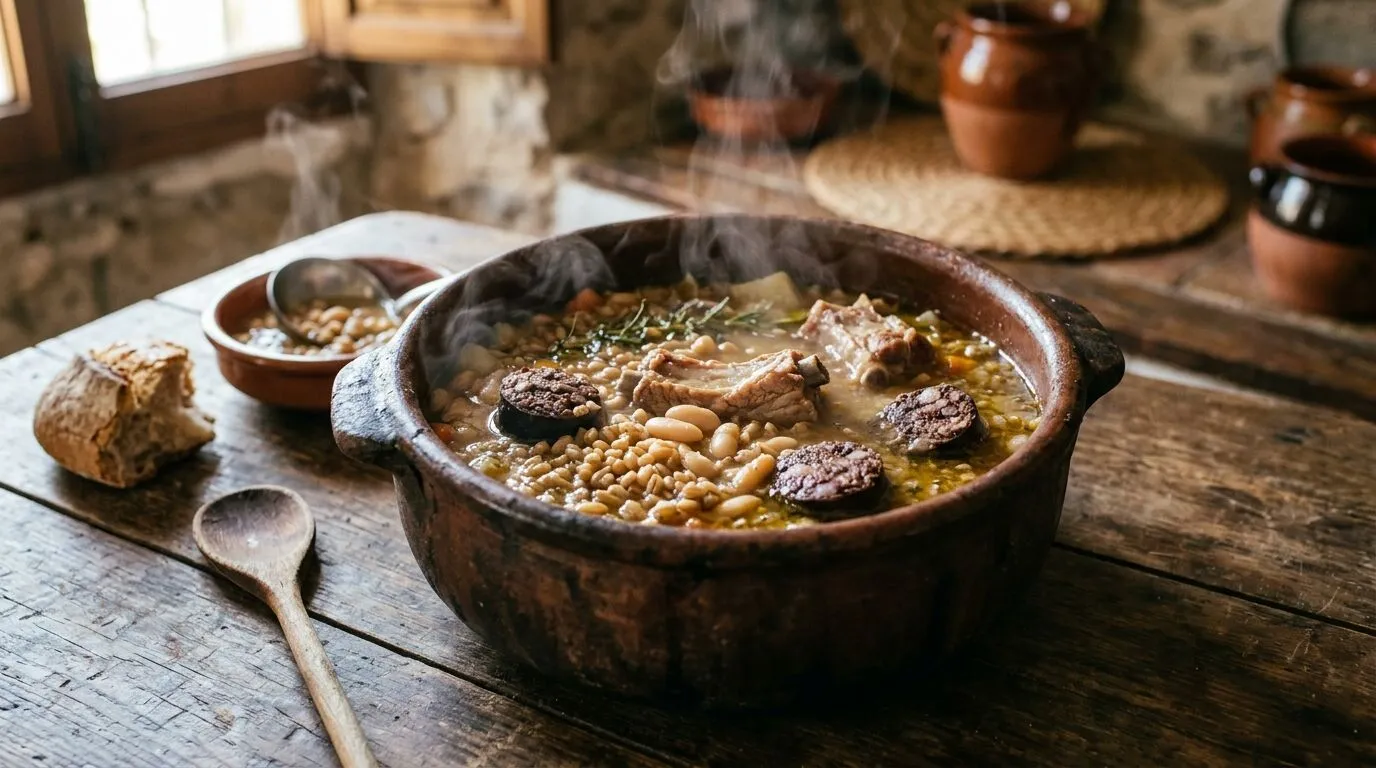

Blat picat (olleta de blat)
Yield: 8 servings
Are there 40 or more of you? We cook rice dishes live for groups
Large paella pans need less liquid. Sources
Ingredients
Wheat and pulses
- 500 gBlat picat (cracked wheat)
- 500 gWhite and pinto beans
Meat and sausage
- 250 gPork ribs
- 250 gPork belly
- 2 pcsBlanquets (white sausages)
- 2 pcsOnion black puddings (morcilla de cebolla)
Vegetables
- 3 pcsPotatoes
- to tasteSwiss chard
- 2 pcsSmall turnips
- 2 pcsParsnips
- to tastePumpkin
- 2 pcsCardoons
Sofrito and spices
- 1 pcsOnion
- 2 pcsTomatoes
- 2 pcsÑoras (dried sweet red peppers)
- 12 pcsSaffron threads
- to tasteCumin
- 3 pcsFennel sticks
- to tasteOlive oil
- to tasteSalt
Ingredients
Steps
- 1Twelve hours ahead, put the 500 g and the 500 g to soak together.720 min
- 2First thing in the morning, cook them over a low heat, with nothing added, for 2 hours. Pour that water away and cover them with cold water.120 min
- 3Fry the 2 pcs, stalks and seeds removed, then take them out. Crush them in the mortar with to taste.
- 4Soften the 1 pcs until translucent. Add the 250 g and the 250 g, then the 2 pcs and, last of all, the 2 pcs and the 2 pcs.
- 5Transfer everything to the pot (the *perol*), with the wheat and the beans. Add the well-cleaned vegetables (to taste, 2 pcs, 2 pcs, to taste and 2 pcs), the crushed ñora, the to taste, the 12 pcs, the 3 pcs, a good splash of to taste and salt.
- 6Keep cooking over a low heat until the stew is done; the recipe does not time this stage, so taste the wheat.
- 7Twenty minutes before the end, add the 3 pcs.20 min
- 8Adjust the salt and serve.
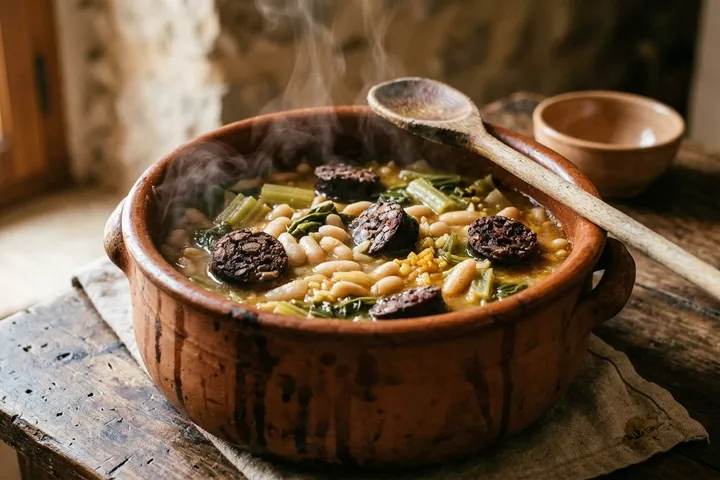
Blat picat is an olleta, a hearty pot stew, in which wheat takes the place that rice has in other stews. Valencia Bonita sums it up like this: wheat instead of rice, with meat and vegetables. This page follows the recipe published by the town councils of Benimantell, in the Marina Baixa, and of Tollos, in the Comtat; it is the same in both and we treat it as a single source. In the Guadalest valley wheat arrived before rice, as we explain in our history of Valencian cuisine.
What “picat” means and how you get it
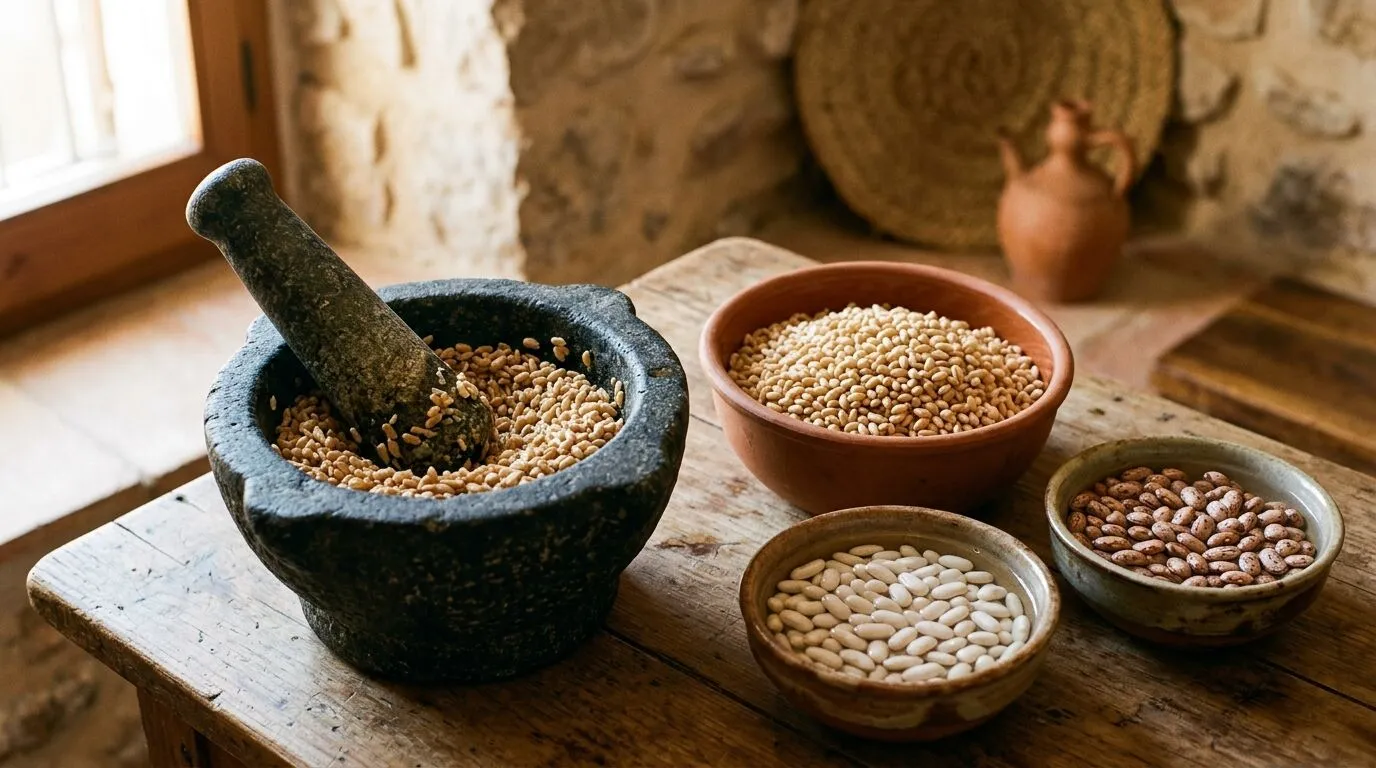
Picat means “chopped” or “cracked”: the wheat is soaked and crushed to loosen the skin of the grain. Valencia Bonita says it is left to soak the night before and cracked in a mortar to separate the grain from the husk. La Vall d’Alcalà describes the method in detail: soak the wheat, drain it, crush it with a little salt in the mortar until the outer layer comes away, blow off the skins and rinse it under the tap.
Benimantell’s recipe does not explain this: it simply asks for “blat picat”. And, according to Valencia Bonita, many shops now sell it already husked. If you find it that way, you save yourself that work and only need the mortar for the ñoras.
Soaking and first cooking: the parts you do not skip
The council method has two long stages. The first is the soak: wheat and beans together, twelve hours ahead. The second is a two-hour cook over a low heat with nothing added, just the two of them; then that water is thrown away and they are covered with cold water.
From there the stew begins. Benimantell does not time the final stretch: it only says the potatoes go in twenty minutes before the end. Comarcarural, which uses less wheat, speaks of no less than three hours in all, and La Vall d’Alcalà of “several hours”. The three hours of cooking marked on this page come from that mix: Benimantell’s two plus the stretch for the stew, with Comarcarural’s minimum as a reference. Take them as a floor, not a clock: what matters is that the wheat is tender and the stew thick. La Vall d’Alcalà gives the sign: the grain gradually opens up.
The ñoras, the vegetables and the cumin
The sofrito follows an order: onion until translucent, then the meat, then the tomato and finally the sausages. The ñoras (dried sweet red peppers) go separately: they are fried with the stalks and seeds removed, taken out and crushed with salt in the mortar before being added to the pot.
The vegetables are chard, turnip, parsnip, pumpkin and cardoon, and the potatoes go in at the end. Together with the ribs and belly, the onion black puddings and the blanquets, they make a broth with body. The saffron, fennel and cumin do the rest.
A note on the cumin: the council recipe writes “a handful of cumin seeds”, an odd amount next to twelve saffron threads. We do not copy it. Add it little by little, tasting, and let the aroma of the saffron and fennel stay in charge.
Other versions and other names
Not all wheat olletas are the same. These are the ones we were able to open:
| Source | Wheat | Pulse | Meat and vegetables | Time |
|---|---|---|---|---|
| Benimantell and Tollos (this page) | ½ kg | ½ kg of beans | Ribs, belly, black pudding, blanquets, chard, turnips, parsnips, pumpkin, cardoons | 2 h beforehand + stew |
| La Vall d’Alcalà | ½ kg | 250 g of chickpeas | Ham bone, pig’s trotter, cabbage, cardoon, turnips | “Several hours” |
| Comarcarural | 250 g | 100 g of chickpeas | Pork, pork fat, snails, potato, chard, pencas | No less than 3 h |
In Villena and some towns of the Alto Vinalopó there is the “triguico” or “triguico picao”. Villena’s tourist office presents it as a star dish and makes it with wheat, pork, pencas, red beans and turnips, and Valencia Bonita notes that many people consider it similar but different. In Cocentaina cracked wheat is called “mentirons”, and in Murcia there is a “Murcian wheat”. They are not exact synonyms and we have not mixed them up.
If you would like to see it in its home setting, Benimantell devotes a week in November to the olleta de blat, and Villalonga has its food fair with a blat picat competition. If you are after another olleta, there is the olleta de músic, and if you prefer a stew with torta, the Alicante gazpachos.
Taking it to the table
It is a hearty stew, served hot. A useful warning if you are cooking for a group: the wheat contains gluten; you will find the full list in the 14 allergens. If there are lots of you, we bring the kitchen and bar to your fiestas, set-up included.
History and variations
An olleta (a hearty pot stew) with wheat where other stews use rice. The Ajuntament de Benimantell says the Guadalest valley always had an ancestral cereal, wheat, and that when rice arrived a variant was made that replaced it. This recipe is published by Benimantell and Tollos.
la Vall d’Alcalà: La Vall d’Alcalà makes it with wheat, chickpeas, cabbage, a ham bone and pig’s trotter. Sources
Villena: In Villena, the “triguico picao” is stewed with wheat, pork, pencas (vegetable stalks), red beans and turnips. Villena’s tourist office gives no quantities. Sources
Tips
Soak the wheat and the beans together, twelve hours before you start cooking. Sources
Add the potatoes twenty minutes before the end, not earlier. Sources
If you do not want to crack the wheat yourself, buy blat picat already cracked and husked: many shops sell it that way today. Sources
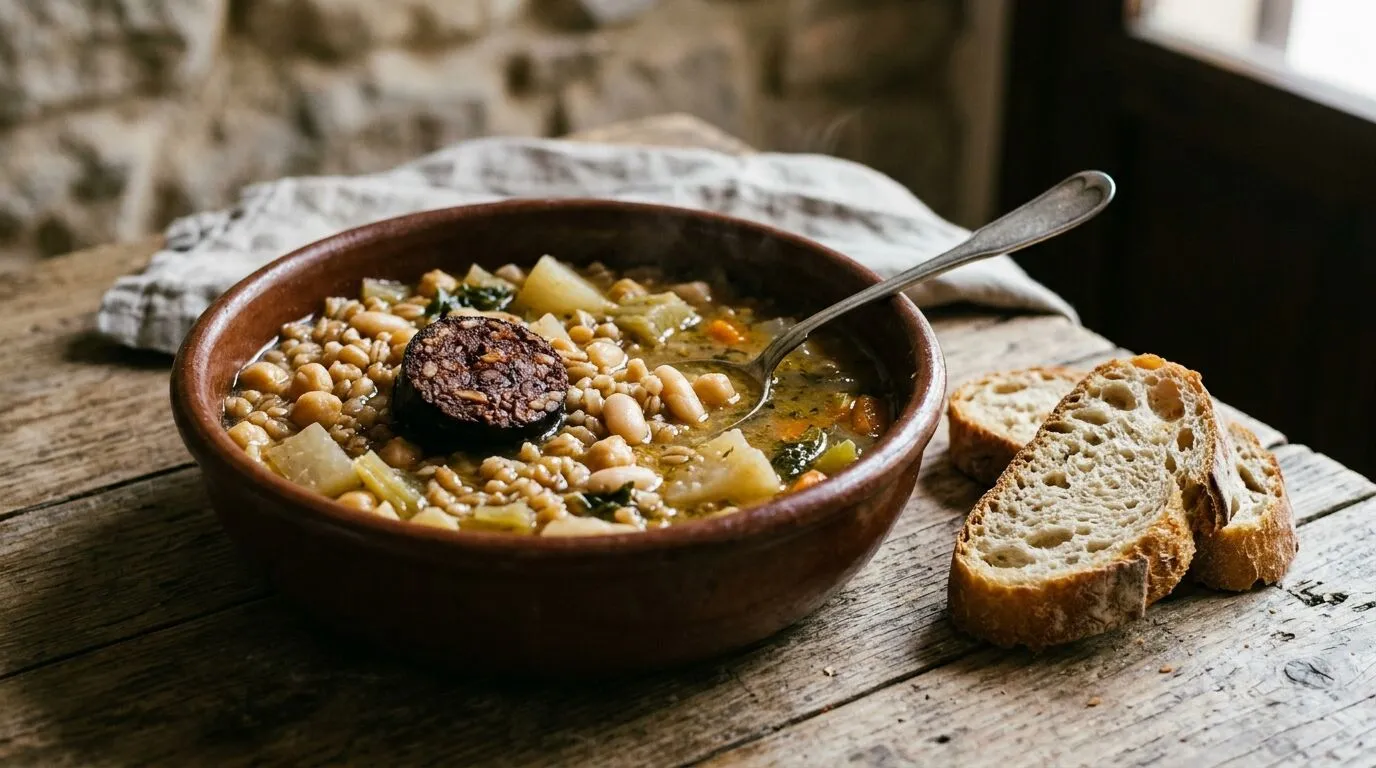
Blat picat (olleta de blat)
Frequently asked questions
What goes into olleta de blat?
According to Benimantell town council, for eight people: blat picat, white and pinto beans, pork ribs, belly, blanquets and onion black puddings, potatoes, chard, turnips, parsnips, pumpkin, cardoons, onion, tomato, ñoras, saffron, cumin and fennel. Other versions swap the beans for chickpeas and add cabbage, like the one from La Vall d’Alcalà.
What does blat mean in Valencian?
Blat is wheat, and blat picat is cracked wheat: the grain is soaked and crushed to loosen its skin before stewing. Valencia Bonita presents it as the star of an olleta made with wheat instead of rice.
Do you have to crack the wheat in a mortar?
Not necessarily. Valencia Bonita notes that many shops now sell it already husked. If you crack it yourself, La Vall d’Alcalà explains the method: soaked, drained wheat crushed in the mortar with a little salt until it loosens its outer layer, then the skins blown away.
How long does olleta de blat take?
You need to allow for the overnight soak, about twelve hours. Benimantell cooks the wheat and beans alone for two hours and then the stew, without giving a total. The three hours on this page take as their minimum the time Comarcarural gives for its version; La Vall d’Alcalà speaks of several hours.
Sources
- Olleta de Blat (Ajuntament de Benimantell; identical to the one published by Tollos town council)
- Gastronomic Week of the “Olleta de Blat” (Ajuntament de Benimantell)
- Olleta de blat (Tollos town council; same recipe as Benimantell’s)
- Blat picat (La Vall d’Alcalà town council, 2017)
- Blat picat, an inland Valencian olleta (Valencia Bonita, February 2025)
- Gastronomy of Villena (Villena Tourist Office)
- Blat picat (Comarcarural, collection of pot stews and potages)
Recipes
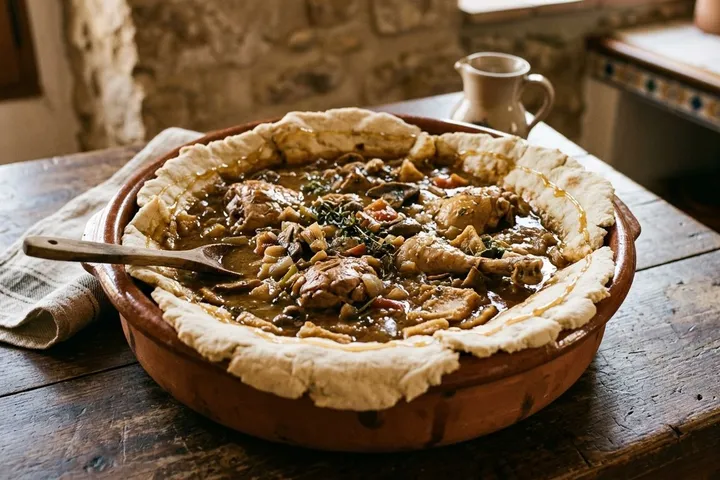
Alicante gazpachos (gaspatxos)
Alicante gazpachos are a hot stew of rabbit and chicken thickened with torta crumbs, served on unleavened torta with honey on the uncovered edges.
Total time: 120 min
Olleta de músic
Olleta de músic is Alcoy’s bean pot: Villena beans, pencas, turnip, pork ribs, offal and onion black pudding, cooked slowly, with no rice and no pumpkin.
Total time: 810 min