
Alicante gazpachos (gaspatxos)
Yield: 4 servings
Are there 40 or more of you? We cook rice dishes live for groups
Large paella pans need less liquid. Sources
Ingredients
Stew
- 0.5 pcsRabbit
- 0.5 pcsFree-range chicken
- 1 pcsLarge onion
- 1 pcsLarge tomato, grated
- 1.5 lWater or meat stock
- 250 gGazpacho torta crumbs
- to tasteSnails
- to tastePebrella (mountain herb)
- to tasteExtra virgin olive oil
- to tasteSalt
- to tastePepper
To serve
- 4 pcsUnleavened tortas (tortas cenceñas)
- to tasteHoney
Ingredients
Steps
- 1Season the jointed 0.5 pcs and 0.5 pcs with to taste and to taste, then brown them in a frying pan with to taste until well coloured on the outside. Set aside.
- 2In a large pot, soften the 1 pcs until translucent. Add the 1 pcs and let it reduce for a few minutes.
- 3Return the meat to the pot together with the to taste and the to taste, and stir everything over the heat for a few minutes.
- 4Cover with the 1.5 l, adjust the salt and pepper, and simmer over a medium heat for about 30 minutes, until the broth has reduced.30 min
- 5Add the broken-up 250 g and carry on for another 20 to 30 minutes, stirring often, until the stew is thick and even.
- 6Warm the whole 4 pcs, in the oven or in a frying pan, until they soften.
- 7Spoon the gazpacho over the tortas, leaving the edges uncovered.
- 8Brush the edges with to taste for a sweet contrast.
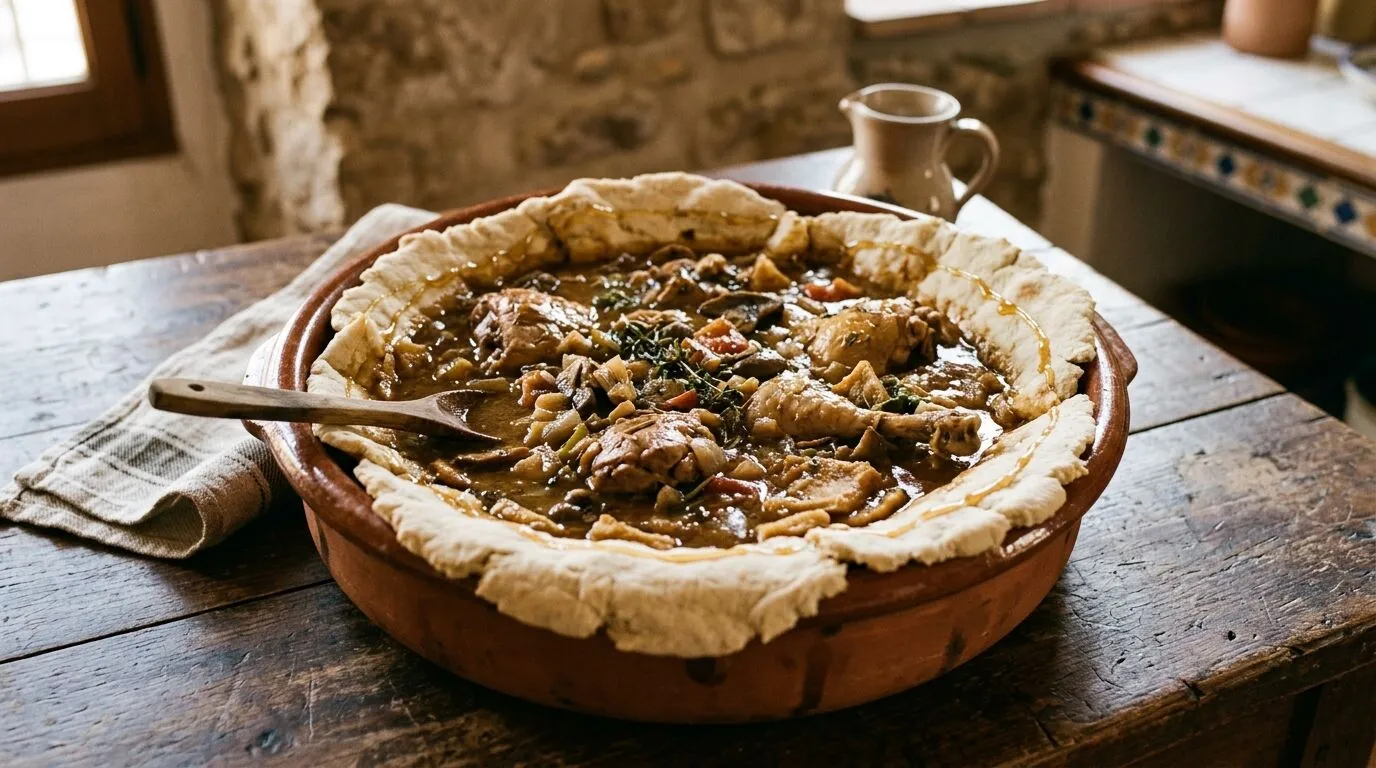
Alicante gazpachos have nothing to do with the cold summer soup. They are a thick, hot meat stew eaten over a disc of unleavened bread. El Español is clear about it: there is no raw tomato or cucumber; the tomato is grated and cooked into the sofrito. Our history of Valencian cuisine shows where this inland dish fits in.
Where this recipe comes from, and what to search for
If you search for “gazpacho” you will mostly find recipes from La Mancha. Wikipedia places this torta dish in La Mancha and the south-east, including parts of the Valencian Community, and lists Castalla among its Valencian versions. Here we follow the Castalla recipe circulated by Turisme Comunitat Valenciana and published by El Español in April 2026, because it is the one that gives quantities. Escapada Rural describes the dish as very popular in Pinoso and Castalla; where it was born, no source says, and neither do we.
The torta: plate and spoon
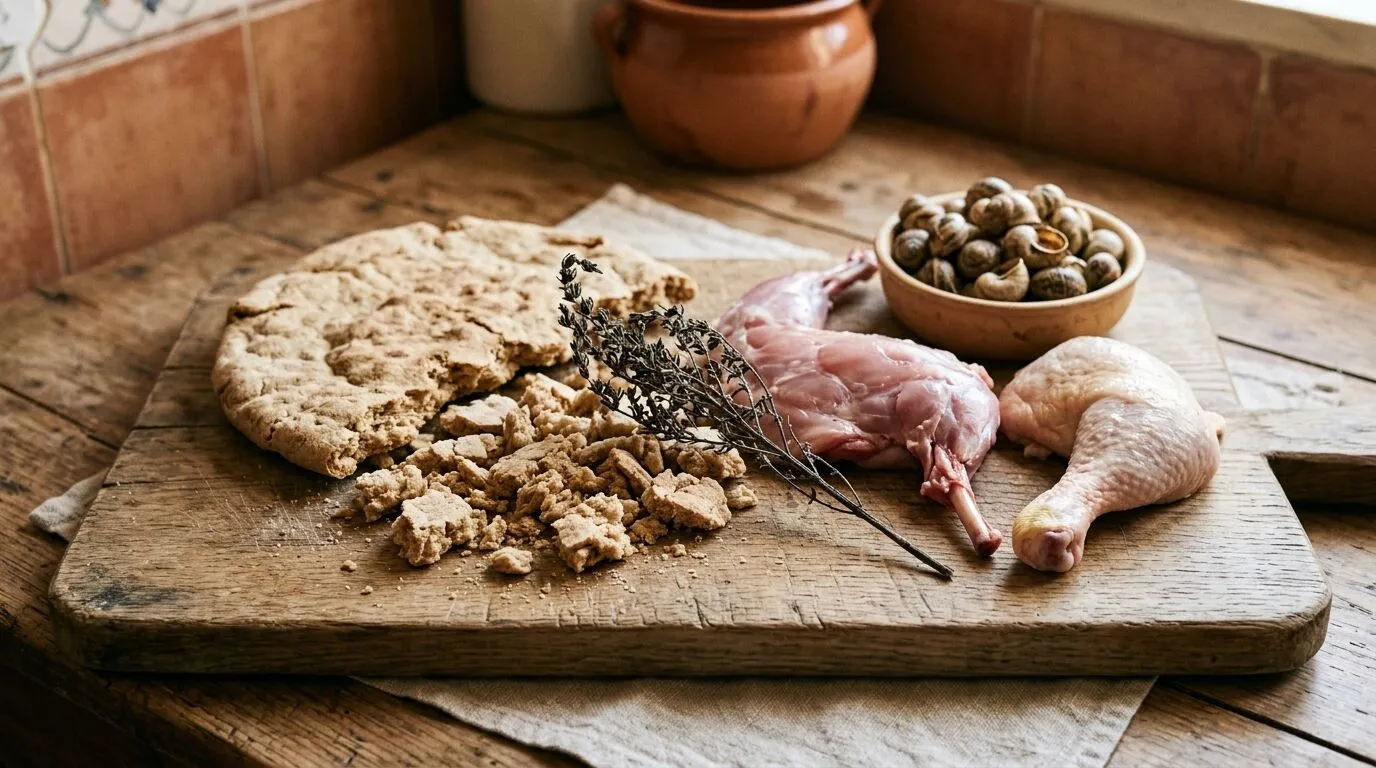
The torta is an unleavened bread of wheat flour, water and salt. Escapada Rural says it is torn apart by hand while still hot and that it comes out best from a wood-fired oven. In this recipe it is used in two ways: crumbled into the stew to thicken it, and whole underneath as a bed. Tradition calls for one big torta in the middle of the table to share; the Castalla recipe uses four tortas for four people, and both ways work.
A cook’s warning: none of the sources we could open gives the proportion of flour to water in the dough, and we are not going to invent it. That is why the torta appears here as an ingredient you buy. Wikipedia says that in La Roda it is made commercially under the name “torta cenceña”, which is the one the recipe asks for.
Sofrito, pebrella and snails
The local cooks quoted by El Español say the secret lies in a first sofrito of meat with tomato, onion and oil, and in stirring non-stop once the crumbs go in so the dough does not stick. That sofrito is the base of the broth: the stew simmers for about 30 minutes over a medium heat until it reduces, then another 20 to 30 with the crumbs. In all, it takes about two hours.
Pebrella is the herb in charge. Villena’s tourist office places it in the thyme family and Escapada Rural speaks of a strong-flavoured mountain plant. The recipe asks for it “to taste” with no quantity; with a flavour like that, start with a little and taste the broth before adding more. The snails have no quantity in the source either, nor any instructions for preparing them, so that decision is yours.
How to serve it, and what to do with the leftovers
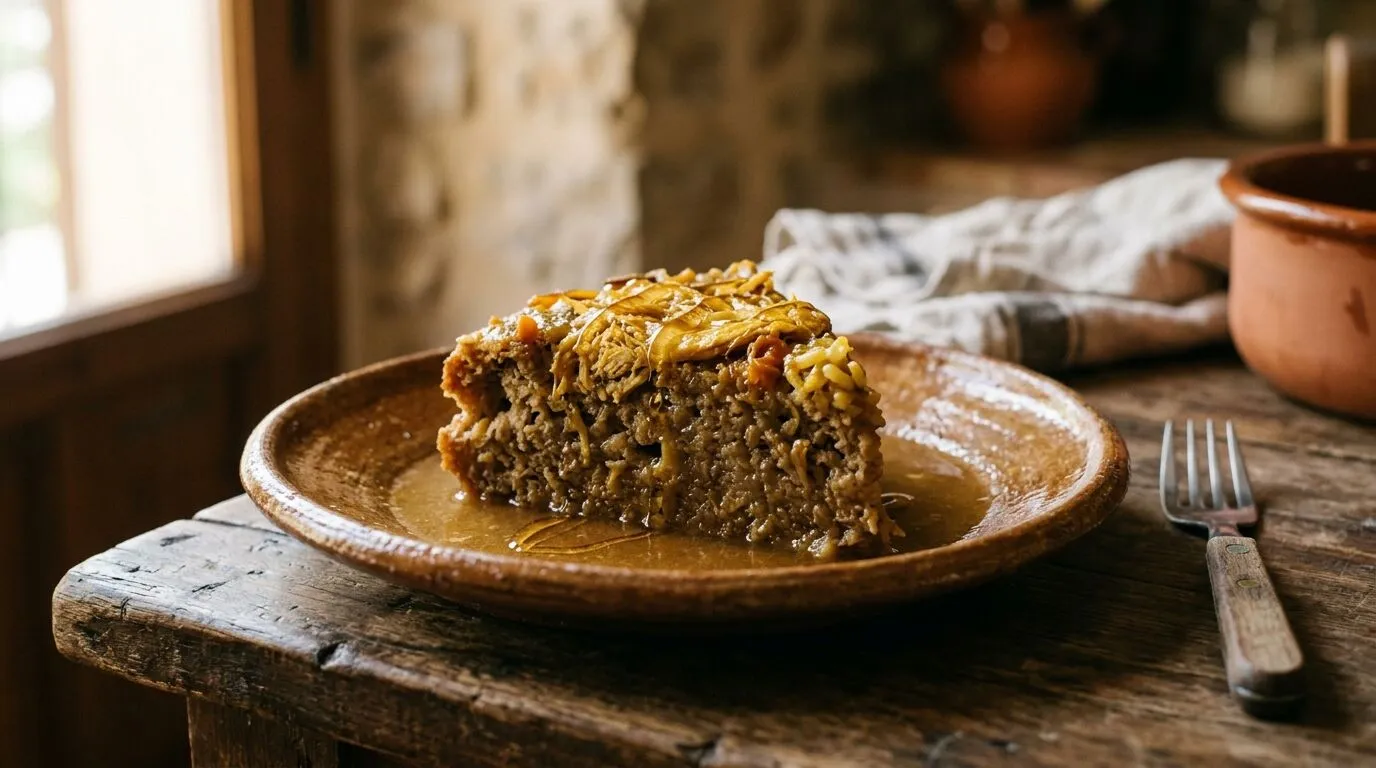
Warm the tortas whole, pour the gazpacho over them and leave the edges uncovered. The edges get honey, and that gives the contrast between the savoury stew and the sweet torta. Soaked torta left over is not thrown away: it is eaten as a dessert with honey, according to El Español and Escapada Rural.
If you are cooking for a group, remember the allergens: the torta contains gluten and snails are molluscs; you will find the full list in the 14 allergens.
Mistakes you can taste
- Crumbs left unstirred. The dough sticks to the bottom and the stew turns out lumpy. Stir often until it is thick and even.
- Cold tortas. The recipe asks for them warm, until they soften, before the stew is poured over.
- Covering the edges. The edges are left free for the honey; cover them and you lose the sweet-and-savoury contrast.
- Taking the stew off in a hurry. After the crumbs go in there are still 20 to 30 minutes on the heat: do not serve it until it is thick.
Variations and relatives
According to Villena’s tourist office, the gazpacho there is made with chicken, rabbit, saffron milk-cap mushrooms (níscalos), gazpacho crackers, snails and pebrella, and served with allioli; it gives no quantities. The rice with rabbit and snails also comes from the interior, with the same pairing of meats. And if you fancy another hearty stew, there is the blat picat.
If there are lots of you at the table
It is a dish for sharing, designed around one big torta in the middle. If there are lots of you, we set up a kitchen and bar for your fiesta, for big groups.
History and variations
A hot stew from inland Alicante, above all from Castalla and Pinoso. Escapada Rural describes it as a humble dish meant to see people through the cold days. The recipe on this page is the Castalla one circulated by Turisme Comunitat Valenciana.
Villena: In Villena it is made with chicken, rabbit, saffron milk-cap mushrooms (níscalos), gazpacho crackers, snails and pebrella, and served with allioli. Villena’s tourist office gives no quantities. Sources
Alicante: According to Escapada Rural, some cooks add snails or serve the torta with allioli or honey. Sources
Alicante: El Español accepts seasonal game (partridge, duck, wood pigeon) and mushrooms. Sources
Tips
Keep stirring when you add the torta crumbs: it is what stops the dough sticking to the bottom of the pot. Sources
Warm the tortas whole and pour the stew into the centre: the edges stay free for the honey. Sources
Crumble the torta by hand before adding it to the stew. Sources
Alicante gazpachos (gaspatxos)
Frequently asked questions
What is gazpacho torta, and can you buy it ready-made?
It is a round, flat, unleavened bread made from wheat flour, water and salt, according to Escapada Rural. It is crumbled into the stew and also serves as a bed for it. You can buy it: Wikipedia says that in La Roda it is made commercially under the name “torta cenceña”, and the Castalla recipe calls for tortas cenceñas.
What is pebrella?
It is a strongly flavoured mountain herb. Villena’s tourist office places it in the thyme family, and Escapada Rural considers it the most characteristic touch of these gazpachos. The Castalla recipe asks for it “to taste” and suggests no substitute, so we do not treat it as interchangeable.
What do you serve with Alicante gazpachos?
A hot torta underneath: they are warmed whole, the stew is poured into the centre and the edges are brushed with honey. Escapada Rural adds that some people serve the torta with allioli. Any soaked torta left over is eaten as a dessert, also with honey.
How long do gazpachos take to cook?
About two hours in total for four portions, according to the Castalla recipe in El Español. You brown the meat and make the sofrito, the stew simmers for about 30 minutes over a medium heat and, once the torta crumbs go in, another 20 to 30 minutes, stirring until it thickens.
Sources
Glossary terms
Recipes
Mortar allioli
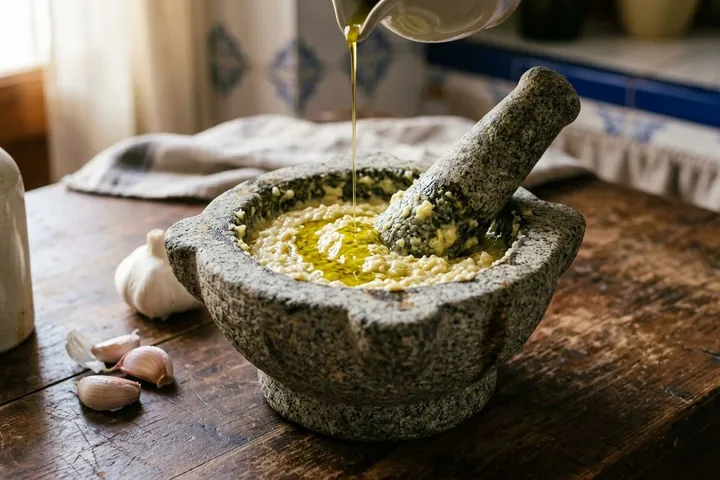
Traditional allioli is made in a mortar with just garlic, olive oil and salt. No egg, plenty of patience: the classic partner for arroz a banda and fideuà.
Total time: 20 min
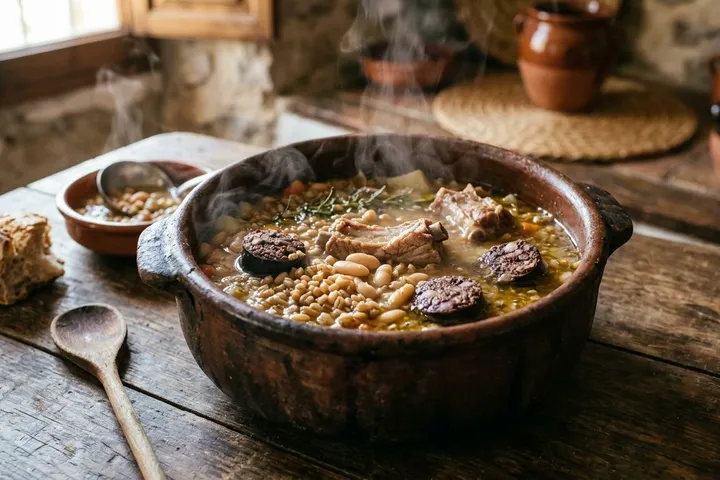
Blat picat (olleta de blat)
Blat picat is a hearty olleta made with cracked wheat, beans, pork and vegetables instead of rice: soak the night before, then cook long and slow.
Total time: 900 min
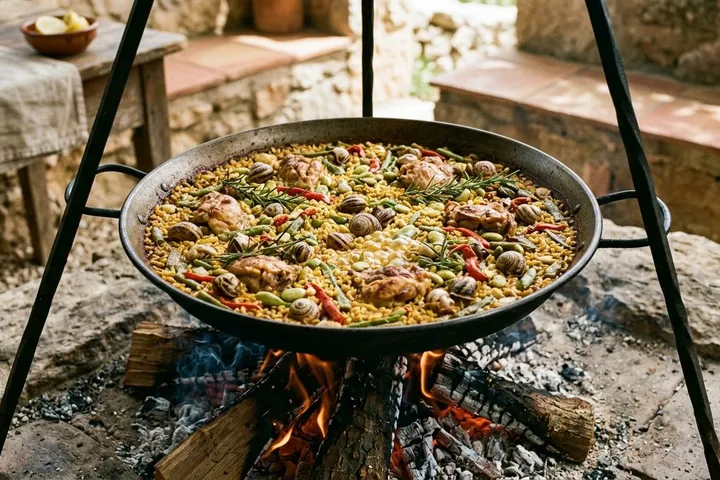
Rice with rabbit and snails
Rice with rabbit and snails is a countryside rice from inland Alicante: fried rabbit, purged snails and a fire of vine prunings, as in Monóvar.
Total time: 60 min