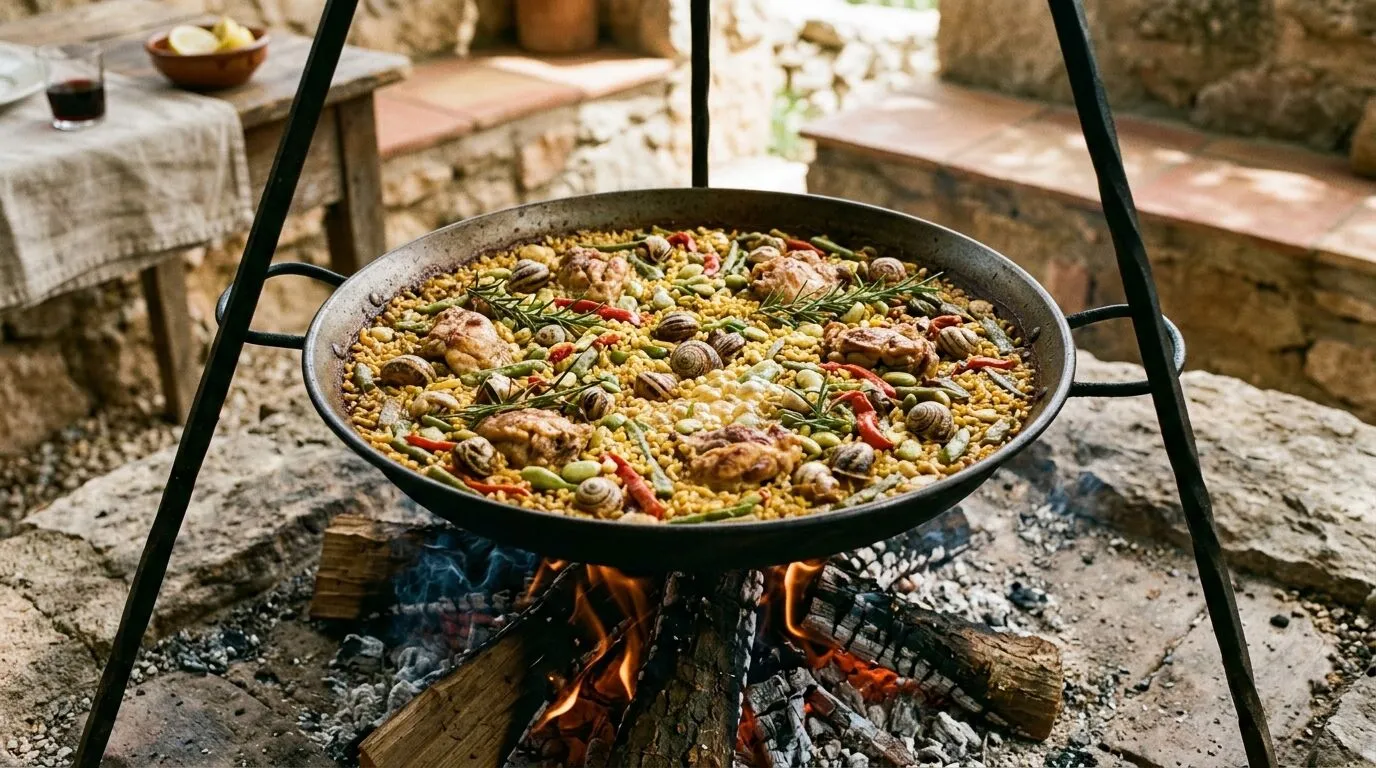

Rice with rabbit and snails
Yield: 4 servings
Suggested paella pans: 1 × 40 cm Glossary
Are there 40 or more of you? We cook rice dishes live for groups
Large paella pans need less liquid. Sources
Ingredients
Rice
- 400 gRice
- to tasteWater
- to tasteSaffron threads
- to tasteSalt
conejo y caracoles
- 1.5 kgWhole rabbit
- 24 pcsPurged snails
- 1 pcsRed pepper
- 1 pcsRipe tomato
- 2 clovesGarlic
- to tasteParsley
- pinchSugar
- to tasteOlive oil
- to tasteLemon
Ingredients
Steps
- 1Wash the 1.5 kg, joint it and fry it in to taste until browned. Take it out.
- 2Deseed the 1 pcs, cut it into strips and fry it in the same oil. Set aside.
- 3Add the peeled, chopped 1 pcs, with pinch to soften the acidity, and fry it down.
- 4Chop the 2 cloves and add it with the chopped to taste, the 24 pcs and the reserved pepper. Fry everything well.
- 5Return the rabbit to the paella pan, turn it over and cover with to taste. Season with to taste and leave to cook for about 30 minutes.30 min
- 6Add the 400 g and a few threads of to taste and cook for 25 minutes more.25 min
- 7Before serving, squeeze to taste over the top and let it rest for 5 minutes.5 min
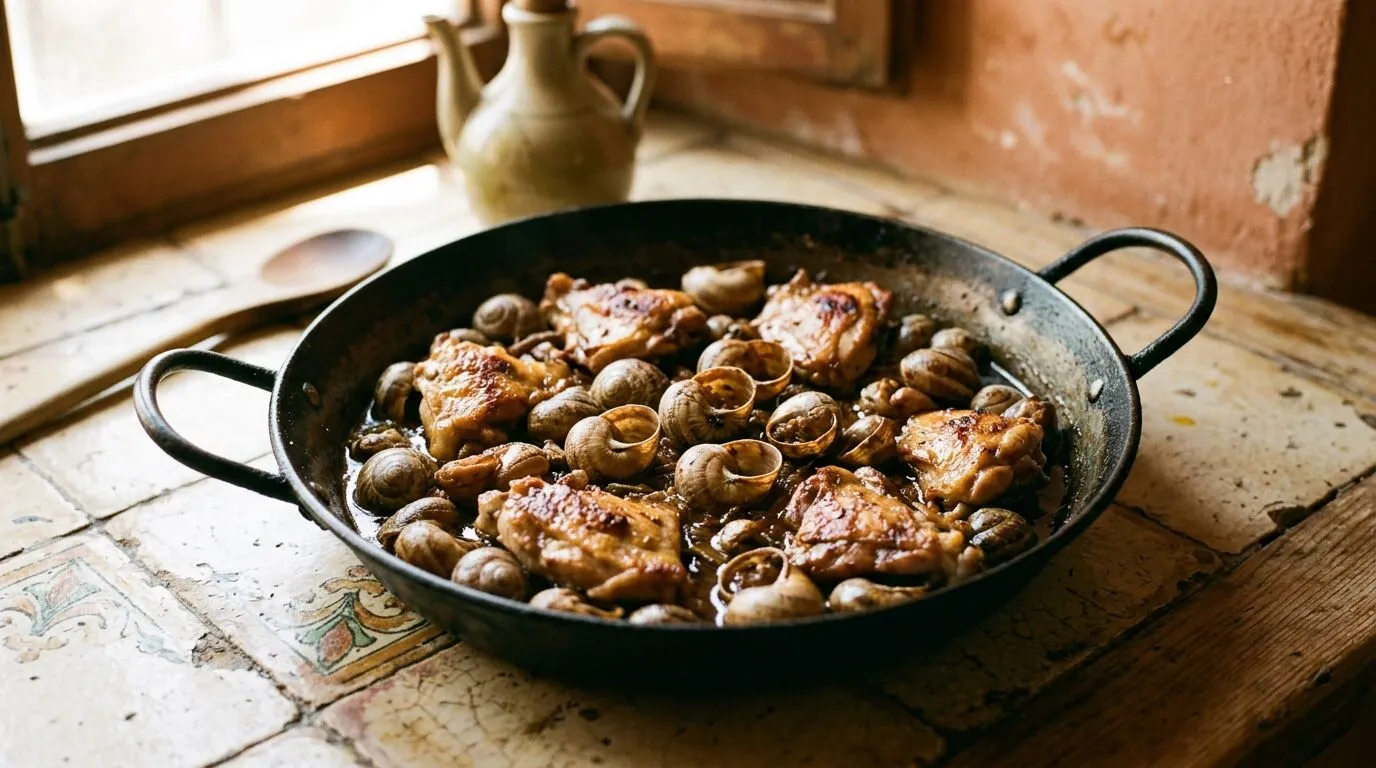
A countryside rice from the Vinalopó
Rice with rabbit and snails is a dish from inland Alicante, from the villages and the wood fire, and it has almost never been written down with measurements.
The Monóvar town council website lists it among the town’s typical dishes: “rice with rabbit and snails made over a fire of vine prunings”, with no recipe. The restaurant Casa Elías, in Xinorlet (Monóvar), cooks it over vine prunings, according to the 5 Barricas blog of Valencia Plaza (2021). Aspe, on the other hand, talks on its website about “rice and rabbit”, served all year round and above all on the Último Jueves (Last Thursday), and without snails: it is a different rice.
The quantities come from Murcia
No town council website publishes the recipe with measurements. The quantities on this page are those of Turespaña, which publishes a recipe from the Region of Murcia: a rabbit of one and a half kilos, 400 g of rice and two dozen purged snails for four people. That recipe uses Calasparra rice, red pepper and a squeeze of lemon at the end; these are details from the Murcian recipe, which is why we mark them that way in the list. Take it as a technical reference for timings and proportions, not as the recipe of Monóvar or of any other town.
The fire is in charge
In Monóvar the dish is described as made “over a fire of vine prunings”, and the same website says that the town’s cooks prepare their dishes “over the fire of vine prunings”. At Casa Elías, 5 Barricas describes the glowing fires of vine branches, “pure gunpowder when it comes to drying the rice”, which demand a lot of technique from the cook. That is what sets this rice apart from a gas-cooked version: the fire is part of the recipe, and with a fire that burns like gunpowder you don’t walk away from the pan. For the grain there is bomba rice, and for the pan, the paella pan.
The method, step by step
The Turespaña recipe begins by frying the jointed rabbit and setting it aside; in the same oil the pepper strips are fried and set aside too. Then comes the peeled, chopped tomato, with a pinch of sugar to soften the acidity, and the garlic, parsley, snails and the reserved pepper are fried. With the sofrito done, the rabbit goes back into the pan, is turned over and covered with water, at two and a half cups for every cup of rice. It cooks for about 30 minutes; then the rice and a few threads of saffron go in, and another 25 minutes. The recipe states an hour and a half of cooking, counting the frying.
There is no stock made beforehand: the stock is made in the pan itself with the rabbit and the snails. Monóvar also lists, among its dishes, the gazpachos (a hot flatbread stew, not the cold soup) with rabbit and snails: the two meats go together in the town’s cooking. A gazpachos recipe with quantities, the one from Castalla, is in Alicante gaspatxos.
The snails: purged and clean
The Turespaña recipe asks for the snails “previously purged”. If you have never purged them, buy them already purged: purging is a trade of its own and these sources don’t explain it.
Typical mistakes
- Too much water. Turespaña gives two and a half cups for every cup of rice.
- Adding the rice while the rabbit is still tough. In the recipe, the rabbit cooks for 30 minutes before the rice goes in.
- Serving it without a rest. The recipe ends with lemon and 5 minutes off the heat.
Who to cook it for, and when
If you are cooking for many, see how much rice per person. If you like rabbit, there is another rice from the area: the arroz con costra (crusted rice); and if you want it as spoon food, the brothy rice with chicken and rabbit. And the broader reference for wood-fired rice, with its variations, is the Valencian paella.
If your village fiesta calls for rice cooked over a fire, we cook for local fiestas.
History and variations
It is a countryside rice from inland Alicante. The Monóvar town council website lists it among the typical dishes, “rice with rabbit and snails made over a fire of vine prunings”, alongside the *gazpachos* (a hot flatbread stew, not the cold soup) with the same meats. In Xinorlet, Casa Elías cooks it over vine prunings. For the context of wood-fired rice, see Valencian paella in the glossary.
Tips
The snails have to reach the paella pan already purged: the Turespaña recipe asks for them that way and doesn’t explain how to purge them. Sources
Cook the rabbit with the sofrito for about 30 minutes before adding the rice, and the rice for another 25: those are the times in the Turespaña recipe. Sources
At the end, a squeeze of lemon and 5 minutes of rest before serving. Sources
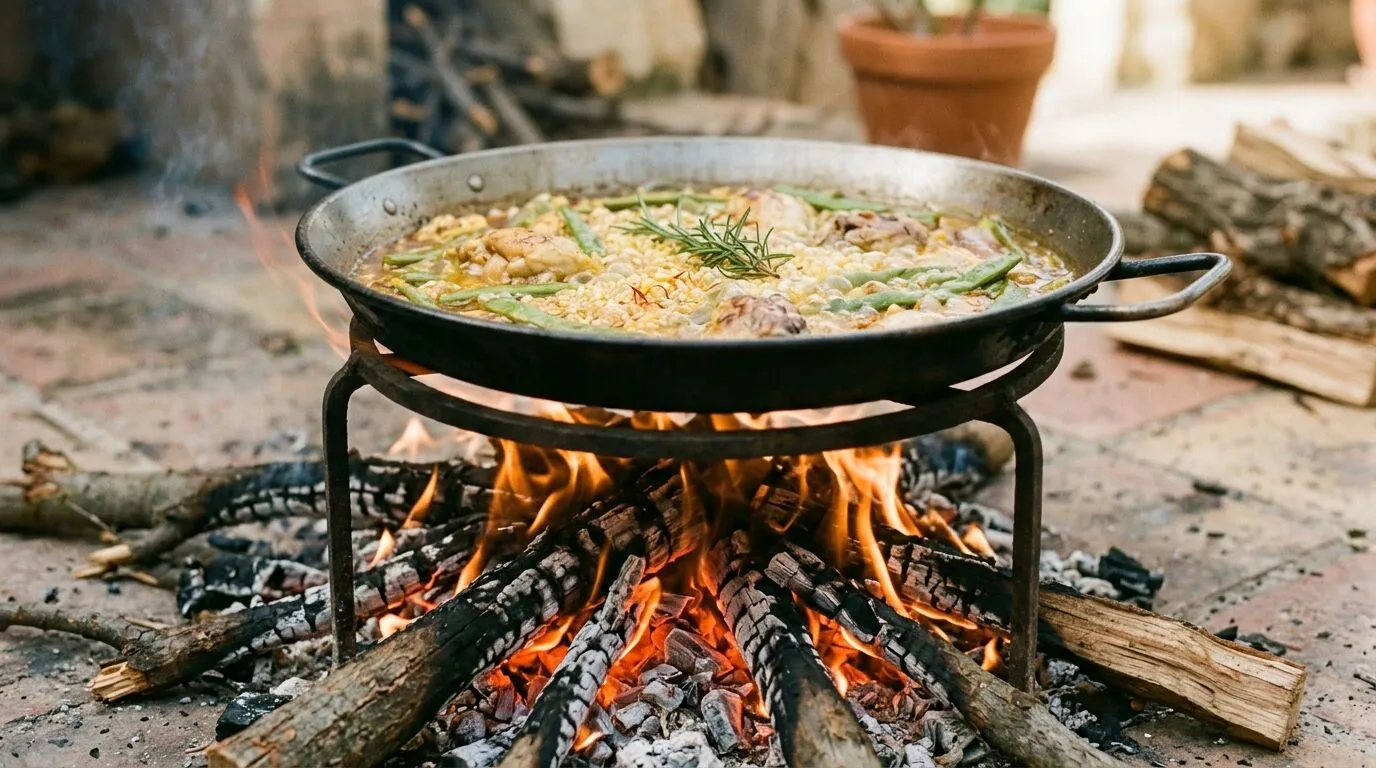
Rice with rabbit and snails
Frequently asked questions
How do you make rice with rabbit and snails?
You fry the jointed rabbit and set it aside, fry the pepper and add the tomato. The sofrito is made with garlic, parsley and the purged snails; the rabbit goes back in, it is covered with water and cooks for about 30 minutes. Then the rice and saffron go in for another 25 minutes, and it is finished with lemon and 5 minutes of rest. That is the method in the Turespaña recipe.
What goes into rabbit rice?
Rabbit, rice, tomato, garlic, oil, saffron, salt and water are the base. The Turespaña recipe, from the Region of Murcia, adds red pepper, parsley, purged snails and a squeeze of lemon at the end. In the Vinalopó, the Monóvar website gives only the name of the dish, with no list of ingredients: every home does its own.
How do you make rabbit rice like your gran’s?
There is no single recipe: every home has its own and almost none is written down with measurements. What shapes the result is well-browned rabbit, the tomato sofrito, the water in the right proportion and a steady fire. If someone gives you a family recipe, note down the proportion of water and the minutes, which are the details that tend to be missing.
Sources
Glossary terms
Recipes
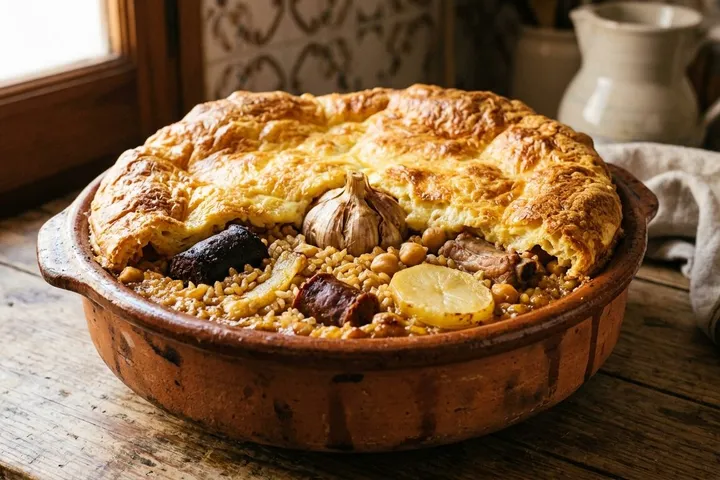
Arroz con costra (crusted rice)
Arroz con costra: a rabbit and sausage rice cooked for 8 minutes in the earthenware pot and finished with beaten egg in the oven or under a costrera.
Total time: 46 min
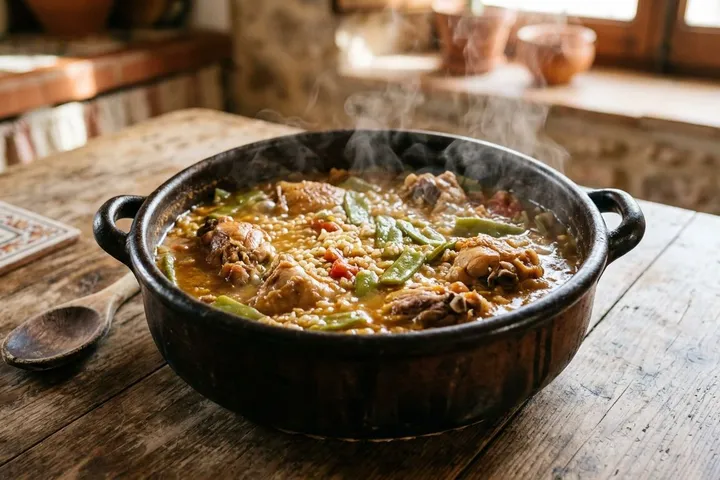
Brothy rice with chicken and rabbit (arroz caldoso)
Brothy chicken and rabbit rice is home-style spoon food: browned meat, flat green beans and garrofón, and rice cooked in four times its volume of water.
Total time: 47 min
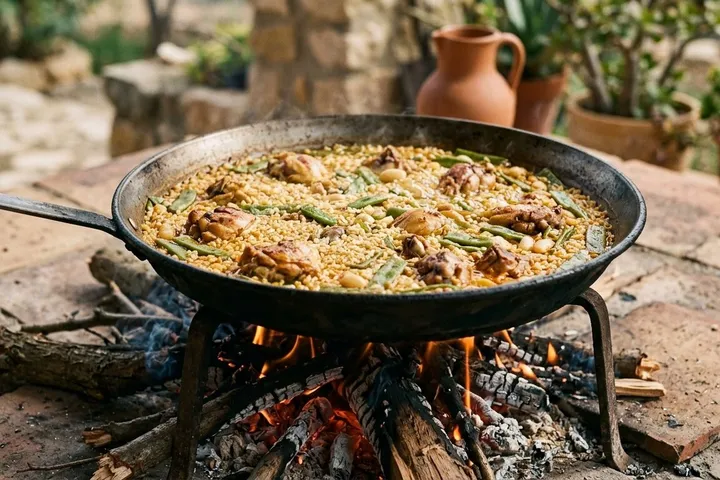
Valencian paella
Valencian paella with chicken, rabbit, flat green beans and garrofó for 4, using Turisme Comunitat Valenciana’s water-mark method and a final rest.
Total time: 60 min