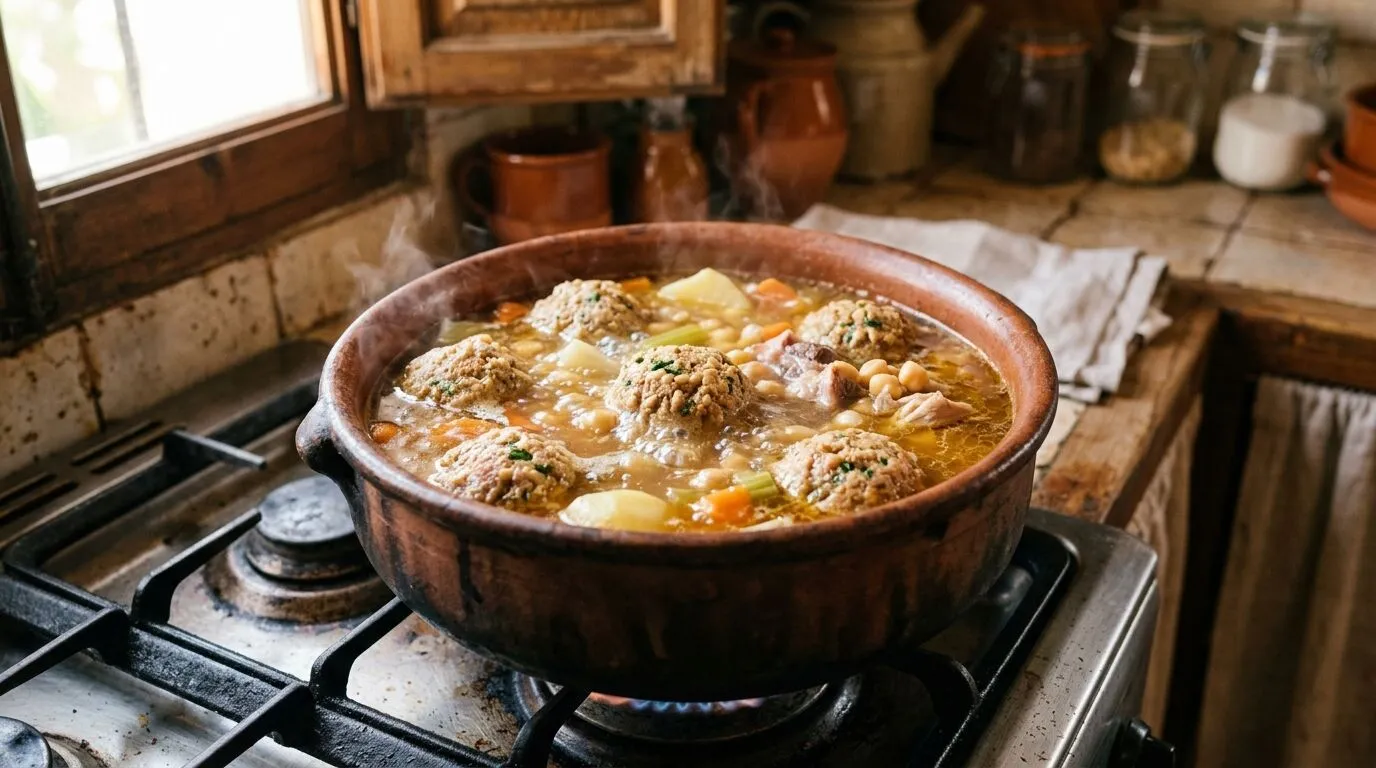

Elda rellenos
Yield: 8 pieces
Are there 40 or more of you? We cook rice dishes live for groups
Large paella pans need less liquid. Sources
Ingredients
Dough
- 500 gMinced lean pork
- 4 pcsLonganiza sausages
- 2 pcsBlancos
- 2 pcsEggs
- 250 gStale bread
- 2 tbspCocido broth (for the mixture)
- to tasteParsley
- 1 pcsLemon
- to tasteSalt
Cooking
- to tasteCocido broth (for cooking)
Ingredients
Steps
- 1Soak the crust of the 250 g and crumble the crumb separately.
- 2Beat the 2 pcs in a bowl.
- 3Add the 500 g, the crumbled 4 pcs, the crumbled 2 pcs, the chopped to taste, the 2 tbsp and the to taste. Add the well-squeezed crust and the crumb.
- 4Work it with your hands until everything is combined.
- 5Wet your hands in 1 pcs juice so the mixture does not stick, and shape the balls, fist-sized.
- 6Drop the rellenos into a large pot of boiling to taste and simmer them for about 1 hour.60 min
- 7Serve them hot with the cocido: the broth, the potatoes, the chickpeas and the meat.
What rellenos are
Rellenos (literally “fillings”) are balls of meat and bread that are simmered in the broth of the cocido stew and served with it. The recipe on this page is Consu Rico’s, who sent it to the portal No Eres de Elda Si No in September 2017 and says she cooks them “as my grandmother did”. It makes eight pieces, each the size of a fist. According to that same source, it is a typical dish of the Medio Vinalopó: Elda, Petrer, Monóvar, Novelda and Pinoso.
With the name, it is best to be careful. The Elda recipe writes fasiuras and faseguras. The form fasegures, ending in -es, is recorded by the blog La rosa del azafrán as the name used in Novelda; it does not appear in the normative Valencian dictionary, and that is why it is in italics. The same blog says that in Elche they call them pelotas or terongetes.
The mixture: meat, sausage and bread
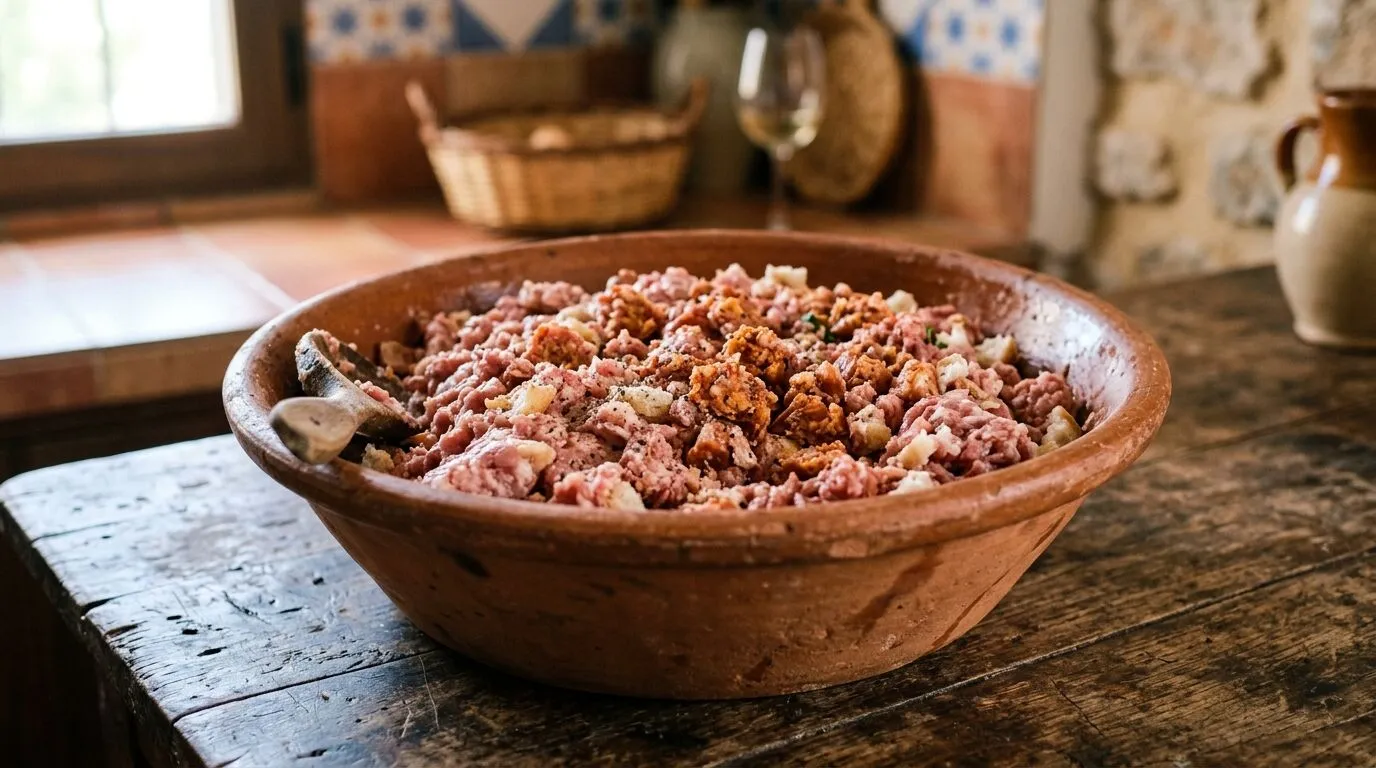
What defines the recipe is the mixture: minced lean pork, crumbled longaniza (a pork sausage), two eggs, parsley, a little of the cocido broth and stale bread. Every part of the bread is used: the crust is soaked and squeezed out well, and the crumb is crumbled separately. Both go in at the end, once everything else is mixed with the beaten eggs.
The list also includes “2 blancos”, which are added crumbled later, and the author does not say what they are. There are hints that it is a sausage: in her introduction she lists “magro de cerdo, longaniza, blanco, pan, huevo” (lean pork, longaniza, blanco, bread, egg), with the egg separate, and Convega’s recipe book, from the Vega Baja, asks for “una longaniza y un blanco picados” (a chopped longaniza and blanco) for its pelotas. A reader from Elda, on the other hand, writes “2 egg whites” in her version. We leave it with the source’s word until we can confirm it with someone from the area. The author adds that pine nuts are sometimes put in, though her recipe does not use them.
How to shape them and how long to cook them
Hands are wet with lemon juice so the mixture does not stick, and the balls are shaped to the size of a fist. They go into a large pot of boiling cocido broth and cook for about an hour. With a roomy pot the pieces are not squeezed against each other and cook evenly.
The hour comes from the base recipe. La rosa del azafrán gives about 30 minutes in two litres of broth, but it is another family recipe (lean pork and pork fat in equal parts, two-day-old bread, cinnamon and pepper) and has no weights, so we do not use it for the quantities. They are two recipes for the same dish, and it is best not to mix the timings of one with the weights of the other.
When they are eaten
The author puts it like this: it is traditional to eat them on 8 September, the day of the Virgen de la Salud, during Elda’s Fiestas Mayores, and also on Christmas Day. That September fiesta has its page in the Elda calendar. Elda’s Moors and Christians are a different fiesta, and the source does not associate rellenos with them. They are also made on any day of the year.
La rosa del azafrán speaks of Christmas or New Year and of Sundays for the rest of the year, and places the dish in the Bajo and Medio Vinalopó. Only the base recipe names Elda; we have not found a source to link it with Petrer, Monóvar or Pinoso beyond the list that same recipe gives.
What they are served with
They go with the traditional cocido, along with the broth, the potatoes, the chickpeas and the meat. It is a big-pot dish, eaten with a spoon. If you are looking for other pelotas from the province, the cocido con pelotas of the Vega Baja and the arroz rossejat have their own, with recipes different from this one.
If you are making a cocido for a crowd at Christmas and would rather forget about the kitchen, we cook for company Christmas lunches and dinners.
History and variations
A typical dish of the Medio Vinalopó (Elda, Petrer, Monóvar, Novelda and Pinoso), says the base recipe, known as rellenos, pelotas, fasiuras or faseguras. In Elda they are eaten on 8 September, the feast of the Virgen de la Salud, and at Christmas, though made on any day of the year.
el Vinalopó Mitjà: La rosa del azafrán gives a family recipe with equal parts lean pork and pork fat, two-day-old bread, one egg, cinnamon, pepper, lemon zest and optional poultry blood, about 30 minutes in cocido broth; in Novelda, it says, they are called fasegures. Sources
Elda: A reader from Elda suggests minced veal and pork, egg whites, grated lemon zest, garlic, parsley, clove and blood if you can get it. Sources
Tips
Wet your hands in lemon juice when shaping the balls so the mixture does not stick. Sources
Drop them in when the cocido broth is already boiling and leave them for about an hour; the recipe from La rosa del azafrán, with other proportions, leaves them about 30 minutes. Sources
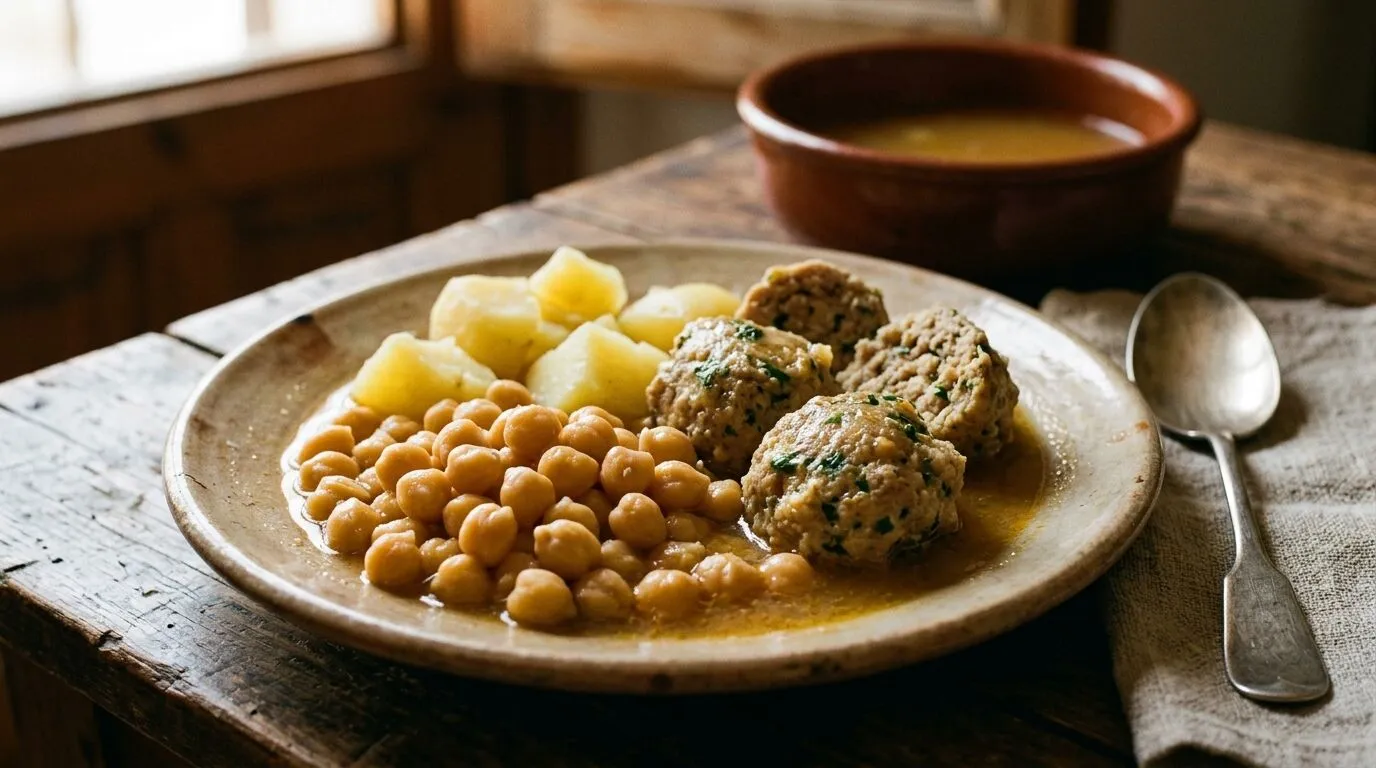
Elda rellenos
Frequently asked questions
When are rellenos eaten in Elda?
According to the base recipe, they are traditionally eaten on 8 September, the day of the Virgen de la Salud, during Elda’s Fiestas Mayores, and also on Christmas Day. The same author makes clear that they can be made on any day of the year. Elda’s Moors and Christians are a different fiesta, and the source does not link them with this dish.
How long do the rellenos simmer in the cocido broth?
The base recipe from Elda simmers them for about an hour in boiling cocido broth. The blog La rosa del azafrán, with a family recipe of lean pork and pork fat in equal parts, leaves them about 30 minutes. If you use the quantities on this page, stick to its author’s hour and do not mix the timings of one recipe with the weights of the other.
What is the difference between rellenos, pelotas and fasegures?
They are names for the same dish, not different recipes. The base recipe from Elda says rellenos, pelotas, fasiuras and faseguras. La rosa del azafrán says that in Novelda they are called fasegures and in Elche pelotas or terongetes, and that “fasegura” possibly comes from the Latin “farcire”, to stuff. The form “fasegures” does not appear in the normative Valencian dictionary.
Are they made with blood?
The base recipe from Elda does not use blood. La rosa del azafrán offers it as an option, poultry blood, to give colour, and warns that it is not easy to find at butchers; if there is none, soak the bread in a glass of broth. A reader of the Elda recipe also includes it in her version, if you can get it.
Sources
- The pelotas (rellenos, fasiuras or faseguras), typical dish of Elda’s patron saint fiestas (Consu Rico, No Eres de Elda Si No, 3 September 2017)
- Rellenos, faseguras, terongetes or pelotas (La rosa del azafrán, Elvira Almodóvar, 15 November 2014)
- Vega Baja del Segura recipe book, recipe 5: cocido con pelotas (Convega)
Recipes
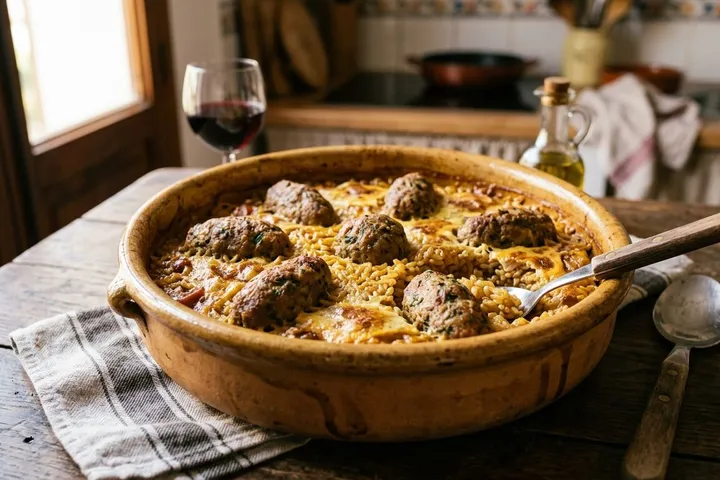
Sant Blai rossejat rice, Torrent style
A casserole rice baked in the oven with pork ribs, chickpeas and meatballs, the Sant Blai dish in Torrent. It isn’t the seafood rossejat, made with fish stock.
Total time: 65 min
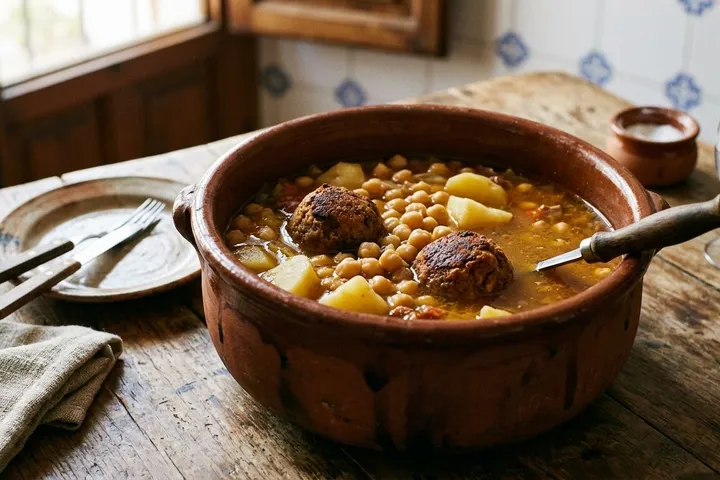
Cocido con pelotas
Winter stew from the Vega Baja: meat in cold water, soaked chickpeas, one potato and one or two pelotas per person, and the broth with a squeeze of lemon.
Total time: 1560 min
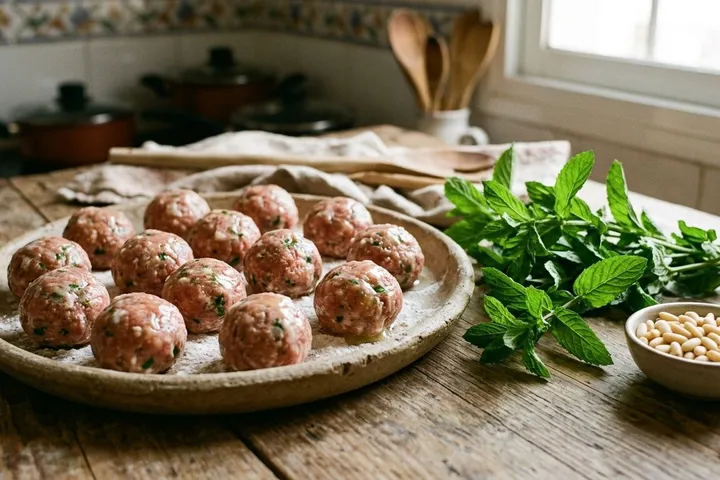
Pilotes de Nadal (Christmas meatballs)
Pork, bread, spearmint, cinnamon and pine nut meatballs, dipped in egg white and frozen, that end up in the cocido, a noodle soup or a brothy rice.
Total time: 25 min
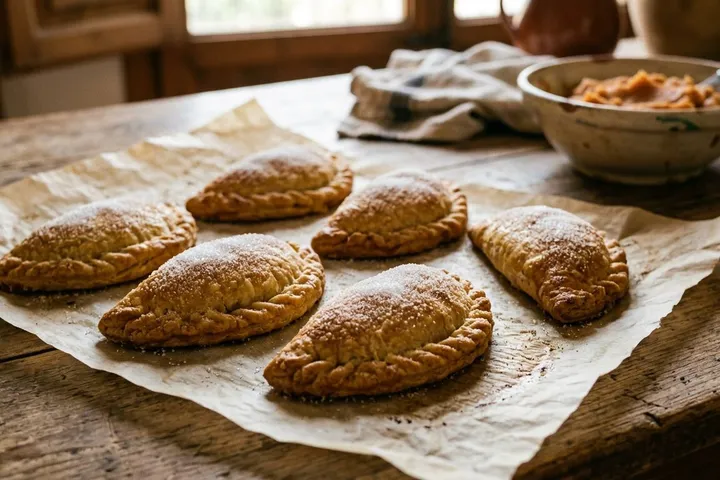
Sweet potato pastissets (pastissets de moniato)
Half-moon sweet potato pastries: a dough of spirit, oil and flour, a lime and cinnamon filling made the day before, baked until golden at the edges.
Total time: 765 min