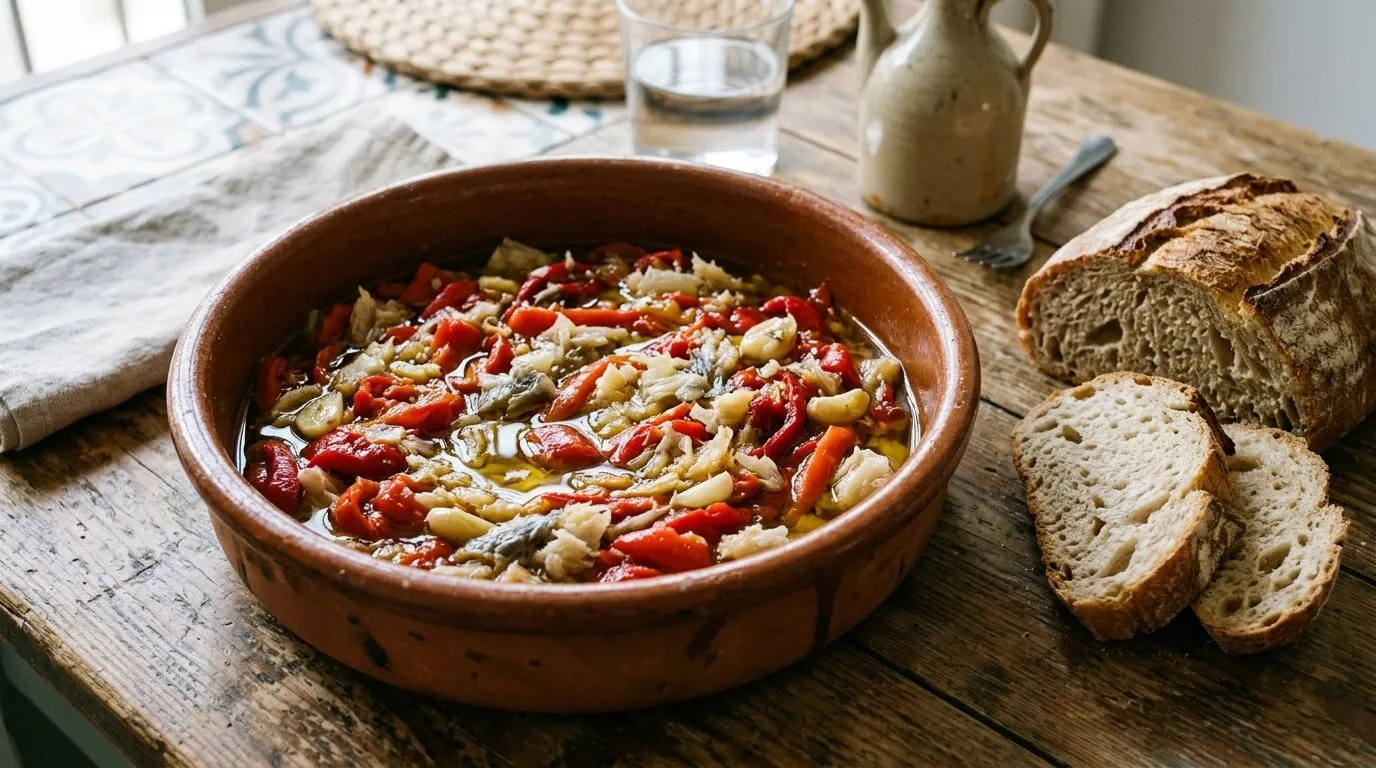

Pericana
Yield: 2 servings
Are there 40 or more of you? We cook rice dishes live for groups
Large paella pans need less liquid. Sources
Ingredients
Dressing
- 4 pcsDried red peppers
- 100 gSalt cod
- 2 clovesGarlic cloves
- 1 tspPaprika
- to tasteOlive oil
- to tasteSalt
- to tasteVery hot water (optional)
Ingredients
Steps
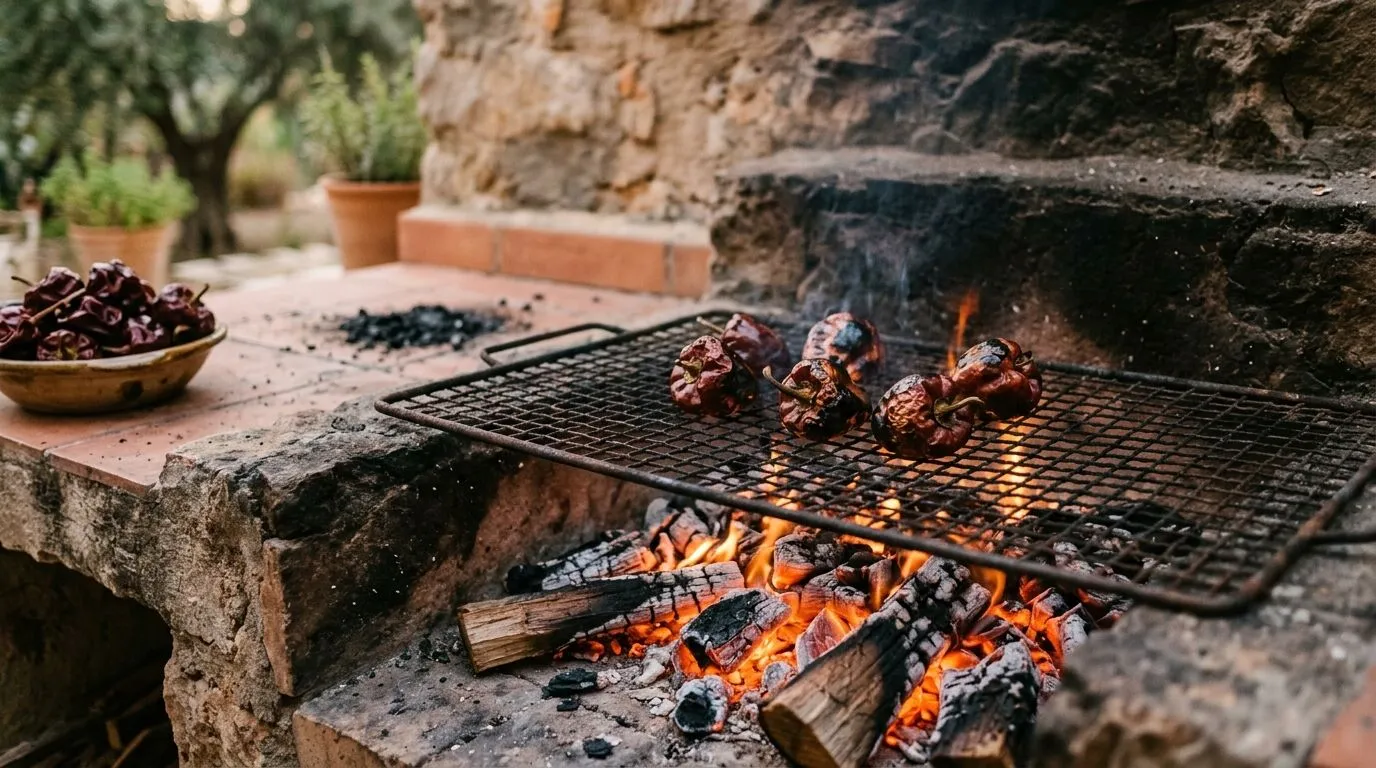
- 1Roast the 4 pcs over embers or fry them for a moment in very hot to taste, until they puff up.
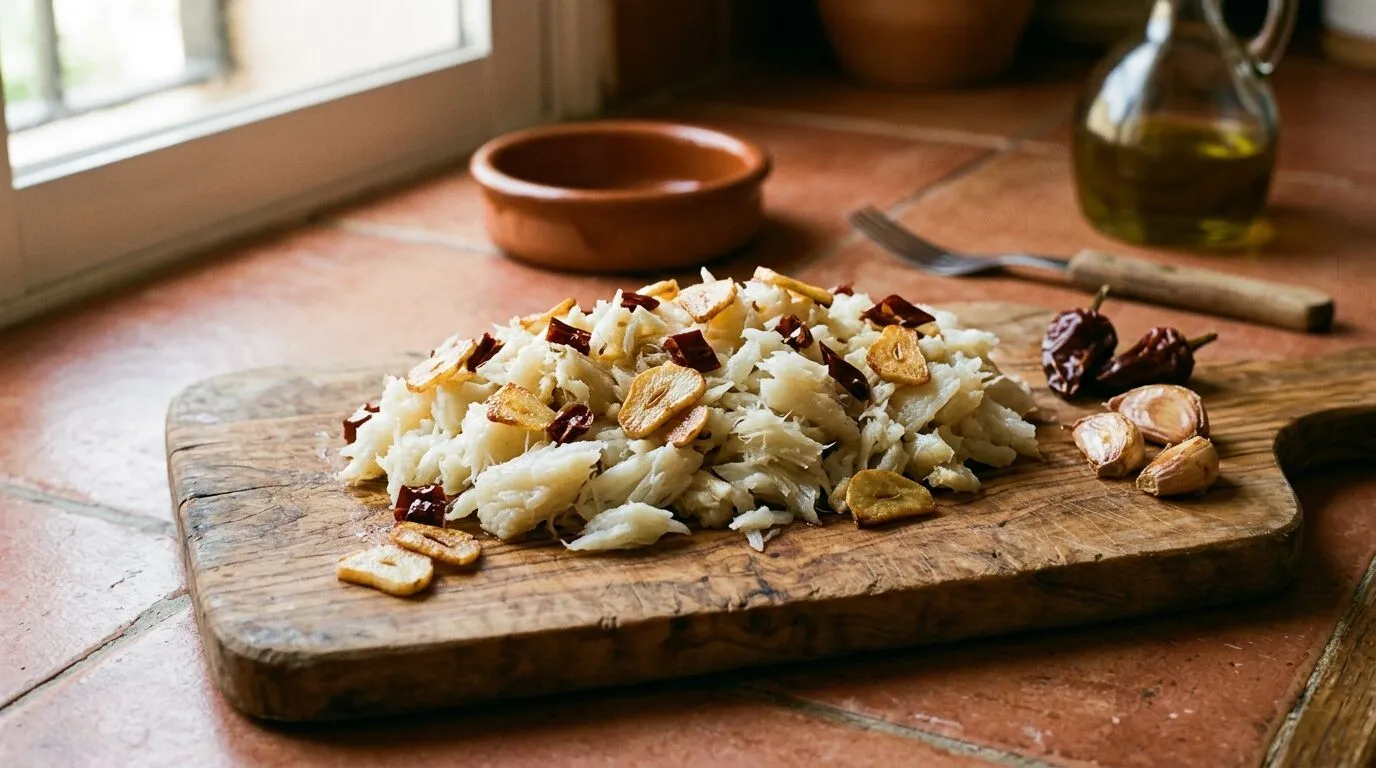
- 2Roast the 100 g on a griddle or directly over the flame, until it sweats.
- 3Toast the 2 cloves on the griddle or over the embers until golden.
- 4Let the peppers cool a little, remove the seeds and cut them by hand into medium pieces.
- 5Flake the salt cod with your fingers and remove the bones.
- 6Peel the toasted garlic and slice it thinly.
- 7Put the peppers, salt cod and garlic in a bowl. Dress with oil and 1 tsp, adjust the to taste and mix well.
- 8If you want a softer texture, sprinkle over a splash of to taste.
Pericana is one of those recipes solved with fire, a good hand and three ingredients. There is no pot and no sofrito: you roast, flake and dress. That is why what goes in the bowl, and how each thing is treated, matters so much. We follow El Español’s recipe for two people.
Roasting well: the pepper, the salt cod and the garlic
All three ingredients go through the heat before they are combined. The dried pepper is roasted over embers or fried for a moment in very hot oil, until it puffs up. The salt cod goes on the griddle or over the flame until it sweats, and the garlic is toasted. No source gives times for each step, so go by eye: pepper puffed without burning, salt cod with a toasted surface, garlic golden on the outside.
If you have no embers, Turisme Dival allows frying the peppers, roasting them in the oven or passing them over a gas flame; the traditional way is over embers, directly on the fire. The garlic is peeled after toasting and sliced thinly.
Flaking by hand
Once cooled a little, the peppers are cut by hand, seedless, into medium pieces. The salt cod is flaked with the fingers and the bones are removed. It is the same gesture that gives the esgarraet its name, with one clear difference: here the pepper is dried and has been roasted or fried, while there it is fresh and roasted in the oven. Anyone looking for the roasted pepper salad will find it in that other recipe.
The paprika and the oil are added at the end, when everything is in the bowl, and mixed well. A splash of very hot water, optional, softens the mixture.
The salt cod and its salt
El Español doesn’t mention soaking the salt cod. Turisme Dival says the salt cod can be salted or already soaked, and that you should adjust the salt according to which you use. If yours is salted, soak it first (as in the borreta from Alcoy) and taste for salt at the end.
Two ways to make it
In Bocairent, Turisme Dival records another way: the ingredients are boiled for about 15 minutes and it is eaten hot. Dival adds that if the boiling is skipped and the shredded ingredients are presented with oil, the result recalls esgarraet. In the Serra de Mariola, dried peppers, garlic, dried abadejo and lemon peel are macerated in raw oil.
Dival describes the Mariola one as an inland dish with a strong flavour, usually eaten as a starter or for supper. In every version, the ingredients are few and from the larder.
On the plate, Dival drizzles the hot version with the olive oil you have chosen, and asks for a good one, because it adds flavour and personality and is not just a dressing. It also suggests another way to eat it: spread on slices of bread, like pan con tomate. El Español adds that the ingredients were carried dry and mixed with olive oil at the moment of eating, and calls it an essential starter on the Christmas Eve menu in many homes.
When to put it on the table
El Español describes it as a starter that appears on the Christmas Eve menu in many homes in the province of Alicante, and adds that it is also good for a lunch or supper after a long day, not only at Christmas.
Everyday mistakes
- Leaving the salt cod raw or without sweating. The source roasts it until it sweats.
- Chopping in a hurry. The peppers are torn by hand into medium pieces, seedless.
- Over-salting. Taste at the end, with the salt cod already mixed in.
If there are lots of you at the table
As a starter, pericana is prepared in advance. If there are lots of you, we cook for groups at company Christmas lunches, and for other dishes from the Alicante tradition you have the rellenos of Elda.
History and variations
None of the sources consulted gives an exact origin. El Español places it “especially” in l’Alcoià-Comtat, at the foot of the Serra de Mariola, and says it is part of the Christmas Eve menu in many homes in the province of Alicante. Turisme Dival sees it as a dish shared between Alicante and the southern interior of Valencia, above all Bocairent. This is the “pericana alcoyana”.
Valencia: In Bocairent the ingredients are boiled for about 15 minutes and served hot; without boiling, it comes out as a salad that recalls esgarraet. Sources
Tips
Without embers, the peppers can be fried, roasted in the oven or passed over the flame of a gas hob; traditionally they are done over the embers. Sources
If the mixture comes out dry, a little very hot water over the top softens it. Sources
Pericana
Frequently asked questions
What is pericana?
A starter from inland Alicante made with roasted dried red pepper, salt cod and garlic, flaked and dressed with oil and paprika. It is not stewed: the ingredients are roasted and mixed. According to El Español, it appears on the Christmas Eve table in many homes in the province.
What are the ingredients of pericana?
Dried red peppers, salt cod, garlic and olive oil; the El Español recipe adds a teaspoon of paprika and salt. Dival’s Mariola version includes lemon peel and dried abadejo. There are few ingredients, so the salt cod and the peppers need to be good.
What is pericana with capellán?
Turisme Dival, in its Bocairent pericana, speaks of “bacalao o capellanes” (salt cod or capellanes) and offers them as an alternative, salted or soaked, adjusting the salt according to which one you use. None of the sources consulted defines capellán in more detail, so here we use salt cod, as in the base recipe.
How is the Bocairent pericana made?
The dried peppers are roasted or fried, peeled and shredded together with the salt cod and the garlic, and boiled in a pot for about 15 minutes until reduced to your liking. Salt is added if needed, along with paprika, and it is served hot with oil on top. It is the hot version that Turisme Dival records.
Sources
Glossary terms
Recipes
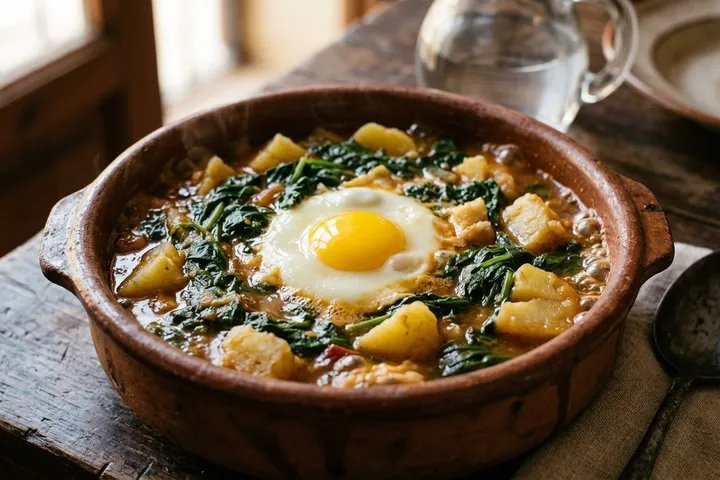
Borreta from Alcoy
Borreta from Alcoy for 4: soaked salt cod, cracked potato, spinach and ñora peppers in a thick stew, with an egg set at the end and served straight away.
Total time: 1480 min
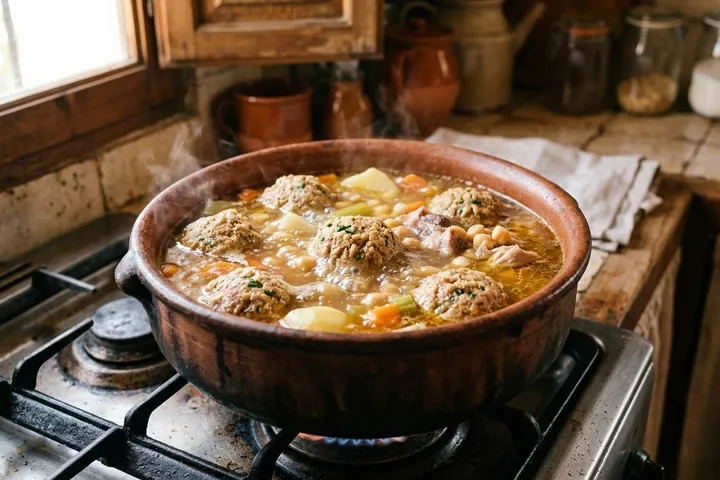
Elda rellenos
Elda rellenos are large balls of lean pork, sausage, stale bread and egg that are simmered for an hour in the broth of the cocido stew.
Total time: 60 min
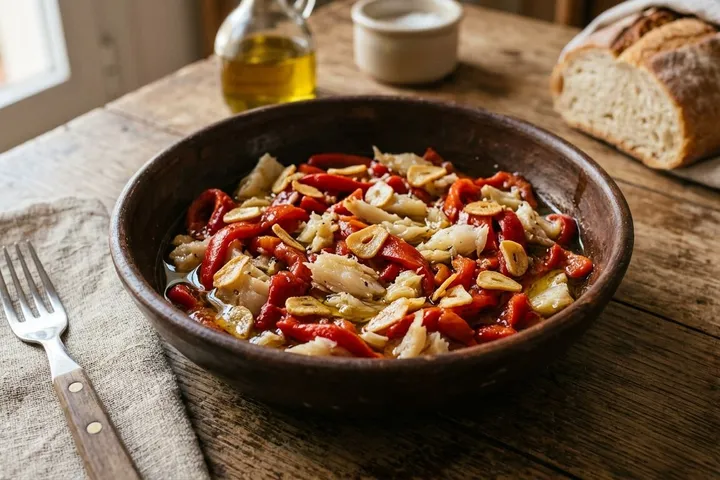
Esgarraet
Esgarraet for 4: red peppers roasted in the oven, peeled and torn by hand, with flaked salt cod and sliced garlic, left to rest in the fridge.
Total time: 260 min
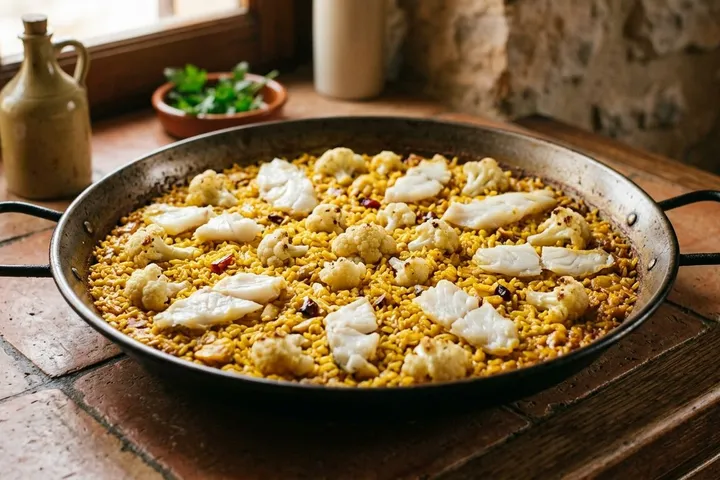
Salt cod and cauliflower rice (Lenten paella)
Lenten paella is a rice dish of desalted salt cod and cauliflower for 3 servings: everything is sautéed in the paella pan and cooked with fish stock.
Total time: 317 min
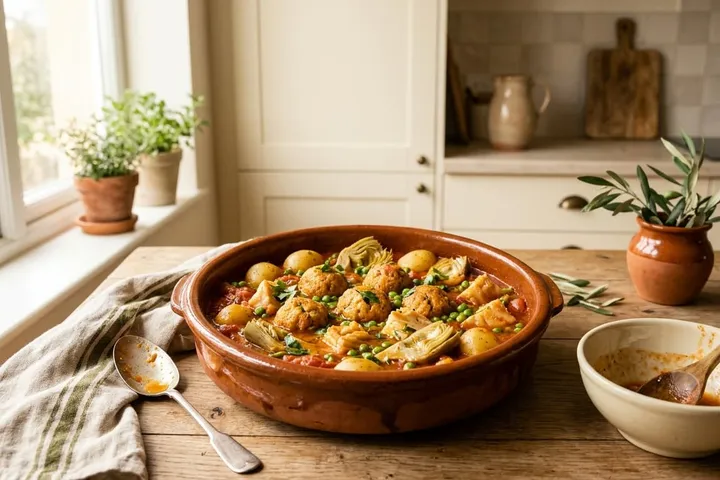
Salt cod meatballs
Salt cod meatballs with bread, egg and pine nuts in a creamy stew of artichokes, potato and peas, with desalted cod and tender broad beans. Serves 4.
Total time: 1515 min