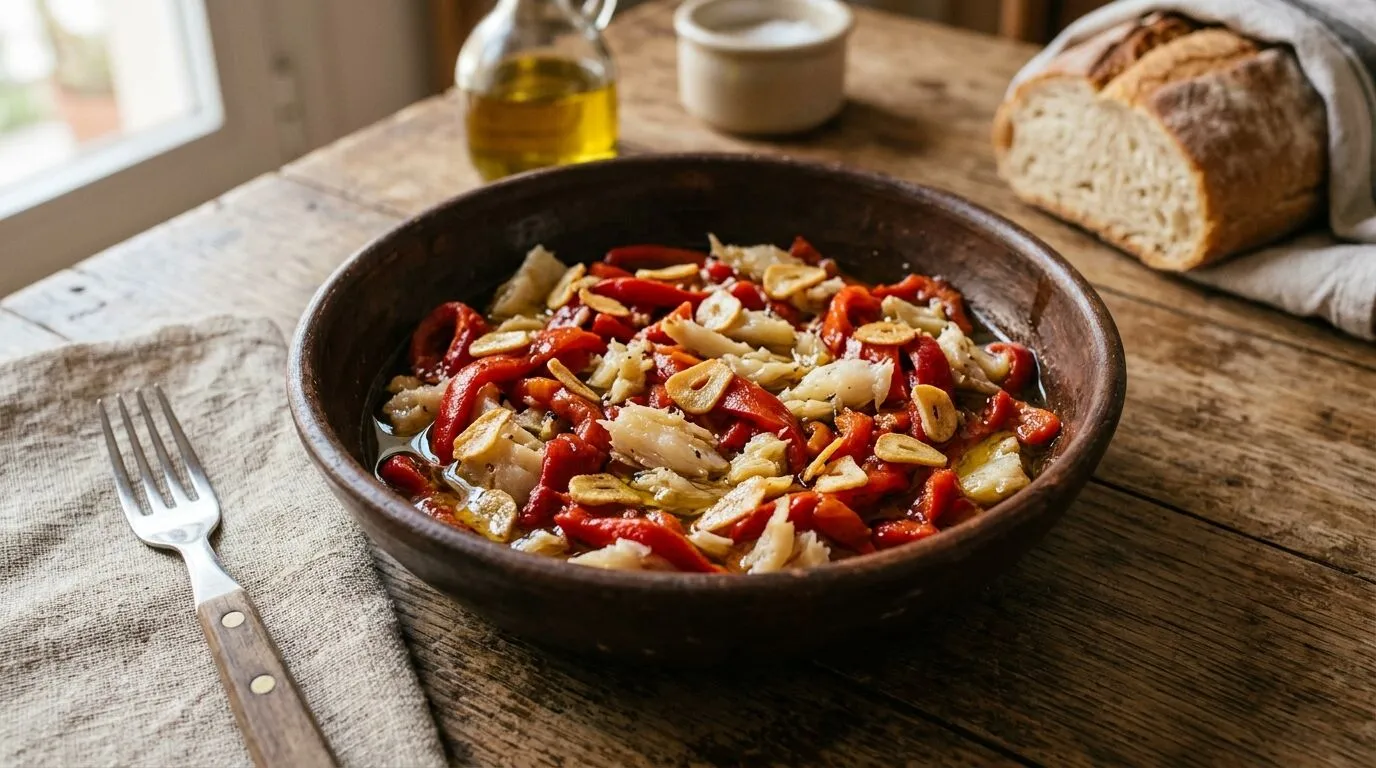

Esgarraet
Yield: 4 servings
Are there 40 or more of you? We cook rice dishes live for groups
Large paella pans need less liquid. Sources
Ingredients
Salad
- 3 pcsRed peppers
- 200 gSoaked, flaked salt cod
- to tasteGarlic
- to tasteExtra virgin olive oil
- to tasteSalt
- to tasteOlives (optional)
Ingredients
Steps
- 1Preheat the oven to 200 °C.
- 2Wash and dry the 3 pcs, rub them with to taste and to taste and place them on a baking tray.
- 3Roast them for 1 hour at 200 °C. Switch the oven off and leave them inside for another hour, so they finish in the residual heat.120 min
- 4Take them out and leave them covered with a cloth, or in a bag, for about 15 minutes: they release juice and peel more easily.15 min
- 5Remove the stalks, skin and seeds.
- 6Tear the peppers with your hands into irregular strips; don’t cut them with a knife.
- 7Peel the to taste and slice it very thinly.
- 8Combine the peppers, the flaked 200 g and the garlic, and dress with a generous splash of oil.
- 9Cover and leave in the fridge for at least 2 hours; better overnight. Take it out 20 or 30 minutes before serving and, if you like, serve it with to taste.120 min
Esgarraet is a salad of few ingredients that shines with time: what separates a mediocre version from a good one is the roasting of the pepper and the hours of resting. This recipe follows Hola’s for about four servings.
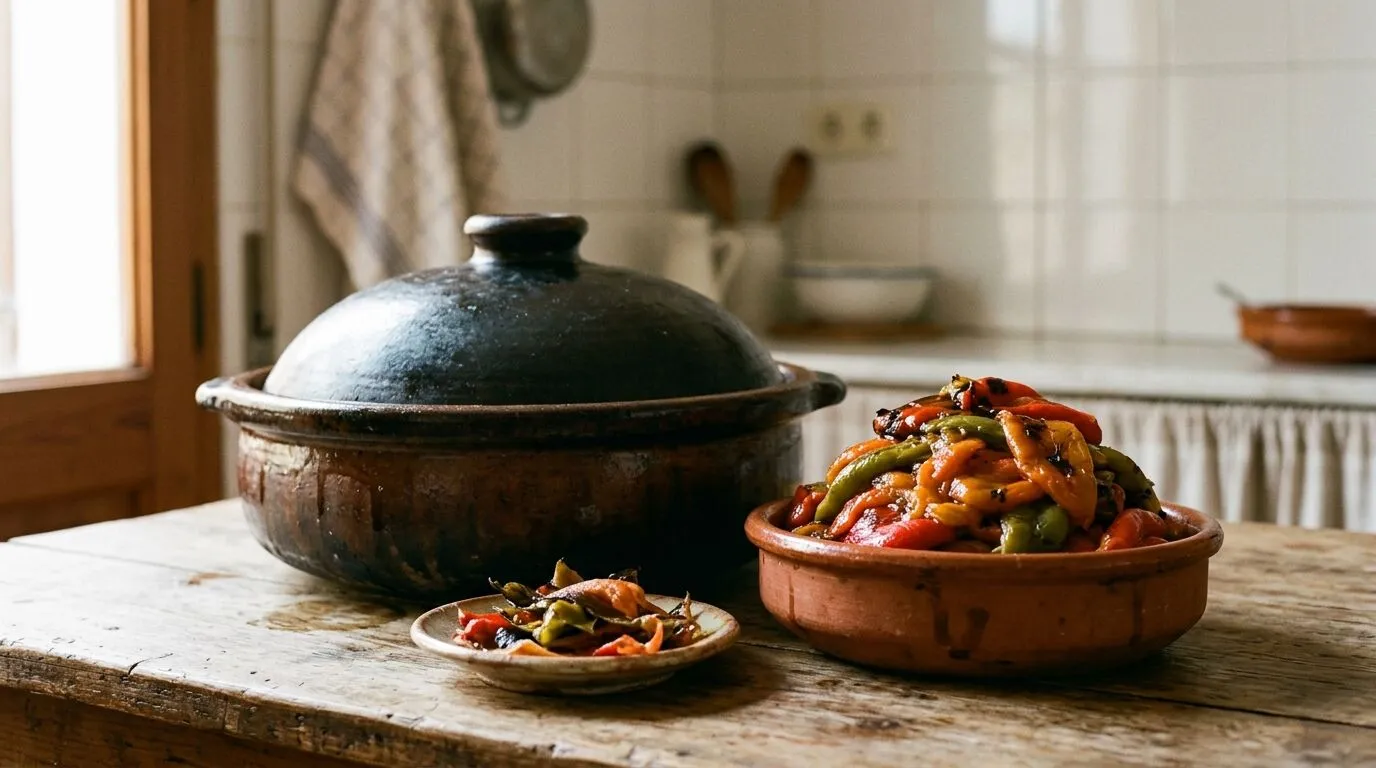
Roasted, sweated and peeled peppers
The peppers are rubbed with oil and salt and baked for an hour at 200 °C. Then the oven is switched off and they stay inside for another hour, so they finish with the heat that remains. Here we follow Hola’s timings; the underlying rule is that they come out very soft.
When you take them out, leave them covered with a cloth or in a bag for about 15 minutes. They release juice and the skin comes off easily. Remove the stalks, skin and seeds, and tear the flesh with your fingers into irregular strips. That gesture is what gives the dish its name.
Hola roasts the peppers over a high heat so the skin toasts and peels better, without the flesh losing its texture. In a hurry, it allows jarred roasted red peppers.
The salt cod and the garlic
The salt cod goes in already soaked and flaked. If you want it less salty, Turisme Dival recommends soaking it before putting it on the peppers; the full soaking, with its changes of water, is explained in the rice with salt cod and cauliflower. The garlic is sliced very thinly so it doesn’t take over: Hola’s recipe gives no quantity, so adjust it to your taste.
Dress with a generous splash of oil, cover and put it in the fridge. The minimum is two hours; if you can, overnight, because the mixture improves with resting.
Esgarraet and espencat
This is how the sources tell it. Turisme Dival presents espencat as a variant of esgarraet that adds roasted aubergine cut into strips. Hola says esgarraet “bears a certain resemblance” to espencat, “with aubergine and hard-boiled egg”. Neither gives the espencat recipe with quantities, so we don’t develop it here. Esgarraet has roasted red pepper and salt cod, and Dival lists grated hard-boiled egg on top as optional.
Hola also names two Catalan dishes that resemble it without being the same: escalivada, which is only roasted vegetables, and esqueixada, a salad of soaked salt cod with onion, tomato, black olives and dressing. They are different recipes.
For anyone looking for something similar with dried pepper instead of fresh, it has its own recipe: the pericana.
What the resting is for
Esgarraet is not a last-minute dish. Turisme Dival puts it in its own way: if you prepare several servings in advance, the flavours blend better. That is why it is best made the day before and brought to table temperature a while before serving.
How to serve it
Take it out of the fridge 20 or 30 minutes before eating: too cold, it loses flavour. Hola suggests it as an appetiser on slices of bread, as a fresh salad or as an accompaniment to other recipes, and Turisme Dival as a tapa or montadito (a small topped slice of bread). The olives, green or black, are optional. It is eaten all year round, although Hola places it mostly in spring and summer.
For a table of tapas, esgarraet goes well with the titaina and with the tuna coca, two classics of Alicante and Valencian tapas.
Common mistakes
- Cutting the peppers with a knife. Hola asks for them to be torn by hand; that is what the dish is named for.
- Leaving the skin on. The recipe asks for the stalks, skin and seeds to be removed.
- Serving it straight from the fridge. It loses flavour; let it come up to temperature.
- Skipping the rest. Hola asks for at least two hours in the fridge, and overnight is better.
If there are lots of you at the table
Since it is best prepared in advance and served cold, it is a convenient starter for fiestas. If there are lots of you, we cook for groups at local fiestas.
History and variations
Its origin is uncertain, like that of so many traditional recipes: Hola attributes it to fishermen and farmers who used up harvest peppers and dried salt cod. The name comes from “desgarrar” (to tear). Hola compares it with espencat, “with aubergine and hard-boiled egg”, and Turisme Dival presents espencat as esgarraet with roasted aubergine strips; grated hard-boiled egg is optional according to Dival.
Tips
Tear the peppers with your hands and don’t cut them with a knife. Sources
Take it out of the fridge 20 or 30 minutes before eating: too cold, it loses flavour. Sources
If you want it less salty, soak the salt cod in water before putting it on the peppers. Sources
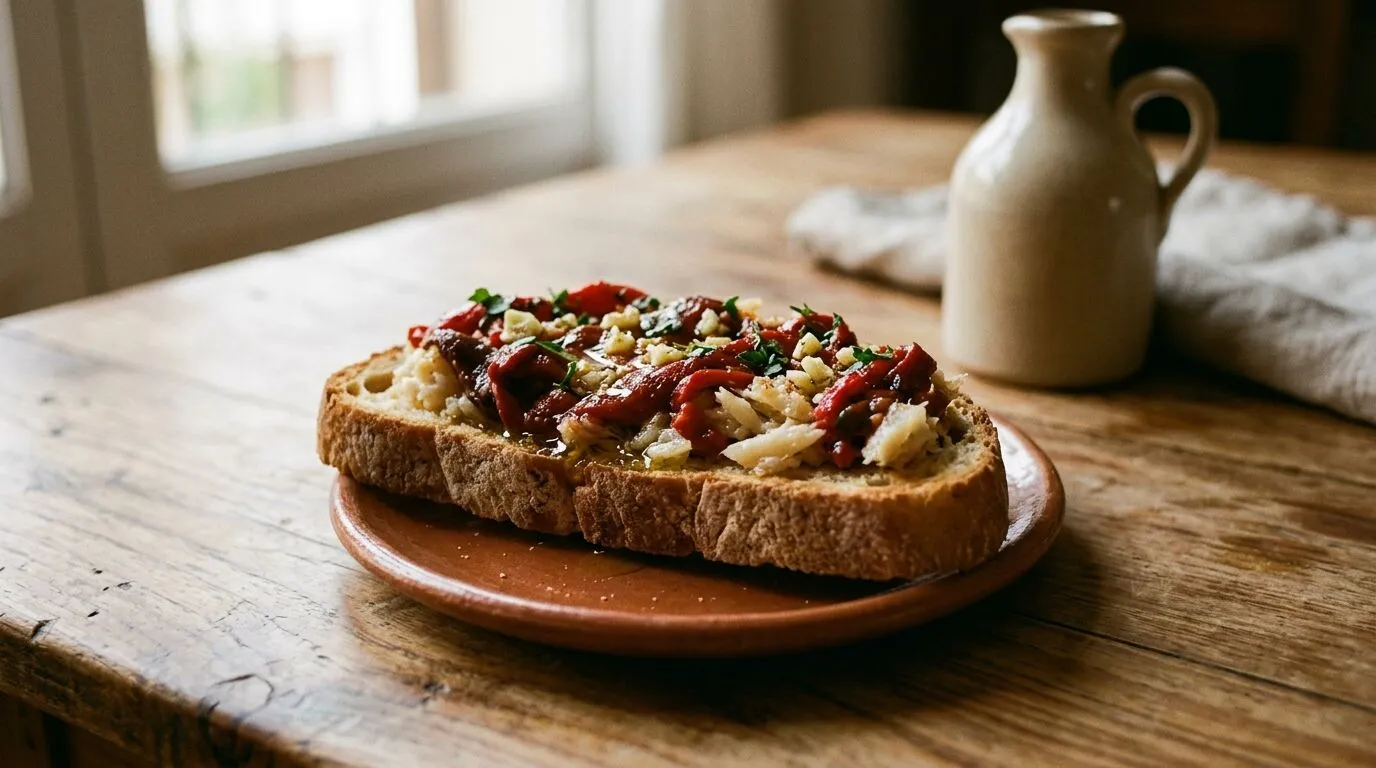
Esgarraet
Frequently asked questions
What does esgarraet mean?
Esgarraet, or esgarrat, is the Valencian name and comes from the verb “desgarrar” (to tear), which is exactly what is done with the roasted peppers and the salt cod: they are torn by hand into strips instead of being cut with a knife. That is how Hola explains it, and why it insists on not using the knife.
What goes into esgarraet?
Roasted red peppers, flaked salt cod, sliced garlic and olive oil, with salt in moderation. That is the base described by Hola and Turisme Dival. As extras, Hola mentions olives and Dival grated hard-boiled egg on top. It is eaten cold or lukewarm, as a tapa on bread, as a salad or as a side.
How do you make esgarraet with aubergine?
This is what the sources call espencat. Turisme Dival presents it as a variant of esgarraet that adds roasted aubergine cut into strips, and Hola describes it “with aubergine and hard-boiled egg”. Neither gives quantities for that version, so this recipe is the one for esgarraet with pepper and salt cod.
What does espencat mean in Valencian?
None of the sources consulted explains the origin of the word. They do say what it is: for Turisme Dival, a variant of esgarraet with roasted aubergine in strips; for Hola, a similar Valencian recipe, “with aubergine and hard-boiled egg”. The difference from this dish is the aubergine.
Sources
Glossary terms
Recipes
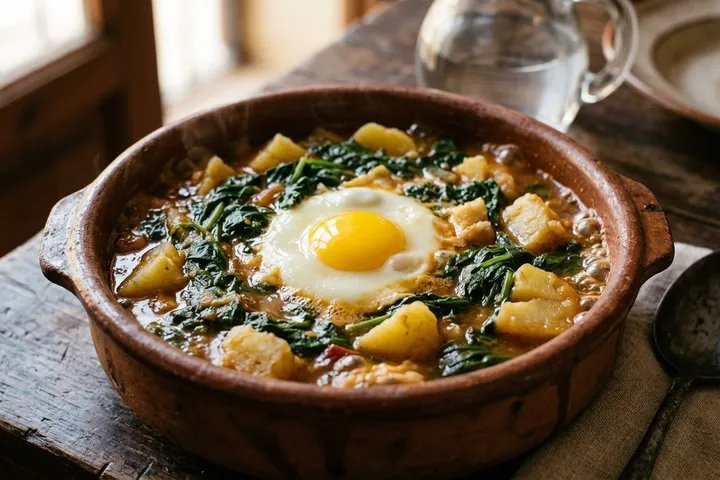
Borreta from Alcoy
Borreta from Alcoy for 4: soaked salt cod, cracked potato, spinach and ñora peppers in a thick stew, with an egg set at the end and served straight away.
Total time: 1480 min
Pericana
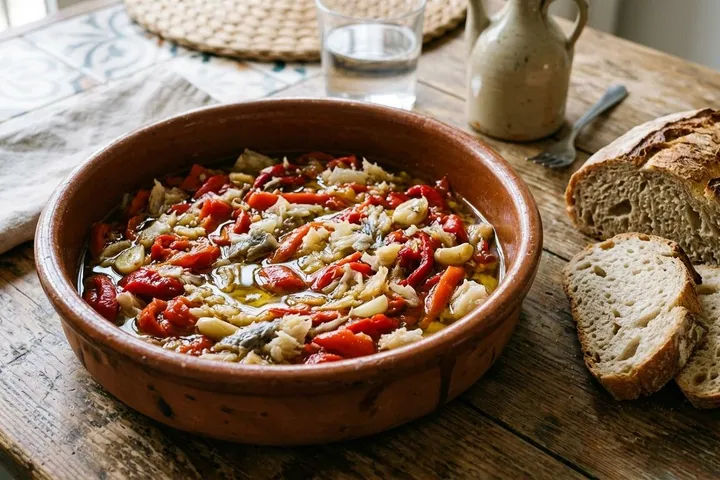
Pericana for 2: roasted dried red pepper, roasted flaked salt cod and toasted garlic, dressed with oil and paprika. As a starter.
Total time: 15 min
Titaina
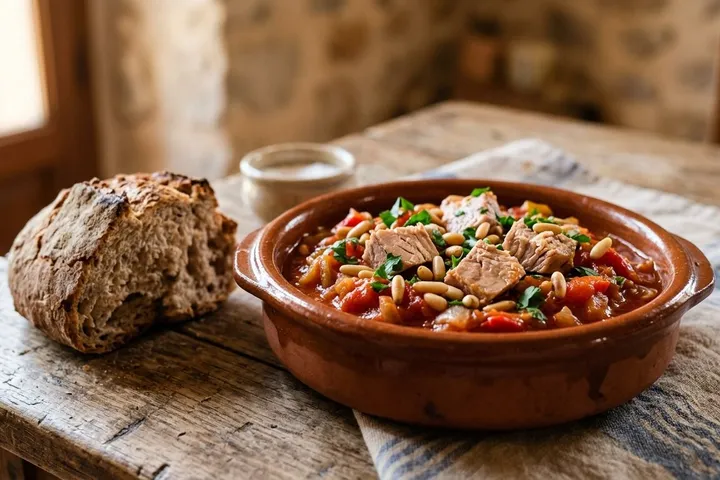
Titaina for 4: tomato and peppers cooked slowly with pine nuts and tuna, which is browned separately and returned at the end. Served cold, lukewarm or hot.
Total time: 560 min
Tuna coca (coca amb tonyina)
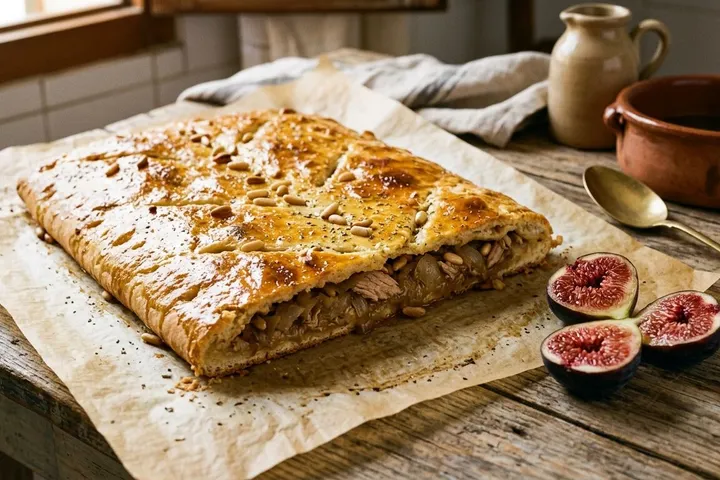
Tuna coca for 500 g of flour: dough made by pouring boiled oil, water and aniseed over the flour, tuna belly, onion and pine nut filling, and a 200 °C oven.
Total time: 40 min