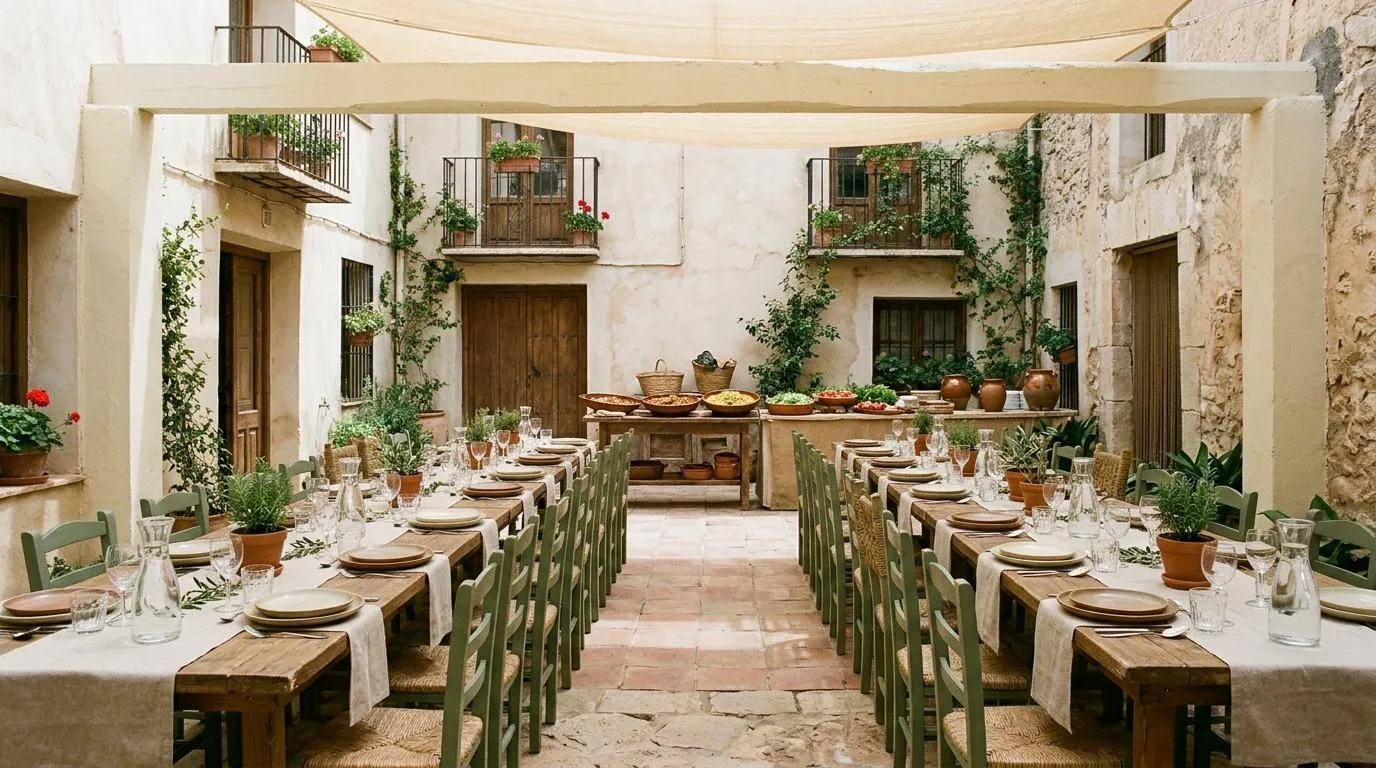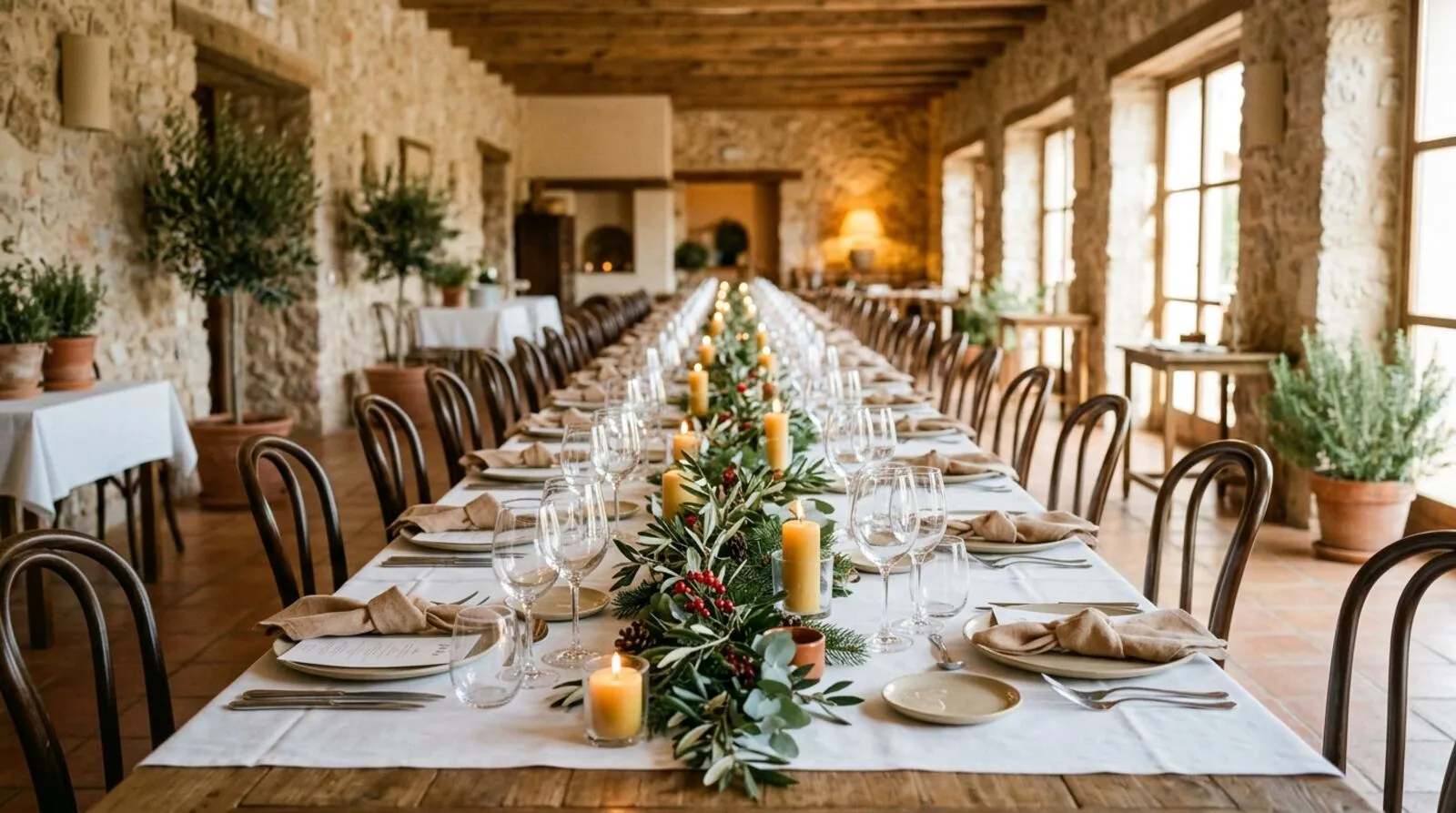
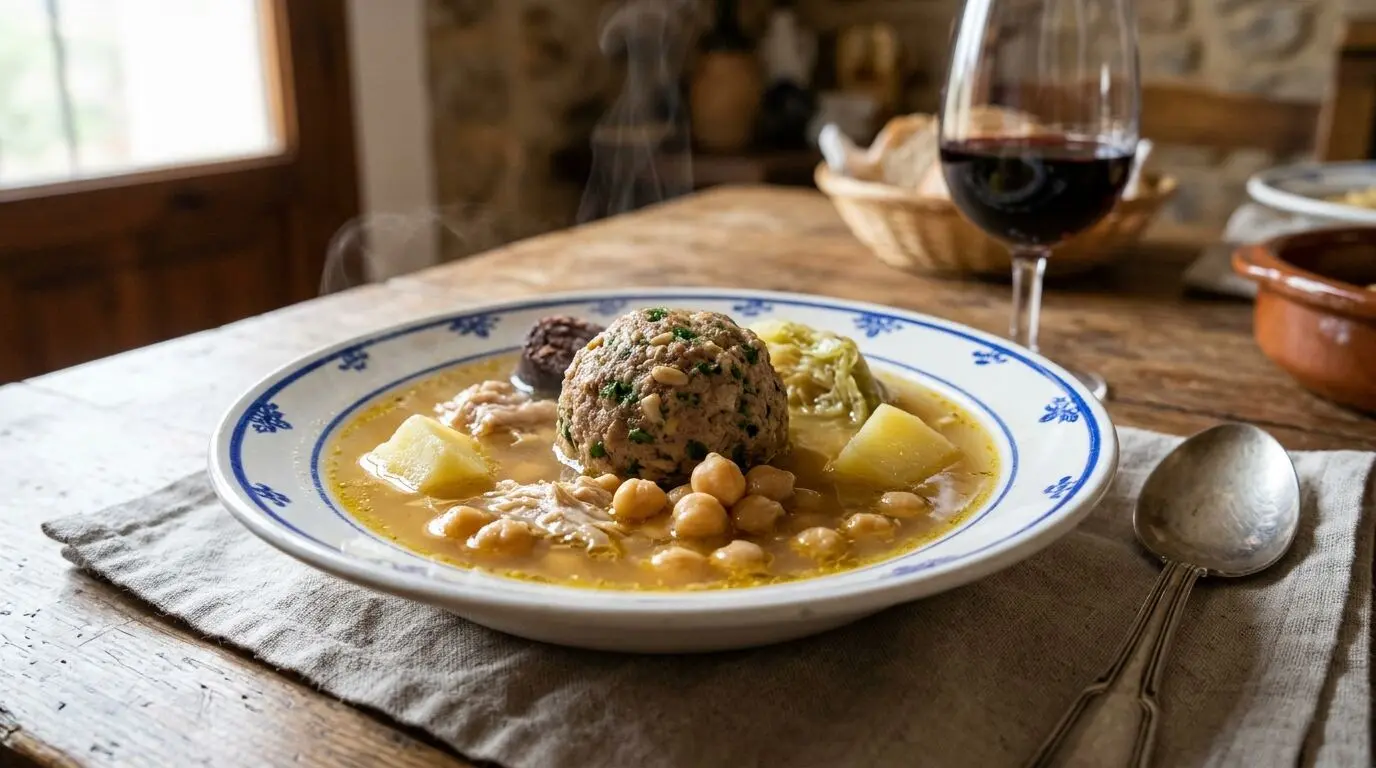
In Alicante and Valencia, Christmas means hearty spoon food: cocido con pelotas (a chickpea and meat stew with large meatballs) on Christmas Day in the Vega Baja and in Crevillent, rellenos in Elda and, on Christmas Eve, pericana of dried pepper and salt cod in many homes across the province of Alicante. For dessert, turrón from Jijona and from Alicante, and pastissets de moniato (sweet potato pastries). And on New Year’s Eve, the twelve grapes, which here have a name of their own: the bagged table grape of the Vinalopó.
There is no single menu: it changes from district to district and, sometimes, from one house to the next. Here it is day by day, with the recipe for each dish in our recipe collection. If you’re curious about where it all comes from, carry on with the history of Valencian cuisine.
What people eat at Christmas, dish by dish
| Dish | When | Where it is most typical | Recipe |
|---|---|---|---|
| Pericana | Christmas Eve | Inland Alicante (l’Alcoià and el Comtat) and Bocairent | Pericana |
| Cocido con pelotas | Christmas Day | Vega Baja (Torrevieja) and Crevillent | Cocido con pelotas |
| Pilotes de Nadal | Christmas festivities | Castelló and València | Pilotes de Nadal |
| Elda rellenos | Christmas Day (and 8 September) | Medio Vinalopó | Elda rellenos |
| Pastissets de moniato | As Christmas approaches | Castelló, València and Alacant | Sweet potato pastissets |
| Jijona turrón (soft) and Alicante turrón (hard) | Christmas season | Made in Jijona | — |
| Bagged table grapes | New Year’s Eve | Vinalopó | — |
Christmas Eve: pericana to nibble on
Pericana is a starter of dried red pepper, salt cod and garlic. The peppers are roasted or fried briefly, the cod and the garlic are toasted, and everything is shredded by hand and dressed with oil and paprika. There is no stewing. El Español places it mainly in l’Alcoià and el Comtat, at the foot of the Serra de Mariola, and says it is part of the Christmas Eve menu in many homes across the province of Alicante. Turisme Dival sees it as a dish shared with inland southern Valencia, above all with Bocairent, where it is boiled for about fifteen minutes and served hot.
It is eaten with bread, and Dival even suggests spreading it on slices of bread, as you would tomato. The steps are in our pericana recipe.
Christmas Day: cocido con pelotas
Cocido con pelotas is the winter stew of the Vega Baja del Segura in the cold months, and at Christmas it comes into its own. In Torrevieja, according to El Español, it is traditional to eat it on Christmas Day. In Crevillent, over in the Baix Vinalopó, its tourism website presents it as the star of many Christmas tables. Convega, in its Vega Baja recipe book, points out that it used to be a dish for feast days and that there is no single recipe.
The method, though, is always much the same. The meat goes into cold water, in order of toughness, and is skimmed; then come the chickpeas, which have been soaking since the night before. The pelotas go in when the meat is nearly done and cook for at least two hours; the egg yolks and the black pudding go in almost at the end. The broth is served with a squeeze of lemon, which Convega describes as a pick-me-up after the feast days. Quantities and timings are in the cocido con pelotas recipe; and if you are heading to Crevillent, its fiestas are in the Crevillent calendar.
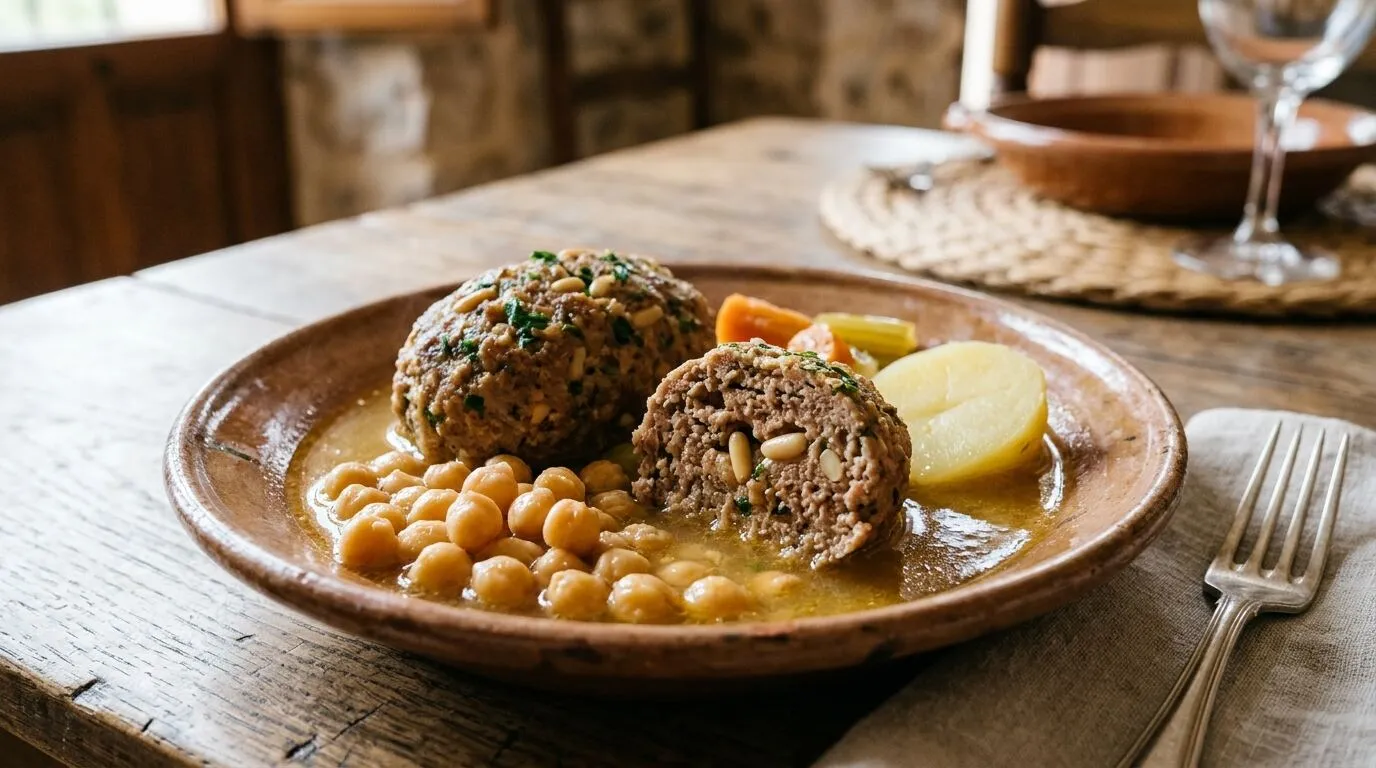
Pelotas, pilotes and rellenos: every household has its own mix
Pilotes is the Valencian name. Directo al Paladar describes them as a very popular recipe in Castellón, Valencia and Catalonia, and as a fundamental dish of Christmas celebrations. The mixture in our recipe is minced pork browned in lard, stale breadcrumbs, spearmint, parsley, cinnamon and pine nuts, and the pelotas are dipped in egg white before cooking: pilotes de Nadal.
Each area, though, has its own mix:
- Vega Baja. Convega mixes pork with chicken or turkey and veal, adds longaniza and blanco, and seasons it with cinnamon, pepper, nutmeg and clove. In Torrevieja, according to El Español, the pelota contains pig’s blood and comes out darker.
- Castelló. Valencia Bonita adds fresh chicken blood, optional but “characteristic”, and makes them large for the paella and smaller for the soup or the Christmas stew pot.
- Medio Vinalopó. The Elda rellenos, also called faseguras, are fist-sized pelotas of lean pork, longaniza, blanco and stale bread, simmered for an hour in the cocido broth. The recipe our page is based on describes them as a typical dish of Elda, Petrer, Monòver, Novelda and Pinoso, and says that in Elda they are eaten on 8 September, the day of the Virgen de la Salud, and on Christmas Day. For the town’s fiestas, see the Elda calendar.
If you fancy making them, pick one mixture and follow its quantities rather than mixing and matching.
Dessert: turrón and pastissets de moniato
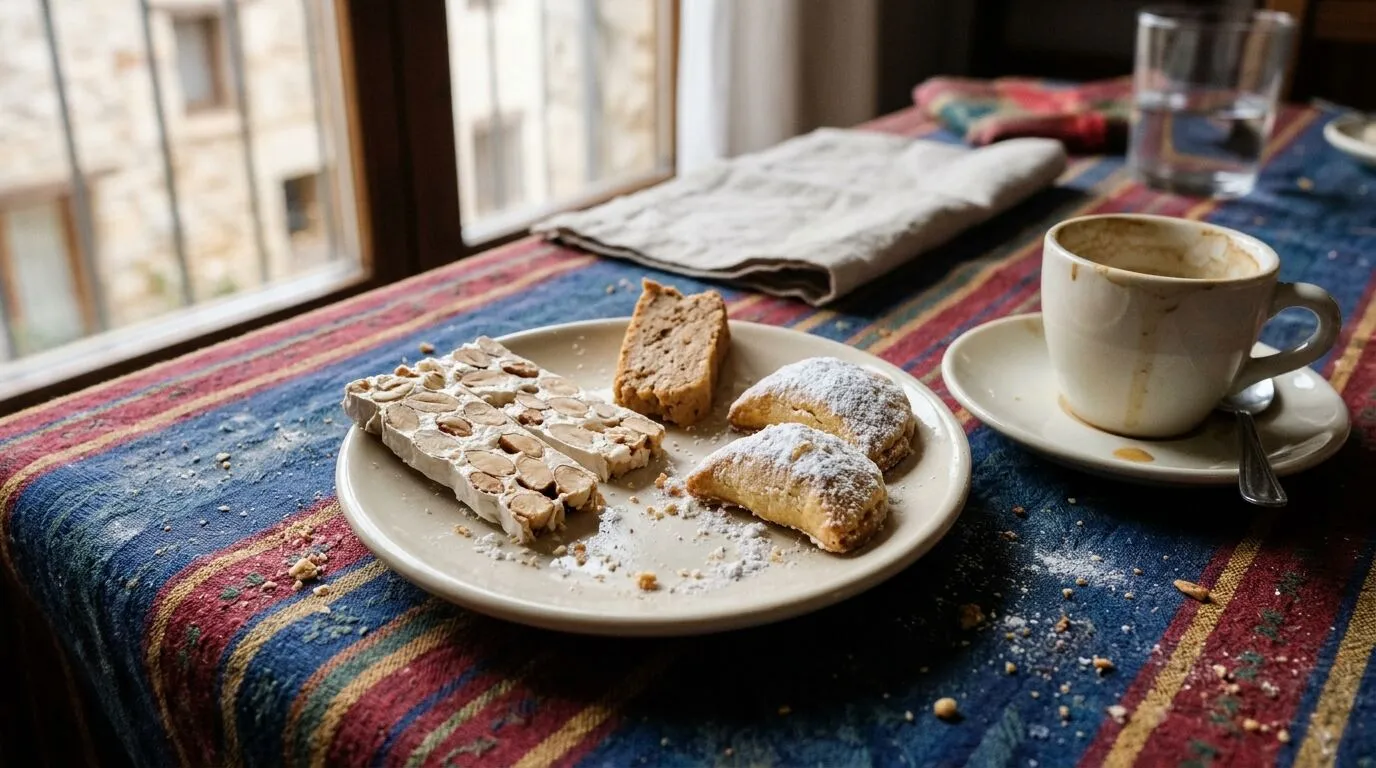
Turrón has two names here. According to ICEX, Jijona turrón is the soft one and Alicante turrón the hard one. Both are protected geographical indications, are made in the municipality of Jijona and are overseen by a single Regulatory Council, based in Jijona itself. The base is the same: almonds, honey, sugar and egg white. Christmas is its high season: in the 2022 Christmas season, the Council reported that sales had risen compared with the previous year.
Pastissets de moniato are more of a home affair. The Agència Valenciana de Turisme describes them as small semicircular pastries, with ingredients of clear Arab influence, found in Castelló, València and Alacant mostly as Christmas approaches, and recommends them with a coffee or a mistela (a sweet drink of grape must fortified with spirit). The recipe we follow uses a thin dough of oil and aguardiente and a filling of sweet potato with cinnamon and lime: sweet potato pastissets. As the dough contains spirit, say so at the table if children will be eating them.
What you can make ahead
Christmas cooking here is spread over several days, and that works in favour of whoever is in the kitchen:
- The pelotas, days ahead. Make them in quantity and freeze them. Directo al Paladar lets them come up to room temperature before they go into the stew; Convega, in its cocido, allows them to go straight into the broth. Follow whatever the recipe you choose says.
- The chickpeas, the night before. Convega’s cocido calls for 24 hours of soaking, changing the water every few hours.
- The pastissets filling, the afternoon before. It has to be completely cold when you close them, and the jam thickens as it cools.
- The pericana, in advance. It is roasted and dressed beforehand, and is ready to bring to the table.
- Leftover pelotas. According to Directo al Paladar, some people put them in a brothy rice, such as the brothy rice with chicken and rabbit, or in a noodle soup.
New Year’s Eve and Three Kings
On New Year’s Eve, the twelve grapes. According to Directo al Paladar, the classic New Year’s Eve grape is the Aledo variety, with a smaller berry, which grows inside paper bags: bagging delays ripening and gives it a special sweetness. It comes from seven municipalities in the Vinalopó valley in Alicante, covered by the Uva de Mesa Embolsada Vinalopó Designation of Origin. Aspe sits in the same valley.
Three Kings is celebrated more in the street than in the kitchen. The Three Kings parade (cabalgata) usually sets off on 5 January, the eve of Three Kings’ Day. The one in Alcoy is among the best known, with pages who climb up to balconies on long ladders to hand out presents, and in Elda the Bajada de Antorchas de Bolón (the torchlit descent from Bolón) announces the arrival of the Kings before the procession. If there is a dinner afterwards, check the parade timetable first and leave time to get away from the route.
If your Christmas meal is the work do
If you’re organising your team’s, at Xepep, in Aspe, we cater company Christmas lunches and dinners: a standing drinks reception, a sit-down lunch or dinner, or rice cooked live, with the dishes chosen with you and everyone’s allergies taken into account. To avoid a last-minute rush, see when to book your company Christmas lunch and, once you have a date and venue, request a quote.
Sources
- Consejo Regulador de las IGP Jijona y Turrón de Alicante
- Jijona PGI, Foods and Wines from Spain (ICEX)
- Turrón de Alicante PGI, Foods and Wines from Spain (ICEX)
- La IGP Jijona y Turrón de Alicante aumenta sus ventas en la campaña de Navidad 2022, Alicante Plaza (23-12-2022)
- La uva de mesa embolsada de Vinalopó, la uva de las navidades, Directo al Paladar
- Recetario de la Vega Baja del Segura, receta 5: cocido con pelotas (Convega)
- Visita Crevillent: gastronomía (Ayuntamiento de Crevillent)
- José, presidente de la Cofradía del Cocido con Pelotas de Torrevieja, El Español (19-1-2025)
- Pilotes de Nadal (pelotas de Navidad), receta tradicional, Directo al Paladar
- Paella con pelotas de Navidad, Valencia Bonita
- Receta de pericana alcoyana, El Español (27-11-2025)
- Pericana al estilo de Bocairent, Turisme Dival
- Pastissets de moniato, Agència Valenciana de Turisme
- Las pelotas, rellenos, fasiuras o faseguras, plato típico de las fiestas patronales de Elda, No Eres de Elda Si No (2017)
- Cabalgata de los Reyes Magos de Alcoy, Turisme Comunitat Valenciana
- Cabalgata de Reyes y Bajada de Antorchas, Turismo de Elda