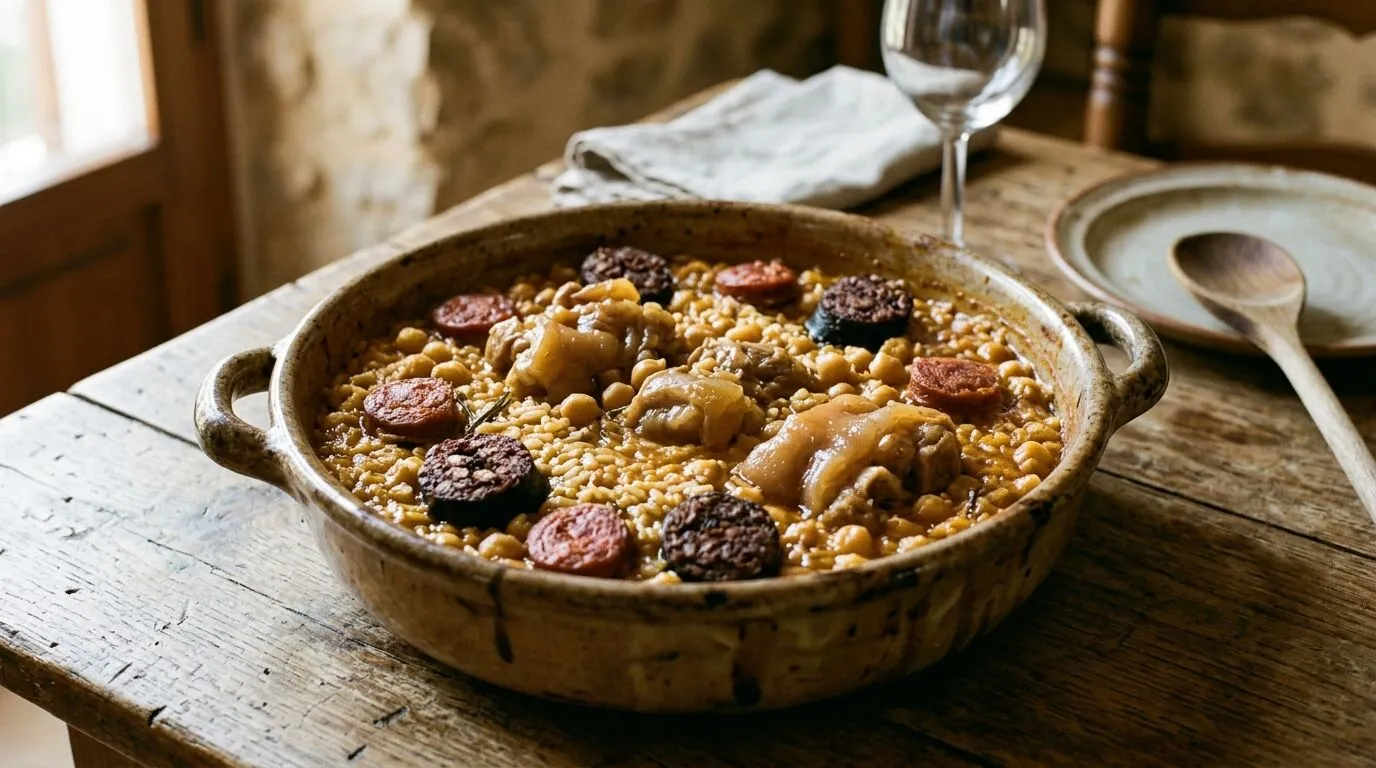

Rice with veal trotter (arroz y pata)
Yield: 4 servings
Are there 40 or more of you? We cook rice dishes live for groups
Large paella pans need less liquid. Sources
Ingredients
Trotter
- 2 kgVeal trotter
- to tasteWater (to cook the trotter)
Rice
- 400 gRice
- to tasteStock from cooking the trotter
- 250 gChickpeas
- 2 pcsOnion black pudding (morcilla de cebolla)
- 50 gCooking chorizo
- 1 pcsOnion
- 4 clovesGarlic
- 1 pcsRipe tomato
- to tasteFood colouring
- 250 mlOlive oil
- to tasteSalt
Ingredients
Steps
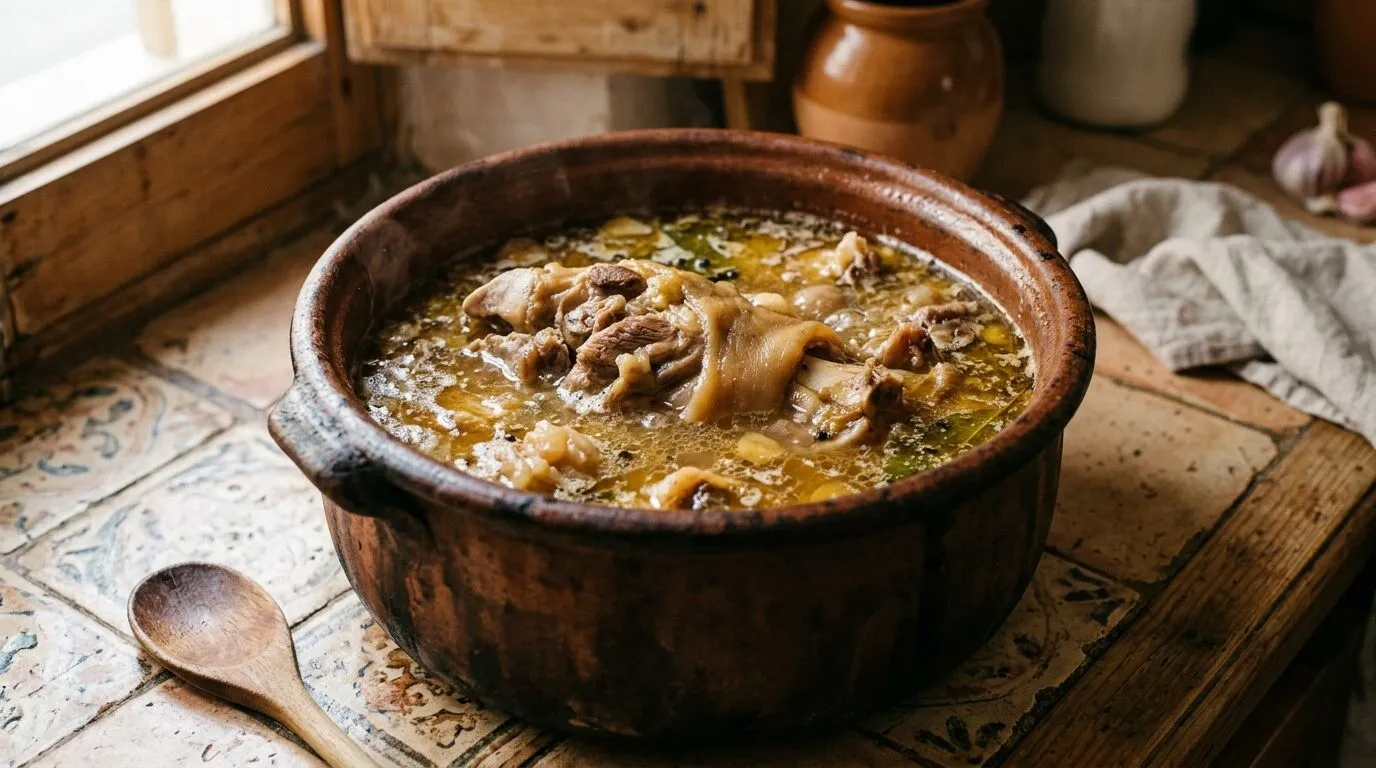
- 1Put the 2 kg on to boil in to taste for an hour and a half or so.90 min
- 2Take it out, bone it, chop it and set it aside together with its to taste: it will give the rice a good part of its flavour.
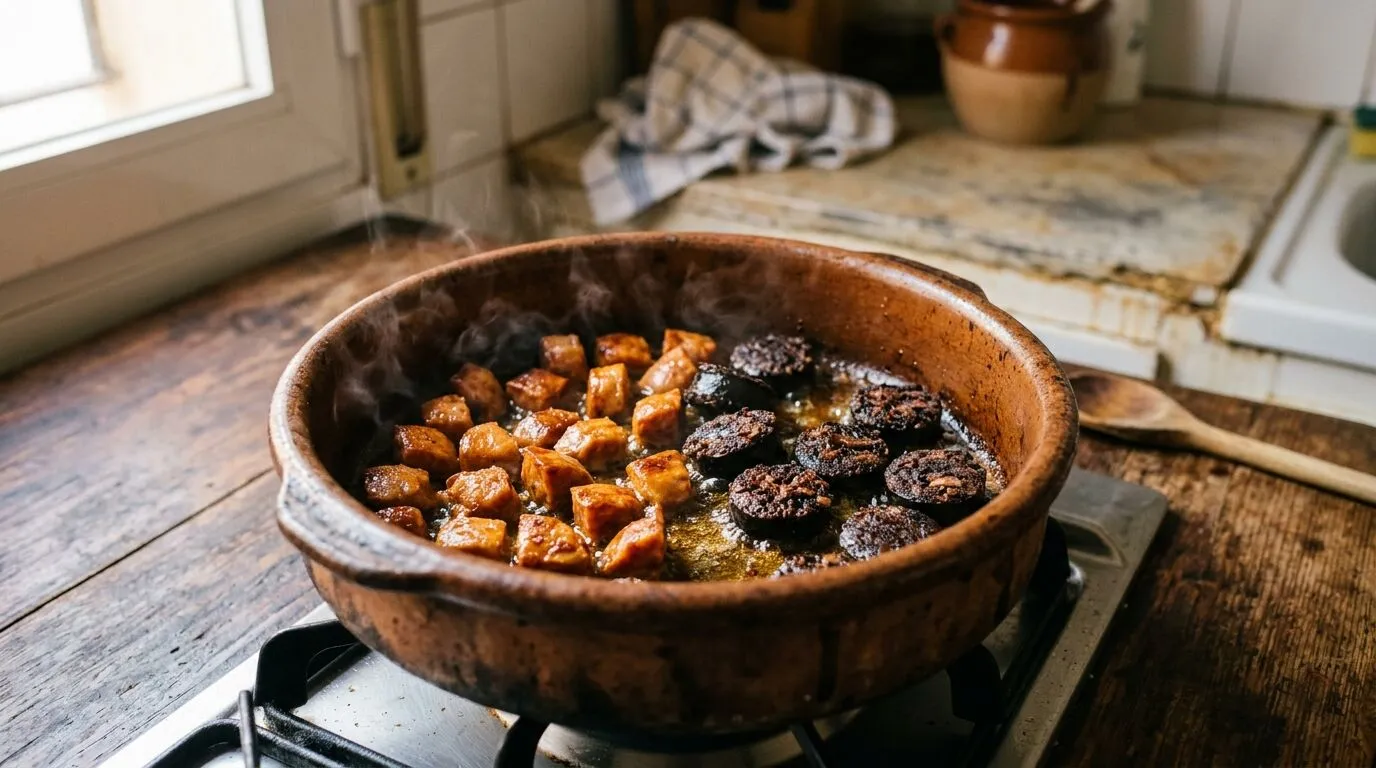
- 3In an earthenware pot, with the 250 ml, fry the chopped 1 pcs, the 2 pcs, the 50 g and the 4 cloves.
- 4Add the chopped 1 pcs and let it cook for a few minutes with the sofrito.
- 5Moisten with the trotter’s stock and add the chopped trotter and the 250 g.
- 6Season with the to taste and the to taste, add the 400 g and bring to the boil.
- 7Cook for fifteen to eighteen minutes, until the grain is done.18 min
Arroz y pata is a casserole rice with a meat rarely found in rice dishes: veal trotter, boiled first, for about an hour and a half. This recipe uses Alicante Turismo’s quantities, for four, and doesn’t mix them with any other version: what changes in the others goes separately, in its own section.
The trotter goes first
It all starts with the trotter boiled for an hour and a half or so. Then it is boned, chopped and set aside with its stock, and that stock is half the dish: it is what moistens the rice. It is best to start in good time and order the piece from the butcher in advance, because the recipe asks for about two kilos.
The sofrito and the doneness of the rice
In an earthenware pot, the chopped onion, black pudding, chorizo and garlic are fried, and the tomato is added. It is a short, hearty sofrito, with more sausage than vegetable. It is moistened with the trotter’s stock, the chopped meat and the chickpeas go in, it is seasoned with colouring and salt, and the rice is added.
The recipe brings it to the boil for fifteen to eighteen minutes. El Español describes it as a very aromatic, creamy rice. Alicante Turismo gives no litres of stock; the version recorded by El Español speaks of about a litre for those 400 g of rice, and it is a good reference to start from.
The ingredients that count
The veal trotter is what gives the dish its name. The chickpeas are 250 g; Alicante Turismo does not say whether dried or cooked. Since the recipe adds them with the rice, which only cooks for a few minutes, they have to be cooked already; if yours are dried, soak them the night before and cook them first. The sausages are two onion black puddings and 50 g of cooking chorizo, which supply the flavour of the pot together with a ripe tomato, an onion and four cloves of garlic. With that, oil, salt and food colouring.
One surprising figure is the oil, 250 ml for four: it is the one the source gives and it is the source’s figure. If you prefer, try less and add as you go, but that is the measure in the recipe.
Easy mistakes to avoid
In its paella recipe, El Español insists on three things. The trotter’s stock isn’t thrown away, because that is where the flavour is. The stock goes in hot. And the rice is spread evenly over the pot, without piling it up.
Alicante and Villena: not the same recipe
The name “arroz y pata” appears on the Villena tourism website, which describes it made in a paella pan with boiled veal trotter, chickpeas, red pepper and garlic, and without quantities. The recipe with figures is Alicante’s, with black pudding, chorizo and tomato. They share trotter and chickpeas and differ in the rest. That is why the recipe gives the quantities of one and names the other.
Another version of the Alicante recipe
In June 2026 El Español recorded the Alicante City Council tourism recipe with small changes: no onion or garlic, with sweet paprika and saffron instead of colouring, about a litre of stock, and five minutes’ rest before serving. If you prefer that version, the method is similar, in a paella; the paprika goes into the sofrito taking care it doesn’t burn.
It isn’t a baked rice
It has chickpeas and meat, like the baked rice, but it is made on the hob, with the trotter as the star, and comes out creamy. If you are after a casserole rice with pulses, the rice with beans and turnips is another route.
For many guests
To work out rice per guest there is the guide to how much rice per person. If there are lots of you, we cook for groups: paellas and show cooking.
History and variations
Arroz y pata is cited as a dish of Villena, made in a paella pan with boiled veal trotter, chickpeas, red pepper and garlic, according to its tourism website, which gives no quantities. The quantities in this recipe are Alicante Turismo’s, with onion black pudding, chorizo and tomato.
Alacant: El Español records the Alicante City Council tourism recipe without onion or garlic, with sweet paprika and saffron instead of colouring, around a litre of stock and five minutes’ rest. Sources
Villena: The Villena tourism website describes it with boiled veal trotter, chickpeas, red pepper and garlic, without quantities. Sources
Tips
Keep the stock from cooking the trotter: it is what moistens the rice and gives it flavour. Sources
If you prefer the version with paprika and saffron, add the paprika taking care it doesn’t burn and put the saffron in with the rice. Sources
Moisten with hot stock and spread the rice evenly. Sources
Rice with veal trotter (arroz y pata)
Frequently asked questions
What goes into arroz y pata?
In the Alicante Turismo recipe, for four: 400 g of rice, 2 kg of veal trotter, 250 g of chickpeas, two onion black puddings, 50 g of cooking chorizo, a ripe tomato, an onion, four cloves of garlic, 250 ml of oil, colouring and salt. The Villena tourism website names the same dish with red pepper and garlic, but without quantities.
Why is the trotter cooked first?
Because it has to be boned and chopped before it goes into the pot, and because its stock is what moistens the rice. Alicante Turismo boils it for about an hour and a half, so allow time before you put the rice on.
Can you use another meat instead of veal trotter?
The Alicante and Villena recipes always speak of veal trotter, and it is what gives the dish its name and leaves the stock the rice is cooked in. With another meat it would be a different rice, not this one. If you can’t find it, order it from the butcher in advance, because it is a cut that isn’t usually to hand.
Sources
Glossary terms
Recipes
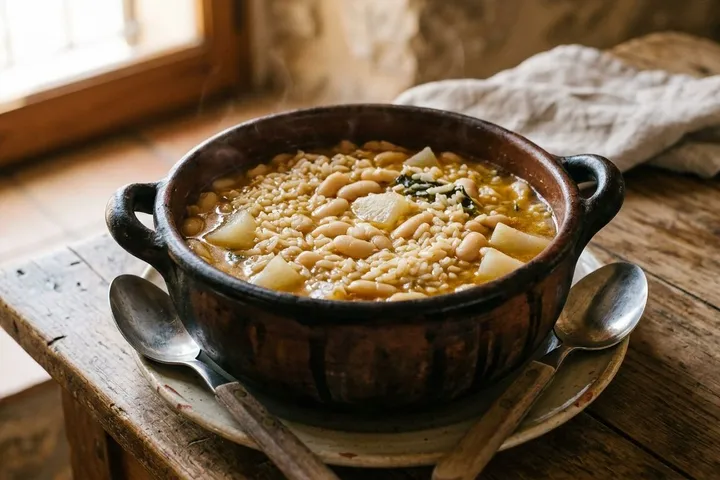
Arròs amb fesols i naps (rice with beans and turnips)
Arròs amb fesols i naps is a Valencian pot rice: pork, white beans, pencas and turnip cooked slowly, and the rice added at the end, without overdoing it.
Total time: 796 min
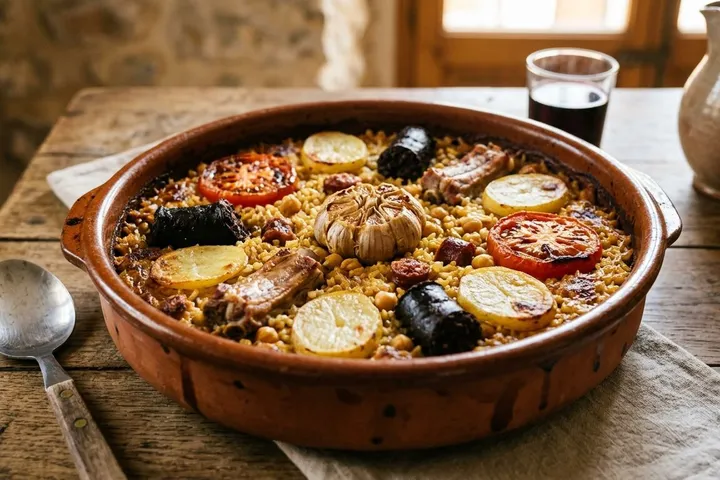
Valencian baked rice
Baked rice, or arròs al forn, is a dry earthenware-dish rice with pork ribs, black pudding, chickpeas and potato, finished in the oven until golden.
Total time: 25 min
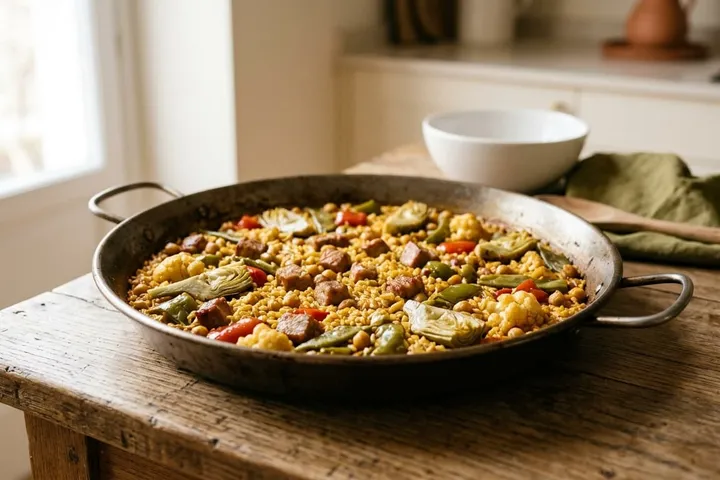
Rice with pork and vegetables
Bomba rice with lean pork, artichokes, cauliflower, green beans and chickpeas in rib stock: boil, convection oven and rest. Serves 4.
Total time: 22 min