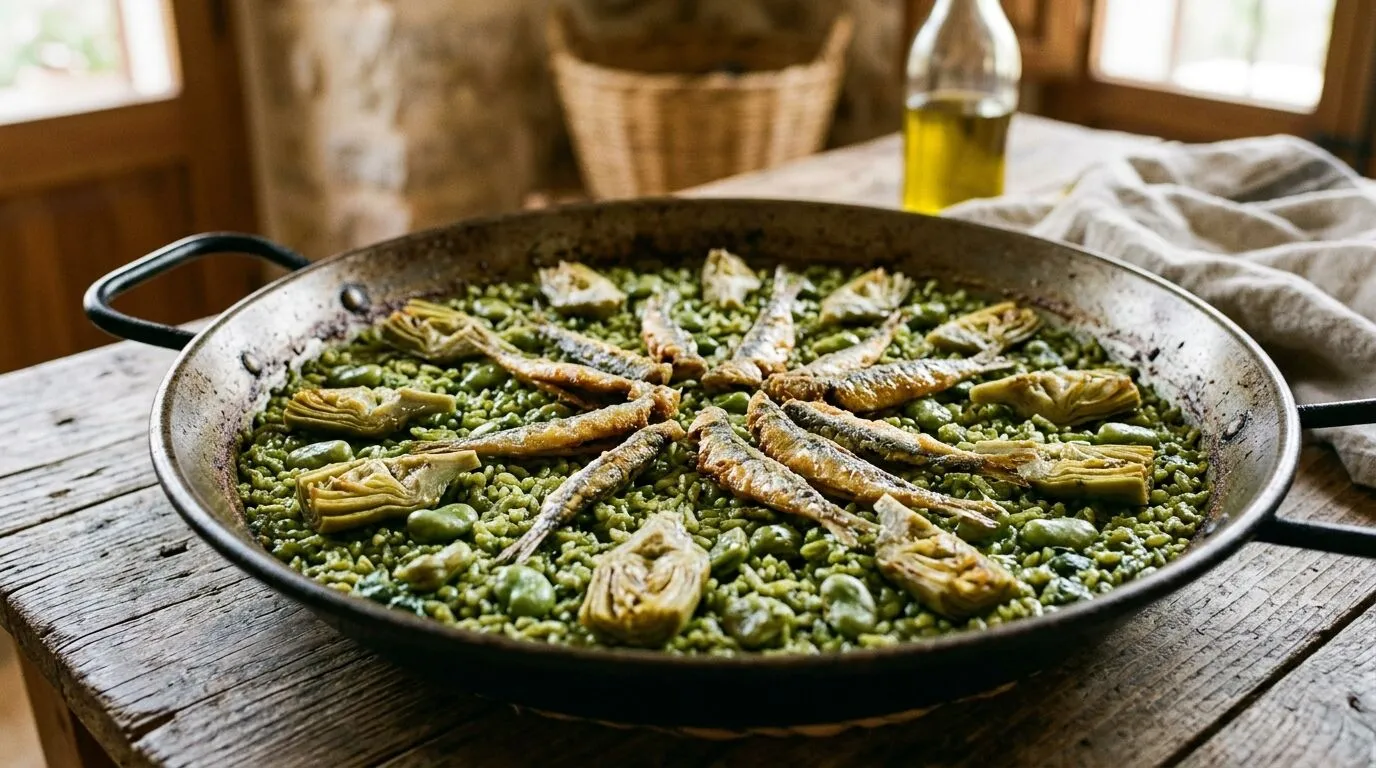

Rice with artichokes and anchovies
Yield: 4 servings
Suggested paella pans: 1 × 40 cm Glossary
Are there 40 or more of you? We cook rice dishes live for groups
Large paella pans need less liquid. Sources
Ingredients
Rice
- 320 gRice
- 1.5 lHomemade vegetable stock
- 4 pcsArtichokes from the Vega Baja
- 100 gBroad beans
- 100 gNew potatoes
- 150 gPeeled tomato
- 80 gGreen garlic
- to tasteSaffron
- to tasteExtra virgin olive oil
- to tasteSalt
boquerones
- 400 gFresh anchovies, cleaned
- to tasteSalt for the anchovies
Ingredients
Steps
- 1Bone the 400 g, fillet them and leave them in to taste for about 30 minutes: that firms them up so they don’t break when cooked.30 min
- 2In the paella pan, with the to taste, fry the vegetables in order of hardness: first the 100 g cut into wedges, then the 4 pcs, and last the 100 g and the 80 g.
- 3Sear the anchovies for just a moment in the pan, next to the vegetables, and take them out.
- 4Add the 150 g and fry it with the vegetables.
- 5Pour in the 1.5 l, adjust the to taste and let it boil.10 min
- 6Add the to taste and the 320 g, lay the anchovies on top of the rice and cook over a high heat.10 min
- 7Turn the heat down to the minimum and let it finish cooking.7 min
- 8Turn off the heat and let it rest before serving.5 min
Rice with artichokes and anchovies has a colour that sets it apart: it should come out green, the colour of the artichoke. The recipe is the one from the Convega recipe book, from the Consortium for the Economic Development of the Vega Baja. We have found no other open source that gives this dish with quantities, so we follow it as it is, with its proportions. The only thing we take from another recipe, Martí Domínguez’s paella d’hivern, is the trick to keep the artichoke from darkening.
A seasonal rice
The artichoke rules. Convega places its season roughly between November and April, and says the Vega Baja is the main artichoke-exporting area in Spain. The region sells its artichoke under a brand, Alcachofa Vega Baja, which the consortium itself describes as a mark of quality: it is neither a Protected Designation of Origin nor a Protected Geographical Indication, and we don’t present it as such.
The other ingredient that gives the dish its name is the fresh anchovy (boquerón), easy to find at fish markets and fishmongers. And the rest depends on the month: more broad beans in some weeks, more potatoes in others, as the winter vegetables arrive.
The vegetables, in order of hardness
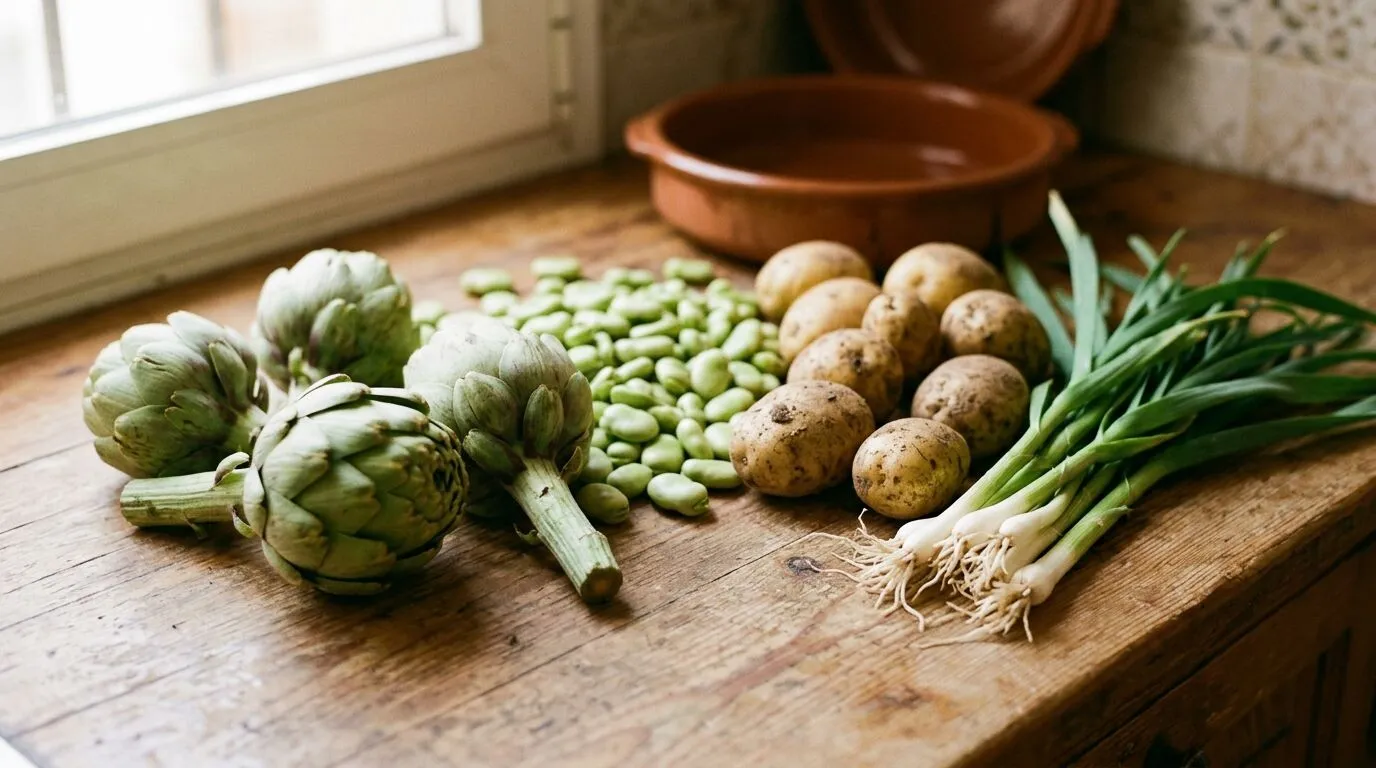
Each vegetable needs its own time, so they go in in order: the new potato, in wedges, first; then the artichoke; at the end the broad beans and the green garlic. After that comes the peeled tomato, fried with them. The recipe asks for a homemade vegetable stock, also made with seasonal vegetables, which is left to boil for ten minutes before adding the saffron and the rice.
The anchovy: salt, searing and on top
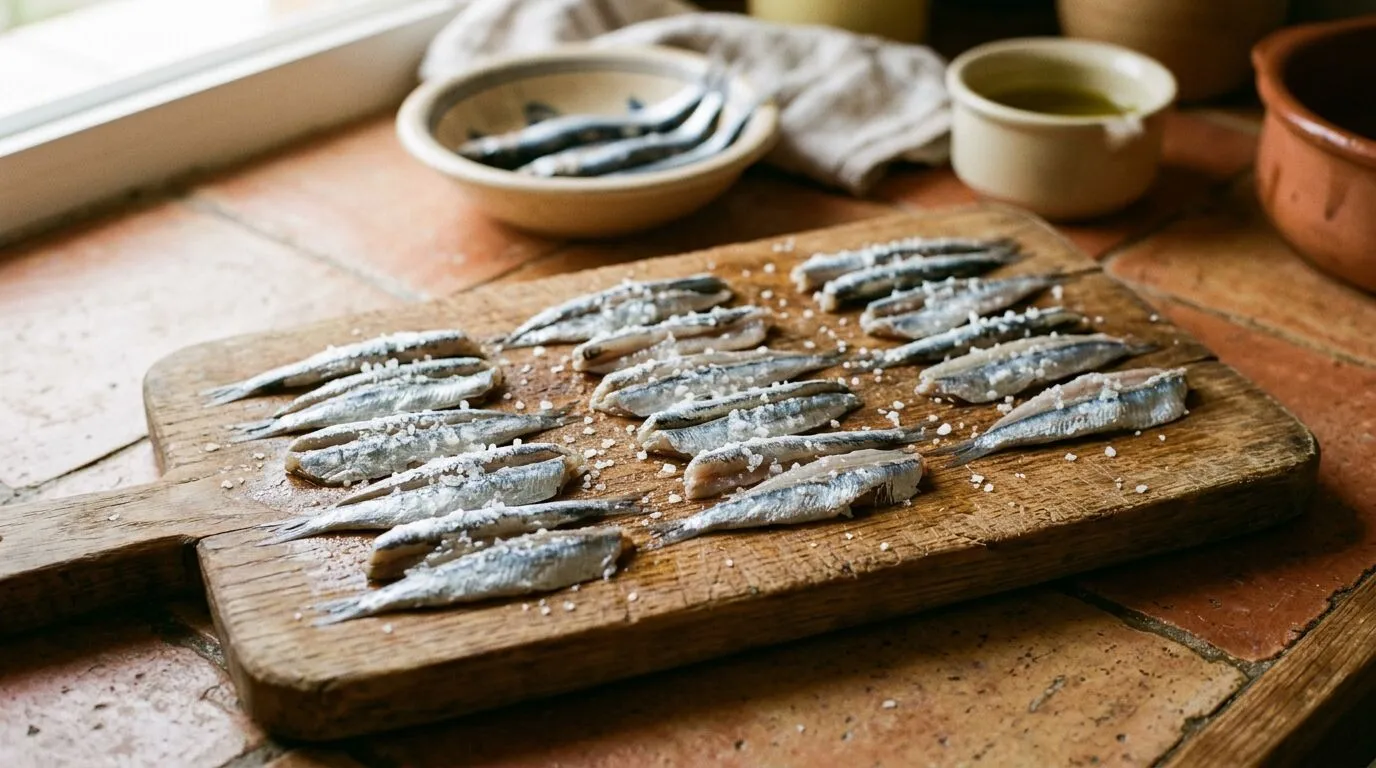
This is the part that most sets the recipe apart. Convega asks for 100 g of anchovy per person; as the recipe is for four, that is 400 g in total, and that is how it appears in the list. The anchovy is boned and filleted; before using it, it rests for half an hour in salt, which firms it up and stops it breaking. Then it is seared for just a moment in the same pan, next to the vegetables, and taken out. When the rice is already in the pan, the fillets are laid on top, without mixing them in, and cook there for ten minutes over a high heat.
Stock, ratio and texture
Convega uses a litre and a half of stock for 320 g of rice, a little over four and a half times its weight (1:4.7). It is much more than usual: other artichoke rice recipes use quite a lot less. We have kept the Convega one without mixing it with others. Note that this stock boils for ten minutes in the pan before the rice goes in, and part of it is lost in that boil. Convega doesn’t say how the grain should end up; if you have stock left over, adjust next time, knowing that you are already departing from the recipe. To understand the difference between dry, creamy and soupy, there is the entry creamy, soupy and dry rice.
After ten minutes over a high heat, the heat goes down to the minimum for seven minutes more and it rests for five before serving. Convega doesn’t say which variety of rice it uses; if in doubt, in the glossary you can read what bomba rice is, one of the usual ones for paella.
Equipment and serving
Convega asks for an iron paella pan, a knife and a wooden paddle. Nothing else. It is served on a plate, with the anchovies on top of the rice. And if you want to follow the old custom that Convega describes, dress the rice with the first green oranges, as you would with lemon.
Typical mistakes
- Vegetables in no order. If everything goes in at once, the potato stays hard and the artichoke overcooks. Respect the order of hardness.
- Anchovy without salt. It falls apart when you sear it; the half hour in salt is what keeps it whole.
- Dark artichoke. It darkens on contact with the iron of the pan. Sprinkle it with lime or lemon as you peel it, as Martí Domínguez does.
Allergens
Anchovy is fish, one of the 14 allergens that must be declared. Tell anyone who will be eating it.
For a group
With so many vegetables to peel, it pays to have the mise en place done beforehand. If you are cooking for a crowd, see the guide to how much rice per person. And if there are 40 or more of you, we cook rice for groups live: see paella and show cooking. Other fish rice dishes, in case you are looking for alternatives, are the arroz a banda, the black rice (arroz negro) and, for Lent, the salt cod and cauliflower rice.
History and variations
Convega, the consortium for the economic development of the Vega Baja del Segura, records it as one of the most popular rice dishes in the area: people start eating it when the artichoke arrives, from November to April. No source ties it to a specific village.
el Baix Segura: According to Convega, in the past and in some towns it was eaten dressed with the first green oranges, as if they were lemon. And, depending on the month, it has more broad beans or more potatoes. Sources
Tips
Fry the vegetables in order of hardness, starting with the ones that take longest: potato, artichoke and, at the end, broad beans and green garlic. Sources
Salting the anchovies for about 30 minutes firms them up and stops them breaking when you sear them. Sources
To stop the artichoke darkening on contact with the pan, sprinkle it with lime or lemon as you peel it: it is Martí Domínguez’s trick for the paella d’hivern. Sources
Rice with artichokes and anchovies
Frequently asked questions
What time of year do you make rice with artichokes and anchovies?
When artichokes are in season, which in the Vega Baja runs roughly from November to April, according to Convega. Convega says it is welcome at any time of year, but it starts with the artichoke. The vegetables change with the month: some months it has more broad beans and others more potatoes, as the winter vegetables come in.
Which artichokes do you use and how do you prepare them?
The recipe uses four artichokes from the Vega Baja for four servings, cut into wedges. You peel them by removing the tough leaves down to the tender heart. So that they don’t darken on contact with the pan and the rice comes out green, sprinkle them with lime or lemon as you peel them, as Martí Domínguez does in his paella d’hivern.
Do the anchovies go in the rice or on top?
On top. They are boned, filleted, left in salt for about 30 minutes and seared for a moment in the pan, next to the vegetables, before being taken out. Then they are laid on the rice just as it starts cooking over a high heat, without mixing them in. That way they stay whole and are visible when served, which is part of the dish.
What stock does it use and how much?
Homemade vegetable stock, made with seasonal vegetables, and plenty of it: a litre and a half for 320 g of rice, almost five times its weight. It is the proportion of Convega, the source of this recipe; other recipes use quite a lot less, but here we don’t mix them. Note that this stock boils for ten minutes in the pan before the rice goes in.
Sources
Glossary terms
Recipes
Arroz a banda
Arroz a banda for 4: ñora and baby cuttlefish sofrito, double the fish stock to rice, dry in the paella pan, fish served apart with potato and allioli.
Total time: 24 min
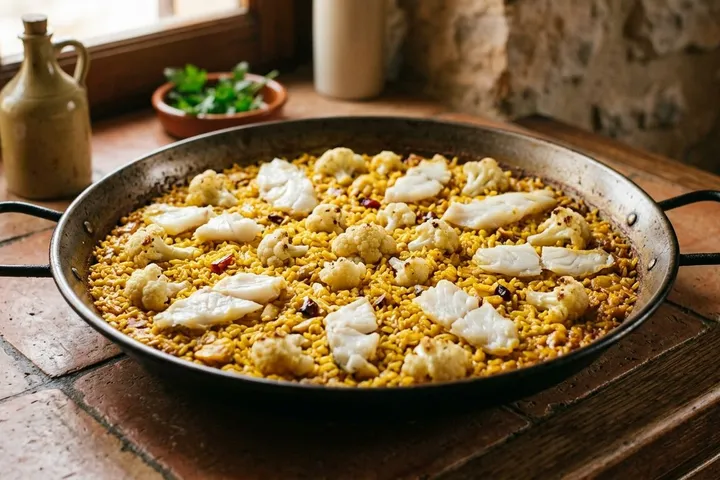
Salt cod and cauliflower rice (Lenten paella)
Lenten paella is a rice dish of desalted salt cod and cauliflower for 3 servings: everything is sautéed in the paella pan and cooked with fish stock.
Total time: 317 min
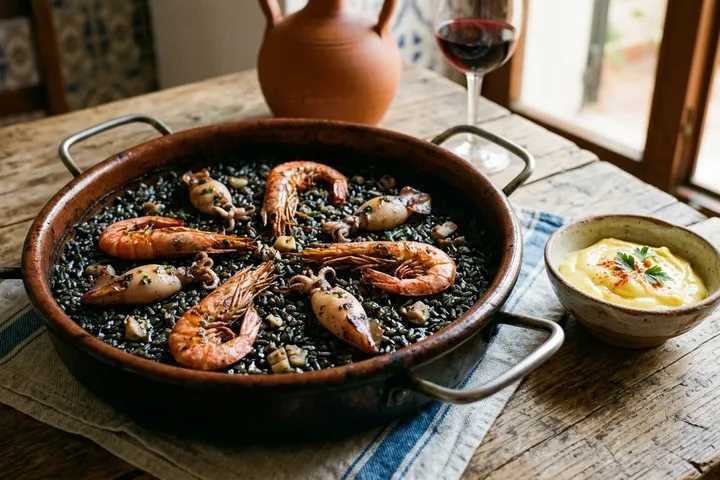
Black rice (arroz negro)
Black rice for 4: baby cuttlefish, ink, small-fish fumet and bomba rice, finished in the oven at 180 °C and served with allioli.
Total time: 30 min