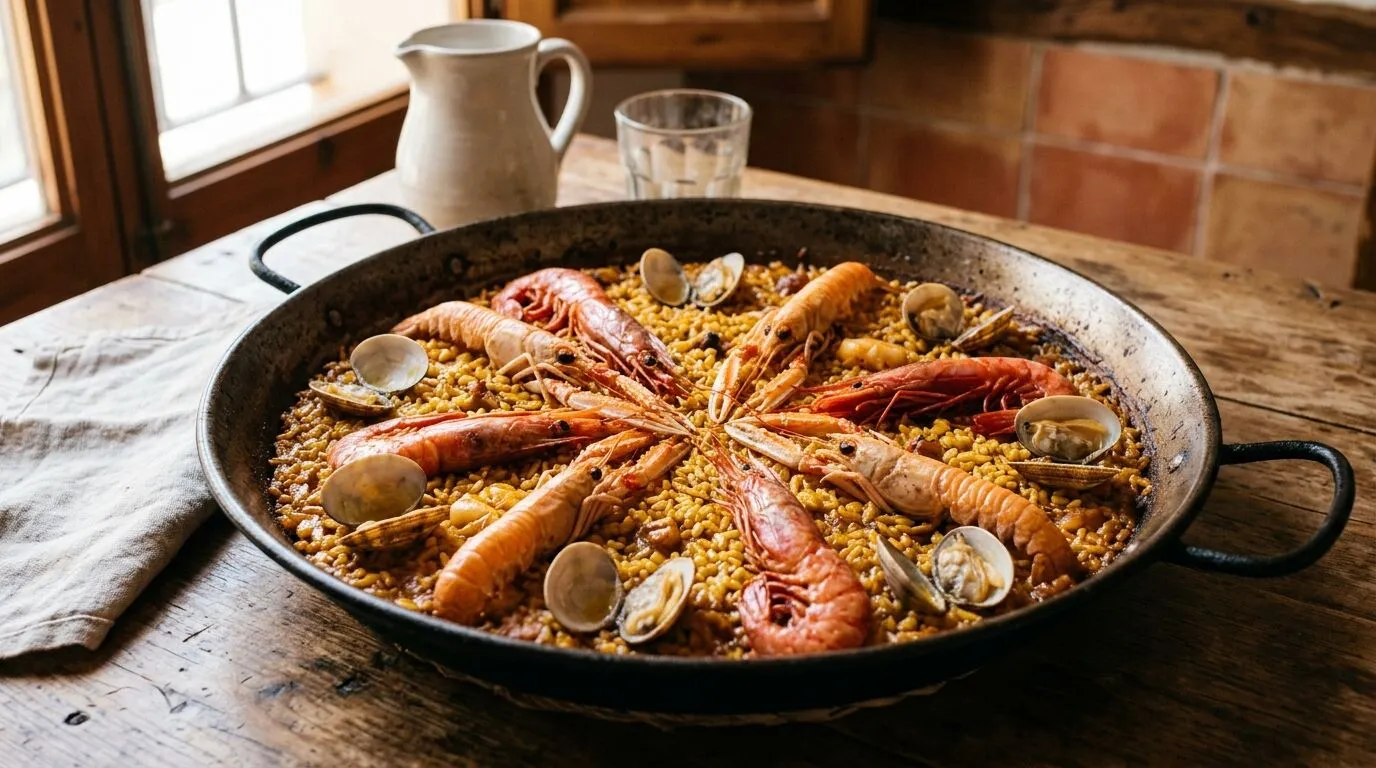

Seafood paella (paella marinera)
Yield: 4 servings
Suggested paella pans: 1 × 40 cm Glossary
Are there 40 or more of you? We cook rice dishes live for groups
Large paella pans need less liquid. Sources
Ingredients
pescado y marisco
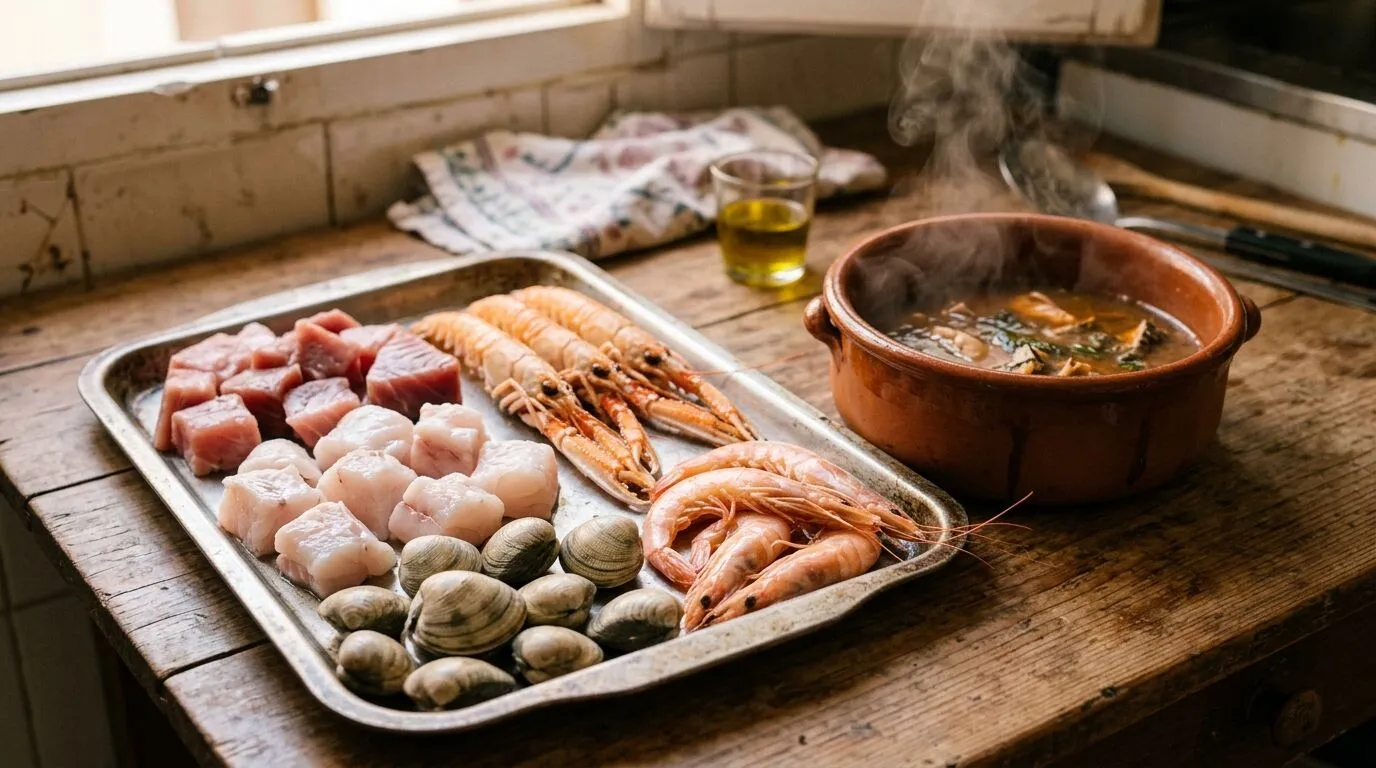
- 550 gMonkfish
- 550 gTuna
- 150 gPeeled red prawn tails
- 100 gChirla clams or other small clams
- 8 pcsCigalas (langoustines)
Rice
- 400 gRice
- 1.2 lFish fumet
- 200 mlOlive oil
Ingredients
- Fish fumet: Rockfish or small mixed fish (morralla) — 900 g
- Fish fumet: Water — 1.2 l
- Fish fumet: Onion — 1 pcs
- Fish fumet: Leek — 1 pcs
- Fish fumet: Carrot — 1 pcs
- Fish fumet: Celery — 1 sprig
- Fish fumet: Garlic — 2 cloves
- Fish fumet: Bay leaf — 1 leaf
- Fish fumet: Black peppercorns — 2 pcs
- Fish fumet: Extra virgin olive oil — 1 tbsp
- Fish fumet: Lemon juice — 0.5 tbsp
- Fish fumet: Fresh parsley — to taste
- Fish fumet: Salt — to taste
Steps
- 1In the paella pan, heat 200 ml and fry 550 g, 550 g, 150 g and 8 pcs.
- 2Take out the cigalas as soon as they are fried and set them aside.
- 3Add the 1.2 l, made beforehand, and 100 g, and let it boil for 5 minutes.5 min
- 4Add 400 g and cook it for 8 minutes over a high heat.8 min
- 5Lay the reserved cigalas on top, lower to a gentle heat and cook for 10 minutes more.10 min
- 6Take it off the heat and let it rest for 5 minutes before serving.5 min
Paella marinera is a coastal rice: fish and seafood in the paella pan, cooked with a good fumet. If you are searching for “seafood paella”, this is it. What it is not is Valencian paella: that one has chicken, rabbit and vegetables, and this one has the sea. Nor should you mix it up with two other fish rice dishes from the area, which is why it helps to have the differences to hand.
Marinera, a banda and senyoret: three seafood rice dishes
| Rice | How it is served | Where the seafood is |
|---|---|---|
| Paella marinera (this page) | All together in the paella pan, with the cigalas whole on top | Inside the rice and on top |
| Arroz a banda | The rice, cooked in the fish stock; the fish, served apart | Outside the rice, served on the side |
| Arroz del senyoret | With the shellfish peeled and the fish boned | Inside the rice, ready to eat without getting messy |
The last two have their story in the glossary: what arroz a banda is and what arroz del senyoret is. Here we stay with the marinera.
The fumet rules
Almost all the flavour of this paella is in the stock. Wikipaella, which studies the recipes of the restaurants it singles out, says that the fish stock “is crucial in every Paella Marinera”, and Directo al Paladar sums it up in a maxim: a good fumet for the base and saffron for the colour. Alicante Turismo prepares it with morralla (small mixed fish), tomato, garlic, ñora pepper and vegetables, but gives no quantities. There is no official proportion either, so make your fish fumet unhurriedly and taste it before you pour it in: a bland stock gives a bland rice. What it is and how it differs from an ordinary stock is explained in the glossary, under fumet.
The ratio between rice and stock also varies. Alicante Turismo uses 1.2 litres of fumet for 400 g of rice, three times as much; Martí Domínguez, a litre of water for 500 g, twice as much; Directo al Paladar, 800 ml for 400 g. This page follows the Alicante Turismo one.
Oil and tuna: the source’s figures
The Alicante Turismo quantities may surprise you: 200 ml of oil, 550 g of monkfish and another 550 g of tuna for four people. We checked them in the Spanish recipe and in its English version, and that is what they say. The oil is a lot compared with current recipes, like the Directo al Paladar one, which seals the monkfish with three tablespoons, but not so much compared with the classic: Martí Domínguez uses 300 g of oil for 500 g of rice. If you want it lighter, cut back the oil with judgement; Wikipaella asks for moderation, because too much makes greasy paellas.
The order of the seafood
The order matters because each piece cooks at its own pace. First the monkfish, tuna, prawns and cigalas are fried, and the cigalas are taken out as soon as they are fried. Then the fumet and the clams go in, with 5 minutes of boiling. Only then is the rice added, and it cooks for 8 minutes over a high heat. The cigalas go back on top, in a star if you like to take care over the dish, and the heat goes down for 10 minutes more. That way the seafood is cooked just right and the rice doesn’t overcook.
When it is done, 5 minutes of rest off the heat. A wide paella pan leaves the rice in a thin layer, which is what a dry rice like this one needs; if you are after the crust on the bottom, the socarrat is explained in the glossary.
Other versions of the marinera
There isn’t a single recipe. The Martí Domínguez one has cigalas, sepionet (baby cuttlefish) and clòtxines (the Valencian name for mussels), with a sofrito of garlic, onion and tomato to which the rice is added with paprika and water; the heat is turned up for about 10 minutes and lowered as the grain dries. Directo al Paladar starts from a sofrito of onion, garlic, pepper and blended tomato, uses bomba rice and reckons 17 or 18 minutes of cooking. The Alicante Turismo one, the one we follow, has no vegetable sofrito in the pan: it fries the fish and seafood, and the flavour comes almost entirely from the fumet. If you are after a creamy seafood rice for a special day, see the lobster rice.
Allergens and groups
Fish, crustaceans and molluscs are among the 14 allergens that must be declared: if you serve this paella to a group, tell the guests about them. And a marinera for four and one for a hundred are not the same recipe multiplied: the size of the pan, the heat and the order of the seafood all change. To work out the rice, start with how much rice per person and the guide to paella for 100 people. And if there are 40 or more of you, we cook rice for groups live: see paella and show cooking.
History and variations
Paella marinera is a coastal rice dish, with seafood and fish cooked in the paella pan. No open source pins down its origin, so we don’t attribute it to any particular port. How it differs from Valencian paella is explained in the glossary.
Tips
Take the cigalas out as soon as you have fried them and lay them on top when the heat goes down: that way they don’t overcook. Sources
Lower the heat as the grain dries, as in the Martí Domínguez recipe. Sources
Go easy on the oil: Wikipaella warns that too much makes greasy paellas. Sources
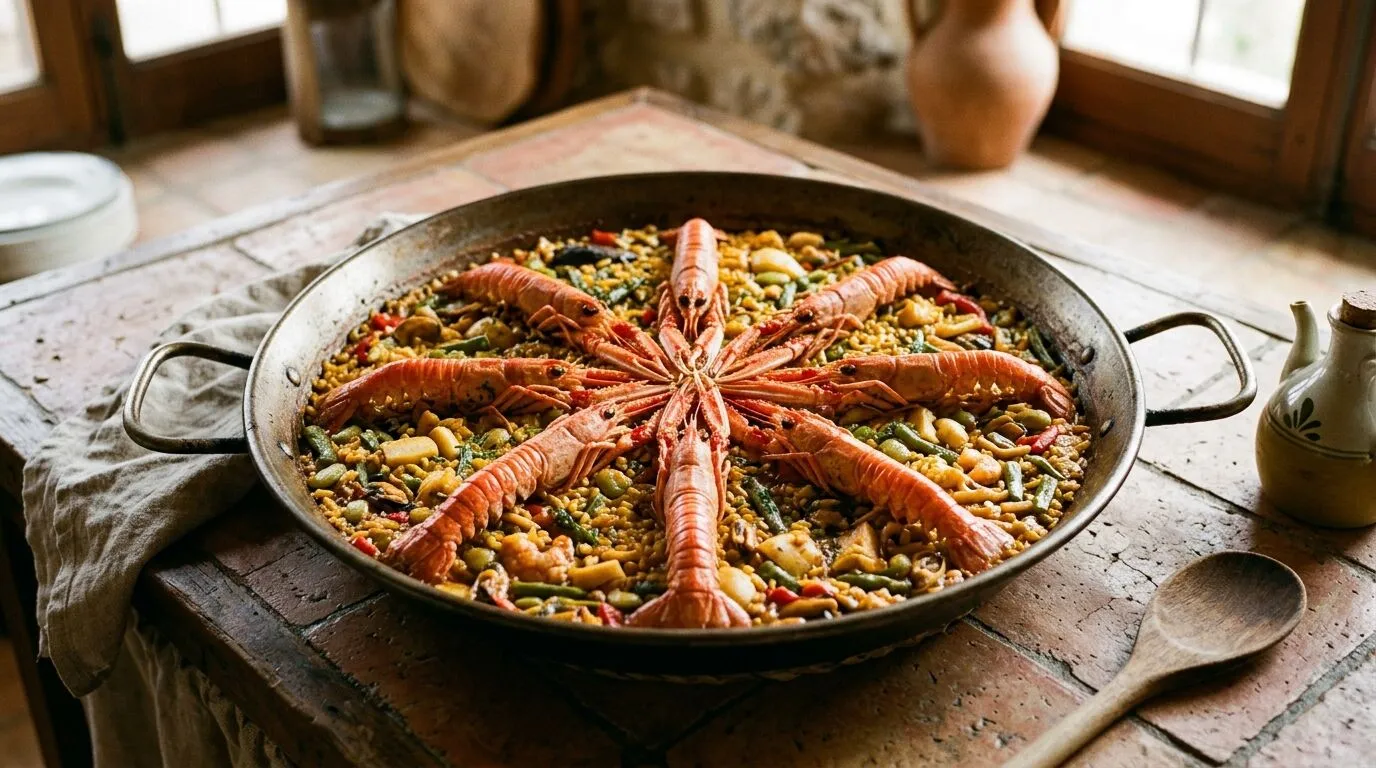
Seafood paella (paella marinera)
Frequently asked questions
How do you keep the rice loose in a seafood paella?
It helps to use a grain that holds up to cooking, like the bomba rice Directo al Paladar uses, and not to stir it. Alicante Turismo cooks it for 8 minutes over a high heat and another 10 over a low one, and Martí Domínguez lowers the heat as the grain dries. At the end, the rest: 5 minutes off the heat finish the job.
What wine goes with seafood paella?
The Alicante, City of Rice project, from Alicante Turismo, suggests serving its rice dishes with the wines of the Alicante PDO, and this paella comes from that recipe collection. That is the source’s suggestion; the rest is a matter of taste at each table. Allioli, on the other hand, is not part of this recipe: it goes with the *arroz a banda*, which is a different dish.
What is the difference between paella marinera and Valencian paella?
Valencian paella has chicken, rabbit, flat green beans and garrofó, and no seafood. Paella marinera is made with fish and seafood in the paella pan, cooked with fumet. They are two different rice dishes, each with its own recipe, and the mix of meat and seafood is yet another thing, which is not Valencian paella either.
Sources
- Alicante Turismo: arroz a la marinera, 4 people (Alicante, City of Rice)
- Alicante Turismo: seafood paella (English version, same figures)
- J. Martí Domínguez, Els nostres menjars, text collected on Vicent Baldoví’s website (uv.es): paella marinera
- Directo al Paladar: easy paella marinera recipe
- Wikipaella: ingredients (fish stock, ñora pepper, oil)
- Valencia Bonita: traditional Valencian rice dishes (arròs a banda and arròs del senyoret)
Glossary terms
Recipes
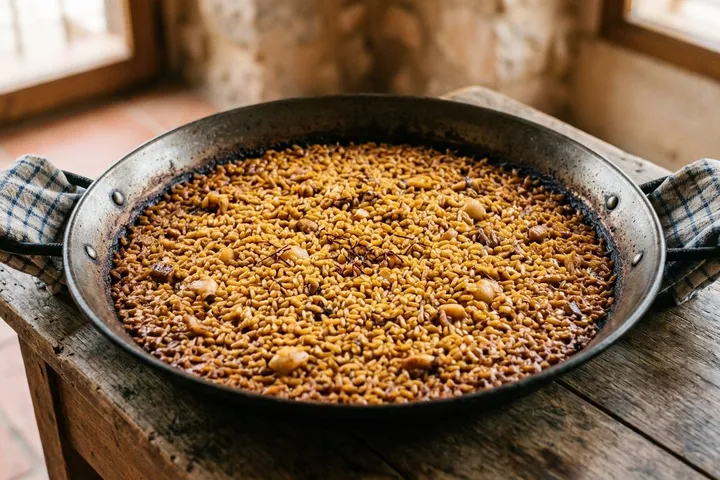
Arroz a banda
Arroz a banda for 4: ñora and baby cuttlefish sofrito, double the fish stock to rice, dry in the paella pan, fish served apart with potato and allioli.
Total time: 24 min
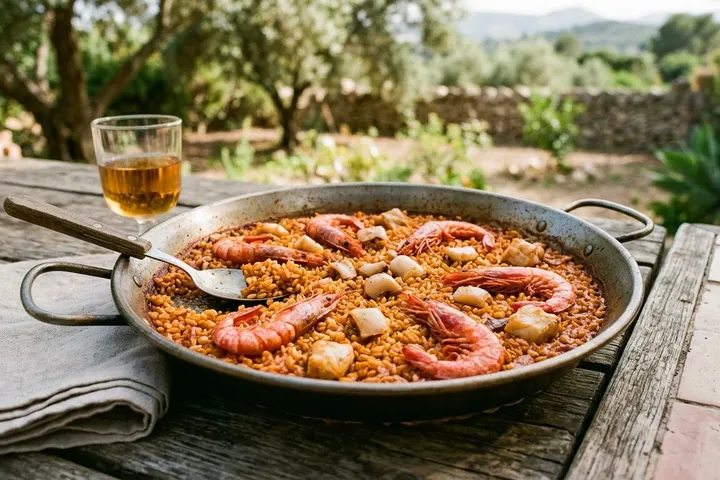
Arroz del senyoret (peeled seafood rice)
Arroz del senyoret for 4: cuttlefish, peeled king prawns and monkfish in a reddish sofrito, twice as much fish stock as rice, all ready to eat with a spoon.
Total time: 50 min
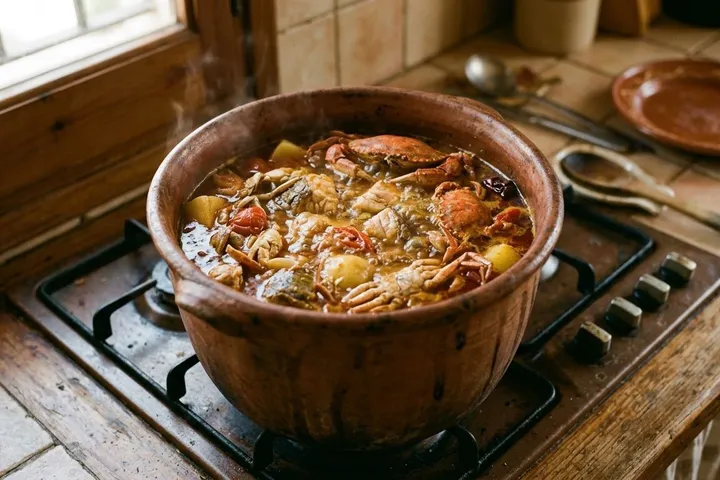
Fish fumet
Homemade fumet is cold water, fish bones and a few vegetables, cooked gently, skimmed and strained. It is the liquid base of seafood rice dishes.
Total time: 35 min
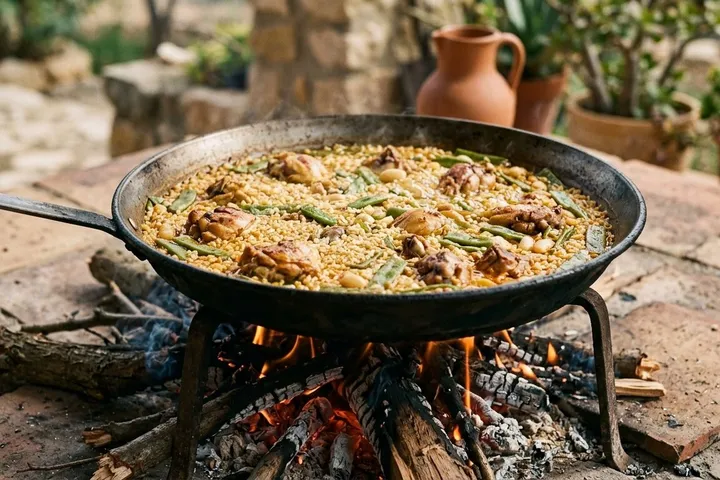
Valencian paella
Valencian paella with chicken, rabbit, flat green beans and garrofó for 4, using Turisme Comunitat Valenciana’s water-mark method and a final rest.
Total time: 60 min